Woman says SLO mobile home park illegally raised rent. Will she lose her trailer?
When Linda Valentine purchased a trailer at a San Luis Obispo mobile home park, she was excited to give her 38-year-old daughter Vanessa, who is autistic, a real chance at living independently, finding the space rent of $767 appealing as a long-term housing solution.
But that all changed when Valentine received the eviction notice from South Peak Mobile Home Park, which said Vanessa had to move out by the end of June on the grounds that she had multiple guests and dogs over at her home, violating the park’s rules on visitors — though Valentine said video surveillance footage showed that Vanessa was the only person entering or exiting her home, and that the dog in question was a neighbor’s that happened to be in the area.
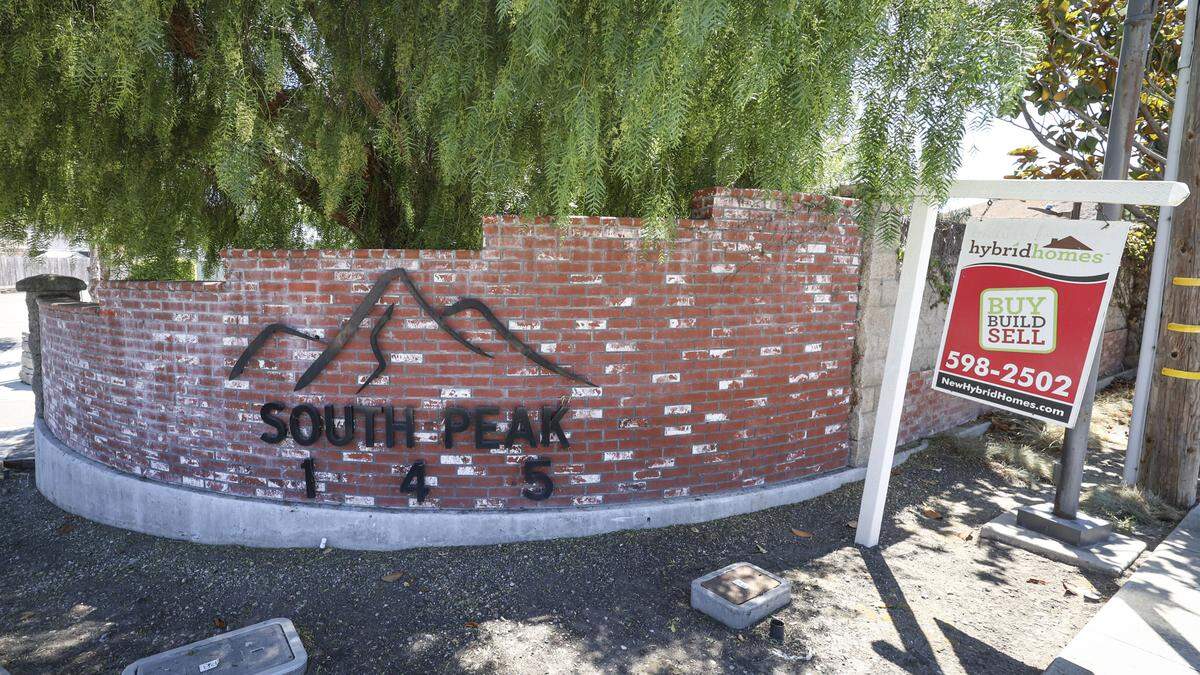
When Vanessa was evicted from the park at 145 South St., she became temporarily homeless for two weeks between living in the mobile home park and the apartment Valentine found for her on July 1.
Worse, Valentine said the eviction may end up costing her more than just the roof over her daughter’s head. She could also lose the $95,000 trailer itself.
Valentine fought the eviction, enlisting California Rural Legal Association attorney Evan Harris and eventually reached a settlement with park owner Harmony Communities that required the Valentines to physically vacate the home by June 30, with a Nov. 30 deadline to sell the unit to a new homeowner.
That was when Valentine learned that park management was raising the space’s rent by more than double, from $767 per month to $1,595 — an increase that has made the sale of her trailer to a new tenant extremely difficult, Valentine said.
“They do harass elderly and disabled people, and we got together and found out why they are picking on just certain groups of people,” Valentine said. “Now they’re raising the rents for anybody who wants to sell their place.”
Harris said if the home isn’t sold by Nov. 30, the park can go to court to seek an unlawful detainer judgment, which would allow the park to use a Notice of Warehouse Lien Sale to sell the home. If there are no bidders, the park could end up fully owning the unit, he said.
“We’re obviously trying to get the city to enforce this law before then and have it sold so that that doesn’t come up, but we are nervous that the park is going to have a lot of control over what happens next, and that could mean that (Valentine) loses this asset she paid almost $100,000 for,” Harris said.
But Harmony Communities senior regional manager Melissa Lawley said Valentine and Harris misrepresented Harmony’s reasons for evicting Vanessa, and said they had reasonable grounds to end the lease.
“Although not disclosed to the park prior to lease signing, Linda Valentine never intended to, and never did, live in the park,” Lawley said in an email. “Instead, it seems, she bought the recreational vehicle to get her drug-addicted daughter out of her Nipomo home.”
Residents claim pattern of space rent hikes emerging at mobile home park
Mobile home parks make up a key part of the housing ladder, often serving as the most affordable way to own a home without being a top earner in the county.
At a park like South Peak, the residences include both larger traditional mobile homes that typically remain in place and smaller trailers that actually have wheels but are installed on a site and look and function more like mobile homes than RVs.
In the city of San Luis Obispo, space rent in mobile home parks is regulated by the city’s base space rent ordinance, which caps rent increases at one price increase per year and limits increases to the annual percentage change in the Consumer Price Index or 9%, whichever is less.
Under that same ordinance, maximum space rent can be raised by the mobile home park owner when there is a change of ownership of the mobile home itself, though that increase cannot exceed 10% of the existing space rent and may not be applied more often than once in any 36-month period as the reason to increase rent.
However, in the event that the sale leads to the being vacated, then the space rent can be adjusted to the fair market rent in the community, according to the ordinance.
Harris said in Valentine’s case, Harmony Communities park management violated Article C of the city’s base space rent ordinance by trying to double the space rent when a new tenant is signed to a lease with the property.
He said Harmony is also trying to split hairs on what kind of home Valentine’s unit is by calling the parked trailer a mobile home. It has wheels but cannot be easily moved because it is installed on the lot. It even has a staircase.
“Harmony’s leased this parked trailer as a mobile home, and collected rent and administered rules under that classification, and now they’re disclaiming the classification to avoid rent control protection,” Harris said. “They’re saying that Linda’s unit is an RV and it’s not covered by SLO’s mobile home rent control ordinance, and it’s true, Ms. Valentine’s unit is technically a parked trailer, not a mobile home under the definition of mobile home residency law, but there’s no noticeable difference between the mobile homes and this parked trailer.”
Valentine said the eviction came at the climax of a series of struggles between her and the park’s management.
She said she intended to live with her daughter at the park until a caregiver could be found. In Vanessa’s two years living on the property, Valentine said she was never able to employ a full-time caregiver who could look after her daughter because the park management repeatedly denied requests for a caregiver to be able to access the park each day, even though she was told a caregiver would be acceptable when she signed the lease.
In recent years, park management has similarly raised rent for other residents whose leases were coming to an end beyond what’s allowed by the ordinance, locking some owners into their leases when the new lease listings failed to generate interest, Valentine said.
Sherry Enns, a current South Peak resident who wanted to start renting a second mobile home at the park for family, said she was similarly blindsided by an increase of space rent from under $800 to around $1,350.
As in Valentine’s case, Harmony Communities management claimed that Enns’ home was an RV, not a mobile home or trailer, meaning it would be exempt from the city ordinance, Enns said.
“We decided we’ll just put ours on the market and see if we can sell it for quite a bit,” Enns said. “Then they came back with, ‘If you do sell yours, you’re going to have to move it out of the park,’ and we thought, ‘What in the world?’”
Dennis Dewalt, a former resident of South Peak, said he put his mobile home up for sale in the park when he moved to the state of Washington.
Prior to his move, Dewalt’s rent at South Peak was around $900 per month; the space rent for a new lease set by park management came in with a $500 increase, he said.
“After some correspondence and arguing (park management) for a little while, I didn’t go ahead and put it on the market, because other mobile homes were also in the same situation and were not selling,” Dewalt said.
City says Harmony Communities violated space rent ordinance
As housing costs continue to rise in San Luis Obispo County, fewer and fewer places are within financial reach of residents — and when mobile home parks lose their affordability, it creates more instability at the lowest level of the housing ladder, Harris said.
Harris said that after he and Valentine reached a settlement with Harmony Communities, they reached out to the city’s code enforcement team, which issued a notice of violation of the city’s space rent ordinance to South Peak in May based on Valentine’s experiences.
A review of whether the park’s rent practices violated the ordinance conducted by San Luis Obispo Community Development Director Timmi Tway in late July found that the rent increase on Valentine’s space violated the city’s ordinance.
Tway said the city has received similar complaints from other South Peak residents.
“Other South Peak residents have contacted the city about potential violations of the rent stabilization ordinance but not have not yet provided sufficient information for the city to investigate their claims,” Tway said in an email.
Last year, Harmony Communities had to pay $61,000 in civil penalties in a settlement with residents of more than 50 mobile home parks in California related to a failure to reimburse background fees such as registration and titling and making misleading statements about housing units the company listed on multiple listing services.
“The park has dragged their feet in giving responses, and I think the city is understanding more and more that South Peak and Harmony Communities more broadly is kind of a bad actor in this space, and they’re doing what they can to enforce the municipal code,” Harris said. “We will see if Harmony Communities then chooses to challenge the city and take them to court over this, and that wouldn’t be surprising — I think they’re they’re looking to get rulings by judges and courts that limit the effect of rent control ordinances.”
Harris said since the director’s review, Harmony Communities has been issued an administrative citation and fine of $100.
Though the director’s review itself is not able to be appealed, the administrative citation could be challenged in court.
Park owner disputes woman’s claim
Lawley offered a substantially different version of the events that led to the eviction of Valentine’s daughter, and said Valentine misrepresented her daughter’s behavior during her time living at South Peak.
“Apparently, Linda no longer wanted to deal with the chaos created by her daughter and figured it was easier for her if the people at South Peak dealt with it,” Lawley continued. “Not surprisingly, the South Peak residents were also not fans of the chaos, resulting in countless complaints from them, warnings from us, and ultimately eviction when it became clear that her daughter was incapable of living in a civilized community.”
Lawley said the company will appeal the administrative citation and denied Valentine’s claim that the rent increase violated the city’s rent control ordinance.
Valentine said she was aware of an incident in which people who had known Vanessa from a previous stay at 40 Prado Homeless Services Center had come to the park seeking to use her daughter’s shower, causing park management to ask the visitors to leave, but she was unaware of other incidents that would justify an eviction.
Harris denied that Vanessa had used illegal drugs on park property and said Harmony was using attacks on the Valentines’ character to avoid the actual argument over whether their rent raise was legally permissible.
“I do want to emphasize that we see this case as a broader pattern of rent control evasion by Harmony Communities,” Harris said. “Harmony Communities has faced legal action in other parts of California for very similar conduct, so this case is, yes, just about Linda, but bigger picture, it’s about defending affordable homeownership for working families across California.”
This story was originally published July 31, 2025 at 5:00 AM.