Judge speeds up Tribune’s lawsuit, laying out plan for Paso, Bausch to turn over records
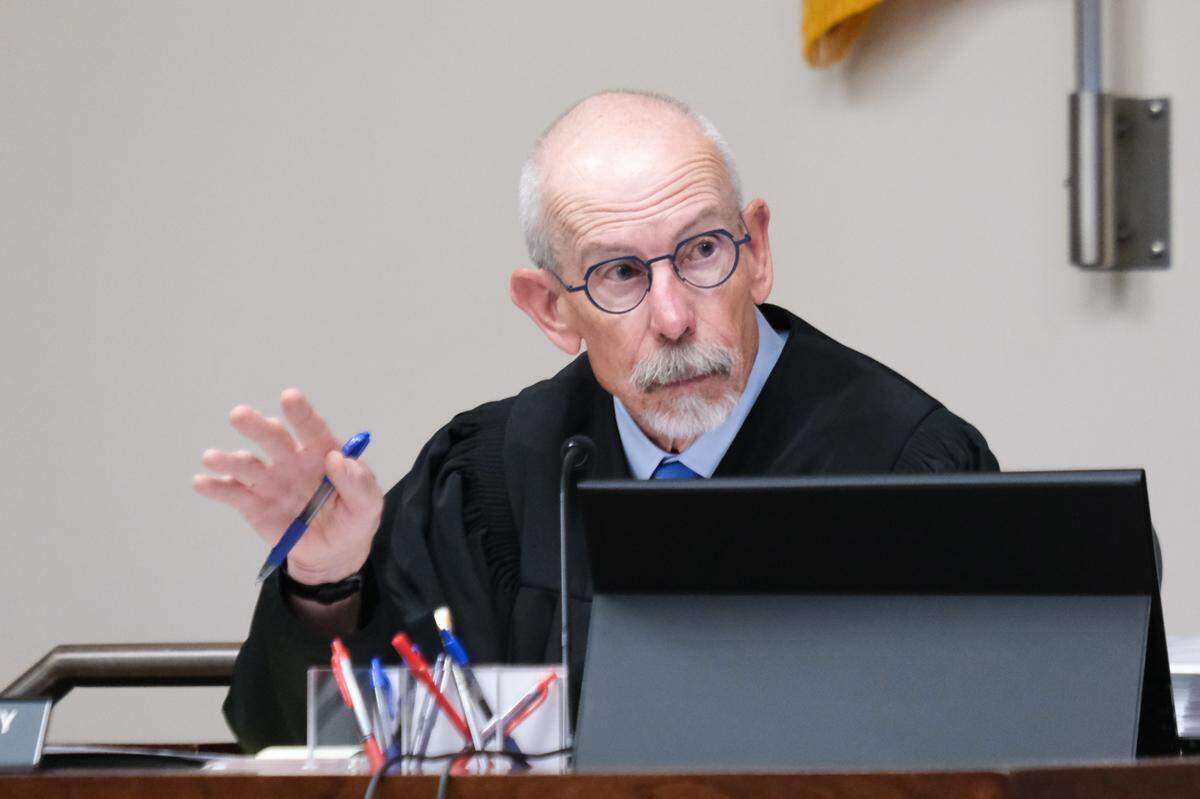
The Tribune’s lawsuit against the city of Paso Robles and Councilmember Chris Bausch accelerated Wednesday after Judge Michael Kelley directed the city to produce a plan by Monday for Bausch to turn over public records by the end of May.
The instruction came during the second hearing in the lawsuit, following an initial hearing on April 9.
The case was spurred by Bausch’s refusal to turn over public records stored on his personal devices, which The Tribune requested as far back as October. So far, the councilman has only turned over one item — a recording he disclosed only after leaking it to Cal Coast News reporter Karen Velie.
In court, Judge Kelley asserted that both Bausch and the city are at fault for the delay in producing responsive records, describing the case’s current status as a “stalemate.”
He demanded the city submit a brief by the end of day Monday outlining a plan for The Tribune to receive the missing records, complete with any redactions or exemptions, by May 31.
“I just need a suggestion from the city about how they can ensure that these documents get into the pipeline to be reviewed for responsiveness and exemptions,” Kelley said.
Kelley hinted that the plan could require Bausch to turn over his devices to city officials, who would then review them for any documents — likely texts and emails — responsive to The Tribune’s requests.
After the city submits its plan on Monday, both Bausch and The Tribune will have until Wednesday to respond. The next hearing in the case is set for Friday, May 9, at 11 a.m.
At that hearing, Kelley said, he will decide whether or not to officially order the records to be released.
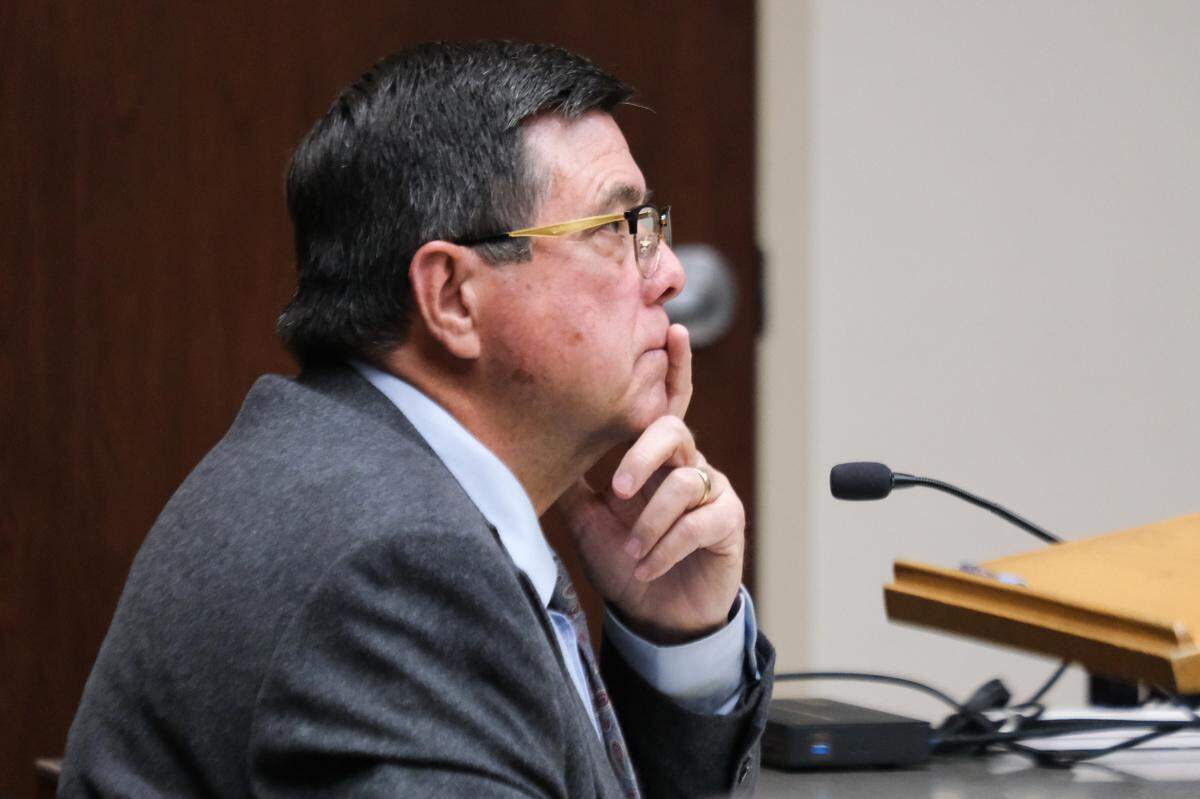
Judge suggests that Bausch give devices to city to expedite process
Overall, the decisions that came out of Wednesday’s hearing reflected a strong sense of urgency on behalf of the court and validated The Tribune’s argument that Bausch and the city have, thus far, failed in their duties under the California Public Records Act.
It also reflected a notable shift in tone for both Kelley and Bausch.
During the first hearing on April 9, Kelley appeared sympathetic to Bausch’s stated reasons for failing to turn over his responsive records.
Bausch held that he had been given conflicting advice by multiple attorneys and had concerns that the disclosure of some records could violate the non-disparagement clause in his settlement agreement with former city manager Ty Lewis.
He also claimed that he had gathered at least 500 responsive records, which were then corrupted in the process of trying to upload them to the city server.
Additionally, Bausch said The Tribune’s 19 requests — only a handful of which were actually targeted at items on Bausch’s personal devices — amounted to 700 individual searches that he’d have to conduct. He claimed he needed more time.
While Kelley again acknowledged Bausch’s roadblocks Wednesday — and called out the city’s own responsibility in the matter — he also indicated that it’s possible for the public records process to move quickly.
“Just in the interest of transparency, everybody should understand that I have been through processes like this where we imaged hard drives of dozens of people, reviewed them, summarized them, and produced them in a matter of days, if not weeks,” Kelley said. “So I understand that there are procedures and protocols and processes that can be deployed that can get this done in an expedited manner and in a manner that protects everyone’s legitimate interest to privacy and the exemptions the Public Records Act recognizes.”
That comment accompanied Kelley’s suggestion that the city might consider reviewing Bausch’s devices for him in the interest of time and efficiency — a plan the judge said he’d likely favor.
“I hear you saying that there’s a lot of requests,” Kelley said to Bausch. “There are 19 of them, and they are quite broad. But if the burden of going through everything in the first instance is taken off of your shoulders, and the city has a process in mind where they think they can meet the end of May schedule for everything, then that’s probably where I’m going to come down.”
Though Kelley did place some blame on the city, the city’s attorney Richard Eggers rejected that argument and pushed the onus back on Bausch.
“I wholeheartedly disagree that the city has improperly delayed or obstructed, and I think ultimately, when the evidence gets out, the court will agree with us,” Eggers said.
He added that the city “moved expeditiously” and had produced plenty of records so far.
Ultimately, Egger said the Monday deadline was a “tight time frame” but that the city would try its best to comply.
As for Bausch, his comments during the hearing were cut short after Kelley urged him not to repeat claims he’d already written in his court filings.
“Mr. Bausch, it sounds to me (that) you’re going to read into the record things that I just told you I’ve already read because they’re in your case management conference statement,” Kelley said. “So, I don’t think that’s productive use of our time.”
Bausch then said he believed it would be possible to turn over responsive emails for the six Tribune requests by May 31, but claimed he’d need more time to review his text messages.
He also said he’d need extra time to review his devices for any new requests submitted by The Tribune, to which Kelley clarified that any requests submitted after The Tribune filed its lawsuit are not included in the current litigation.
The Tribune has not claimed that any new requests need to be litigated at this time. It has not yet received records responsive to the latest requests, which were filed in response to comments Bausch made in court during the first hearing on April 9.
Bausch also said Wednesday he doesn’t plan to withhold any documents — a statement that contradicts his comments on a recent KPRL radio show he appeared on, when he said he was withholding documents from Best Best and Krieger, the city’s law firm.
“I want to make very clear that I am fulfilling the records requests. It’s not that I’m not doing those searches. I am searching for the records that The Tribune has requested,” Bausch said on air. “What I’m not doing is turning them over to BBK.”
But on Wednesday, Bausch didn’t seem to have a problem with turning documents over to BBK.
“I don’t plan on withholding any documents. If it’s responsive, it will go to whoever. It sounded like it’s going to head to BBK for their review,” Bausch said in court. “I will not be withholding any documents.”
The councilman, who has represented himself in the case so far, also said he signed a retainer agreement with an attorney. The attorney was not present at Wednesday’s hearing.
City releases new emails from city servers
In another new development, at 10:43 p.m. Tuesday night, the city sent additional documents to the Tribune, along with the first volume of a privilege log explaining which documents were withheld and why.
The additional documents were responsive to a previously closed Oct. 9, 2024, request asking for emails sent to or from Bausch that mention, were about or sent to Lewis, those to and from Lewis that mention, were about or sent to Bausch, emails that pertain to Bausch’s professional conduct, and both Lewis’ and Hull’s emails to each other from Jan. 1, 2024, through Sept. 30.
Egger said in court Wednesday that the additional records were disclosed because as the city was executing the privilege log, it realized it had withheld records that were not exempt from disclosure. All were from the city’s servers. None were from Bausch’s devices.
Nineteen additional emails were disclosed.
Some of the emails did not have relevant information, like scheduling Zoom meetings, troubleshooting access to staff reports, whether the city should support or oppose a state ballot initiative and budget reports for the Main Street Association.
Among the emails was a threat sent to Lewis from a member of the public named Lyle James Lemen.
On April 26, 2024, Lemen, who used the alias Juan Motime, sent Lewis an email with the subject line “START PACKING YOUR BAGS” and wrote “IS TAR AND FEATHERING STILL APPROPRIATE???? THE PEOPLE OF PASO SAY YES!!!”
Lewis responded, “Sounds like you’re very upset … maybe even angry. If you can bring yourself to put down your hot-pocket (sic), Capri Sun, National Enquirer and leave your keyboard, I’d be glad to meet you in the park today at noon, near the gazebo? I’d love to better understand you and try to build a strong meaningful dialogue.”
When Lewis emailed Lemen using his real name, Lemen responded that he was impressed Lewis found his real name by googling his email address. He also threatened to forward the email exchange to the City Council and Cal Coast News reporter Karen Velie.
“I THINK I WILL FORWARD YOUR SNARKY EMAIL TO THE CITY COUNCIL. MAYBE IT WILL WILL (sic) GIVE THEM SOME INSIGHT TO THE KIND OF PERSON THAT YOU REALLY ARE. I MIGHT SEND ONE TO KAREN VELIE AT CCN ALSO,” Lemen wrote.
He then told Lewis to be professional in all interactions with everybody before adding, “I DO NOT HAVE THOSE RESTRICTIONS ANYMORE.”
Other emails pertained to the city’s negotiations with Loyd’s Aviation to be Paso Robles Municipal Airport’s base operator — which was mentioned in Lewis’ claim because of a rumor allegedly spread by Bausch that Lewis was fixing the applicant process in Loyd’s Aviation’s favor because the owner was a “personal friend,” which Lewis denied.
The emails did not show insight into where the rumor started, but Lewis did note in an email to Loyd’s Aviation owner Ryan Crowl that the rumor existed.
This story was originally published May 1, 2025 at 9:00 AM.
.JPG)