Paso Robles, councilman clash over who’s to blame for Tribune’s records lawsuit
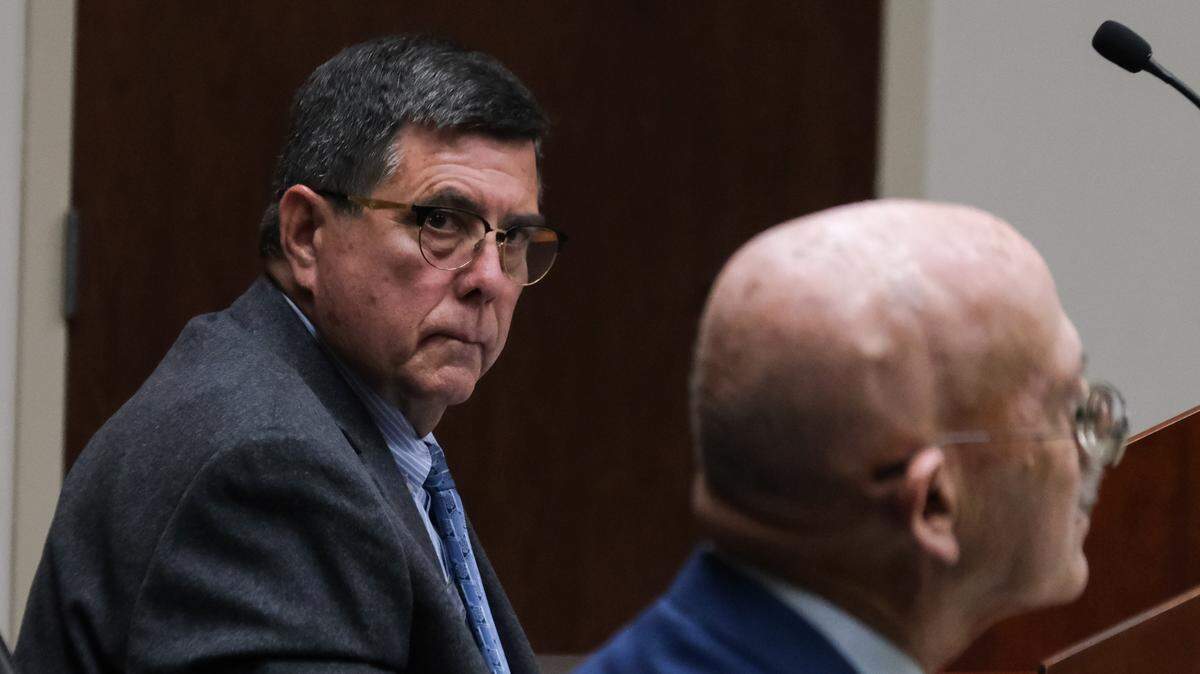
The city of Paso Robles and Councilmember Chris Bausch pointed fingers at each other Wednesday in the first court hearing over who’s responsible for delaying the release of public records requested by The Tribune.
But there were two things everyone agreed on: The Tribune had a right to the records, and the issues should be resolved in a timely manner.
The Tribune sued both Bausch and the city for violating the Public Records Act in March after the city claimed Bausch refused to comply with state law unless ordered to do so by a court.
Bausch, for his part, denies that allegation.
He held the public records delay was the city’s fault, claiming attorneys hired to represent him in former city manager Ty Lewis’ $2.275 million claim had told him to not respond to requests. He also claimed the city wrongly denied him legal representation, and he demanded the city provide him an attorney.
As Bausch searches for an attorney to represent him — it was a “probably a mistake” to represent himself, he said — he is also claiming to be searching for public records.
In an April 2 court filing, Bausch claimed the search — which he has allegedly been doing since January despite having requests dating back to October — will take him six months to complete. He also asked to have himself dismissed from the lawsuit and for The Tribune’s outstanding records requests to be dismissed, according to the filing. In that same document, he also asked for a 30-day jury trial.
Both the city and Bausch are expected to have their response to The Tribune’s lawsuit filed by April 21. The city is expected to provide a log of any records that are exempt from disclosure and why by the next hearing on April 30.
Councilmember claims city lied about his refusal to search for records
Bausch spoke about his public records delays publicly and in depth for the first time Wednesday, representing himself during the first hearing in The Tribune’s legal case.
The councilmember claimed he is currently conducting around 700 individual searches on his personal devices for the delayed records — an effort he said has been ongoing since before city attorney Elizabeth Hull sent her February email to The Tribune calling him out for refusing to comply with public records law.
Bausch did not specify when he started searching for the records and refused to clarify this detail with a Tribune reporter following the hearing.
Bausch did acknowledge to the court it would be in his “best interest” to turn over the responsive records. He also denied Hull’s claim that he wouldn’t turn over records without an order from a judge.
“That quote is, in fact, a lie,” he said.
Instead, administrative hangups, questions and concerns have prevented Bausch from turning over documents so far, he said.
The councilman claimed in court that he attempted to upload a batch of responsive emails to the city’s server on Jan. 24. However, the files were corrupted in the process, Bausch said, forcing him to start his search anew.
“To be sure, that conversion failure is probably on me,” Bausch added.
Bausch said Jan. 24 was also the date he submitted the recording of a meeting among himself, Paso Robles Mayor John Hamon and former city manager Ty Lewis at Angela’s Pastries — a public record The Tribune first requested in October.
That request was at first denied by the city but later reopened after a clip of the recording was leaked online by Cal Coast News reporter Karen Velie in December. Velie posted what she said was a full version of the recording in January. The full recording was provided to The Tribune by the city on Feb. 7 — just shy of two months after Velie initially released the partial recording.
According to Bausch’s case management statement, which he filed in court, he did not release the recording earlier “on advice of counsel.”
“More questions came in from across typical media contacts but curiously, only the SLO Tribune sent the formal CPRA requests, eight all together to me, seeking to expose some sort of conspiracy to the employee who had made the hostile work environment claim,” he said in the filing.
Bausch has refused to speak to The Tribune on the record since October, despite multiple attempts.
In a Jan. 7 email to Hull and attorney Richard Egger, which is typically attorney-client privileged but was attached to the court filing, Bausch wrote, “I recorded the March 8, 2024, meeting to protect myself against a perceived risk that my discussion might later be misrepresented. I did not record the meeting with the intent to create a city record subject to public disclosure.”
City councilmember demands city represents him in lawsuit
In addition to the technological difficulties he faced, Bausch also aired to the court a laundry list of concerns about the city’s handling of his search for records and recent refusal to provide him with legal representation.
According to Bausch, he has been represented by three different lawyers since Lewis first filed his claim against the city.
Bausch said his first attorney, appointed through the city’s insurer, clashed with city attorney Hull after Bausch directed Hull to communicate with the attorney about public records requests, rather than the councilman himself. The second attorney also had to be replaced, Bausch said.
In the process of searching for records responsive to The Tribune’s requests, Bausch said he was counseled not to release records that could potentially trigger a defamation lawsuit, presumably by Lewis, who alleged in his claim that Bausch harassed and spread rumors about him. That advice was given after the settlement agreement had been reached between the two, Bausch said.
And now, after Bausch’s alleged refusal to comply with public records law, the city has refused to supply him with legal counsel, he said.
A March 20 email attached to Bausch’s statement illuminated a backroom conversation at City Hall, confirming that detail.
The email, sent from Hull to Bausch, claimed the Paso Robles City Council discussed The Tribune’s lawsuit in closed session March 19, the same day The Tribune served Bausch with the lawsuit. During that meeting, the subject of Bausch’s legal counsel was brought up, Hull wrote.
Bausch was invited to participate in that conversation, Hull wrote, but he left the meeting before it was finished.
Ultimately, the city decided not to provide Bausch’s legal representation due to his “refusal to cooperate” with the city’s public records process.
Bausch took issue with that decision in court Wednesday.
“We need to come to some sort of an agreement for the city to correct course in, what I believe, is a serious error in the city’s judgment in convincing City Council to deny legal representation to me on the basis of me not providing a search of my devices,” Bausch told Judge Kelley. “If they use that as a basis for not providing counsel to me, they were in error, and they need to pay for counsel.”
Judge Michael C. Kelley replied: “That dispute is not before me today, and I’m not even sure it would be before me in any form or shape in this case.”
Bausch also asked the court whether the city has the right to review his public records or if he should hand the records over straight to the judge or The Tribune, since the city is no longer representing him.
“I think since I have been cut loose from the city of Paso Robles, I believe BBK has given up their right to accept these documents,” Bausch said.
BBK is the law firm that represents the city.
BBK attorney Egger, who appeared in court virtually representing Paso Robles, emphasized the city’s need to examine the documents prior to their release by Bausch.
In its review process, the city would be looking for potential redactions or withholdings, including information falling under attorney-client privilege, work product privilege or other legal exemptions for public records.
Kelley agreed with the city.
Kelley told Bausch the city does have a right to review the records for redactions and exemptions prior to their release, even though the city is no longer representing him.
Kelley also clarified that the city has a right to provide records to The Tribune on a rolling basis, but should not require Bausch to sign an affidavit until he has fully completed his searches.
City considering filing cross-lawsuit against councilman
In addition to not representing Bausch in court, it appears the city may also file a cross-complaint against him.
In Wednesday’s hearing, Egger told Kelley the city was considering a cross-complaint, but did not specify what that would entail.
But Bausch clarified it in his own statement, saying Egger “threatened to file a cross-complaint against me.”
According to Bausch’s court filing, Egger told the councilman the city was going to file a cross-complaint against him because Bausch was “a threat to the city.”
Bausch claimed in his filing that Egger was unable to articulate how or why he was a threat, chalking the issue up to the repeal of the city’s controversial paid parking program.
“Perhaps there are lingering sour grapes over my request that BBK reimburse the City $1,000,000 in legal billing for admittedly poor advice regarding a failed parking program,” Bausch wrote in the filing. “I find it sad that their parking vendetta is turning this ugly.”
Bausch claimed Egger “is apparently unwilling to seek remedies that would likely save Paso Robles taxpayers quite a bit of money,” including mediation, settlement conferences or arbitration.
“I have requested that the court either transfer jurisdiction of this case to federal court or dismiss all remaining public record requests as I truly believe there was not any level of animosity between the employee and myself that has been imagined,” Bausch wrote in the filing.
The federal courts do not have jurisdiction over state public records act requests. State law requires government agencies and officials to respond to Public Records Act requests.
“If the court in its wisdom and discretion believes that I should continue to search through my personal devices, I will respect the court’s decision, but I ask the court to realize that I volunteer to be a city councilperson. I can’t control who sends me an email or text,” Bausch wrote.
Bausch claimed “he is not the enemy here” and that the independent investigation into Lewis’ claim found Lewis’ allegations “never existed,” calling Lewis’ allegations “the fantasy that might have led to a large payout (that) never materialized.”
The Tribune requested all investigative documents and reports regarding Lewis’ claim on Dec. 10. The city denied the Tribune’s request on Dec. 17, claiming the records were exempt from disclosure under personnel privacy and attorney-client privileges.
In the final statement of his filing, Bausch parroted a false claim about The Tribune that has been wielded by other critics in recent months.
“I don’t think I should have to pay for McClatchy’s fancy inhouse attorney,” he wrote. “I know they are allegedly going out of business and I’m sure sorry about that, but I didn’t cause that to happen. I don’t want to donate to the cause.”
He also requested to depose Paso Robles Daily News editor Scott Brennan, Tribune reporter Chloe Jones, Lewis, Hamon and cannabis business owner Grace Hall, who shared her knowledge of the alleged conspiracy between Bausch and Velie.
In the notes, he wrote he wanted the depositions to be about rumored plans for a sale of The Tribune — yet another false claim.
The Tribune is not for sale.
This story was originally published April 9, 2025 at 6:12 PM.
CORRECTION: Details have been added to this story regarding Bausch’s desire to depose five people and what he hoped to learn from them.
.JPG)