Homes, hotels approved in Los Osos despite appeals over water concerns
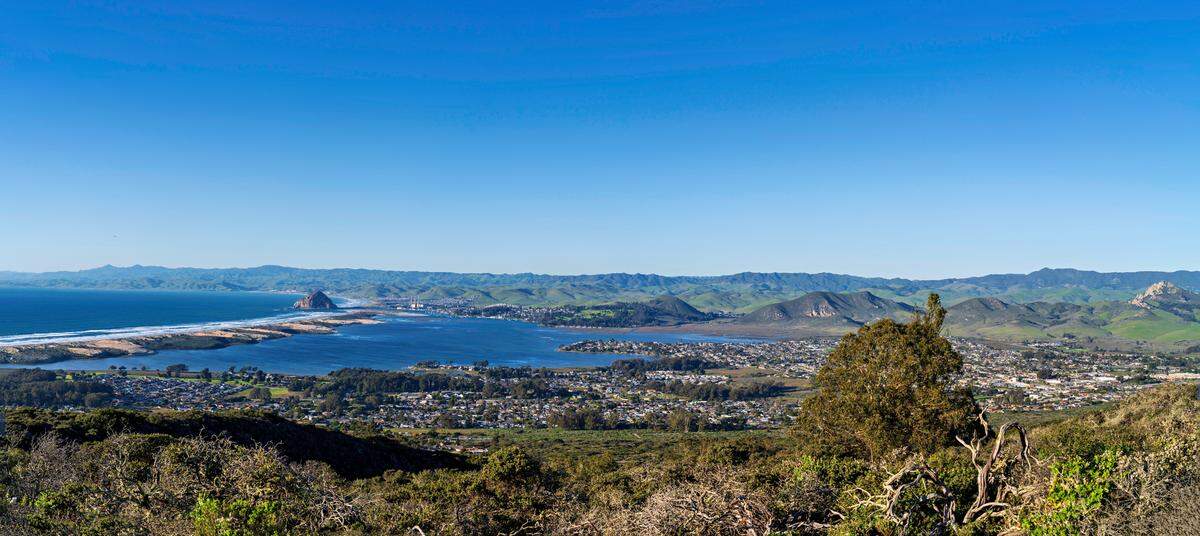
.jpg "The Morro Bay Estuary seen from the hills above Los Osos.")
The San Luis Obispo County Board of Supervisors upheld up its vote to allow four development projects in the bayside town of Los Osos after lifting a 35-year building moratorium, despite community concerns over new construction threatening their water source.
The moratorium, lifted last year, was placed on town over three decades ago to protect it’s only water source, the Los Osos groundwater basin.
Back in the 1970s and ‘80s, a population boom overdrew the basin, leading to chloride pollution from seawater intrusion, and poorly designed septic tanks leaked nitrates into the water source.
As a result, the Central Coast Regional Water Quality Control Board banned Los Osos from installing new septic systems in 1988, essentially placing the community under a building moratorium.
The moratorium was rolled back in October, finally allowing new growth at a 1% annual rate, equal to 50 building projects a year. Nearly 400 people sit on the list to build, some having been waiting for decades — but some citizens think the basin still is not equipped to handle new development.
The Los Osos Sustainability Group appealed the construction permits for two homes and two hotels in Los Osos at Tuesday’s board meeting, arguing that the projects threaten the sustainability of the town’s fragile groundwater basin by placing additional demand on a water supply that is already in “critical overdraft,” according to the group.
The group cited concerns over new construction potentially exacerbating existing issues like seawater intrusion and chloride contamination. One of the project appeals raised concerns of impacts on environmentally sensitive habitats and areas.
“New development means more water is used,” group chair Patrick McGibney said to the board at Tuesday’s meeting. “This is why we ask that these projects be denied.”
Supervisor Bruce Gibson disagreed.
He noted at Tuesday’s meeting that the Los Osos Basin Management Committee and the California Coastal Commission both “make the explicit conclusion that the basin at this point is not in overdraft.” He added that two of the projects do not change water use in any way.
The board ultimately rejected the appeals, upholding the projects’ permits and allowing for their continued development in Los Osos.
“You really need to revise what your definition of sustainability is,” McGibney said. “... Our basin is in critical overdraft, regardless of what you’re being told.”

Los Osos sustainability group appeals four building projects
The Board of Supervisors considered four project appeals from the sustainability group.
The first project is a two-story home on less an than acre of land on Alamo Drive, according to the staff report. The 1,970-square-foot home would have an attached 461-square-foot garage and 880 square feet of exterior deck.
The other home the group appealed was an approximately 3,452-square-foot residence with an attached 1,202-square-foot garage, 424-square-foot storage space and a 504-square-foot art studio all on less than half an acre of land on Madera Street, the staff report said.
Both homes would be served by on-site septic systems, according to the staff reports.
The other two projects are hotels in already existing, neighboring buildings in Los Osos. The first project, at 1325 Second St., includes a one-story mixed-use restaurant, a four-unit hotel and a storage area, according to the staff report. The other sits next door at 1315 Second St., and includes a two-story, three-unit hotel with laundry facilities, 501 square feet of decking and 5 parking spaces, the staff report said.
Because the hotel buildings are already standing, neither project would require construction or result in any change in current levels of water use.
The Los Osos Sustainability Group appealed all four projects on the grounds that increased chloride levels and potential seawater intrusion necessitate a halt to new construction, despite the lifting of the decades-long building moratorium.
Chloride levels in the basin increased to 199 milligrams per liter of water in 2023 — which is higher than the 100 milligram per liter chloride level limit established in the Basin Management Plan.
“The chloride metric is going up every year,” Lynette Brooks, a consultant to the sustainability group, said at Tuesday’s meeting.
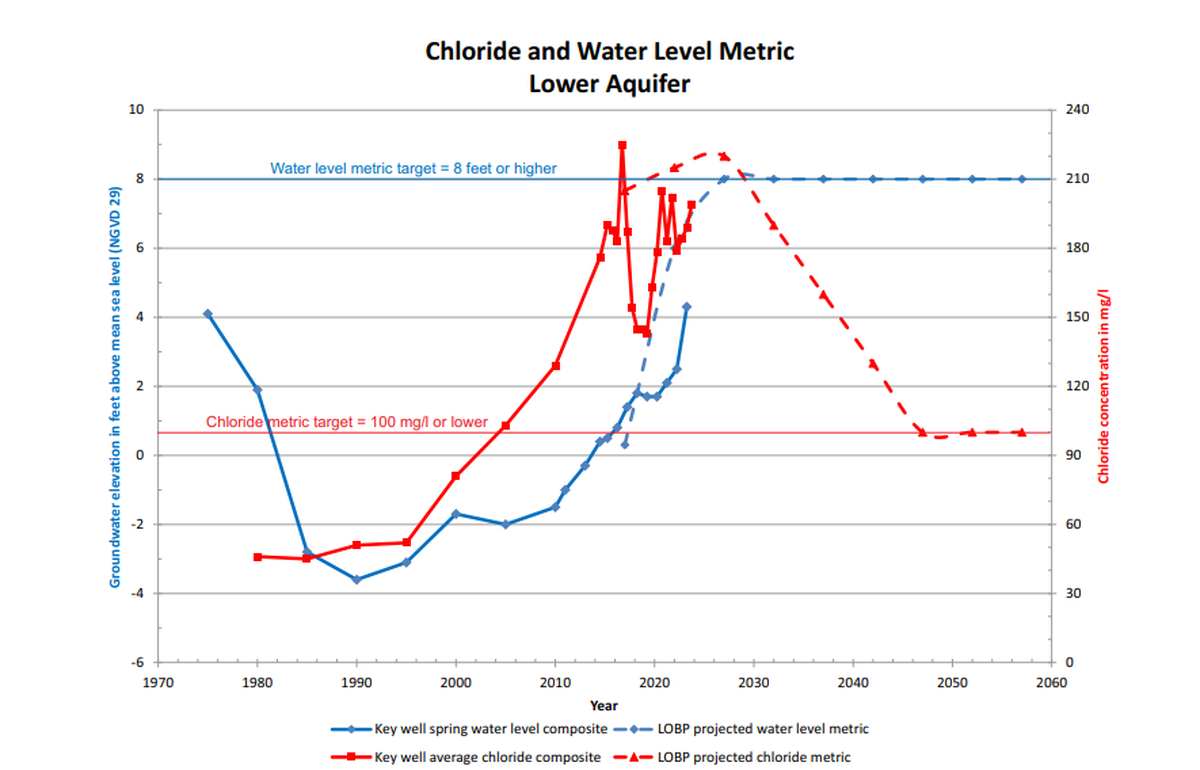
Brooks’ appeals presentation on Tuesday focused on the shortfalls of the model used to measure the sustainability of the groundwater basin.
“All the metrics, all the information, the data that is actually out there shows that we do have seawater intrusion. Our chloride levels are climbing. Therefore, by definition, we are not sustainable,” McGibney said Tuesday.
Gibson conceded that the current models may not be fully accurate, saying that “we will have more sophisticated modeling available hopefully sometime this year.”
According to the group, the projects violate county policy because they lack sufficient and sustainable water supplies and sewage disposal systems, arguing that the basin is in “critical overdraft,” as found by the Department of Water Resources in a Jan. 15 report, the group said.
The report is the most recent ruling, but it is not up to date, Gibson told The Tribune.
“It’s not consistent with current information,” Gibson said. “It’s out date and irrelevant.”
While the two housing projects will rely on-site septic systems, the hotels sit within the city’s sewage service area and will continue to be served by the Los Osos Water Recycling Facility. Additionally, both housing projects provided will-serve letters from the Golden State Water Co.
Despite the sustainability group’s presentation and appeals, the county concluded that the “the basin is not in overdraft” and it falls within the basin’s sustainable yield to support the proposed developments and associated water offsets.
Since 2015, environmental consulting firm Cleath-Harris Geologists Inc. has set the sustainable yield for the basin as the amount of water that can be drawn from the basin without worsening seawater intrusion.
In 2023, Los Osos pumped 69% of the basin’s sustainable yield, which was enough to give the county the green light to continue with limited development of 50 units per year.
According to the county, it will take some time for the basin’s health to even out, but as long as it remains within a sustainable yield every year, new development will continue.
To McGibney, the board’s decision “put our community at risk of losing a water supply that it is dependent upon for their livelihood.”