Work shores up seawalls at 2 Pismo Beach homes. Now the Coastal Commission is investigating
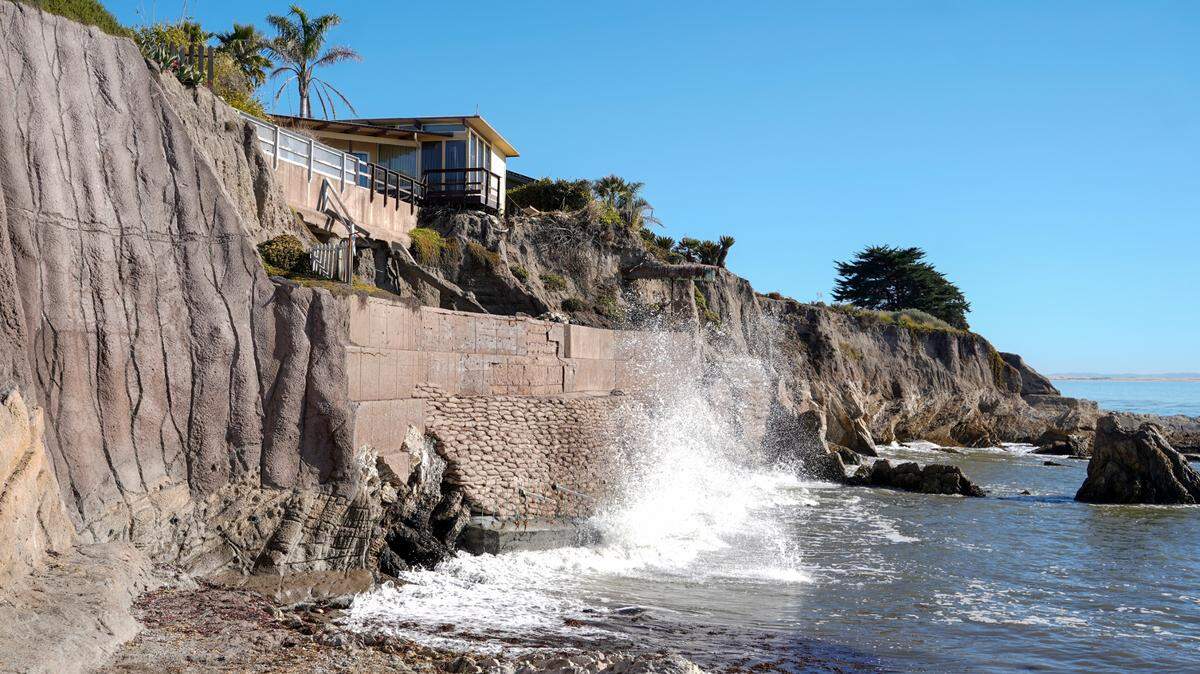
Two oceanfront homeowners in Shell Beach bolstered their bluffs against erosion in recent weeks — and the work has attracted the attention of the California Coastal Commission.
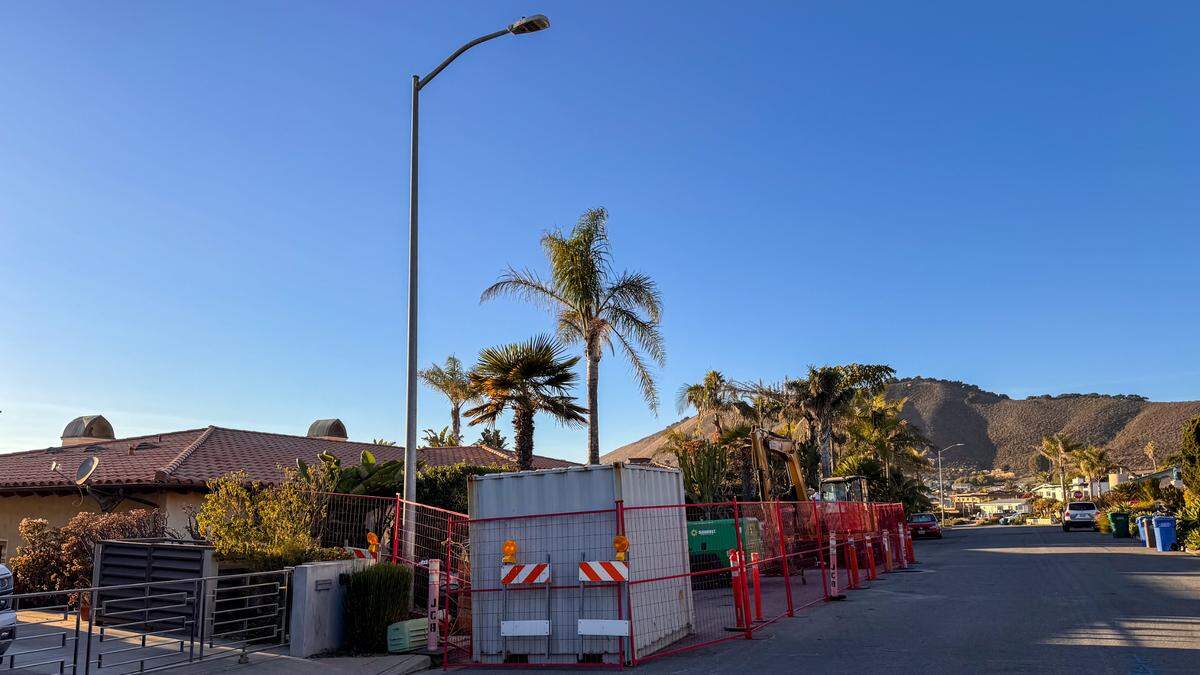
This week, two large cranes were spotted along the Shell Beach coastline moving construction materials and equipment from the blufftop streets to the beach below.
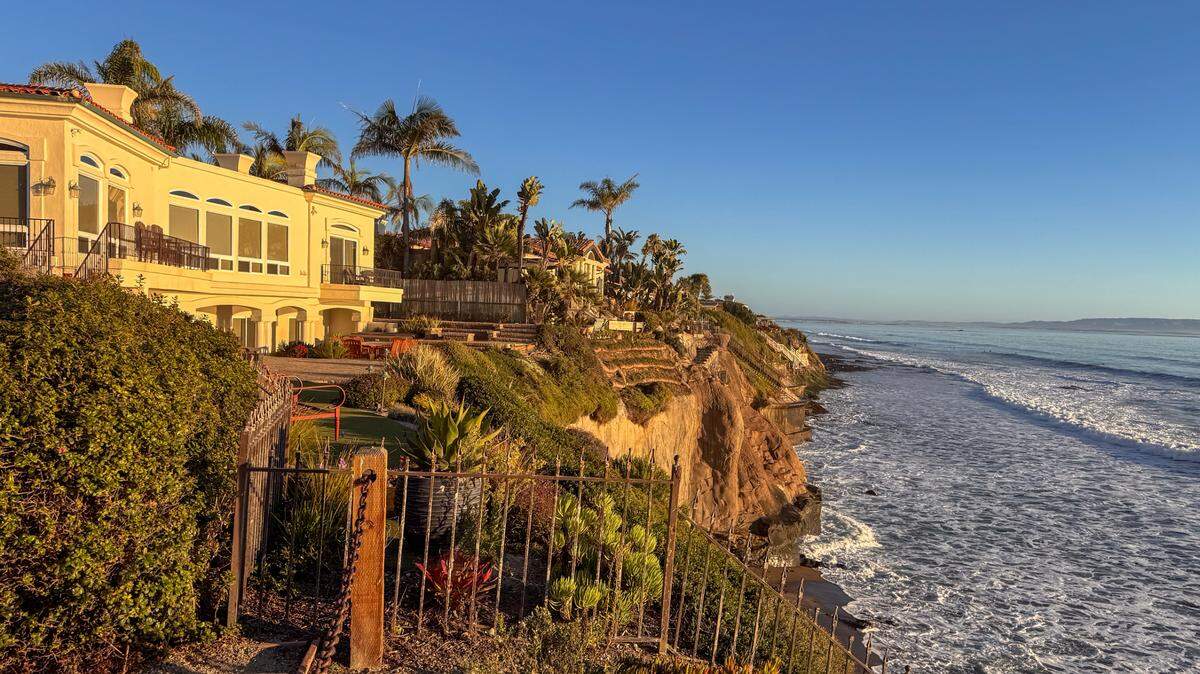
The building sites — at 195 Naomi Ave. and 117 Indio Drive — are located on the west side of their streets and feature backyards that extend to the edge of Shell Beach’s bluffs, where the subject of erosion and whether or not to armor and preserve the existing coastline has become a hot-button topic.
In recent years, some Shell Beach homeowners have said the Coastal Commission increasingly prefers the policy of managed retreat when residents ask to save their properties by building or updating seawalls.
While not the official stated policy of the commission, managed retreat — which involves moving homes and other infrastructure inland away from the eroding bluffs and allowing erosion to naturally occur — is a difficult proposition for many blufftop Shell Beach homeowners who have no space left to move their houses.
As a result of the commission’s increasing preference for managed retreat, building or repairing existing seawalls along Shell Beach’s fragile bluffs have become a rare occurrence, with few walls gaining the commission’s approval. Those that do typically have to check a laundry list of requirements — most importantly, that the structure was built prior to the Jan. 1, 1977, implementation of the Coastal Act.
The 195 Naomi Ave. residence, which was built in 1965, checks that box. For the 117 Indio Drive property, it’s a different story.
As part of its Reality Check series, The Tribune took a look at how getting coastal armoring approved by the Coastal Commission works for these kinds of blufftop properties.
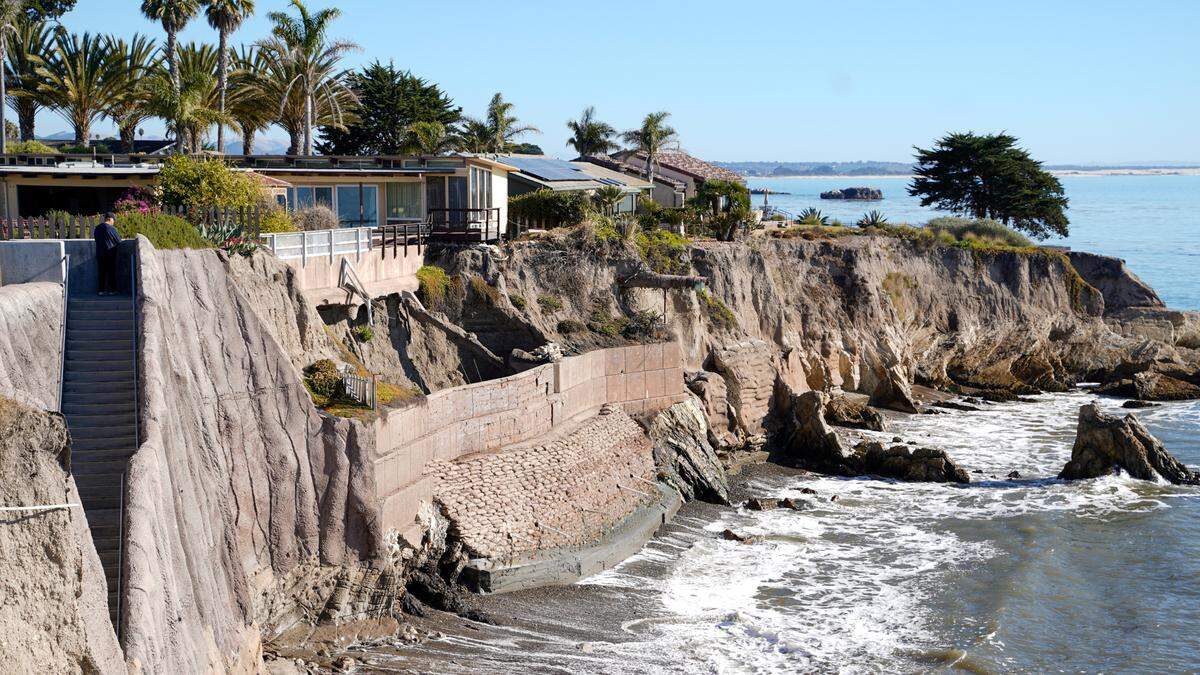
Shell Beach seawall projects lack Coastal Commission approval
Since learning of the construction efforts this week, the Coastal Commission’s Enforcement Division opened an investigation into the construction work at 117 Indio Drive, which never gained a Coastal Development Permit from the commission, public information officer Joshua Smith told The Tribune. Smith said the Enforcement Division is also investigating the 195 Naomi Ave. project for similar reasons.
The 195 Naomi Ave. property was approved for an emergency coastal development permit as of Nov. 13, along with a restricted use notice advising against overnight stays due to bluff-side erosion of the home’s foundation.
Coastal Commission records show that the Indio Drive applicant, James Gentilcore, first attempted to get a coastal development permit from the commission in December 2021 after being approved by the Pismo Beach Planning Commission in September 2021.
In the Sept. 28, 2021, Planning Commission staff report, staff found that the project was necessary to protect 117 Indio Drive and neighboring seawalls and residences at 113 and 121 Indio Drive due to “accelerated bluff failure due to a combination of existing subsurface springs, unique geologic conditions, inadequate drainage in the rear yard, and focused wave energy” that caused more erosion than expected.
Gentilcore sought to build a new 120-foot-long, 40-foot-high textured and colored shotcrete seawall with 23 drilled tiebacks located on the bluff face, bluff toe and beach to protect the 117 Indio Drive residence, which was constructed in 2003, according to the Coastal Commission staff report. Shotcrete is a sprayable concrete used to create smooth surfaces and fill gaps.
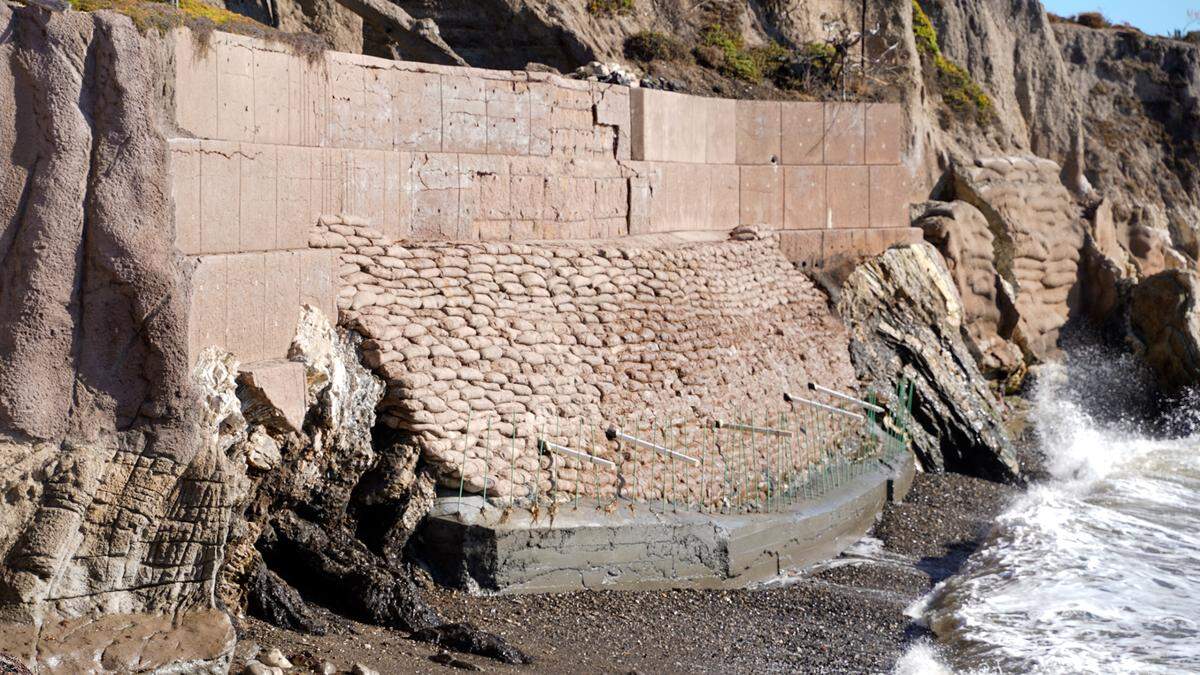
Gentilcore’s proposal was rejected by the Coastal Commission in December 2021 due to a “substantial issue” with the application.
“The appeal contends that that the city-approved seawall would protect a structure that is not allowed such protection under the LCP (Local Coastal Plan) and that, even if it were allowable, does not appear to have been appropriately evaluated in terms of alternatives, impacts and mitigations, all of which could lead to adverse, unmitigated and not allowable coastal resource impacts,” the meeting staff report found.
Smith said that while the commission told Gentilcore to come back to them in a de novo hearing — meaning to start from the beginning while incorporating staff feedback — a new hearing to get the needed permit never happened.
“In this particular case, I don’t know exactly what happened between the Coastal Commission and the applicant, but they ended up withdrawing before it could go to the de novo hearing, and so they don’t have a Coastal Development Permit for this project,” Smith said.
Gentilcore received an emergency coastal development permit from the city of Pismo Beach effective Feb. 1, 2024 — which entitles him to complete emergency repairs to the seawall — along with a subsequent time extension to March 12, 2025, to complete the repairs, but the property never received a coastal development permit from the Coastal Commission, according to a letter from Coastal Commission planner Sarah MacGregor to Gentilcore’s attorney Stanley Lamport from Jan. 10.
In no uncertain terms, the commission directed Gentilcore to ditch his seawall plan and look at moving the home instead.
“Moving forward, and in light of the dangers to development at this site — including that armoring does not appear to be allowed in the future — that were fully known to your client when they originally developed the site in 2003, we advise that your client pursue courses of action associated with this site that do not include shoreline armoring, and that your client start planning for next steps that might be necessary in light of such dangers at this location, including potential removal of any threatened development before it falls to the beach below and creates public hazards,” the letter read.
Nevertheless, work began at the site this month.
Coastal Commission investigating both properties
In an email, Pismo Beach assistant city manager Mike James said the city issued the emergency permits to get work done now, which will require the applicants to submit a regular coastal development permit within 30 days of the completion of the work.
James said these emergency permits aren’t subject to appeal either to or by the Coastal Commission, but the permits that the applicants need to get at the conclusion of emergency work are.
According to the emergency permit posted at both properties, the applicants must apply for coastal development permits at the conclusion of work, and the public will have an opportunity to comment on the projects at a future planning commission hearing. That Planning Commission decision may be subject to appeal by the Coastal Commission.
“Once the regular CDP application for each project is submitted, the city will review the application and schedule them for Planning Commission (PC) review,” James said. “If PC approves the CDPs, they may be appealable either by the public or Coastal Commission.“
James added that if the emergency permit work is appealed to or by the Coastal Commission, the improvements and repairs made under the permit may need to be removed entirely.
“The regular CDP process requires review and approval by city’s Planning Commission, which can be appealed to/or by the Coastal Commission,” James said. “The city informs the applicants of this process, and they are made aware that any improvements installed under the ECDP may be required to be removed based on the outcome of the appeal process.”
Both properties’ owners declined to speak with The Tribune or comment on their repair work.