From triumph to tragedy: Tribune journalists share their most memorable stories of 2022
Back in April, Tribune reporter Sara Kassabian was pondering ways to improve our diversity coverage when she came up with an innovative idea.
What if instead of covering stories of underrepresented communities in response to events and quickly moving on, we engaged with some of the key newsmakers more deeply and let them tell and own their stories more deeply?
Sara proposed launching a series we now call The Tribune’s Diversity Storytelling Project, and it began with recent Paso Robles High School graduate Ava Hughes, an LGBTQ student who was one of the leaders pushing back against bigotry after an incident in which some students tried to flush a Pride flag down the toilet.
Sara reached out to Ava and asked if over the course of about four weeks, she would be willing to keep a journal about her feelings in the wake of the incident and any other discrimination she might experience afterwards.
Ava agreed, and the result was a highly personal and insightful pair of stories that shared just how it felt for an LGBTQ teen to grow up in this community, overcome discrimination and become a voice for change.
Based on the success of that first example, we are now looking for more diversity storytellers across a wide range people, and we will bring you their accounts in the coming year. If you have an idea for a nominee or would like to participate, email Sara at skassabian@thetribunenews.com.
This project was just one of many that stood out in a year full of consequential news around San Luis Obispo County, and Tribune reporters have been there every step of the way to capture the stories and ensure our many communities are well-informed about developments that impact their lives.
We have followed each twist and turn as the conservative majority on the county Board of Supervisors redrew the district map in a brazen overhaul that was clearly gerrymandering, only to then lose races where they had the edge in registration.
We’ve closely tracked the rapidly changing energy industry in our county over an eventful year that saw Diablo Canyon nuclear power plant suddenly experience newfound life while efforts to build vast wind farms off our coast take major steps toward becoming a reality.
We’ve told the stories of those who struggle to just get by in one of the most expensive places to live in the country, from a homeless jazz singer who finally found housing to evicted families who were forced to live for weeks in hotels because they couldn’t find anywhere affordable to rent.
And we’ve committed to revealing the vast systemic failures that plague mental health care in SLO County, leaving our most vulnerable residents at near constant risk, including one woman who was released from care early by mistake and picked up by a sex offender.
Each of these stories has been told by dedicated journalists who truly believe in their craft and its value to our community and democracy. In their hearts, they want to tell stories that right wrongs and bring about change. They are committed to the truth, whatever it may be.
As always, we could not do this work without your support, especially from our subscribers, who know that accountable, professional journalism does not come free.
Your support allowed us to add a full-time reporter covering housing affordability and cost of living issues in SLO County. And in the coming year, we’re looking to grow again, adding more reporting resources. If you’d like to help boost these efforts, you can make a tax-deductible donation to our Local Journalism Impact Fund at givebutter.com/WfodRG.
Those examples above are only a sliver of the work each Tribune journalist tackled this year. Some stand out more than others. Here’s a look at some of their favorites.
— Tribune editor Joe Tarica
Small farmers vs. Big Carrot
There were a few things that hit me when I first stepped foot in the sparsely populated Cuyama Valley to report on its groundwater issues in June.
For one, you could feel how dry the area is — every footstep was crunchy and produced little clouds of dust; each breath in took the saliva right out of my mouth.
Second was the constant noise: hissing water sprinklers and loud groundwater pumps that reached far below the Earth’s surface for centuries-old water to feed thirsty crops.

Few communities have come together to figure out how to fix their groundwater issues like Cuyama — pretty much everyone showed up to the community meetings to draw up a plan to rescue the water beneath them.
Hearing residents and local farmers’ voices crack as they told me how betrayed they felt by the giant commercial carrot growers who are suing everyone in the community over groundwater rights was difficult to say the least.
It brought into sharp focus for me how large corporations can use their money and power to sway the future use of a resource as precious and essential as water.
— Environment and education reporter Mackenzie Shuman
Kristin Smart murder trial
The Kristin Smart murder trial was one of the biggest — if not the biggest — criminal trials in recent SLO County history.
When court documents were unjustly sealed and the public was being shut out of court proceedings, The Tribune led the way to make it right, assembling a coalition of media partners to file a court motion for the documents’ release.
Through those records, we were able to bring important context to the public that would not have been shared otherwise.
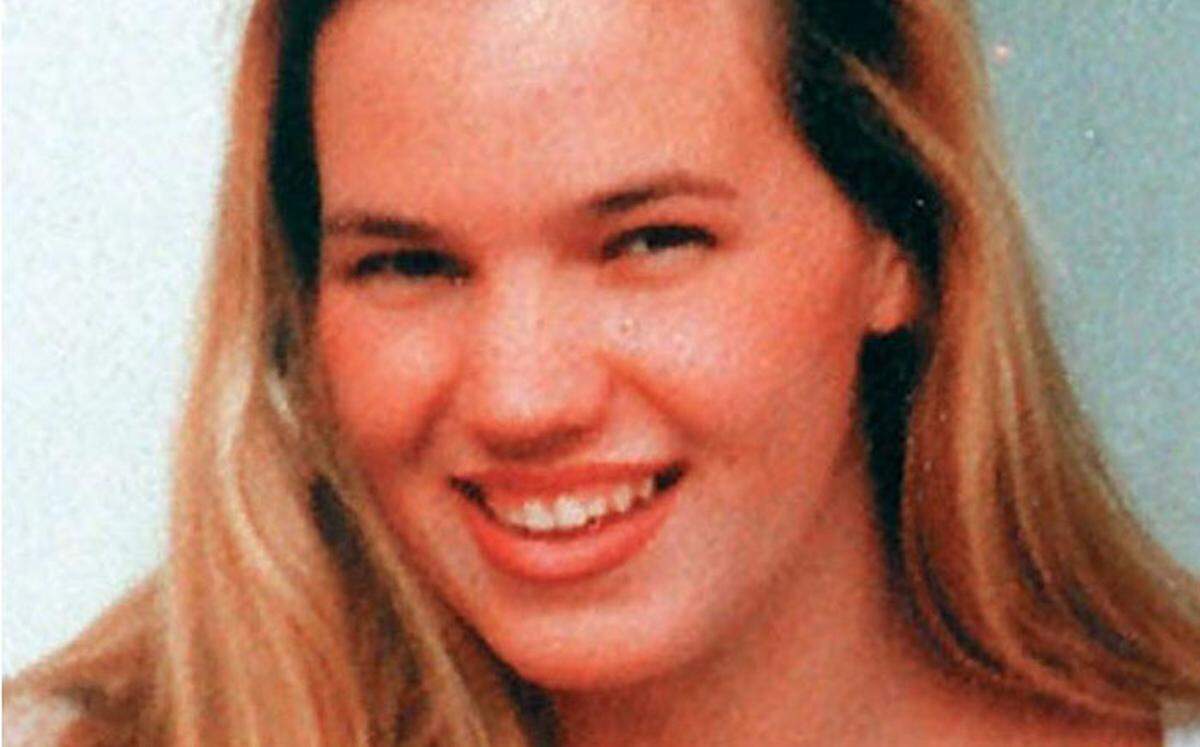
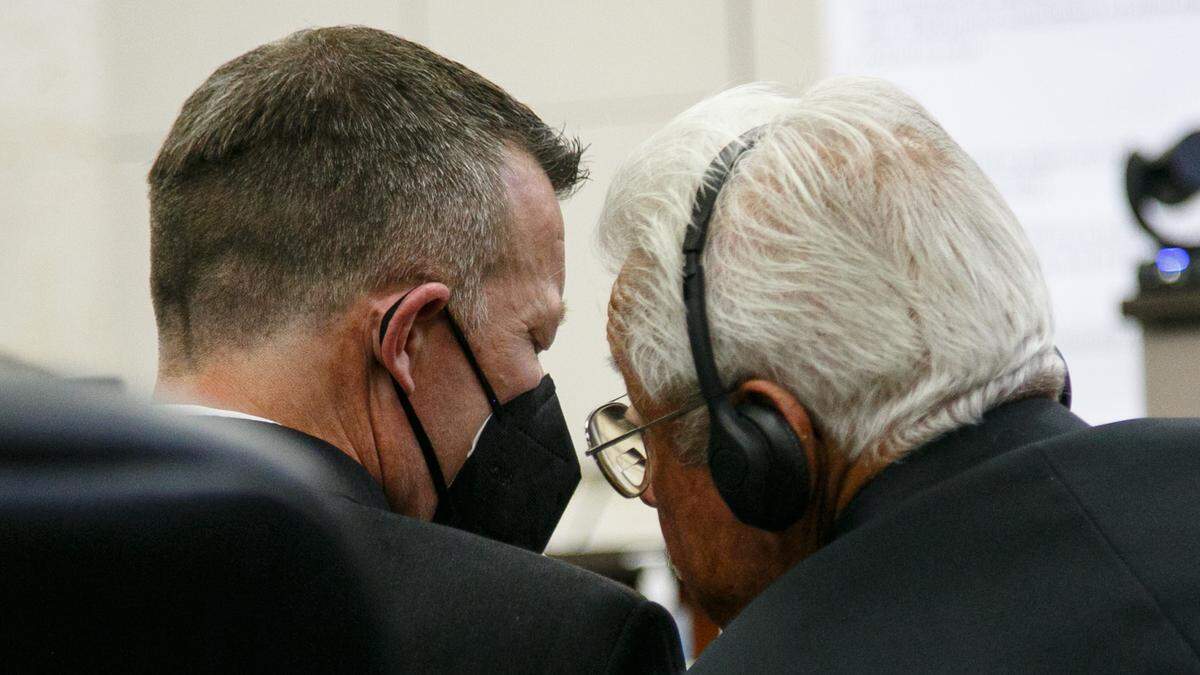
The Tribune was at the trial nearly every day, sourcing, writing, photographing and reporting. We were the only news organization to talk to jurors, and were the first to break the verdict.
Then on verdict day, we reported 10 stories across our team to ensure we delivered as in-depth of coverage as possible. The Tribune began covering the story in 1996, and never stopped.
— Courts and crime reporter Chloe Jones
Cambria family lives out of a motel
In August, a Cambria family had been living for months in a motel room that was costing them more than $5,200 a month, and were being asked to leave.
It was the only housing that Diana Suhovich, Thomas Oxley and their four kids (ranging in age from 7 to 18) could find in the small North Coast town where finding reasonable rental housing is akin to finding gold in a mud puddle.
They’d been living for a dozen years in a Cambria house that was then sold “out from under them.” That common situation in this area, which we have covered in depth this year, magnifies the lack of affordable housing countywide.
The family is still living in a costly motel, and the dad is awaiting for recertification to go back to his new job. They are negotiating to buy an RV in which the family can live, but that deal is on hold until he goes back to work.
Their situation touched my heart from the get-go, and my story prompted many people from all over the state and U.S. to donate to the family’s GoFundMe.
That money and assistance helped feed the family and keep a roof over their head, no matter how tight and pricey their living quarters were and still are.
The capper? The mom was hired for a new, better-paying job that required medical-office management skills and degrees that she had, but had never been able to use, and even months later, generous Cambrians and others continue donating money and food to help keep the family afloat.
— North Coast reporter Kathe Tanner
Voters reject far-right school board members in Paso Robles
School board meetings became the targets of the far right during the height of the COVID pandemic, when many angry parents demanded an end to restrictions like distance learning and masking.
The anger didn’t dissipate when the restrictions were lifted.
Critical race theory and rights of LGBTQ+ students became new targets, especially in the Paso Robles Unified School District.
The school board, which had already passed a ban on teaching critical race theory in 2021 — even though the subject was never part of the curriculum — contemplated other reactionary moves, such as removing specific protections for transgender students from its anti-discrimination policy and adopting an unnecessary resolution protecting gender-specific labels like “Mr.” and “Mrs.”
In November, several far-right candidates ran for school board seats throughout the county. Some made no secret of their extreme views.
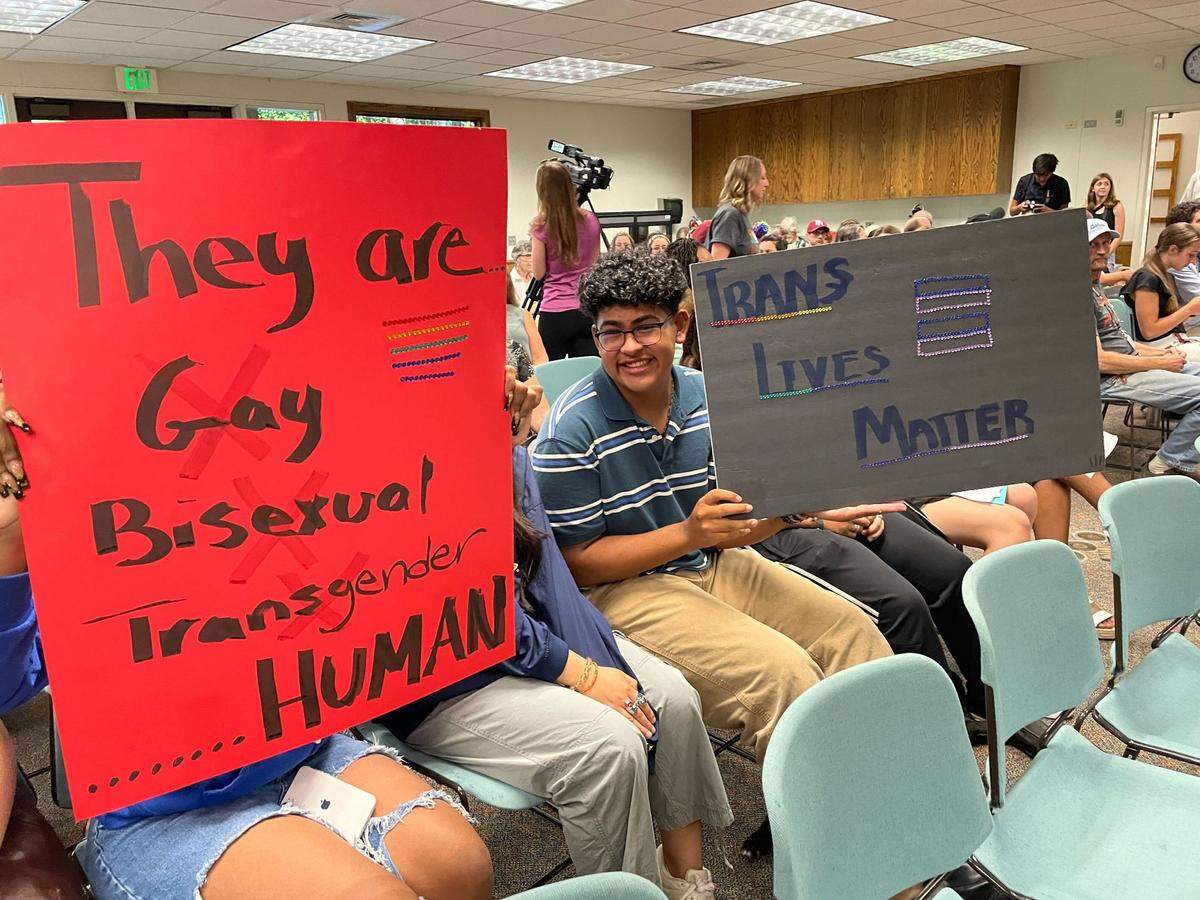
For example, Paso Robles trustee, Frank Triggs, who was appointed to the board and then ran for election, claimed being transgender is an “imaginary condition.”
Tribune reporter Mackenzie Shuman did an excellent job shining a light on the situation, and The Tribune Editorial Board followed up by declaring certain candidates unfit for office.
The results of the election were heartening, especially in Paso Robles. Triggs, along with another far-right board member, were voted out of office.
On top of that, Paso Robles voters circulated a petition to have another appointed member, Kenney Enney, kicked off the board due to his divisive views. That seat will be filled by a special election.
— Opinion editor Stephanie Finucane
Reidly Varner, Ashlynn Miles and SLO County’s mental health crisis
While reporting about the tragic death of Atascadero teenager Reidly Varner, it became clear that the story was about more than the scourge of fentanyl poisoning in this small community.
Varner repeatedly tried to get help for her acute anxiety and substance use disorder but had to leave the county to get access to any inpatient services. In the end, even that wasn’t enough.
The gaps in mental healthcare services in SLO County emerged again in the story of unhoused Paso Robles woman Ashlynn Miles, who’s struggled with severe schizophrenia since her teenage years, was released early from a mental health hold, and then was picked up by a sex offender and taken across state lines in Arizona.
Miles’ mother Kimberlee Booth shared her daughter’s medical records with me, which showed a highly vulnerable woman who has cycled in and out of mental health hospitals and rehabilitation for substance use disorder. In three years, Miles was hospitalized more than 50 times in three different states.
Miles’ story showed how the county-run and state-run mental health system fails its most vulnerable victims time and again. In order to get long-term mental healthcare for her schizophrenia, Miles had to be taken by a sex offender to another state.’
Reporting the stories of Varner and Miles showed how the gaps in the mental health system in California and in SLO County leaves people with severe mental illness vulnerable and without long-term options.
As a health reporter, I’m always looking for patient stories that point to larger, more complex issues with the healthcare system.
Bringing the stories of these young women’s lives to Tribune readers felt vital to illustrating gaps in the healthcare system and how those gaps continue to impact the most vulnerable.
As a journalist both of these stories were extremely emotional to report but benefited from the trust and transparency that the two mothers gave to me. Their hope was their daughters’ stories would effect local change and help other families grappling with similar experiences.
Without local journalism, Varner and Miles’ stories would be untold and the systemic failures of mental healthcare in this community would be unexamined.
— Health reporter Sara Kassabian