Atascadero teen needed help, but there was nowhere in SLO County to get it
READ MORE
Fentanyl’s toll
The Tribune’s ongoing series on the impact of opioids in SLO County
Expand All
Editor’s note: This story is a part of an ongoing series examining the mental health care crisis in San Luis Obispo County.
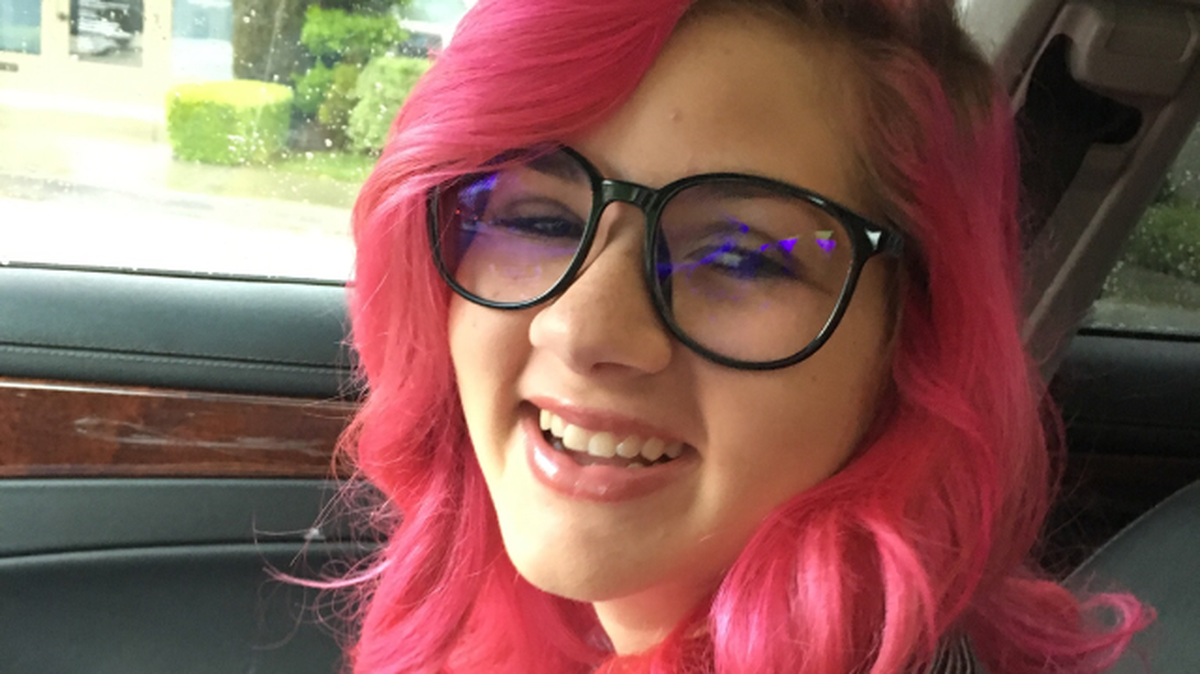
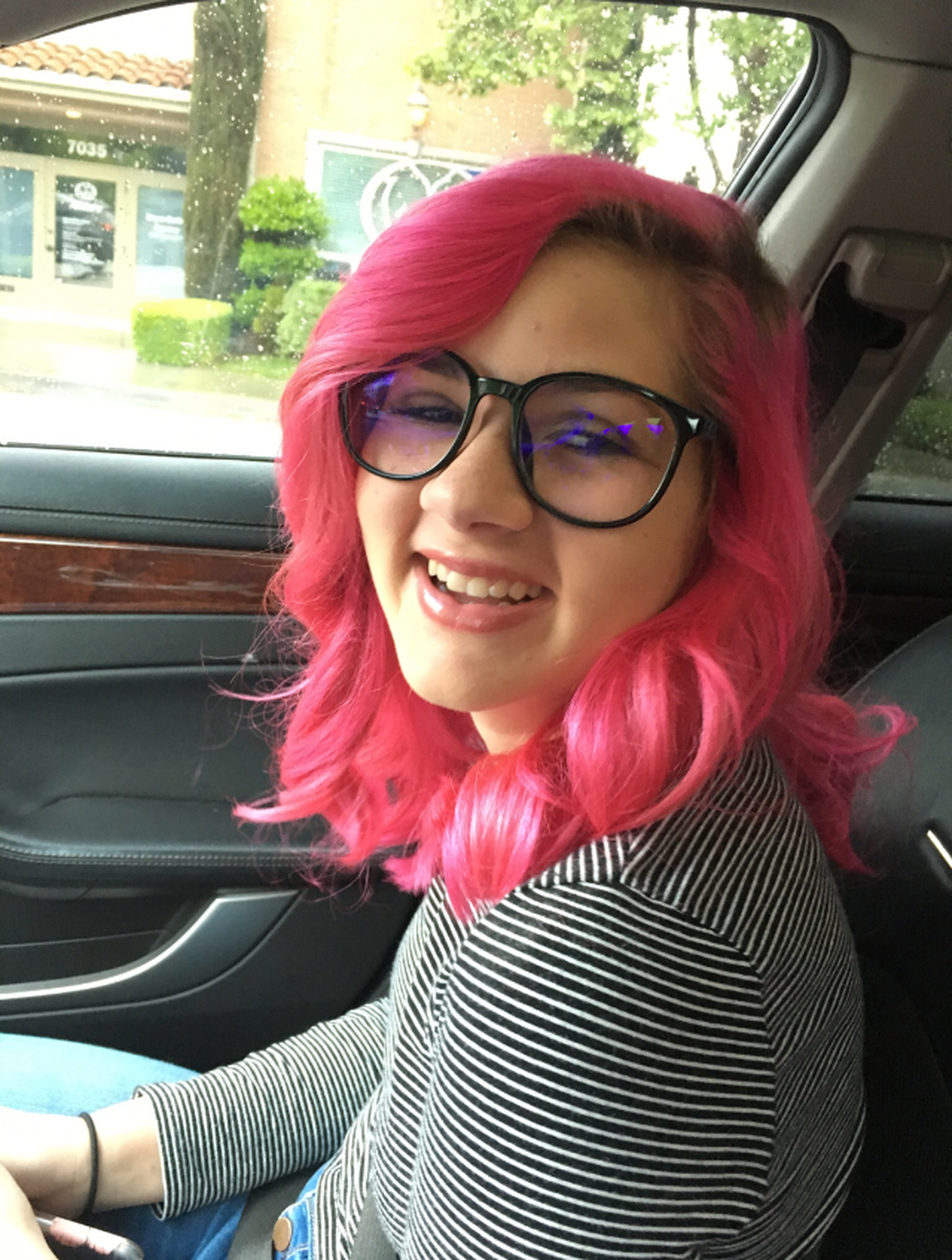
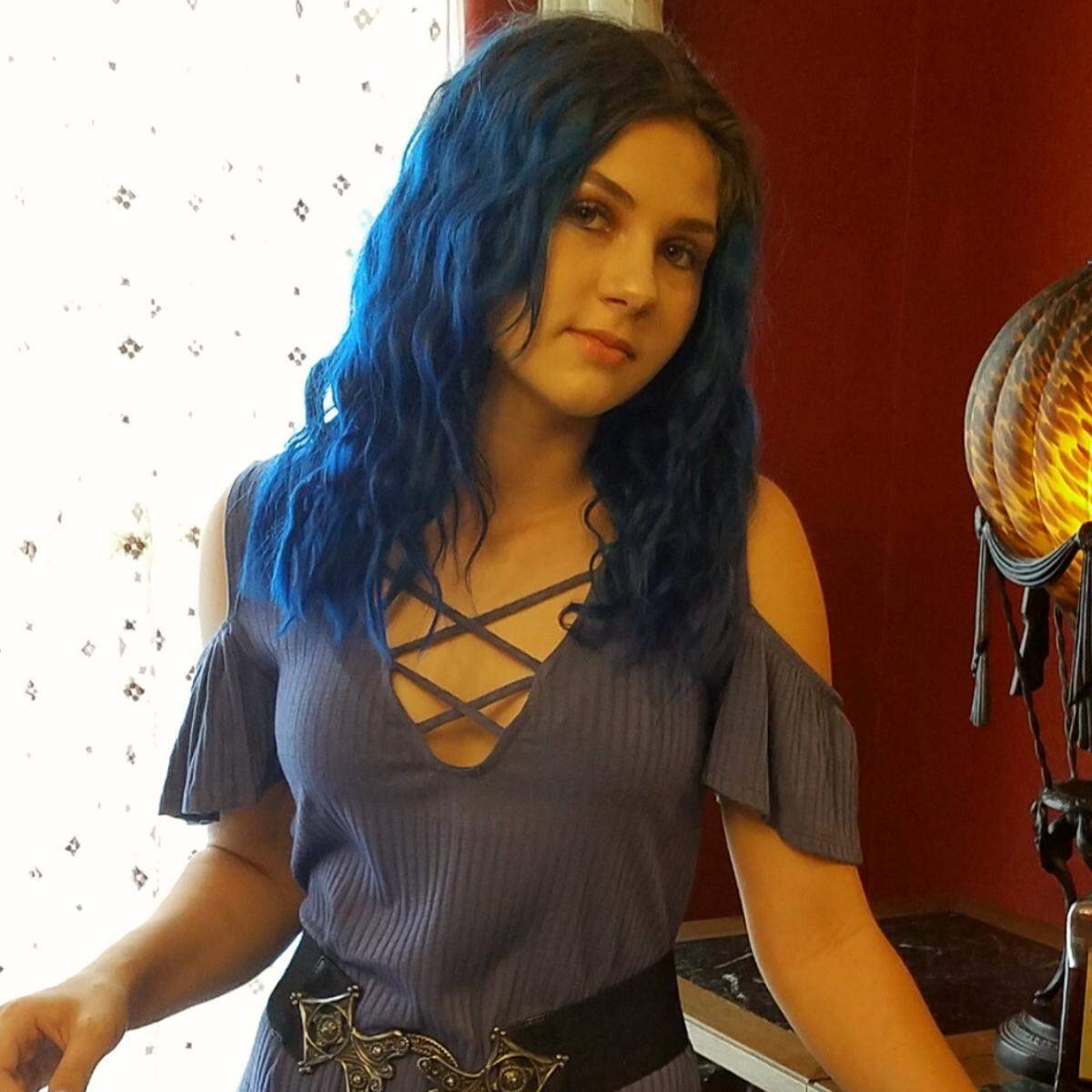
In the 10 months before she died from fentanyl poisoning, Reidly Varner traveled twice outside San Luis Obispo County for acute mental health care she couldn’t get here.
She was one of nearly 200 young people who had to leave home that year to find critical help.
But it wasn’t enough.
The Atascadero teen died on Feb. 16, 2021, after she locked the door to her bedroom and took a fentanyl pill she bought on Snapchat from a dealer in Santa Maria.
While the coroner couldn’t determine whether her death was accidental or intentional, one year later, it continues to leave a gaping hole in the lives of those who were closest to her, while also serving as a stark example of the lack of services available to teens in crisis on the Central Coast.
“After Reidly died, I was really lonely,” said Dani Bloomer, 18, who met Reidly when they were in middle school at Atascadero Fine Arts Academy. “And I still kind of am.”
Bloomer said it became clear that Reidly — who struggled with anxiety, depression and substance use disorder — was experiencing more severe and dangerous symptoms. She tried to keep her best friend safe.
“In those last few months, I always tried to make sure that she knew that any time of the day or night, anywhere, I don’t care how far it is or how late it was,” Bloomer said. “If she needed me there, then I would go. “
Reidly was hospitalized twice in the year before her death — and both times was sent hundreds of miles from home.
“I thought I was doing everything ... between rehabs and therapy and psychiatrist,” said Reidly’s mother, Candice Varner. “I was like — we’re gonna get through this. You’ll be fine. It sucks to be a teenager. I know.”
Ultimately, if there is anything that could have saved her life, it would have been more access to intensive inpatient psychiatric services or drug rehabilitation locally, Varner said.
“We need a facility here on the Central Coast for teens that is inpatient,” Varner said.
SLO County has no inpatient psychiatric facility for teens
At the end of January 2021, it became clear to Varner that something was wrong with Reidly.
“She had done something two or three weeks before her death to where she was freaking out,” Varner said. “She was not herself. She was psychotic and suicidal, and it scared the crap out of us. So I had her committed.”
Reidly was admitted to the emergency room at Sierra Vista Regional Medical Center in San Luis Obispo for two days while they searched for a bed at a psychiatric hospital.
“Anytime we’re hospitalizing a minor, it’s going to include a trip out of the county for several days at a minimum, and that trip starts at a local emergency room,” San Luis Obispo County youth triage crisis specialist Jason Hooson told The Tribune.
Reidly told mental health officials that she had researched medications that would allow her to take her own life, according to her autopsy report.
Because of that, she was ranked as “very high risk” on the Columbia-Suicide Severity Ranking Scale, according to her autopsy report, which is used by mental health professionals to determine the level of risk for suicide for minors, Hooson said.
SLO County has no inpatient psychiatric beds for teens, so Reidly was sent to a mental health facility in Bakersfield.
There, the doctor prescribed her with a new antidepressant, and after four days, she was sent home.
“A few weeks later, she was dead,” Varner said.
Reidly’s stay at the psychiatric hospital wasn’t the first time the family sought intensive mental health support for the teenager.
About 10 months earlier, by the time the COVID-19 pandemic shut down the local school system in March 2020, Reidly had just turned 16 and her substance use disorder escalated to dependency on benzodiazepines — a class of anti-anxiety drugs like Xanax — and experimentation with harder illegal drugs like heroin and methamphetamine.
Reidly told her mom that she was scared.
Her family took her to a facility in Long Beach, which wanted to treat her for roughly 60 days, but the family’s insurance would only pay a small portion of that, Varner said.
Facing an out-of-pocket cost of $1,500 per day, the family picked her up after 15 days.
In the time between her stay at the drug rehabilitation center in Long Beach and her hospitalization in Bakersfield, Reidly attempted to stay away from drugs, Varner said.
“She had been sober and trying,” Varner said. “We brought her home and things were going OK for a while, but she would still go on these little benders.”
Then, she learned Reidly was buying Xanax off the street. Varner said that her prescribed medication was not working and that may have triggered the need for Xanax again.
“It’s not like she would just take one to calm down. She would take five to shut everything off and go to sleep,” she said.
Despite her dependency on anti-anxiety medications, she was on track to graduate high school a year early and had recently started a new job at Walmart.
“I missed the signs that she was using that much,” Varner said.
But she also struggled with boyfriends, friendships and had recently had an abortion, even though she told friends like Dani Bloomer and her mom that she wanted to continue the pregnancy.
Varner said Reidly had pregnancy complications, which is why she needed the abortion in October 2020. The loss of the pregnancy was hard on the teen and may have contributed to her decline, Varner said.
Varner believes that access to intensive psychiatric and drug rehabilitation facilities locally could have made the difference for Reidly.
“There’s no facilities here on the Central Coast for teenagers. Not a one, right?” Varner said.
Families struggle with lack of local services
Reidly’s story is not especially unique in SLO County, which is simply unequipped to handle cases of this nature.
Too often, emergency services respond to calls from people suffering from mental health crises and drug overdoses.
But after that initial triage, the gap of where to go next reveals itself, especially in terms of the lack of inpatient psychiatric beds for teenagers in San Luis Obispo County.
Over the last decade, the number of minor patients who’ve had to leave the county for inpatient psychiatric care has more than doubled, from 77 in 2010 to 199 in 2020, according to the California Department of Health Care Access and Information.
That rate far exceeds the increase among adults, which has grown 45% over that same period. The number of adults who’ve had to leave for such care rose from 404 in 2010 to 585 in 2020, but reached as high as 637 in 2019.
“Right now, when we have a youth who needs to be hospitalized, if we read a 5585, they are waiting in the local hospitals while our team looks for a bed somewhere throughout California,” said Jill Rietjens, division manager for Behavioral Health Youth Services at San Luis Obispo County.
A 5585, similar to the more widely recognized 5150, refers to the state law that permits an involuntary mental health hold for anyone under the age of 18, Rietjens said.
Reidly was placed on a 5585 hold on Jan. 28, 2021, and was judged to be at very high risk for suicide, according to her autopsy report.
“The nearest places that our kids get placed are like Bakersfield, Ventura, but we go as far as Santa Rosa, which, that’s a huge journey for the kids,” Rietjens said. “You’re away from home. It’s scary.”
When Reidly was sent to Bakersfield after indicating a desire to take her own life, the distance was an immediate challenge for the family.
“How are you supposed to do that family outreach, togetherness when they’re that far away?” Reidly’s mother asked.
It’s not just inpatient mental health facilities that are outside the county — drug rehabilitation facilities for children and young adults aren’t found in San Luis Obispo County, either.
“Currently, if somebody needs that intensive residential treatment, we don’t have facilities in our county,” said Jenn Rhoads, coordinator of the San Luis Obispo County Opioid Safety Coalition. “They always have to get sent out of county, which is a challenge because you’re taking a person out of any social support that they might have. You’re moving them.”
That matches the Varner family’s experience. When Reidly needed help with drug rehabilitation, she was sent to a private Long Beach facility that helped youth.
Reidly was admitted to the Long Beach facility on March 17, 2020 — the first day of the COVID-19 quarantine. Due to COVID restrictions, the family was not allowed to visit Reidly or participate in family repair counseling.
“We weren’t allowed to go down and do any of the normal family repair. Anything,” Varner said.
Planned Templeton hospital could help teens with mental illness
The lack of mental health care in San Luis Obispo County has been well-documented.
Despite high-profile plans to build a psychiatric hospital in Templeton that would treat people of all ages, including teenagers suffering from mental health crises, the land sits vacant today.
The project was spearheaded around 2016 by retired ophthalmologist and medical property developer, Dr. Harvey Billig and his wife, Melanie Billig, a former mayor of San Luis Obispo.
Some community members protested the project, but the County Board of Supervisors approved plans to build the Templeton hospital in March 2016 — citing the acute need for mental health services in the area.
However, six years later, construction still hasn’t started on the hospital.
In a recent conversation with The Tribune, Harvey Billig said the project is ongoing but progress has been slow due to COVID-19.
“The need only gets more crucial,” Billig said. “Really, if this doesn’t happen, things are going to only get worse.”
Billig said that, aside from supply chain issues related to the COVID-19 pandemic, he has been searching for a company to run the hospital.
In January 2016, Billig told The Tribune that North Carolina-based company Vizion Health LLC was selected to run the hospital.
When asked about Vizion Health, Billig said that they are among the various hospital operators the landowners are considering.
The San Luis Obispo County Behavioral Health Department is not involved with plans to develop the Templeton psychiatric hospital, but officials said having a psychiatric hospital here could help Central Coast teens who struggle with severe mental illness get support closer to home.
“I think we need to start with increasing the number of psychiatric hospital beds for youth,” Rietjens said.
Until that can be accomplished, communities need to find alternative ways to help youth experiencing mental health crises, Rietjens said.
SLO County wants to expand mental health services for youth in crisis
The County Behavioral Health Department does offer some mental health services for youth.
To start, the county offers treatment for youth using Medi-Cal on an outpatient basis at three locations: Arroyo Grande, Atascadero and San Luis Obispo.
In the past, the county was able to house youth and adolescents placed under 5585 holds at the state-regulated, county-run Psychiatric Health Facility (PHF) — commonly referred to as the “Puff.”
Since some of the people placed at the PHF come directly from the County Jail, however, the 16-bed facility no longer accepts children and adolescents placed under a 5585 hold.
Admission to the PHF also is mostly limited to Medi-Cal patients, the state’s public insurance.
That gap in inpatient youth psychiatric services caused the Behavioral Health Department to search for alternatives to help children and teens in crisis.
In 2015, the county worked with the Sierra Mental Wellness Group to establish a Mental Health Evaluation Team (MHET) to provide 24/7 mobile crisis services to people experiencing a mental health emergency, according to a county report.
Calls are forwarded from responders to the MHET team Monday through Friday, 8 a.m. to 5 p.m. through the Psychiatric Crisis Dispatch Center in San Luis Obispo, which was established from state funding and is sustained today using grant funding from 2021, said Frank Warren, division manager for prevention and treatment services at the Behavioral Health Department.
The dispatch center allows first responders, schools and clinicians to call for emergency mental health services directly without using 911, which adds law enforcement to the triage process and slows the time from crisis to intervention.
The goal of the dispatch center is to provide quicker intervention for individuals who need it most and ideally will reduce the reliance on involuntary psychiatric holds and hospitalizations, Warren said.
Boosting these resources is critical because the data shows youth and young adults are disproportionately impacted by mental health crises locally.
In 2020 and 2021 about 57% of MHET emergency calls were in response to people under 26 years old, Warren said.
The Mental Health Evaluation Team recently expanded to include two grant-funded youth crisis teams that work primarily with K-12 children and people under the age of 21 that come into local emergency rooms, said Jason Hooson, who works on the youth crisis team.
Each youth crisis team typically includes one clinician or psychiatric technician and one peer support staffer, meaning someone with a similar lived experience, Warren said. The county plans to add a third youth crisis team by July 2022.
The youth crisis teams also help patients connect with outpatient care resources, through the county or private insurance, after they are evaluated, admitted to a psychiatric hospital and discharged, or evaluated and discharged, Hooson said.
Sometimes the youth crisis team will see the same patient more than once. By providing continuity of care, the youth crisis team can establish some rapport with the patient.
“It’s not a stranger. It’s a familiar face,” Hooson said. “I think that goes a long way with being able to help them to feel comfortable in an obviously very uncomfortable time.”
As an indication of the youth crisis teams’ value, the contract through MHET was recently extended.
Reidly’s case is indicative of another trend. Of the countywide hospital calls for youth in crisis, 36% were from North County, Warren said.
Recognizing the urgency to fill a gap in mental health services for North County youth, the county is finalizing a contract to establish a Young Adult Crisis Care Mobile Unit to provide on-site, emergency care for youth and young adults in that region, Warren said.
The mobile unit is different from the other youth crisis teams that are associated with the MHET program.
The roughly $1 million grant would support the purchase of and staffing for a crisis care vehicle for four years.
The funding will also cover the additional psychiatric dispatch personnel to ensure the phones are staffed 24/7.
The crisis care mobile unit focuses on the university-aged population as well as the underserved North County youth population, Warren said.
Local youth in crisis could also benefit from services like children’s crisis centers, which are a step down from inpatient psychiatric hospitalization, said Rietjens of the county’s Behavioral Health Youth Services.
One example is a crisis stabilization unit, or CSU. A CSU helps people experiencing a mental health crisis but who do not qualify for a 5150 or 5585 hold at a psychiatric hospital, which would require the patient be hospitalized involuntarily for at least 72 hours, Rietjens said.
Unlike a psychiatric hospital, the crisis stabilization unit is in an unlocked facility located in the county where the patient can stay for up to 24 hours.
“It’s a short-term intervention with the hope of stabilizing an individual and then getting services lined up to support them when they return home,” Rietjens said.
SLO County has a crisis stabilization unit for people 18 and older, but not for youth and young adults.
Warren said the county wants to establish a crisis stabilization unit specifically targeted for youth, and is planning to apply for grant funding in late summer to build a new facility.
The impact of fentanyl poisoning reverberates throughout the community
The death of Reidly and so many other San Luis Obispo County community members from fentanyl poisoning has left loved ones reeling with grief.
Reidly was one of six youth aged 18 and younger who died from fentanyl poisoning in 2021, according to preliminary data from the San Luis Obispo County Coroner’s Office.
Fentanyl was present in roughly 75 drug-related deaths reported in the county in 2021, up from about 34 fentanyl-related deaths in 2020, according to Sgt. John McDaniel with the San Luis Obispo County Coroner’s Office.
The Tribune is still awaiting the final numbers for drug-related deaths in the county in 2021.
The prevalence of fentanyl today means some families are grieving multiple losses from the drug.
Last year in particular was a challenging one for Reidly’s childhood friend, Reign, who asked to be identified by her middle name. Just three months after Reidly’s death, Reign’s biological father also died from fentanyl poisoning after a long struggle with addiction.
During an interview with The Tribune, Reign held a necklace that contains a bit of Reidly’s ashes and said she tries her best not to think about the fact that both her father and Reidly are gone.
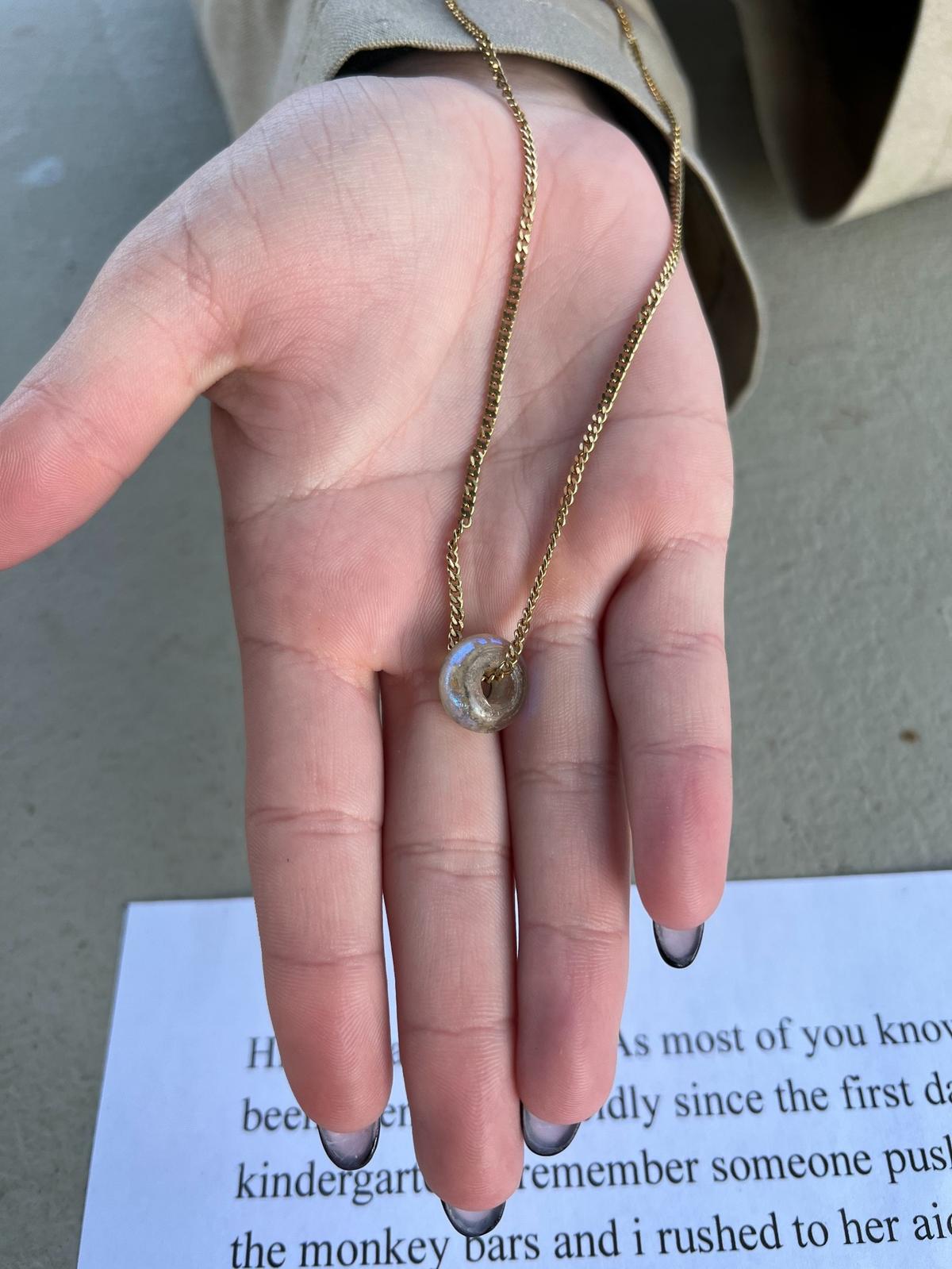
“I just say to myself, ‘Oh, it’s like when you were little. He’s just not here. He’s not in your life anymore,’” Reign said. “Like Reidly, I also try to say, ‘Oh, she’s just doing her own thing, we’re not really talking anymore.’”
But that only lasts so far.
Sometimes, the grief is inescapable, and she holds her father’s ashes in one hand, Reidly’s in the other and lets herself cry in bed — “because I miss them,” she said.
Dani Bloomer said for months after Reidly died, she couldn’t do schoolwork, couldn’t leave the house, couldn’t draw.
Today, she writes letters to Reidly about “stupid stuff” that happens throughout the day, like a book she’s reading that Reidly would hate, silly things her dog did and, sometimes, about her accomplishments.
“She wanted me to do so much that now I have (done),” Bloomer said. “Sometimes I just wish I could see her or talk to her again, and tell her, ‘Look at what I can do now.’”
One year removed from Reidly’s death, Violet Williams and some of her other friends still come over to visit Candice Varner.
They’ll sit in Reidly’s room, on the bed where Candice found her, and reminisce about their lost daughter and friend, Varner said.
On Reidly’s birthday, Jan. 16, the friends brought over a coffee cake. It was Reidly’s favorite. They talk about their boyfriends, their jobs and their plans for the future, she said.
“I’m just so happy for them but so sad for myself that my kid doesn’t get to continue on doing that stuff,” Varner said.
Instead, Varner wants to try to live for her.
Someday, she said, she will bring Reidly’s ashes to the Eiffel Tower in Paris and take them to see the ball drop in Times Square on New Year’s Eve.
“She was an amazing, troubled person trying to work through it. The impact on my life is … it’s changed me forever. I will never be the same,” Varner said. “ I don’t know if I will ever find happiness again without her.”
If you are in crisis, please call the Central Coast Hotline at 800-783-0607. You may also call the National Suicide Prevention Lifeline at 800-273-8255 or text HELLO to 741-741.
This story was originally published April 4, 2022 at 5:00 AM.