
Is homelessness in SLO getting worse? Here’s what community members, officials say
At The Circle, a hub at the head of the Bob Jones City to the Sea Bike Trail in San Luis Obispo where unhoused people frequently gather, 48-year-old Chad Lamb talks about how he became homeless.
“My dad abused me from age 4 to 17, which explains a lot about why I am out here,” the Alberta, Canada, native said, his head down as tears formed from his eyes. “He was a drunk.”
A breakup and loss of his Los Osos home environment led Lamb to the streets several years ago.
Lamb also has a history of using drugs. In fact, he was nearly killed by a fentanyl overdose a couple of weeks ago; a group of friends used the medication naloxone, also known as Narcan, to save his life.
As community conversations on homelessness have risen to the forefront at San Luis Obispo City Council meetings and other forums, leaders and members of the local homeless community say the number of unhoused people living on the streets appears to be rising. They’re also more visible.
“We have many more (unsheltered residents) now than we did five years ago,” said Carley Creath, who lived on the streets until 2015 and now stays in an RV on a friend’s property while volunteering with the nonprofit organization Hope’s Village of SLO. “There’s just more people struggling. Where are they going to get work? Where are they going to take a shower to get a job? You need to take a shower every day to look presentable as a server.”
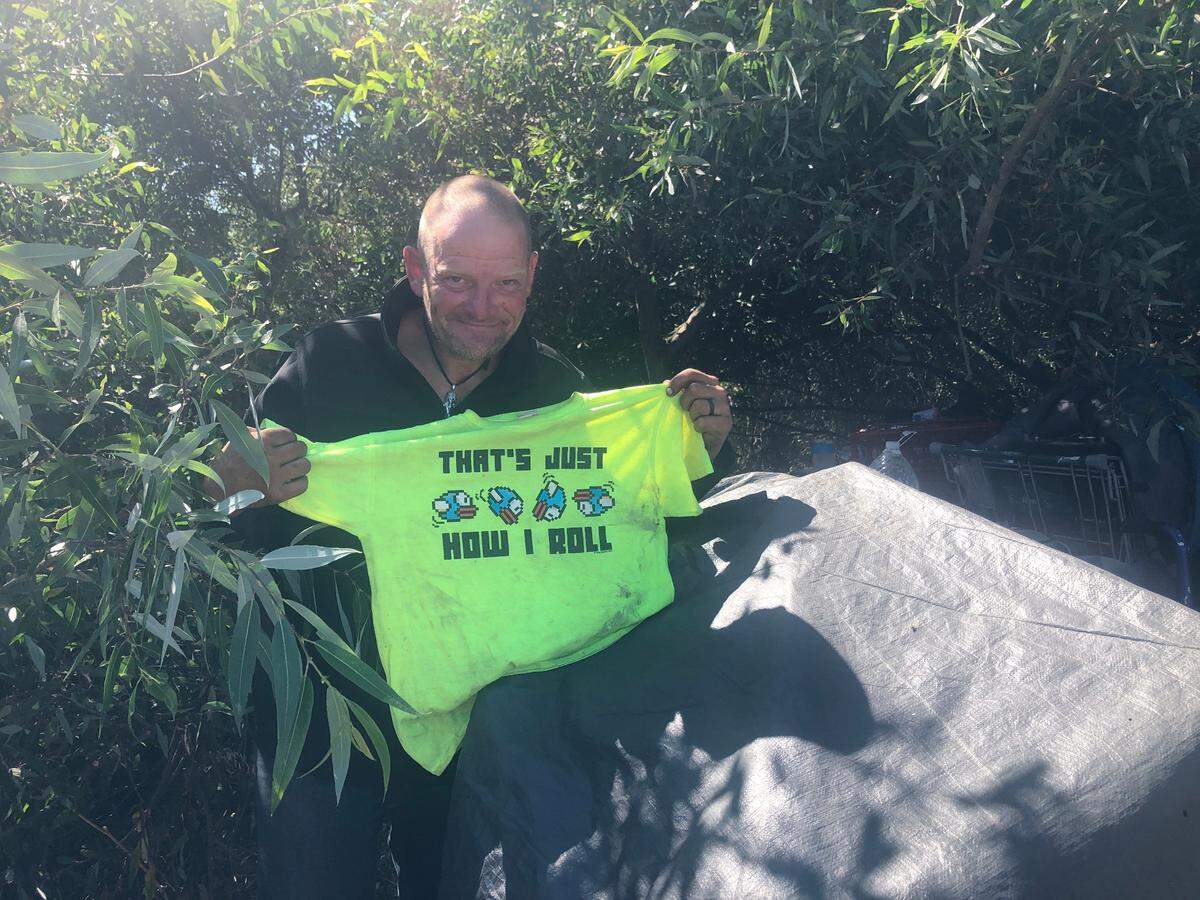
One popular camping area for homeless people is the Circle and creeks areas nearby, which is close to San Luis Obispo’s 40 Prado Homeless Services Center and a San Luis Obispo County social services facility.
City officials routinely clear the campers out, citing the need for safety and to prevent trash and pollution.
“I want to get into housing now because it’s getting harder to live out here as I get older,” said Sam Clanin, who has been homeless on and off since he was a teenager. “It gets cold in the winter. We make fires sometimes to get warm. I know we’re not supposed to and we try not to. Or we huddle up together, just do whatever we can.”
Clanin, 55, grew up in San Luis Obispo and said he was in a bad car accident in 2003 that injured him severely. He used to drop in at his family home on High Street, but a relative sold it in 2006.
Another unsheltered man, 63-year-old Wayne Cherry, said he lost his home in October, when his landlord couldn’t pay the mortgage. Cherry now lives in his vehicle with his girlfriend and parks at 40 Prado, where he gets food and uses email.
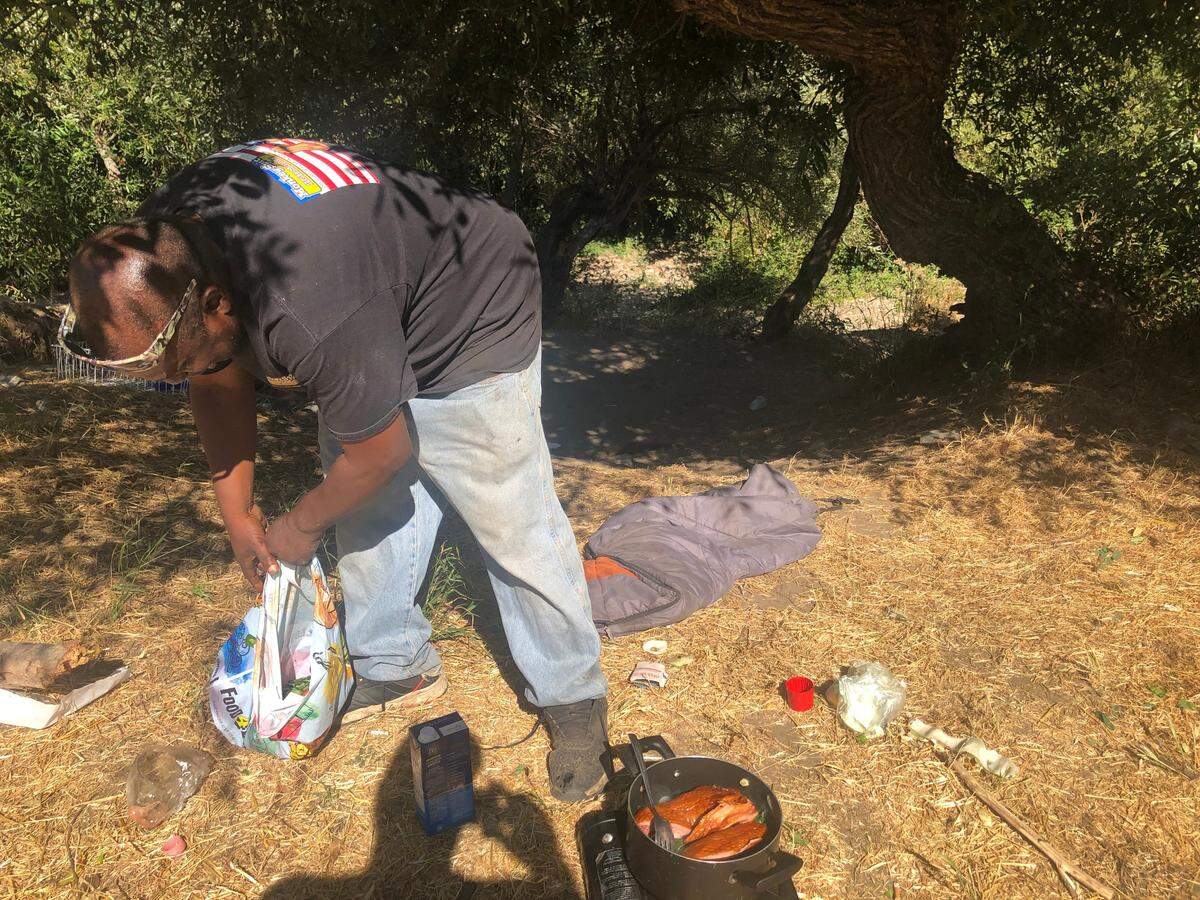
On a recent early evening, Cherry was cooking collard greens and turkey on a hot plate down by the creek off the trail, his barking pit bull tied to a log nearby.
“Every day, I check email to see if we can get into housing,” Cherry said, adding he gets about $1,000 per month in Social Security. “Nothing. It’s hard to get in and we just keep hearing ‘no.’ It’s uncomfortable sleeping in a car.”
His friend, 66-year-old David Kyle, admits to past alcoholism and not paying rent on time, which got him evicted.
Kyle is now staying at 40 Prado, and he’s working with a case manager to get into a home.
“I’m just saving up for first and last month’s rent,” Kyle said. “I put money away into a savings account they’re helping me with. ... I think I can get in. Even if I’m living with other people, that’s okay. I’d rather live in my own place if I can.”
SLO County sees growing number of homeless people
Countywide, the homeless population in 2019 was up 32% over the previous survey in 2017, according to the latest official tally of San Luis Obispo County’s Homeless Census and Survey.
In the last “Point in Time” count, officials reported 1,483 unsheltered countywide and 482 homeless living in the city of San Luis Obispo. The city of Paso Robles was the next highest with 239 houseless and Atascadero had 173. The unincorporated areas of the county (non-city jurisdictions) had 393.
In March, the U.S. Department of Housing and Urban Development (HUD) found that 580,466 people experienced homelessness in the U.S. on a single night in 2020, an increase of 12,751 people, or 2.2% from 2019.
No data source has exact current local numbers, and the unhoused population is often in flux.
Speaking to The Tribune about two weeks ago before her death, Susan Maez said she’d observed many more people living on the streets locally after falling on hard economic times.
“There’s definitely just a lot more,” she said.
Others echoed her assessment.
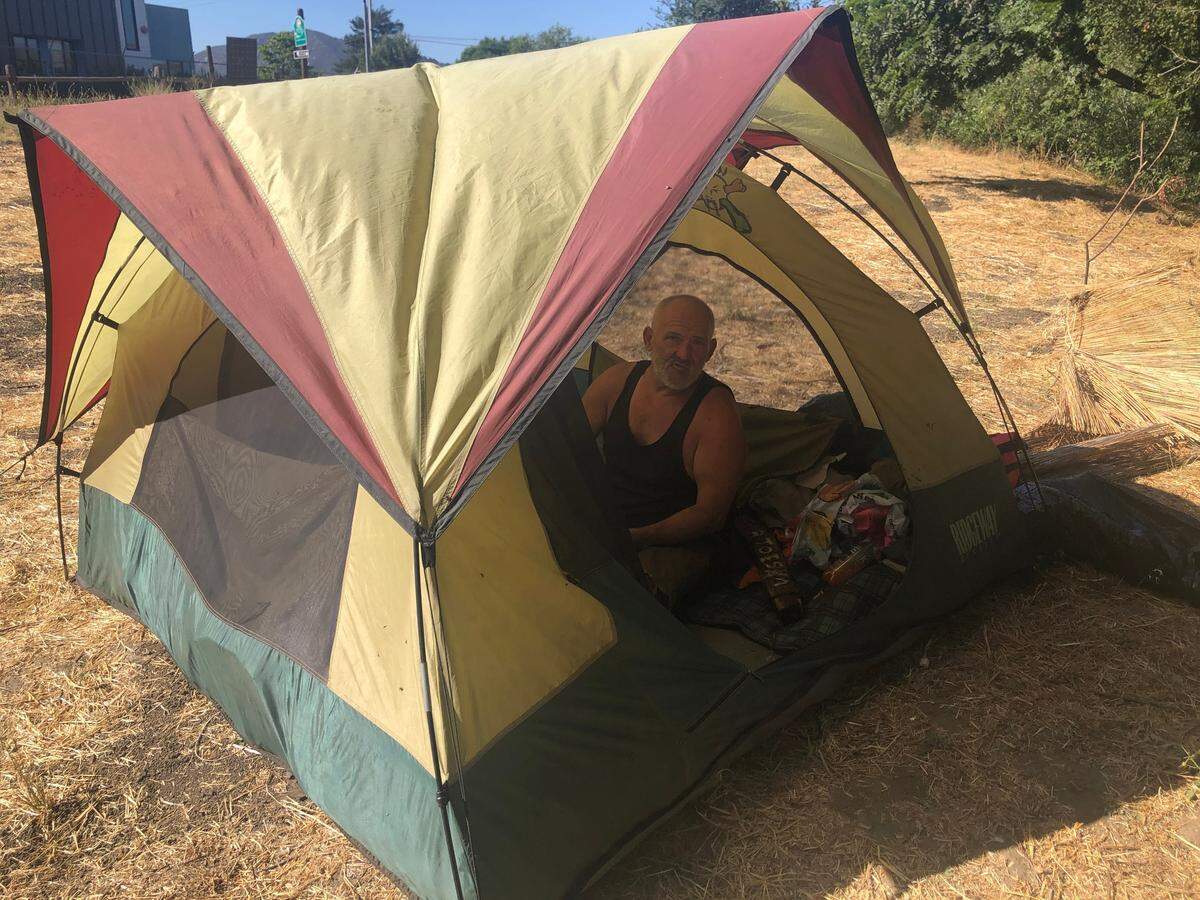
“When I first came out here after I divorced and was evicted, there were a few women, and some men, but not too many women,” said one 58-year-old woman who lives in a tent off of Los Osos Valley Road.
She requested her name not be used out of privacy for her family situation.
“Now, there are (unhoused) people all over the place, both men and women,” the San Luis Obispo woman said. “Every month, after they cleared out people from Bob Jones Trail, we were moving every month because we’d get kicked out of the next place. But I’ve been in the same spot for five months.”
Unhoused people expressed frustration with having to move from encampments they’ve established by creeks or recreational areas. City officials have moved dozens of people out of public spaces in recent months, citing pollution, safety and impact on natural resources.
Homeless advocates cite Centers for Disease Control (CDC) interim guidelines saying if individual housing options are not available, government agencies should allow people who are living unsheltered or in encampments to remain where they are due to the risk of COVID-19 infection — while following social distancing recommendations.
“These CDC guidelines have been ignored by the city of SLO during the entire pandemic,” said Tim Waag, a homeless and affordable housing advocate who frequently visits the city’s unhoused outdoors. “The city of SLO has done the exact opposite of the CDC guidelines.”
But San Luis Obispo officials say they’ve made services available to those without homes during the COVID-19 pandemic.
“Camps were cleaned out and all persons were provided shelter and/or services that had immediate health and safety issues,” San Luis Obispo city manager Derek Johnson wrote in an email. “This happened in conjunction and coordination with COVID-19 protocols for admissions.”
Johnson said officials responded to clear health and safety issues, including people living on roadways, using hypodermic needles and staying close to playgrounds.
“We worked to place individuals in shelters rather than allowing people to live in substandard tents,” Johnson said. “Allowing persons to live in substandard conditions rather than paneling into a shelter with COVID-19 protocols is inhumane.”
The city has 40 Prado as an option but not everyone wants to stay there. Some find the rules too strict, while others have been temporarily blocked from entry due to behavioral issues, requiring them to show they’re willing to address behavioral issues that are affecting their admission.
San Luis Obispo also has a safe parking area near Railroad Square, but many don’t use it due to security cameras in place and police patrols.
“It would be nice to park somewhere and not be bothered by police,” Christina Melman said.
She and Jason Coleman are living in their vehicle and move it around every few days. The couple previously used a motor home that burned down in December due to an electrical fire was caused by a microwave malfunction, they said.
SLO homeless woman dies after husband loses jobs
The struggle to find permanent housing has resulted in tragedy for some.
Former chef and restaurant manager Michael Maez lost two restaurant jobs during the coronavirus pandemic — forcing him and his wife to live in recreational vehicles.
The couple had to move often to avoid ticketing, parking in Grover Beach and near El Chorro Regional Park across Highway 1 from Cuesta College in San Luis Obispo. A fire destroyed their previous home on wheels.
Susan Maez suffered from a severe lung illness, using a portable medical oxygen tank to help her breathe on bad days. Living in a motor home only made things worse, her husband said.
On July 23, her lungs gave out suddenly. She was dead at age 55.
“She was sick for a couple of years, but I didn’t think she would go so soon,” said Michael Maez, who desperately tried to save his wife’s life as paramedics arrived. “It’s not good for anyone to be out on the streets. It doesn’t benefit anyone. And there are a lot more people who are.”
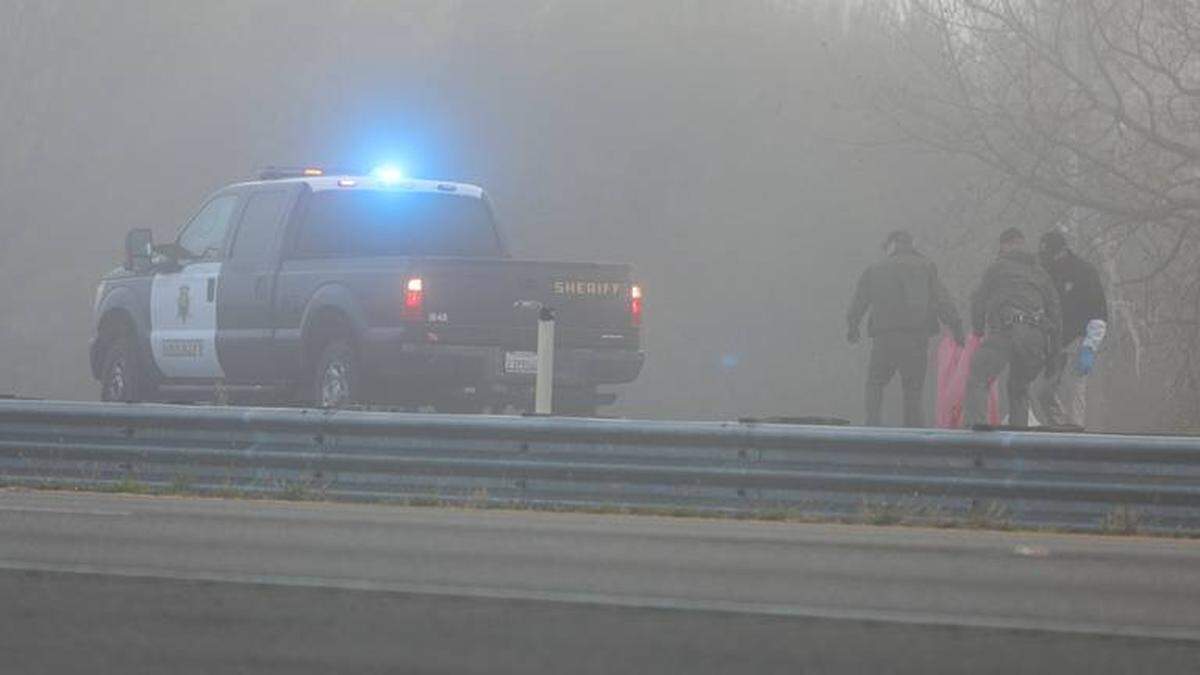
Since January 2020, at least 33 people believed to be homeless have died in San Luis Obispo County, according to a list provided July 23 by the San Luis Obispo County Sheriff-Coroner’s Office.
But that information is considered incomplete, Sheriff’s Office spokesman Tony Cipolla said.
“We don’t keep a coroner’s database that’s based on where a person lives,” Cipolla said. “To create this list, (a sergeant in the Coroner’s Office) looked for those whose residence was listed as unsheltered and those who weren’t found in a residence or home.”
Death on the streets
Trying to narrow down how many people have died locally without roofs over their heads can be challenging based on how records are kept, definitions of who is considered homeless, and information available at the time someone passes away, law enforcement officials say.
Sheriff’s Office spokesman Tony Cipolla said the agency doesn’t have a streamlined way to document deaths of homeless people.
Some unhoused people may die at the hospital or at a homeless shelter, while others may be listed as having addresses by family members.
Incomplete record-keeping can make it unclear whether someone died while homeless.
They may have “gone for a walk, had a heart attack, (were) found outside the home and taken to the hospital where they later died,” Cipolla wrote in an email.
Cipolla said that a sergeant who works with the Coroner’s Office poured through 4,500 records over the past 18 months to identify the information associated with deaths believed to involve homeless people.
The 33 people believed to have been unsheltered, listed with first names only, died from a variety of causes with no clear single trend.
Among the causes of death were methamphetamine and fentanyl overdoses, cardiac arrest, stomach bleeding, uncontrolled diabetes, pneumonia, blunt force trauma, COVID-19 and malnutrition.
The unsheltered death list included eight women and 25 men, 14 of whom died in San Luis Obispo. The rest died in locations scattered across San Luis Obispo County, including six in Paso Robles, three in Pismo Beach and two in Morro Bay.
Susan Maez told The Tribune in July that she knew 17 homeless people who died over the past couple of years from drug overdoses, health complications, malnutrition and other causes.
Creath said some of the people she knew who died in the past year or so had serious illnesses or drug overdoses.
“Some are too sick and don’t get treated properly at the hospital,” Creath said. “In a normal year, some homeless people die, but it’s typically a few that I hear about. But this year, it’s way more.”
SLO City Council members speak about homelessness issue
San Luis Obispo City Council member Jan Marx said she isn’t sure if the local homeless population is growing, “but the feedback I get from the public often is around the accumulation of trash that we see in parks and other places around the city.”
“And there’s a fear factor because of an attitude of anti-social behavior,” she said.
Marx said her constituents are afraid to use parks and public streets due to unpleasant experiences of being yelled at or attacked.
“I was punched on the shoulder by a man on the street who asked me where I was going,” Marx said. “I was just waiting at the crosswalk light to go to the SLO County Government building for a meeting. I ran away as fast as I could.”
Marx said community attitudes toward homeless people range from revulsion to an excess of sympathy that results in giving unhoused residents “whatever they want.”
“There needs to be a middle ground to try to focus on those who can actually receive help and turn their life around,” Marx said, describing homelessness a “really difficult and complex issue.” “There are some that over-sentimentalize these folks, and that’s counterproductive and can be enabling.”
Marx said she supports prioritizing families with children to help them get into housing, as well as individualized, person-to-person interactions.
Social worker John Klevins meets with unsheltered people throughout San Luis Obispo to develop relations as part of the city’s Community Action Team (CAT). The city added another social worker position this year.
Vice Mayor Erica Stewart said homelessness has been one of the “top issues” she’s heard about from the public as a council member.
“I think COVID exacerbated this issue so much,” Stewart said. “Before the average person didn’t see what they saw during COVID, and then they were seeing the number of people without homes growing and gathering in pods, which made people made very aware of housing challenges. It got bad at Mitchell Park and Bob Jones Trail and they saw behavior they didn’t want to see.”
Stewart said “no one’s going to solve the issue surrounding homelessness, but I think we can definitely reduce the amount of people who are homeless.”
She said providing assistance for medical needs, substance abuse recovery and other programs makes a difference.
“When (the former) Maxine Lewis shelter was falling apart, we really followed up on the request to have everything all in on place, so people didn’t have to go to one place for dinner and another place for shelter and another for county services,” Stewart said. “40 Prado truly does consolidate those services.”
Business owners weigh in
Shelley Stuckey, who co-owns Tails Pet Boutique and ax throwing business Battle Axe in downtown San Luis Obispo with her husband, Neil, said that homelessness has major impact on local businesses — especially when people are self-medicating or have mental health issues.
“They’re just going to scream and show different behaviors that are not socially accepted or not social norms,” Shelley Stuckey said. “About once per week, we have some sort of interaction with the homeless, whether it’s someone trying to store their things in the alley of the back of our shop.”
Stuckey said she asks unhoused people to move by the time her Tails shop opens at 10 a.m., adding that her interactions with that community are mostly respectful.
“They know that I will not give them money, but I’ll offer pet food for their dogs and I’ve made sandwiches for them or a little cup of soup,” Stuckey said.
Stuckey has called police on some occasions when unsheltered visitors are acting out in the store.
“I’ve seen an increase (in the homeless population) in SLO, and really a lot more when I travel to Los Angeles and Pasadena, too,” Stuckey said. “It’s heartbreaking to see that people have been displaced because of COVID or just unfortunate circumstances.”
Monika Anderson, owner of Monika’s Macarons, said that her business has experienced three incidents with homeless people involving crimes in recent months — including the theft of her car with her dog inside.
In an unprovoked scuffle, a homeless man attempted to attack her plumber, who shoved the man out the door, Anderson said.
She also said a man sleeping in a nearby parklet who swung a knife at her boyfriend, Rick Joseph, after Joseph tried to tell the man he couldn’t sleep there.
Anderson said she and Joseph have been in contact with police on numerous other occasions, and officers have told them not to confront people. They believe more people cleared from the creek areas have migrated downtown.
“Somebody is going to get hurt and it’s not going to be good,” Anderson said. “This is a big systemic problem and looking at cities that have been successful and have solutions is a great idea.”
Anderson said that she hopes the city will take a close look at other cities for successful models of addressing homelessness.
“I came here from Temecula where they had social workers go out to a lot more (nonviolent) calls in the downtown and helped take people to facilities and get them services versus a police citation and the person goes on their way,” Anderson said. “We need more social workers doing that.”
Anderson said she’s open to joining a coalition of citizens or business owners to offer input and help.
“It’s all of our responsibility and it takes a village,” Anderson said.
This story was originally published August 5, 2021 at 5:00 AM.
%20Cropped.jpg)