
Removing Morro Bay power plant stacks could cost $30 million. Will company foot that bill?
With the legal framework in place to remove the defunct Morro Bay Power Plant’s prominent stacks, it remains unclear whether the towering structures will come down.
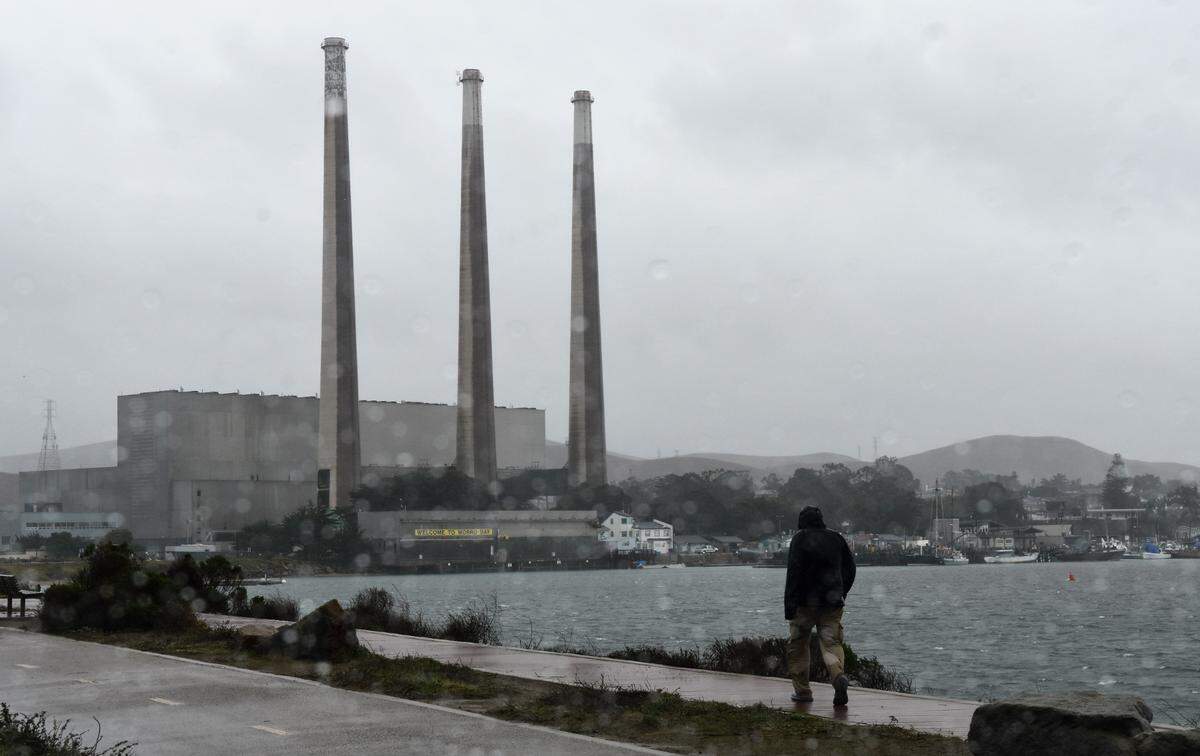
Some Morro Bay residents worry that the high cost of demolishing the 450-foot-tall stacks, estimated in 2014 to cost $30 million, could deter the property owner, Vistra Corporation, from tearing them down to make way for a massive battery storage facility — should community members support that option.
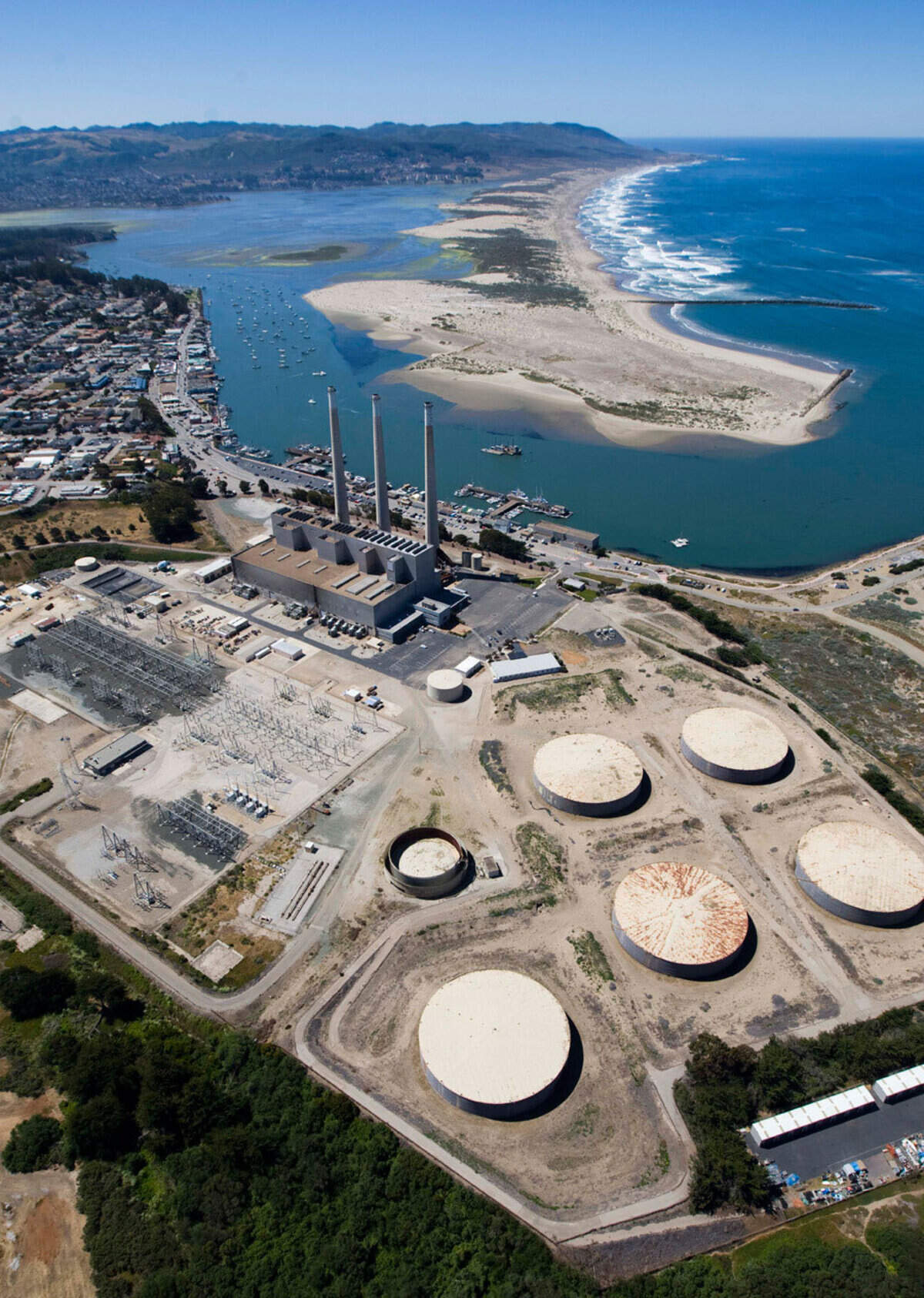
Residents are also concerned about the need to remove soil contaminants that seeped into the ground at the 107-acre property over decades of power plant use.
The Morro Bay City Council approved a memorandum of understanding (MOU) with Vistra Corp. on June 9, requiring the Texas-based energy company to remove the stacks and asbestos-containing turbine building by 2028 — or pay a $3 million penalty to the city.
“Doesn’t it seem likely (Vistra Corp. will) just cut a check to Morro Bay in 2028 for $3 million to remove the property encumbrance, retain ownership of the property, and leave Morro Bay with just barely enough to fund a month or two of our 2028-29 operating budget?” Morro Bay resident Sean Green asked in a June 9 letter to the city.
The City Council must decide by December 2022 whether it wants to keep the three stacks that loom over the city.
Under the MOU, the council must make that decision after holding a “robust community conversation” about the stacks’ removal, a city news release said.
In a recent Tribune poll, almost 57% of respondents said they supported removing the aging stacks, with many describing the stacks as an ugly eyesore that will be costly to maintain in coming years.
Other respondents said they see the stacks as an important local landmark, and suggested the structures could potentially be repurposed as art installations, a museum or a zip line park.

What’s in store for old Morro Bay Power Plant property?
Built in the 1950s, the Morro Bay Power Plant was initially operated by PG&E until the energy company sold it to Duke Energy in 1998, according to the city.
Dynegy took ownership of the plant in 2007 before closing it permanently in 2014, citing environmental impacts.
Vistra Corp. merged with Dynegy in 2018, acquiring the former Morro Bay Power Plant property along with other holdings.
Vistra Corp. plans to build the world’s largest lithium ion-battery storage facility on the site at 1290 Embarcadero, providing new industry and significant economic impact at the former Morro Bay Power Plant property, connecting to existing electric grid infrastructure. The company’s portfolio includes a 300-megawatt battery storage plant in Moss Landing.
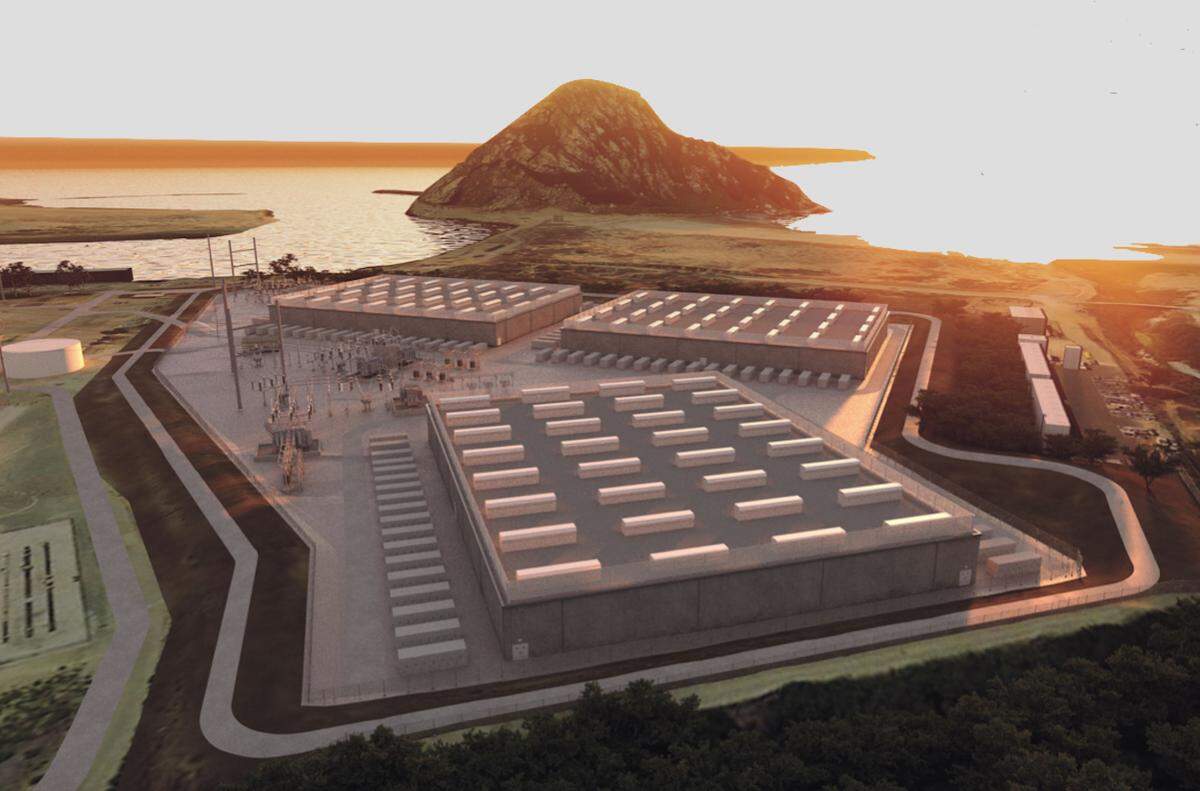
As envisioned, Vistra Corp.’s Morro Bay battery storage facility, not considered for review as part of the MOU, would be located on a 22-acre portion of the power plant property and consist of three 30-foot tall buildings that would house 2,400 battery racks.
New buildings would add up to 273,000 square feet.
The proposed facility would supply 450,000 homes with renewable, zero carbon energy and address “intermittency/reliability issues related to the electric grid,” city officials said in their June 9 MOU discussion staff report.
“The project is anticipated to commence construction in 2022 and last for 36 to 48 months,” according to a Microsoft PowerPoint presentation posted to the city’s website.
It’s unclear if Vistra has plans to use the site for any commercial projects beyond its battery plant operation.
The proposed project estimates a “$4.8 million total annual property tax payment to San Luis Obispo County,” the PowerPoint presentation said.
Does energy company plan to tear down stacks?
Despite concerns from the community about following through with demolition of the phased out facilities, Vistra Corp. told The Tribune that it’s committed to the removal of old power plant structures in Morro Bay.
“Vistra committed in the MOU to bear the sole cost and expense of demolishing the building and stacks with the view that removing them could lead to potential development of greater value than the cost of demolition,” Meranda Cohn, Vistra Corp.’s senior director of communications and media relations, wrote in an email.
Cohn rejected the suggestion that Vistra Corp. would absorb the $3 million penalty as a way to skirt old building removal costs.
“Vistra believes that demolishing the generation building and stacks would unlock new development opportunities within the requirements of the existing land use covenants placed on the site by (the DTSC) and PG&E,” Cohn wrote.
“Vistra looks forward to continuing the work to build the battery project and the coming discussion with the City and residents of Morro Bay about the future of the rest of the plant site,” she added.
Cohn said no specific cost amount has been estimated at this time in regard to the demolition of the stacks and other structures.
Groundwater and soil contamination on Embarcadero site
According to Cohn, Vistra Corp. will also “comply with all applicable regulations with respect to any necessary remediation of the site and disposal of debris from the demolition.”
In addition to asbestos in the old turbine building, soil contaminants on site would require massive cleanup for any non-industrial use.
The city’s staff report notes California’s Department of Toxic Substance Control (DTSC) has determined “that portions of the site may be limited to industrial use due to shallow groundwater contamination and soil concerns” and costs of remediation for non-industrial uses are in the “multi-million dollar range.”
A PG&E deed restriction deterred past developers interested in the Morro Bay plant property from moving forward with non-industrial uses because of the massive financial investment that would take, the staff report says.
The PG&E restriction, also referred to as a land use covenant, was put in place when PG&E sold the Morro Bay plant to Duke Energy in 1998. It forbids the plant’s owner from developing the property for lodging, hospitals, health care facilities, day care centers, parks, playgrounds or other recreational use because of contaminants on the site, city officials said in a June 9 staff report.
Past investigations of the site by the DTSC revealed the presence of chemicals with the potential to harm humans or the environment.
Portions of the property were cited for total petroleum hydrocarbons and arsenic, according to DTSC’s response to public questions in 2020 as part of a land use covenant review, cited in the city staff report.
“PG&E retained the environmental liability from the sale of the site from PG&E to Dynegy Morro Bay,” the document notes. “PG&E is responsible for the historical contamination at the site caused by their previous operations.”
Vistra Corp. would be responsible for any contamination at the site since 1998, when PG&E sold the property, the DTSC said.
DTSC officials noted that, based on numerous groundwater samples taken over nine years, “no significant plume of contaminants in groundwater has been found.”
“While the groundwater at the site would still require some form of treatment before being appropriate for residential consumption, the reasons for this do no have to do with contaminants from the site, but rather, other conditions” such as high concentrations of dissolved solids or high salinity due to seawater intrusion, agency officials said.
“DTSC will not allow use (of the site) beyond industrial use until contaminants of concern are both evaluated and remediated,” Morro Bay city manager Scott Collins said at the City Council’s June 9 meeting.
Further investigation is needed to determine the full extent of the contamination, city officials say.
“I’ve heard remediation of the site is anywhere from $30 million up to $150 million,” Collins said at the June 9 meeting.
Residents express concerns about power plant deal
The MOU agreement settles a lawsuit between the city and Vistra over an easement dispute and replaces Morro Bay’s option to purchase the Vistra Property for $1 if the old plant is not demolished by Oct. 1, 2033.
“When you remember the deed restrictions and (soil) issues with contamination, and the buildings that remain contain contaminants, and a lot of expense related to those that need to be cleaned up (for non-residential use), then (the old agreement) no longer seems like such a great deal for the city,” Collins said.
With the new MOU agreement between the city and Vistra Corp. in place pending a 90-day escrow, some Morro Bay residents envision potential drawbacks.
Former City Council member and Morro Bay resident Betty Winholtz wrote before the June 9 meeting that the “council is making a long lasting commitment without allowing for real consideration by the public to ponder the effects.”
“An immediate detail that stands out is the minimal amount of money, $3 million, (the) council is exchanging for giving up rights to the 100-plus acres for $1 in 12 years,” Winholtz wrote.
“The staff report states that while the MOU is not about the battery storage proposal, it is ‘a primary impetus for Vistra to pursue the city’s release of the $1 option,’ ” she added. “This is a red flag because the environmental (impact report) is yet to happen and compliance with the the (California) Coastal Act is yet to be done.”
Morro Bay resident David Nelson lobbied in past years against the plant’s use as an oil and natural gas-burning operation.
Nelson told The Tribune by phone that contamination remains on site from five decades of operation.
“This site needs to be cleaned up and that hasn’t happened yet,” Nelson said.
He said that the proposed Vistra Corp. battery storage facility should be built at Diablo Canyon nuclear power plant once it’s decommissioned, adding that the Environmental Protection Agency “should come in and make sure the cleanup is carried out.”
City officials lay out reasons for MOU
Morro Bay officials cited a number of reasons for moving forward with the MOU, including the ability to redevelop a property that has long sat unused.
“Nothing has happened on this property for eight years,” Collins said. “We have negotiated over a long period of time and reached a mutual agreement.”
In voting to approve the MOU, Morro Bay Mayor John Headding said, “We feel this agreement is a good deal for the city, as it provides the opportunity for Vistra to tear down worn out, contaminated power plant structures, and opens the door for future redevelopment of this key site in our community. We look forward to working closely with the community on reviewing these opportunities.”
Collins said the Vistra Corp. battery storage project represents the potential for a “long and fruitful partnership” between the city and the company that could provide clean energy.
“This could help reduce the impacts of climate change, a particularly critical issue for a coastal community like Morro Bay,” the city’s staff report noted. “The proposed project could also potentially connect with and help facilitate future offshore wind opportunities on the Central Coast.”
In May, the federal government announced it is fast-tracking a massive project to build a massive offshore wind farm northwest of Morro Bay. The floating wind turbines, which would occupy a 399-square-mile area of the Pacific Ocean, would generate enough energy to power roughly 900,000 homes.
The proposed Morro Bay battery storage project, if it continues to progress, will be scheduled for public hearings at the Morro Bay Planning Commission and City Council, with “a potential Coastal Development Permit and a potential Conditional Use Permit, and statutory compliance with California Environmental Quality Act requirements,” the city’s staff report noted.
%20Cropped.jpg)