
SLO police were warned about Eddie Giron’s mental illness in months before deadly shooting
Family and friends of the man who killed Det. Luca Benedetti in a shootout say they repeatedly warned San Luis Obispo police about his spiraling mental illness and that he owned firearms.
The accounts from those who knew Edward “Eddie” Giron trace their concerns in the months leading up to the deadly altercation on May 10 and contradict a statement from San Luis Obispo County Sheriff Ian Parkinson, who told reporters at a news conference that Giron had no local record of mental illness.
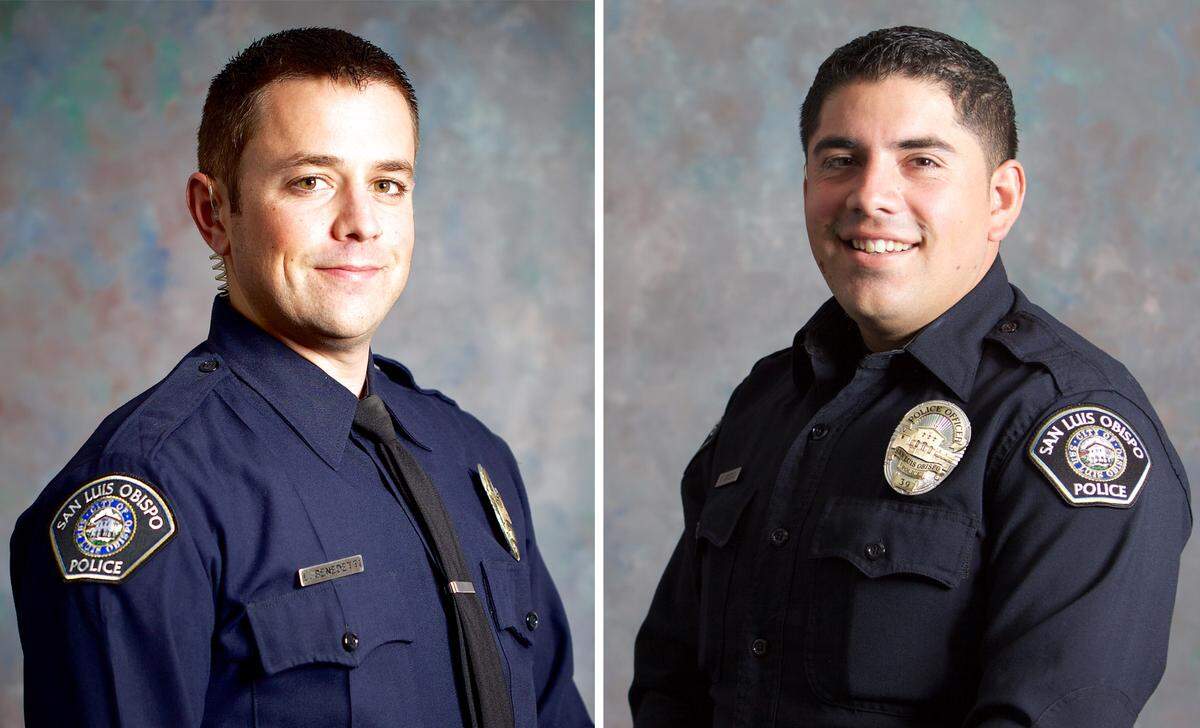
Benedetti was shot and killed by Giron as he and five other officers served a search warrant on Giron’s apartment related to what officials say were several commercial burglaries. San Luis Obispo police Det. Steve Orozco was injured in the shooting.
Giron, who officials say was also shot during an exchange of gunfire, died from what appeared to be a self-inflicted gunshot wound.
His friends and family members told The Tribune they tried in vain for nearly a year to get him mental health help — which he would refuse — by reporting his increasingly erratic behavior and asking the San Luis Obispo Police Department to check on his welfare.
Records obtained by The Tribune and interviews with Giron’s loved ones also reveal an arrest for trespassing in Santa Barbara in July and an October incident in Avila Beach, as well as a missing persons report filed with the San Luis Obispo Police Department in November.
All should have raised red flags about Giron’s mental health and increasing paranoia of law enforcement before armed officers arrived at his apartment looking for equipment stolen from The Pad Climbing gym in San Luis Obispo.
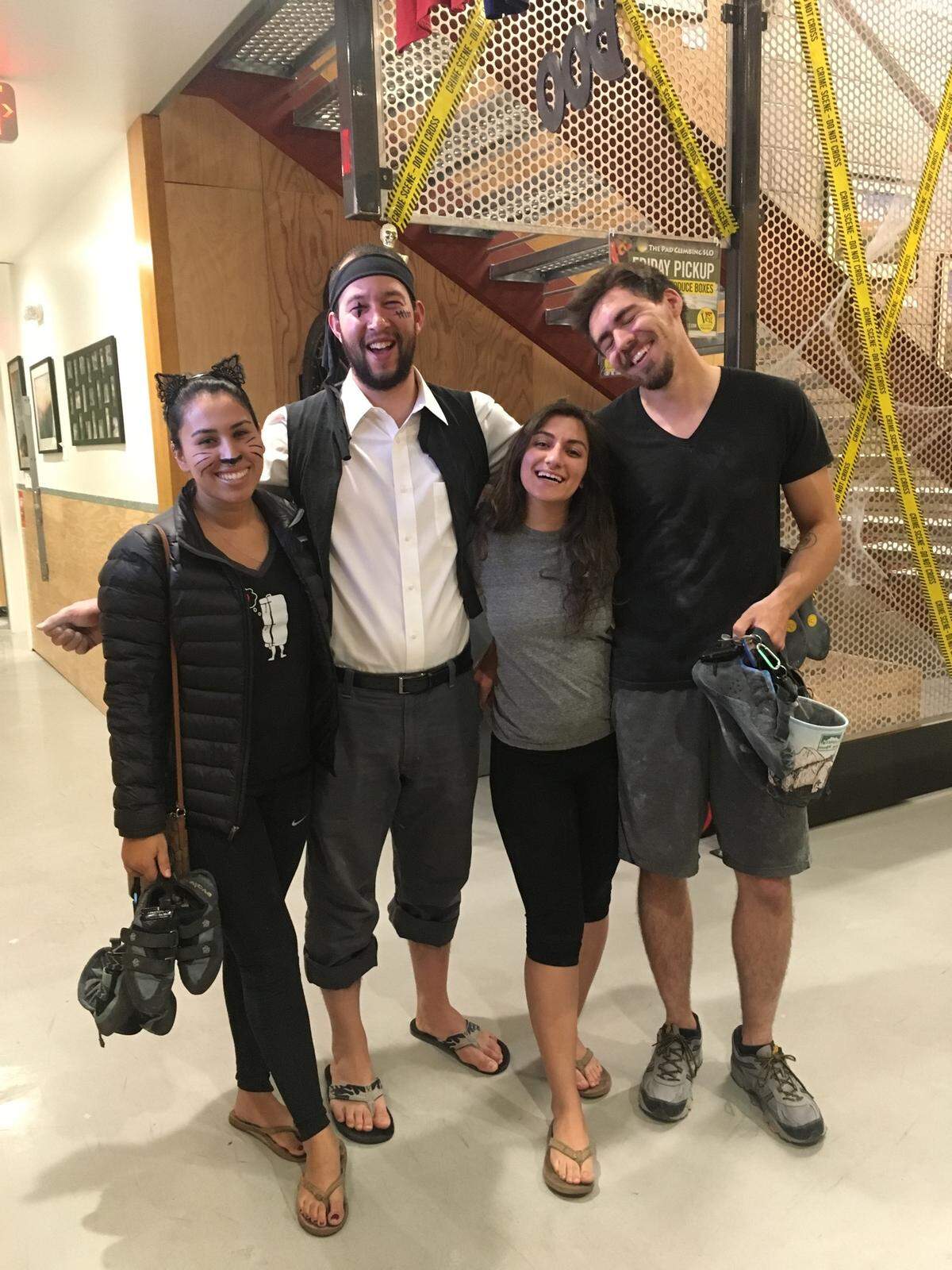
Giron, 35, had lost his jobs at the gym and at Costco in June and July, and grew increasingly isolated as the COVID-19 pandemic raged on, sources who knew him said.
But every time they sought help from San Luis Obispo authorities, they said the reports went nowhere.
“Nobody could do anything,” said Shelby Urban, a former neighbor. “It worried me about what was going to happen.”
A spokesman for the Sheriff’s Office, which is investigating the shooting, did not respond to a request for comment Wednesday.
San Luis Obispo public communications manager Whitney Szentesi declined to comment on specific questions in an email statement.
Responding generally, she wrote, “We understand that the community and members of the media have questions about the tragedy that occurred on May 10, 2021 in San Luis Obispo, when a man opened fire on officers serving a court-ordered search warrant, resulting in the death of one officer, injury to another, and the death of the suspect.”
“We are all struggling to understand why a tragedy like this would or could happen here,” Szentesi added. “An external investigation is being conducted by the Sheriff’s Office and the City is also conducting its own internal review.”
Szentesi said it’s “important for people to know that police officers carefully prepare to minimize risk before serving a search warrant. As a matter of public safety, it is standard practice for multiple officers to serve a search warrant.”
“In the case of the search warrant served on May 10, SLOPD was aware of past contacts with the suspect, Mr. Giron,” Szentesi noted. “None of these contacts were violent in nature nor did they result in an involuntary mental health hold. A pre-warrant check disclosed that he had no firearms registered to him.”
Szentesi added, “We want to maintain transparency, accountability, and public trust, while protecting the integrity of the investigation. All information will be released when the investigation is complete.”
SLO County sheriff: ‘No indication’ of mental illness
At a May 11 news conference, Sheriff Parkinson responded to a question from a Tribune reporter about Giron’s mental health history.
“There was no indication of anything in our files of mental illness,” Parkinson said at the time.
Parkinson also said that, though Giron had a criminal history of nonviolent “alcohol, drug, and property offenses,” he “had no registered firearms to him.”
However, the San Luis Obispo Police Department was told of Giron’s apparent mental illness and that he possessed unregistered weapons, said one of Giron’s closest friends, who maintained email and phone communication with a San Luis Obispo police officer from July to October, according to email, social media and phone records that she provided to The Tribune.
The San Luis Obispo woman agreed to share her story on the condition of anonymity given the sensitive subject matter. The Tribune is not identifying the officers she and others contacted regarding their concerns about Giron.
Court records show that Giron was arrested July 10 in Santa Barbara on suspicion of unauthorized entry of a dwelling, disorderly conduct and possession of stolen property. A court hearing in the case remains scheduled for next month.
According to email records, the woman told a San Luis Obispo police officer on July 11 that she wanted to open up the line of communication regarding Giron after his arrest the previous night.
The woman said that she had talked to Giron on the phone and was told he entered an unlocked house looking for friends — he didn’t have any in Santa Barbara, she said — and took a bottle of shampoo. He entered a second house that was still “accidentally not the right one” and was arrested after being confronted by security guards, she told the officer.
Giron spent a night in Santa Barbara County Jail, she said, and provided screenshots of Giron’s Instagram account.
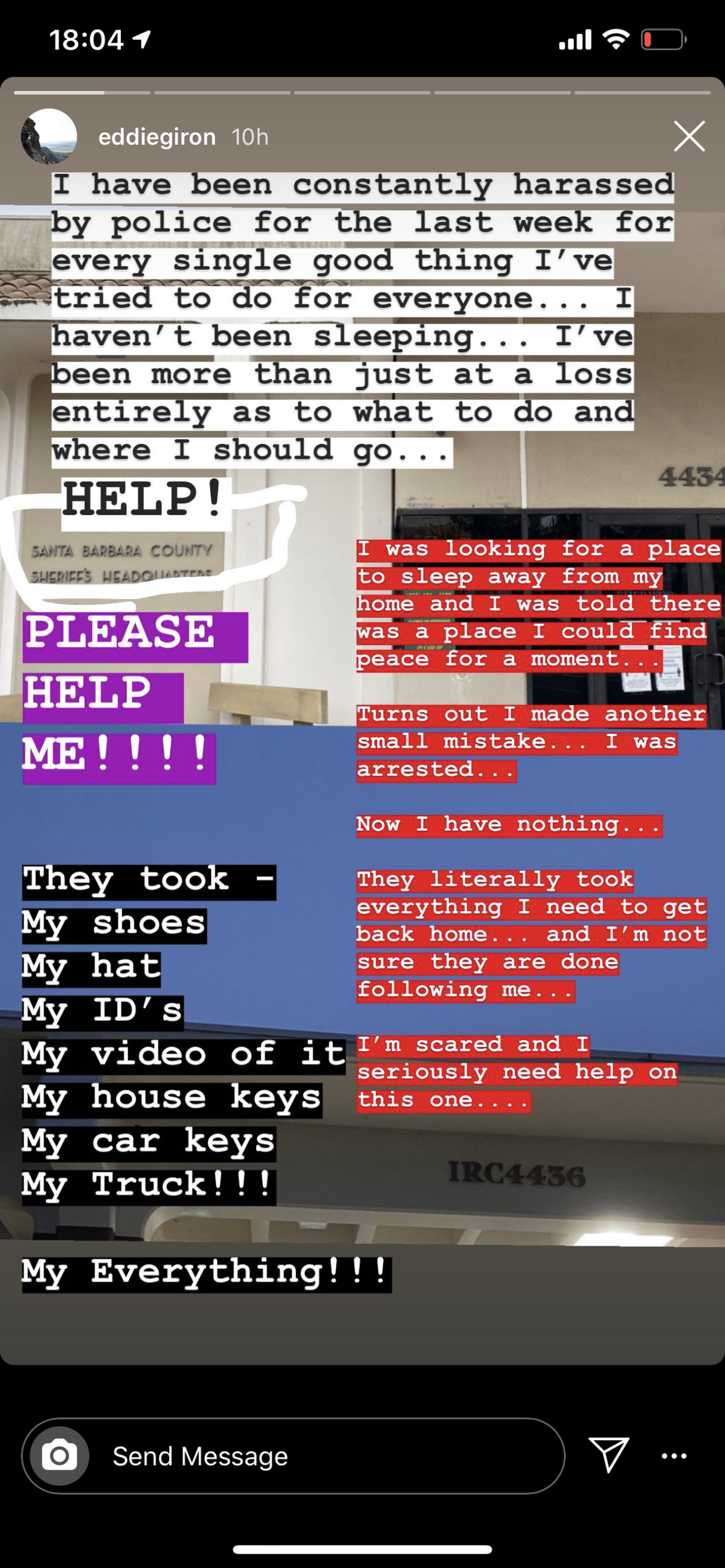
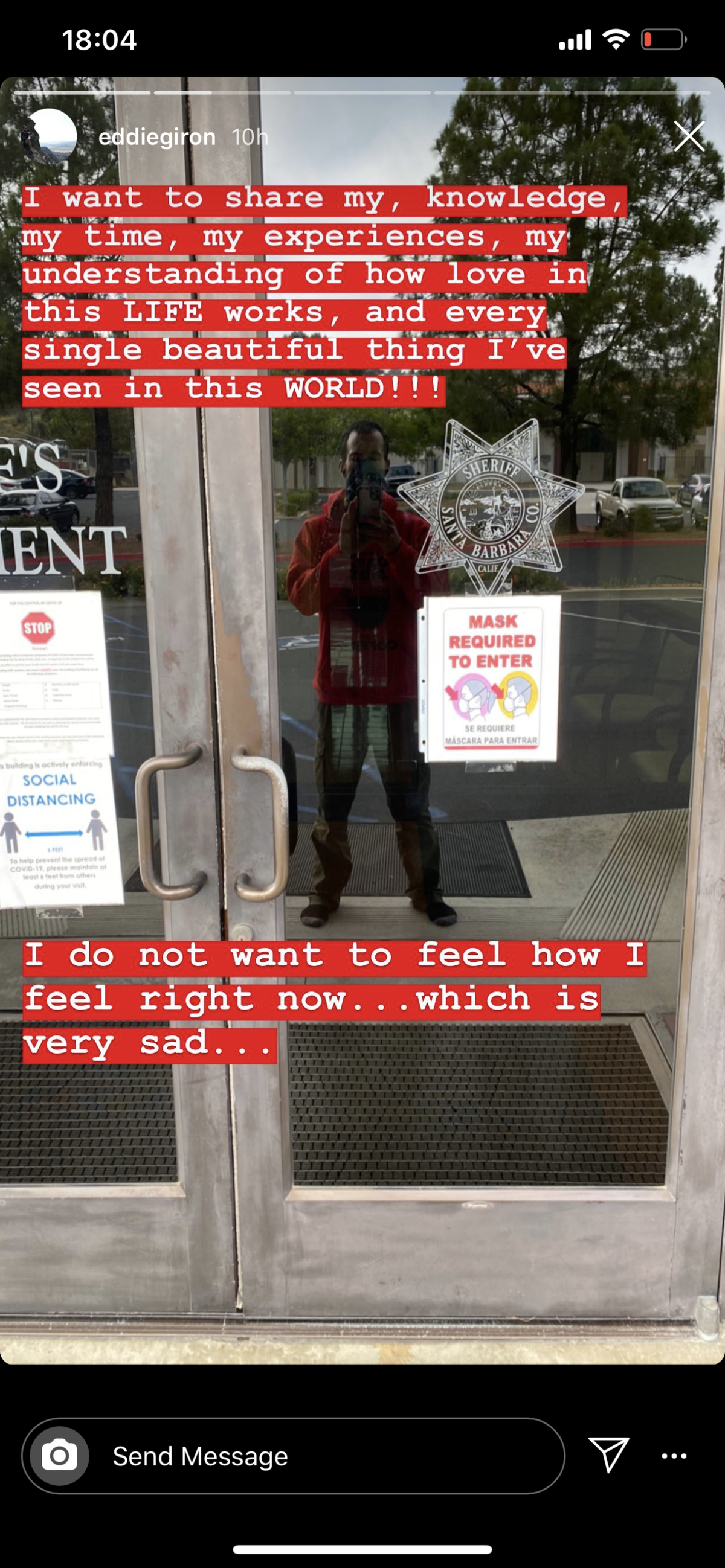
“At this point anyone who has been in close contact with the situation is concerned about the rapid rate in which his paranoia and erratic behavior (have) increased,” Giron’s friend wrote to the officer. “There is concern about his choices and the inherent risk to himself and the community.”
She added that Giron once wanted to see a therapist, but following his arrest, he was “totally resistant to the idea.”
“Unfortunately I’ve seen this before and it wasn’t handled well,” the woman wrote.
The officer wrote back the same night that he had emailed the city’s Community Action Team social worker, who responds to calls regarding mental health that may have a public safety component, and relayed the information.
Three days later, the woman emailed the officer back, telling him that Giron was “increasingly agitated and combative but does not know why.”
“He’s much more volatile and violent,” she wrote the officer, describing Giron’s “paranoia” and “unreasonable distrust of the law.”
The woman referenced a welfare check she told The Tribune she requested of the officer, writing that she and two other friends “came together to conclude that with inaction, inevitable results look much worse.”
“It only takes a split second for things to go wrong,” she wrote in a later email.
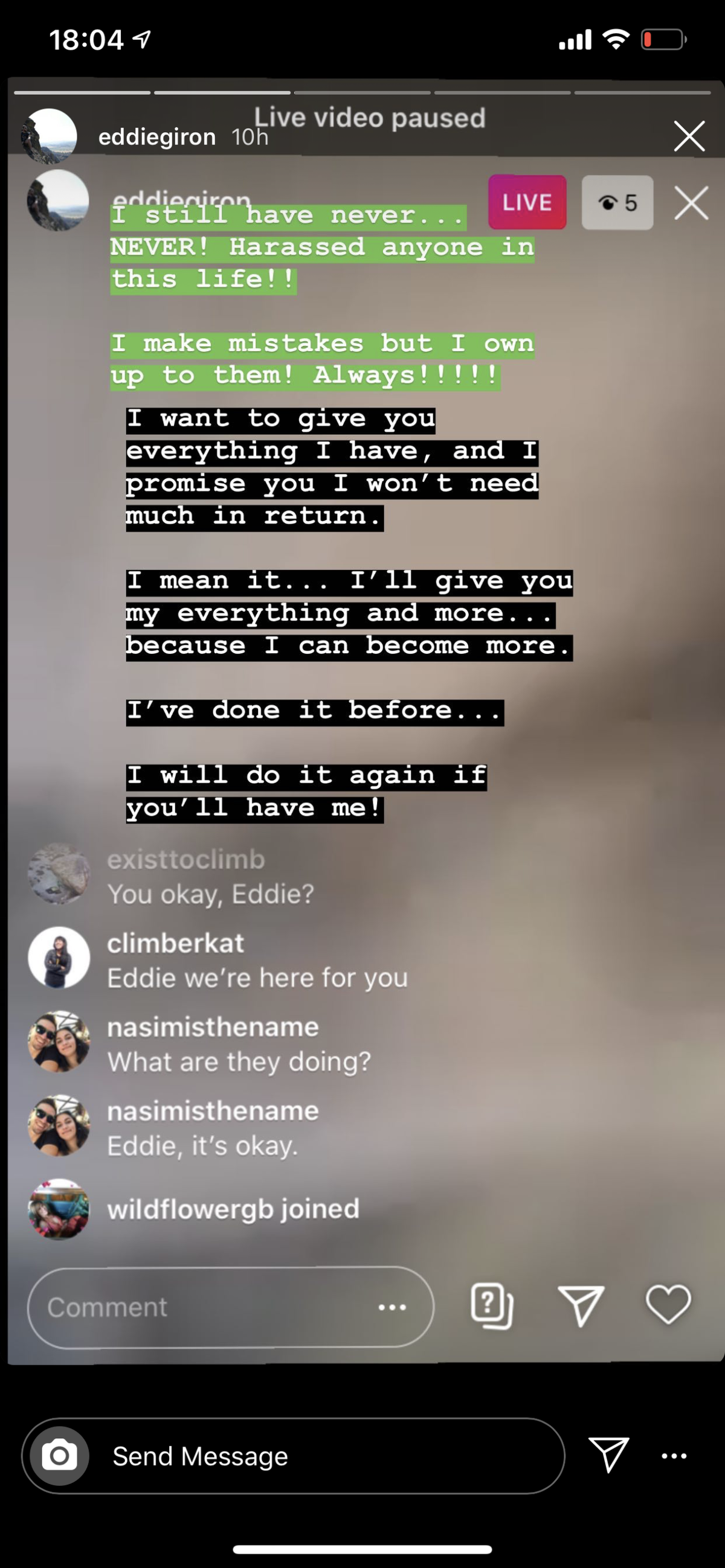
The woman says she told the officer that Giron possessed firearms — something that’s not shown in the emails because the officer mostly communicated with her over the phone. The officer told the woman that there was no record of Giron owning registered firearms, she said.
“I told him, ‘Then he has unregistered firearms,’” the woman told The Tribune, saying she offered to tell the officer where the weapons were stored.
The officer told her that police didn’t want to “escalate the situation,” she said.
That conversation was documented in an email from the woman to a Sheriff’s Office detective on May 22, records show.
“I know it must be frustrating from your perspective seeing that a different course of action wasn’t taken during the check-the-welfare calls you had made,” the detective told the woman in a emailed response on May 24. “Obviously with the clarity of hindsight, we can always find improvements and different approaches. The mental health system and law enforcement’s role is complicated to say the least.”
“As we discussed before, it’s tough to try and find that balance between helping someone in a mental health crisis and escalating the situation unintentionally,” the detective added.
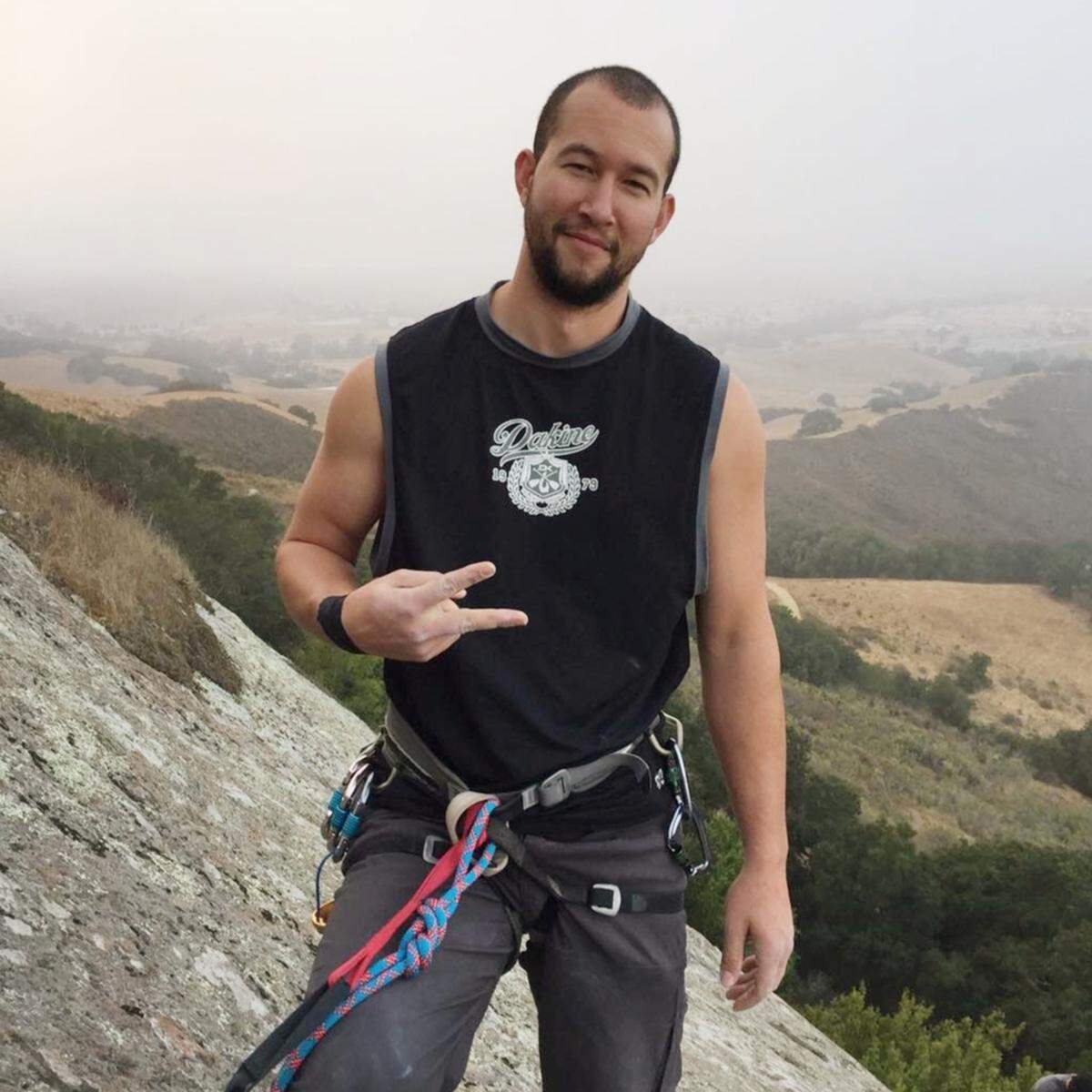
Neighbor called for welfare checks on burglary suspect
Urban, Giron’s former neighbor, said she lived below Giron’s upstairs unit in the apartment complex off Margarita Avenue for about three years.
She, like others who knew Giron, described him as sweet and sincere, adding that the decline in his mental health became obvious following the loss of his jobs.
“There was a major shift in his personality. That’s when I started to see red flags,” Urban said Wednesday.
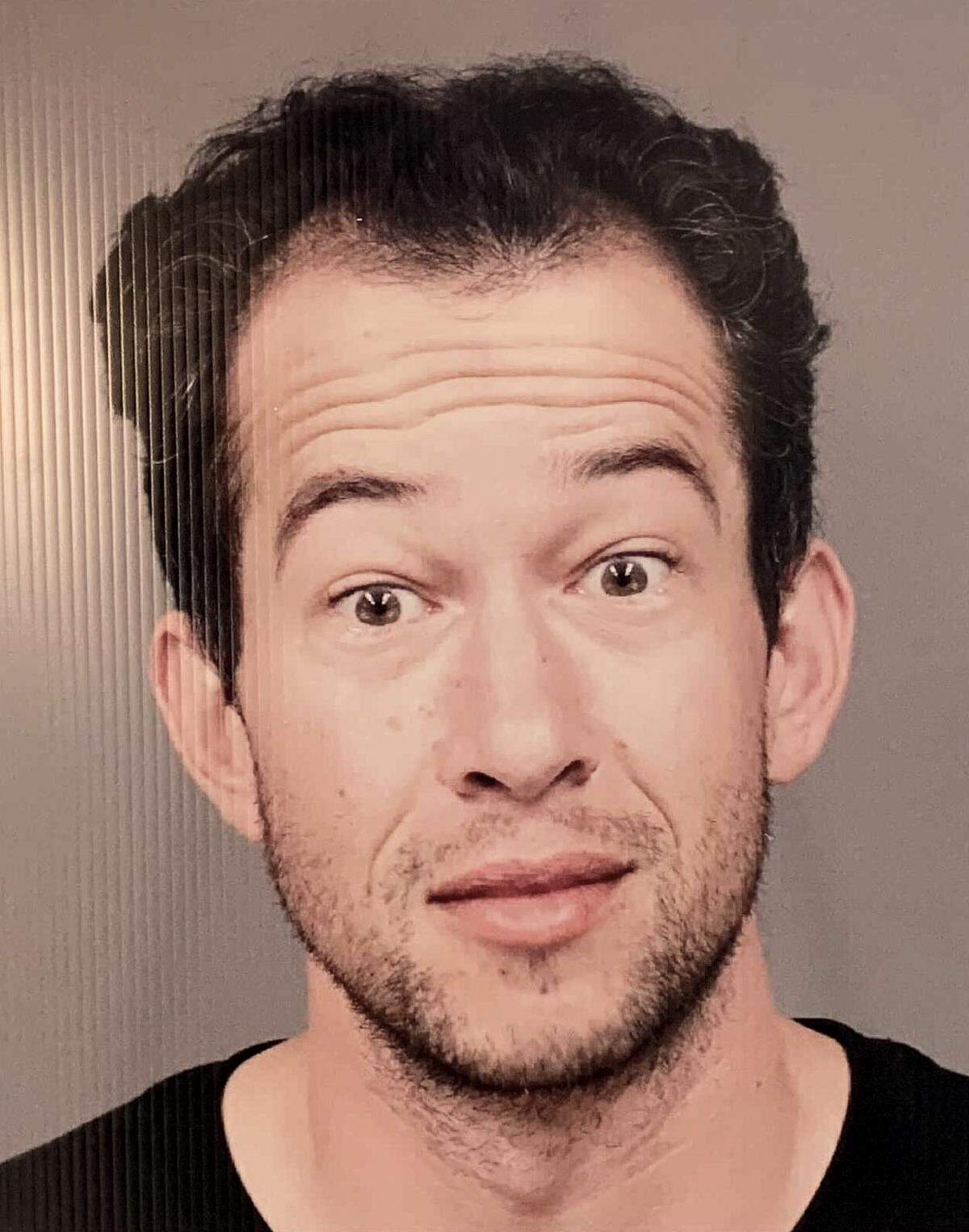
She described seeing Giron wandering the apartment complex mumbling to himself. And she said she heard him exhibit uncharacteristically noisy behavior in his unit.
Urban — who provided partial phone records to The Tribune — says she and her boyfriend called the San Luis Obispo Police Department about Giron about six times, though she says she didn’t mention mental health concerns in the first three calls, which were for noise and rowdy behavior while Giron appeared to be drinking.
But as the bizarre activity increased in frequency, she says she was clear to police officers that “mentally he needed a little help.”
Urban recalled requesting a welfare check when she awoke to Giron standing on his balcony early one morning yelling, “Nobody listens to me, nobody loves me.”
“The cops would come, he would say he was fine, and they would leave. And that would just make him mad,” Urban said. “It hurt to watch him dwindle down the way he did.”
Urban said that what irritated her the most after learning of the May 10 shooting was that officials denied they could have known Giron was living with severe mental illness.
“Yet again, they’re covering their asses,” she said. “If they would have just done their jobs, this officer would not have lost his life. Eddie would not have lost his life.”
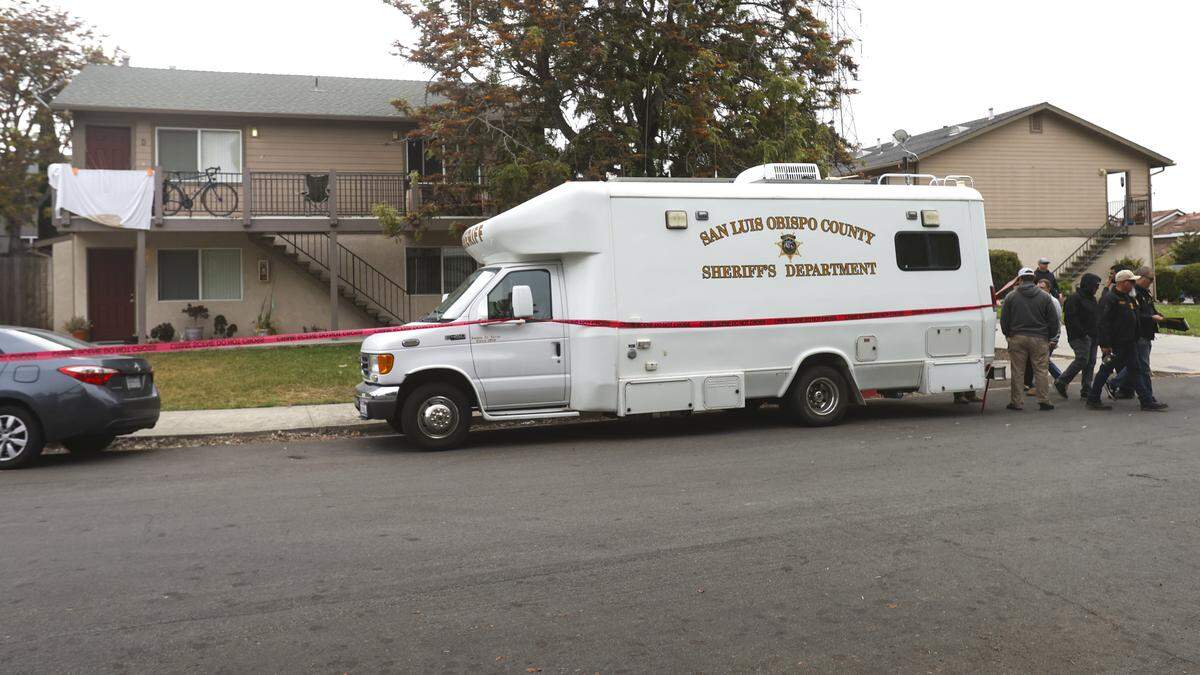
SLO man’s mother: ‘There was so much that led up to this’
Giron’s mother, Caroline Wichman of San Jose, said that her son had experienced mental illness, including depression, dating back to the early 2000s when he left college, a mechanic school in Colorado, after his father died.
Giron saw a therapist and took medication for about four months before starting his job at Costco in San Luis Obispo in 2005, she said. He worked for the big-box retailer for more than 15 years before being fired in July 2020, she said.
Wichman said she called the San Luis Obispo Police Department police multiple times in the fall of 2020 when her son went missing for a few weeks in October and November, recalling those pleas for law enforcement help being “every other day.”
“I told them over and over and over,” Wichman said of her son’s mental illness. “There was so much that led up to this.”
A voicemail obtained by The Tribune over the missing persons report shows a San Luis Obispo police officer responded on Nov. 6, 2020, that Giron was located by another agency.
“They advised he was OK and well, and did not need any assistance,” the officer says on the voicemail. “We’re not able to disclose the location or any other information. He said he was doing OK. Thank you, bye.”
Wichman said authorities were aware of multiple incidents involving her son’s strange and irrational behavior that required law enforcement assistance.
On Oct. 18, 2020, Giron swam out to sea in Avila Beach and was rescued, according to Wichman and Port San Luis Harbor officials. That incident occurred shortly before he went missing in October.
Port San Luis Harbor officials said Cal Fire responded to the scene. Cal Fire has not yet responded to a records request for more information.
Wichman said her son called her afterward, saying the officials wanted to talk to her but he told her the rescuers “don’t speak English.” Giron hung up the phone after she urgently requested to talk to the officials, who she perceived to be U.S. Coast Guard authorities, saying she could hear voices in the background.
Wichman said her son disappeared shortly afterward and his family alerted authorities in San Luis Obispo. She said Giron told her he went to Mexico, where he was beaten up and his truck was stolen.
During Giron’s mysterious absence, his family urged his San Luis Obispo complex apartment manager to open his door to check on his welfare, Wichman said, and his sister finally was allowed in.
“They did a walk through and it was real quick and (the manager) said there was nothing there (unusual) to see and that was it,” Wichman said.
In January, Wichman said police responded to a report of her son dancing bizarrely at the Trader Joe’s store in San Luis Obispo, and investigating his “strange behavior.”
Wichman said that Parkinson’s comment at the May 11 news conference on the shooting about “no indication of anything in our files of mental illness” was a “bald-faced lie.”
“They’re lying if they’re saying there’s no mental illness,” Wichman said. “There were so many things they were told about.”
Wichman lived in San Luis Obispo County for 12 years between 2004 and 2016 and previously operated Karma Sunshine Store in Morro Bay selling 20th century collectibles before moving to the Bay Area. She said she last spoke with her son around New Year’s 2021.
“Then he started shutting out his friends and family,” Wichman said. “He wouldn’t respond to text or calls, and I would reach out anyway.”
Like others in Giron’s life, Wichman said, she urged her son to get psychiatric treatment, but he refused it.
“I was planning to come down to see him (when the shooting occurred),” Wichman said.
The family plans to hire a private investigator to gather information about the case, Giron’s mother said, and file a lawsuit against the San Luis Obispo Police Department over how the search was handled.
“They shouldn’t have broken down his door,” Wichman said. “They could have gone to the manager’s office and asked for the key. They should have had a social worker with them.”
Police said that Giron was lying in wait for officers and opened fire on them after they knocked and announced their presence with no response.
“I don’t know what happened,” Wichman said. “I don’t know what’s true.”
Wichman said that no one in her family has seen Giron’s body, but added she was informed her son had “multiple bullet wounds.”
Wichman said her son was already isolated when COVID-19 hit in March 2020, adding that being terminated from his position at The Pad Climbing further affected him.
“He was a social guy and liked to go out to eat and drink with friends,” Wichman said. “He was personal, physically active and loved fishing and rock climbing. When the pandemic came, it isolated him from his friends and family. It made things worse.”
This story was originally published May 26, 2021 at 7:34 PM.

%20Cropped.jpg)