‘It’s not going to work’: Paso Robles homeless residents critical of city’s tent camp
Homeless residents in Paso Robles are skeptical the city’s now-open tent camp will provide a safe, easy-to-access place for people to stay — even as leaders prepare to clear makeshift shelters from the Salinas Riverbed.
The city last week began operating a tent camp for homeless residents at Borkey Flats, a city-owned site off River Road north of the 24th Street Bridge.
Leaders opted to build the camp — which features tents, portable toilets, showers and spaces for safe parking — to create a city-sanctioned space for homeless residents to stay prior to cleaning up the riverbed.
Paso Robles has no brick-and-mortar shelter, and homeless people have been camping in the waterway for years. The city plans to clear out makeshift shelters in coming weeks as part of an effort to prevent fires.
The cleanup will likely take 30 to 60 days, and city leaders are trying to convince residents to check out the Borkey Flats site, said Fire Battalion Chief Randy Harris, who’s helping set up the camp.
“We didn’t want to disrupt them without having a safer and healthier place for them to go,” Harris said.
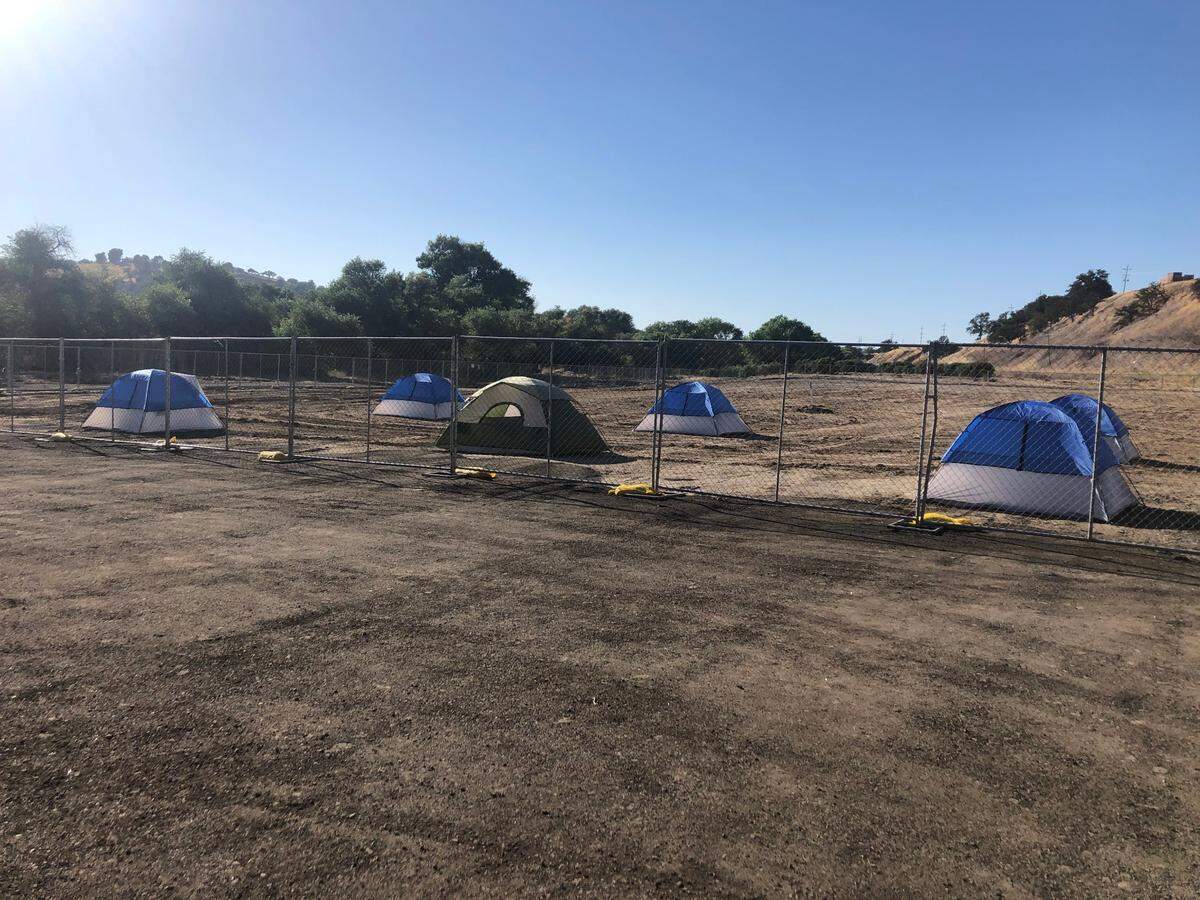
What does the city’s homeless camp look like?
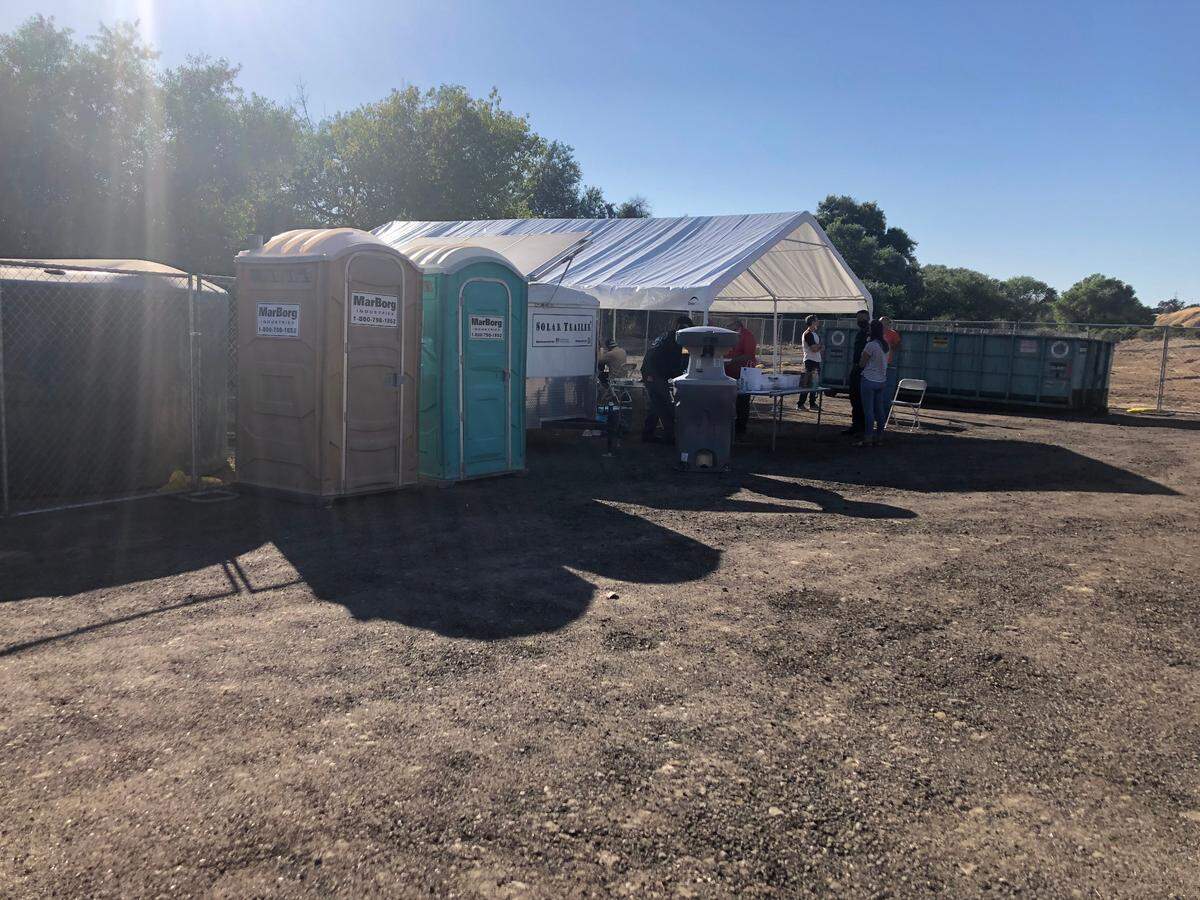
The city has purchased 20 tents and has set up six of them in a fenced-off dirt area on one side of the site. The rest of the site has a staff trailer, showers and portable toilets, as well as a safe parking area.
Paso Cares and the El Camino Homeless Organization (ECHO) will host a nightly dinner at the camp, shifting the meal from its typical location at 24th Street and Riverside Avenue.
SLO Bangers — a syringe exchange and overdose prevention nonprofit — plans to provide overdose prevention education, overdose reversal medication Naloxone, sharps containers and syringe litter cleanup at the site, said Lois Petty, site manager for the syringe exchange program.
Miller Event Management Inc. will provide security at the site overnight and during the weekend, although none of the personnel has been trained to interact with individuals coping with addiction or mental illnesses, Harris said.
The city continues to rely on its police Community Action Team (CAT) and ECHO staff to help such people, he said. Security personnel will contact police officers or fire crews, as needed.
The site has capacity for additional tents, but the city is holding off on ordering more until leaders see how many residents express interest in staying there, Harris said. It may take some time to spread the message about the camp through the city’s homeless community, he said.
“It really is a challenge to entice them out of the riverbed,” Harris said.
What do homeless residents think of the new camp?
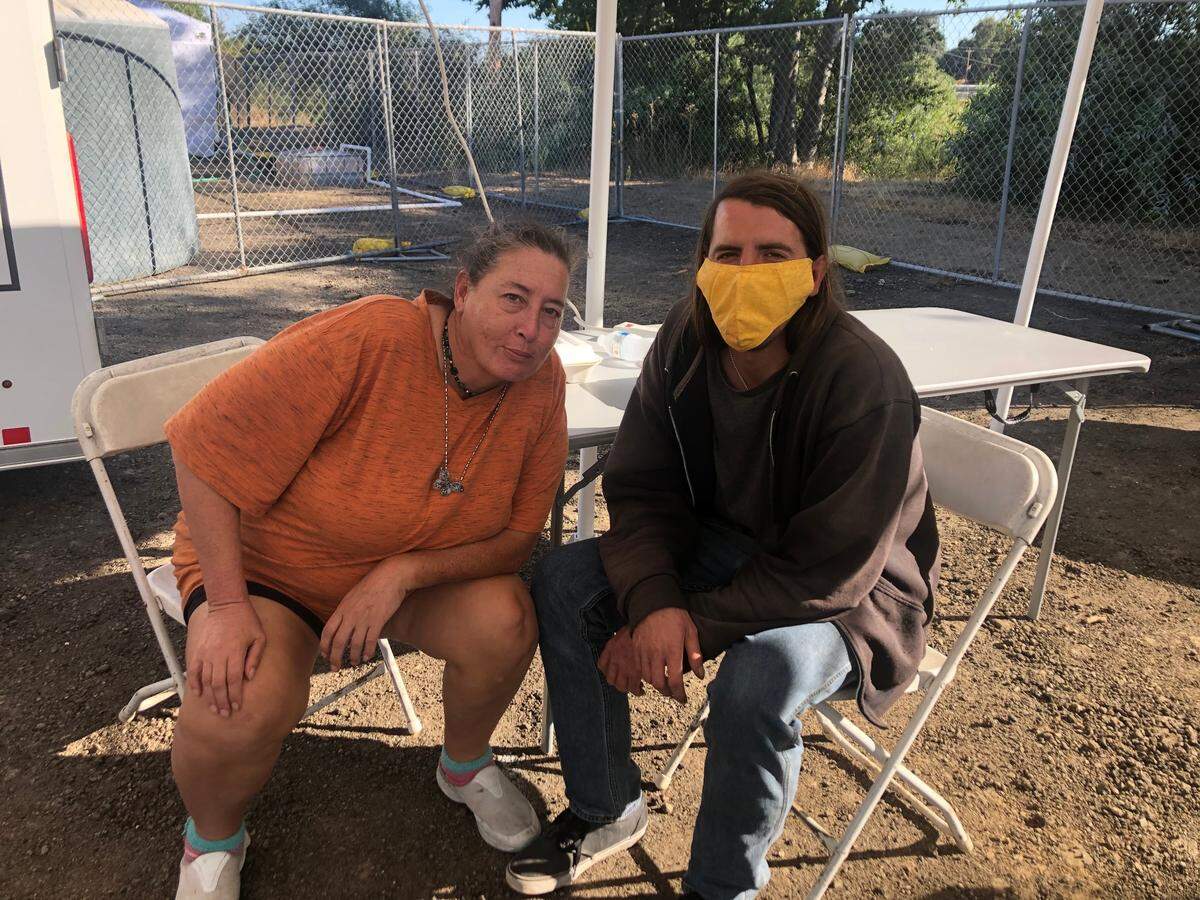
Sharon Schultz and her son, Joshua, ate dinner at the new site one night last week. Schultz, who’s been living in her Jeep Grand Cherokee for four years, said she doesn’t feel safe staying at the Borkey Flats site.
“I need lights where I can see people,” she said.
Schultz prefers to park near a shopping center on the east side of Paso Robles, which is well-lit and has a steady police presence.
“There’s just too many negatives here for me, as a disabled woman, to stay here,” she said of the camp.
Schultz has found a spot with an outdoor electrical outlet and a sidewalk where she plugs in her phone and relaxes on a blanket before retiring to her car for the night. For showers, she visits the ECHO shelter in Atascadero.
For several years, Schultz has dealt with a series of health problems. She became homeless when her disability payments didn’t come through in time and she was kicked out of her Santa Margarita trailer.
Schultz is working toward getting housing at Oak Park, a low-income development on Paso Robles’ northwest side. In the meantime, she thinks she’ll visit the Borkey Flats camp for meals only.
“I want to be a productive person,” Schultz said. “I want to be normal.”
Homeless residents share safety concerns
On Aug. 4, homeless residents gathered for one of the final meals served in a corner of the parking lot at 24th Street and Riverside Avenue.
Paso Cares volunteers and ECHO staff gave attendees bags of toiletry items and to-go containers of food. Many of those who arrived to eat walked up or rode bicycles to the site.
Nearly all of the homeless residents who spoke to The Tribune were skeptical about the new camp, and some were defensive about the negative way in which their community has been portrayed.
Casey Abbott lost his Ventura County home in the 2017 Thomas Fire and has been living under the 13th Street Bridge. He said he works for a local machine shop and is saving money to get his own business off the ground.
Abbott said some homeless residents are struggling with drug addiction and other problems, while “some people are better equipped to get their lives together more than others.”
“It’s not a great big family of togetherness,” he said.
In the riverbed, people set up their own camps and can avoid those with whom they don’t want to interact, Abbott said. Even so, he’s seen fights, and other riverbed residents have stolen his belongings, he said.
He thinks people should be allowed to keep their campsites, and the city should instead create a designated place for residents to create fires for cooking and such.
Abbott plans to find a “better hiding place than (he has)” if he’s kicked out of his current living space.
“Putting everybody in one concentration camp is not a good idea,” Abbott said. “It’s not going to work and never will.”
Michael Harris was previously homeless in Paso Robles and in other cities throughout California. He now lives with family members in a house on Riverside Avenue, but he remembers his time on the street well.
Harris told The Tribune he doesn’t think the homeless camp is a good idea, especially because residents may have a tough time reaching the site safely.
He called the camp “unconscionable” and “like putting a gas station inside a ball of fire.”
River Road is very narrow and winding, with almost no shoulder for bicyclists — Harris called it “an accident waiting to happen.”
“Everybody outside is not on drugs,” he said. “Everybody outside is not an arsonist. Some people are just down on their luck.”
Harris sees empty homes around Paso Robles that could be used to house those without a place to live. He said it took some time for him to get used to living inside once he found housing.
Now, when Harris feels uncomfortable, he sits on his porch. But he’s happy being outside is no longer his only option.
“It’s nice to be able to come in out of the cold,” Harris said.
This story was originally published August 13, 2020 at 5:00 AM.