
Want to grow strong fruit trees in your SLO County garden? Here’s how
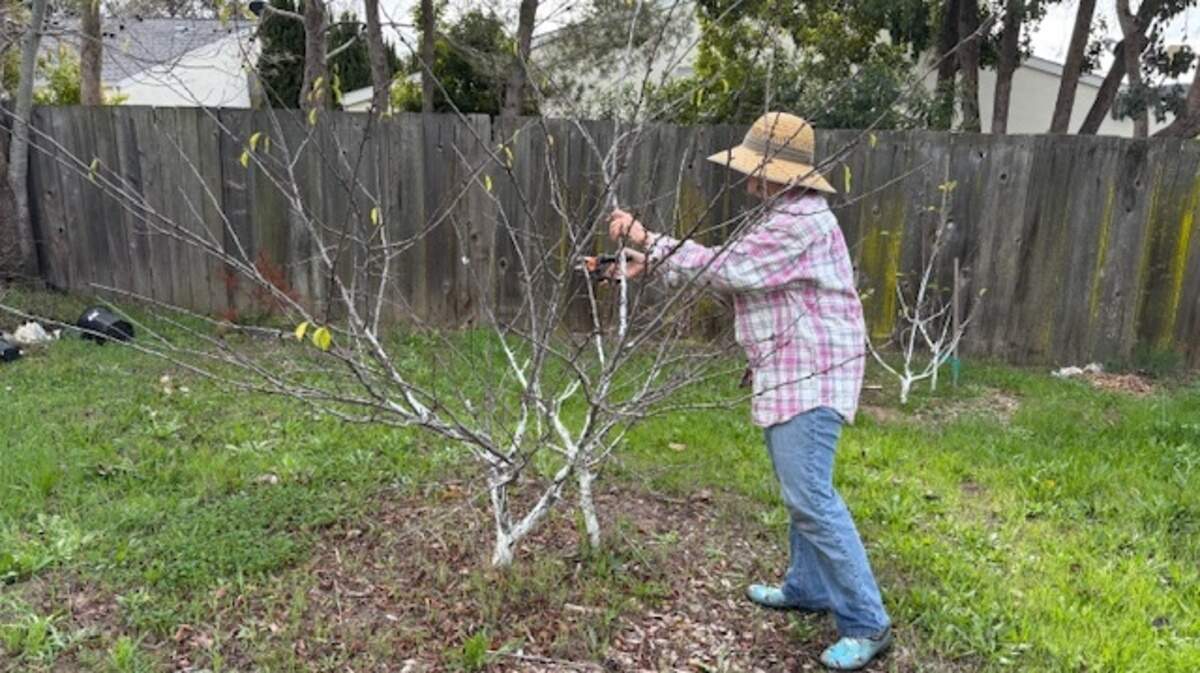
Caring for deciduous fruit trees — apples, pears, peaches, plums, apricots, cherries and others — comes down to a few repeating seasonal practices: right variety, consistent water, thoughtful pruning, timely feeding and proactive pest monitoring.
Guidance offered by UC Cooperative Extension and UC Master Gardener emphasizes that long-term success starts before you even pick up pruners.
Choose varieties suited to your climate, especially winter chill hour needs, because insufficient chill can reduce bloom and fruit set.
Water: steady moisture, not soggy soil
Irrigation is one of the most important management factors for healthy trees.
Newly planted trees should be watered thoroughly to settle soil around roots, but heavy soils should not be kept overly wet because saturated soil is suffocating, and roots do need air.
As trees mature, aim for deep watering that moistens the root zone, then allow the upper soil to dry slightly before watering again — this encourages deeper rooting and reduces disease risk.
Mulch and soil care
Apply organic mulch (wood chips or composted material) beneath the canopy to moderate soil temperature and conserve moisture.
Keep mulch a few inches away from the trunk to reduce crown and bark problems.
Good soil practices also support beneficial organisms and reduce plant stress — one of the biggest drivers of pest and disease issues.
Pruning: Structure in winter, control in summer
UC Master Gardeners recommend pruning at least annually, and many trees benefit from both winter and summer pruning.
During both seasons, remove dead, damaged, diseased, crossing or poorly angled wood, and make clean cuts that allow water droplets to run off, rather than cupping and holding water.
Winter (dormant) pruning is typically used to create a strong structure and set up productive scaffolds, while summer pruning can help manage vigor, keeping trees smaller and fruit more accessible.
Thin fruit for size, tree health, and regular bearing
Many deciduous fruit trees set an overabundance of fruit, leading to smaller, lower-quality yields.
Thinning (removing some developing fruit early) improves final fruit size, reduces limb breakage and helps prevent the “on-year/off-year” cycle in some species.
If you want manageable home-orchard trees, thinning is not optional — it’s a key practice that leads to quality produce.
Fertilize with restraint
Over fertilizing can push excessive leafy growth, which often attracts pests like aphids and can reduce fruiting.
UC IPM notes that avoiding over-fertilization (and favoring slow-release approaches when appropriate) helps reduce aphid problems.
In spring, fertilize according to the tree’s age, vigor and soil test results, if you have them. Reduce the amount of fertilizer applied if the tree’s growth is already strong.
Follow Integrated Pest Management (IPM) Guidelines
Rather than spraying “just in case,” UC guidance encourages monitoring for pests regularly and choosing the least-disruptive controls first.
UC IPM’s home garden resources and Pest Notes provide step-by-step identification and management options for common fruit tree pests and diseases.
With consistent seasonal efforts — water wisely, prune with purpose, thin early, feed moderately, and monitor regularly — deciduous fruit trees become easier to manage and far more rewarding year after year.
For more information
Caring for fruit trees will be the topic of our next Master Gardener Advice to Grow By workshop. Certified Master Gardeners will explain how to select, grow, and maintain healthy trees and demonstrate techniques of winter pruning.
The program will take place Saturday, Jan. 17, from 10 a.m. to noon, at 2156 Sierra Way, San Luis Obispo. There is no charge; see our website below for more information or to register.
Visit our YouTube channel at San Luis Obispo County UC Master Gardeners for more informative gardening videos.
Visit our website at ucanr.edu/sites/mgslo or email questions to anrmgslo@ucanr.edu.
At our UC Master Gardener Helpline offices, volunteers are available to help answer plant questions at three locations in the county:
UCCE Master Gardener Helpline offices:
- San Luis Obispo: 805-781-5939 (Monday and Thursday, 1 to 5 p.m.)
- Arroyo Grande: 805-473-7190 (Wednesday 10 a.m. to noon)
- Templeton: 805-434-4105 (Wednesday 9 a.m. to noon)
This story was originally published January 11, 2026 at 5:00 AM with the headline "Want to grow strong fruit trees in your SLO County garden? Here’s how."