
How you can keep your SLO County home fire safe through landscaping
A couple of weeks ago, I watched the removal of my neighbor’s nearly 60-foot ancient pine tree in the middle of a tiny front yard. As each layer of branches was cut down, more and more dead branches were revealed.
One lone ember could have turned this tree into a torch.
Fire awareness and the need to prepare are timely topics in our county. We hear one question quite often, “what should I plant that won’t burn?”
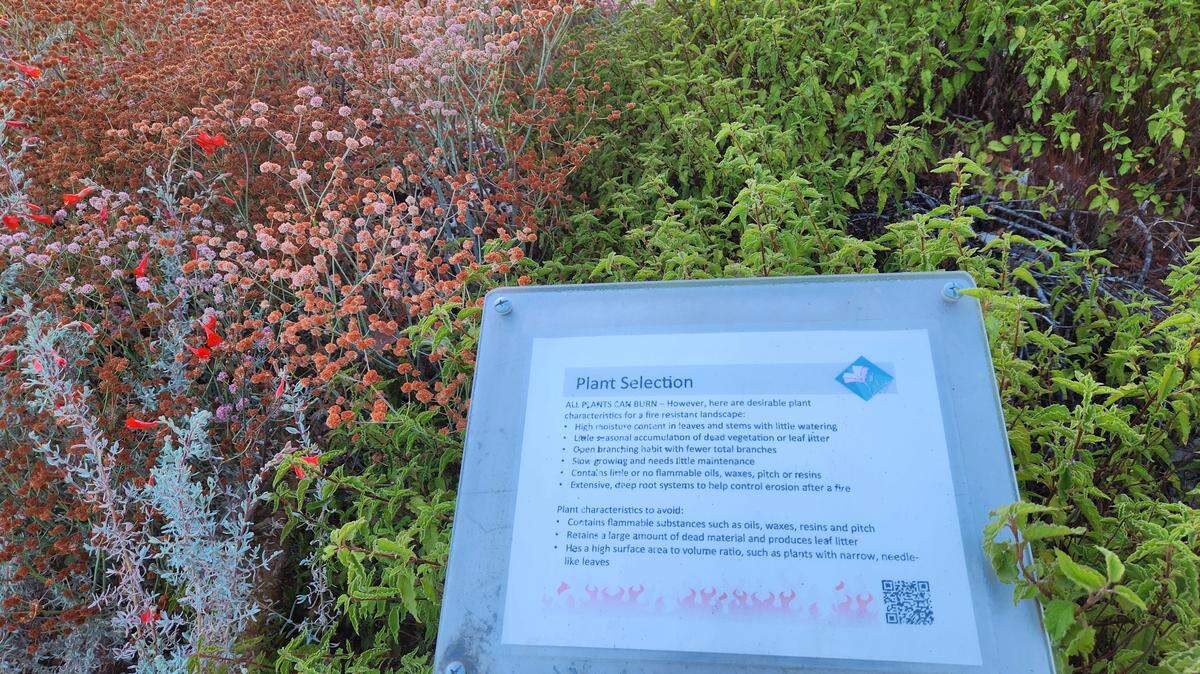
The reality is that all plants will burn in a sufficiently hot fire. The severity of a fire depends on topography, heat, weather and fuel. The fuel component is the element we have the most control over in our own landscapes.
On Saturday, Oct. 18, from 10 a.m. to noon, the UC Master Gardeners of San Luis Obispo County will present “A Fire Safe Yard and Garden” in partnership with Cal Fire. The workshop will be held at the Garden of the Seven Sisters, 2156 Sierra Way in San Luis Obispo. We hope this presentation will inspire our local residents to take action to improve the safety of their landscapes.
There are a few tips.
First, take a step back and take a wide-angle view of the space that surrounds your home or other structure on your property. Review the recommendations below for managing the zones around your structure and determine which are the most applicable to your space. Then implement each of the modifications to reduce fuel components in each of the zones.
- Zone 0 (0-5 feet from the structure): Remove any clutter, relocate firewood and any other wood to 30-100 feet away from the structure, or to the property line. Remove plantings including trellises, trees and shrubs, and clear out all weeds. Use non-combustible mulches such as gravel or bark that is larger than 3 inches (no shredded bark) and clean the gutters.
- Zone 1 (5-30 feet): Prune existing plants to create low, open shapes and improve airflow. Provide sufficient irrigation to maintain overall plant health, as stressed plants are more susceptible to insect and disease infestations. If adding new plants, maintain wide spacing. Be sure to account for the size of the plants at full maturity. Select plants that can withstand drought conditions. Native varieties such as ceanothus and manzanita are good non-woody choices. If you want a ground cover, choose a low-growing variety that stays low to the ground.
Not everyone’s property has Zones 2 and 3: 30-100 feet and greater than 100 feet, respectively. These two zones address vertical and horizontal spacing for shrubs, trees and tree limbs, maintaining vegetation and relocation of wood piles and other combustibles.
For more information
Join the UC Master Gardeners on Oct. 18 at the Garden of the Seven Sisters, 2156 Sierra Way in San Luis Obispo at 10 a.m. for more tips on how to get started. There is no charge; see our website below for more information or to register. In addition to the workshop, we’ll have a plant sale featuring native and Mediterranean varieties, propagated by our chapter volunteers.
Visit our You Tube channel at San Luis Obispo County UC Master Gardeners for more informative gardening videos.
Visit our website at ucanr.edu/sites/mgslo/ or email questions to anrmgslo@ucanr.edu. Our volunteers are available to help answer garden-related questions at three locations in the county.
UCCE Master Gardener Helpline offices:
- San Luis Obispo: 805-781-5939 (Monday and Thursday, 1 to 5 p.m.)
- Arroyo Grande: 805-473-7190 (Wednesday 10 a.m. to noon)
- Templeton: 805-434-4105 (Wednesday 9 a.m. to noon)
This story was originally published October 12, 2025 at 5:00 AM with the headline "How you can keep your SLO County home fire safe through landscaping."