Central Coast gets $5M to improve care for severely mental ill amid federal cuts
Amid a particularly challenging budgeting year for health services, the Central Coast is set to receive a major one-time funding package to improve care for its severely mentally ill population.
California’s $352 million budget for fiscal year 2026-27 allocates $5 million to CenCal Health — which administers Medi-Cal coverage on the Central Coast — to run a local pilot training program for parents, caregivers and providers of those who struggle with severe mental illnesses.
The money will enable CenCal to focus on hard-to-treat cases, specifically by improving care training and coordination.
The funding is a dream come true for parents like Dawn Marie Anderson, whose son, despite being diagnosed with a slew of severe mental illnesses over the last three decades, doesn’t know he is sick.
She said her son, now 42, has struggled with mental illness since graduating from Morro Bay High School, including bipolar disorder, schizoaffective disorder, grandiose personality disorder and a lesser-known symptom of these diagnoses called anosognosia — the inability of someone with a mental illness to register their illness.
As a result of his illness and anosognosia, getting lasting help that worked for her son was near impossible for decades. He has faced chronic homelessness, was arrested at least 200 times for misdemeanor offenses or to be put on detox holds, declared incompetent to stand trial 12 times and repeatedly incarcerated in the SLO County Jail and Atascadero State Hospital.
“I needed this for (my son) 20 years ago,” Anderson told The Tribune of the CenCal pilot program. The Tribune is not naming Anderson’s son to protect his privacy.
According to National Alliance on Mental Health, which Anderson previously led the SLO County chapter of, anosognosia typically causes a person to avoid treatment because they don’t think they need it.
“Anosognosia is not denial,” Anderson said at a May 4 state assembly budget subcommittee hearing on health in Sacramento. “It is not stubbornness. It’s a part of the illness. Until we acknowledge that, we will continue to fail people like my son.”
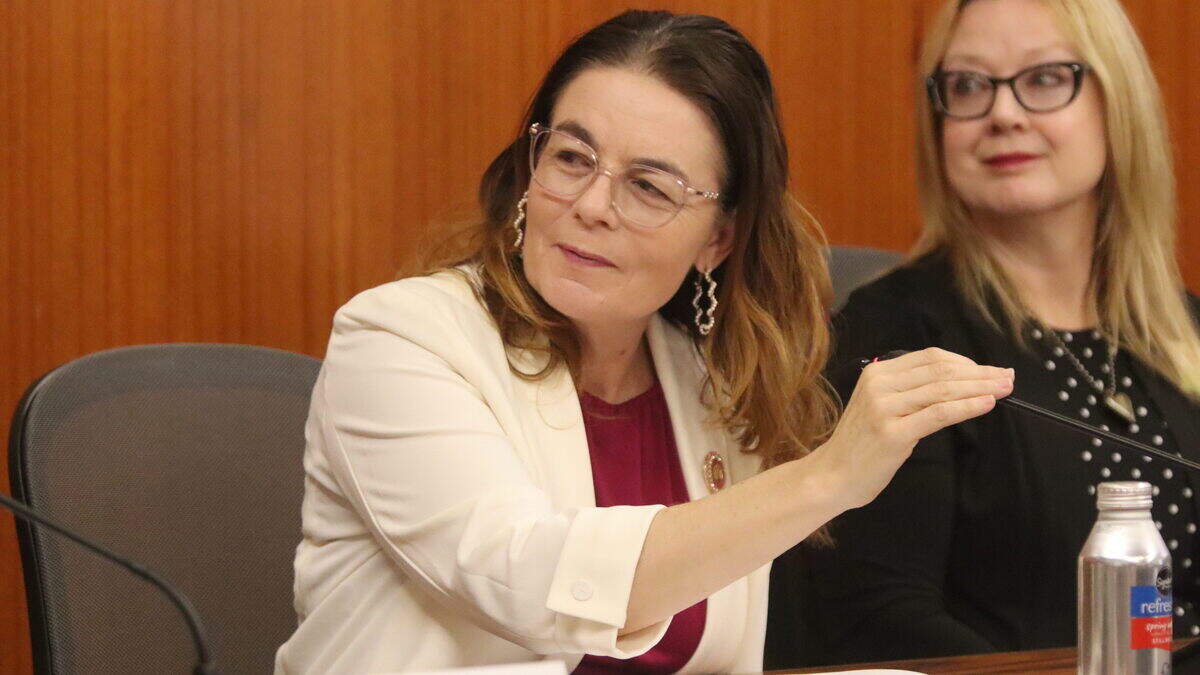
The hearing was about House Resolution 1 — the Trump administration’s “One Big Beautiful Bill Act” — which, among other things, cut tens of billions of dollars in federal funding from Medi-Cal, which funds Medicaid for California residents. Anderson was invited to speak in Sacramento by San Luis Obispo County Assemblymember Dawn Addis.
“What we’re facing right now with HR 1 is going to take us backwards because of the significant reduction in Medi-Cal dollars,” Addis said at the hearing, noting that the reduction will cause a care crisis for those with serious mental illnesses.
Now, the state budget will help bridge that gap.
CenCal’s one-time, $5 million budget package will fund programs in SLO and Santa Barbara counties to teach LEAP trainings — Listen, Empathize, Agree and Partner — a communication technique developed by clinical psychologist Xavier Amador, author of the book “I Am Not Sick, I Don’t Need Help!”
The method focuses on understanding and humanizing rather than denying the experience of someone with severe mental illness in an effort to deliver care they feel safe accepting, his book teaches.
“Even if your loved one still doesn’t accept the fact that they have a mental illness, they can learn to accept the fact that there is something that helps them function differently,” said Anderson, who has done two LEAP courses and champions the method.
Marina Owen, CEO of CenCal, said the goal of the pilot program is to reach all providers along the spectrum of care of individuals with severe schizophrenia and anosognosia, from emergency room clinicians, law enforcement and jail staff to families and caregivers.
“The idea would be first to provide comprehensive training at all various touchpoints, just so that those interfacing with clients are better able to communicate with them and meet their needs,” Owen told The Tribune.
Owen said while the design and details of the pilot are still being ironed out, CenCal plans to partner with Amador and follow his established LEAP training course framework.
CenCal will also be able to distribute funds to other community organizations and fill-in healthcare coverage for uninsured individuals and services, she said.
Owen added that a larger portion of the money may be allocated to SLO County over Santa Barbara County.
“We do see a greater need in San Luis County than Santa Barbara on at the service level,” Owen said. “There’s fewer providers, fewer points of entry, so we will be focusing on SLO.”
Also to help address that care gap, an additional $2 million was awarded to SLO County’s Transitions-Mental Health Association, or THMA, for behavioral health workforce hiring and retention of psychiatrists, psychiatry nurse practitioners, substance use counselors and therapists.
SLO County has a 25% shortage in behavioral health providers and around a 50% deficiency in psychiatrists, according to THMA’s clinical director Megan Boaz Alvarez.
“We’re really hoping to recruit and retain more providers to help us meet the need and serve folks who maybe would not otherwise have services,” Alvarez told The Tribune.
One-time funding packages of $2 million for medical school loan repayments for physicians who practice on the Central Coast and $1 million to Cal Poly to study physician access and retention on the Central Coast, including a medical school feasibility study, are also meant to support that goal.
“Cal Poly is proud that Assembly member Addis invited us to partner on this feasibility study, and we look forward to exploring solutions that help attract and retain healthcare providers in our region,” Cal Poly President Jeffrey Armstrong told The Tribune in an emailed statement. “We hope the findings will not only benefit Central California but also provide a model for other rural communities facing similar workforce challenges nationwide.”
Addis said programming like the pilot CenCal plans to implement often starts in big cities like Los Angeles or in the Bay Area and then grows outward to rural areas where they don’t fit.
The goal of this funding was to uplift the needs of rural areas like SLO County, which is often dismissed when it comes to mental health, she said.
“(The) Central Coast could be a model for rural California in terms of how we do mental health services on hard-to-treat mental illness, because it is a problem that exists across the state, but I think if you can tackle it in an area like ours, where healthcare is sparse, providers are sparse, we often lack resources, distance causes a lot of problems, then you’d be able to replicate that more easily in urban settings,” Addis said.
Addressing the ‘success cliff’
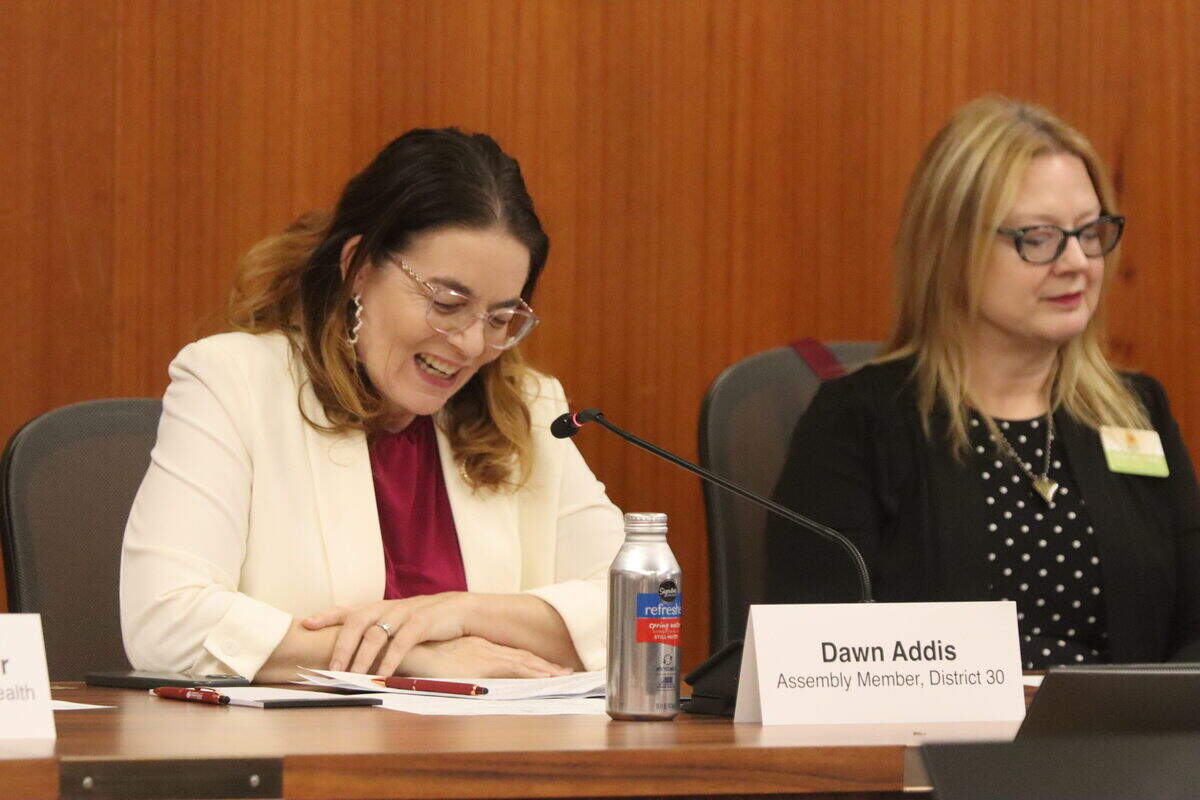
Addis said she sees the CenCal funding and THMA funding working hand-in-hand to address gaps in the care continuum for those with schizophrenia and anosognosia in SLO County.
“A lot of folks described sort of a success cliff ... as soon as they start to really level off and be functional, a lot of the services start to drop away,” Addis told The Tribune. “We wanted to craft it in a way where we could have services that would continue to wrap around the individual to provide continued supports.”
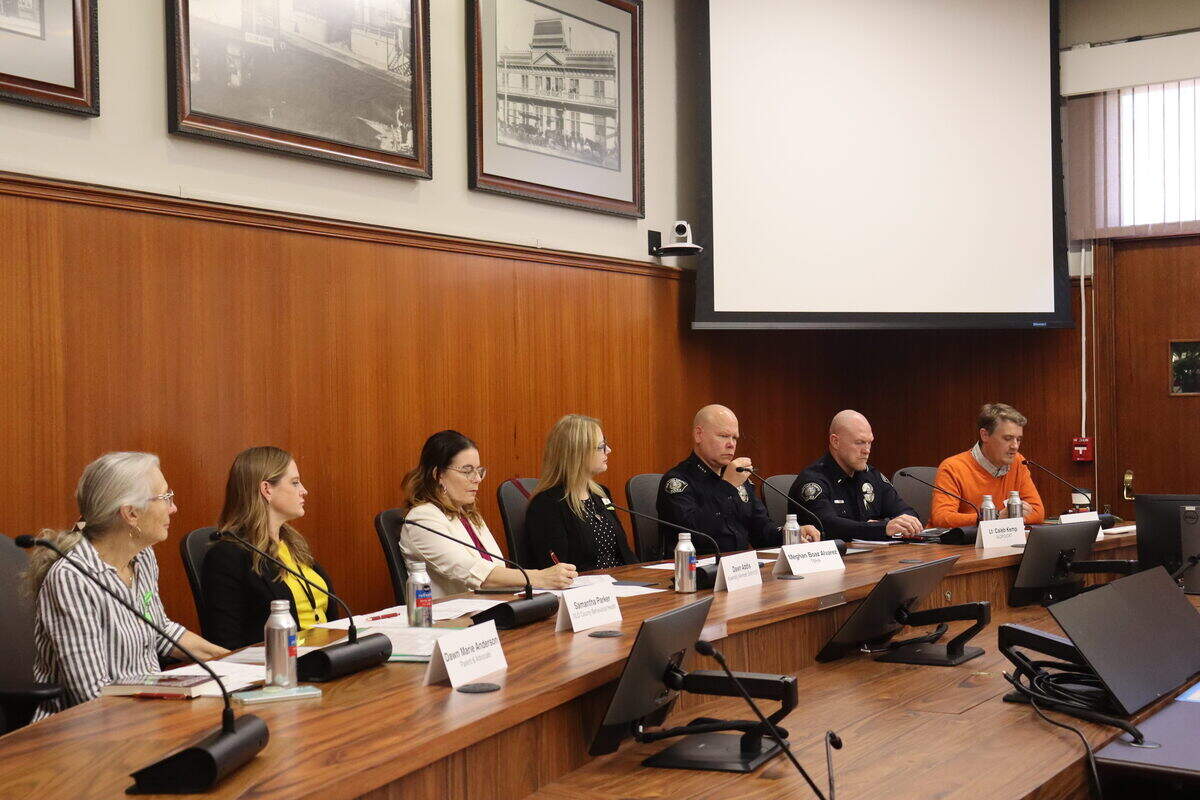
This was the assemblymember’s key takeaway from a May 8 panel held at SLO City Hall, days after the budget hearing in the state capital, she told The Tribune.
Anderson described her son’s own cyclical battle with his mental illnesses and the justice system at both events. Over more than two decades, her son has completed numerous rehabilitation and treatment programs including mental health diversion, voluntary CARE Court, outpatient programs and most recently a post-release treatment and supervision program initiated through Assembly Bill 109 without the treatment ever sticking.
“When the program ends, the support ends,” she said. “The charges are dropped. The system calls it a success, but for someone with anosognosia, that success is a cliff. He believes he is fine, so he stops the medication. Within weeks, things fall apart again. He loses his housing, his work, his stability, he’s back on the streets and the cycle starts all over again.”
Her son lived inside this cycle for more than 26 years, Anderson said. Sometimes, she would beg police to arrest him, just to get him stable again because no resources existed for him outside the criminal justice system.
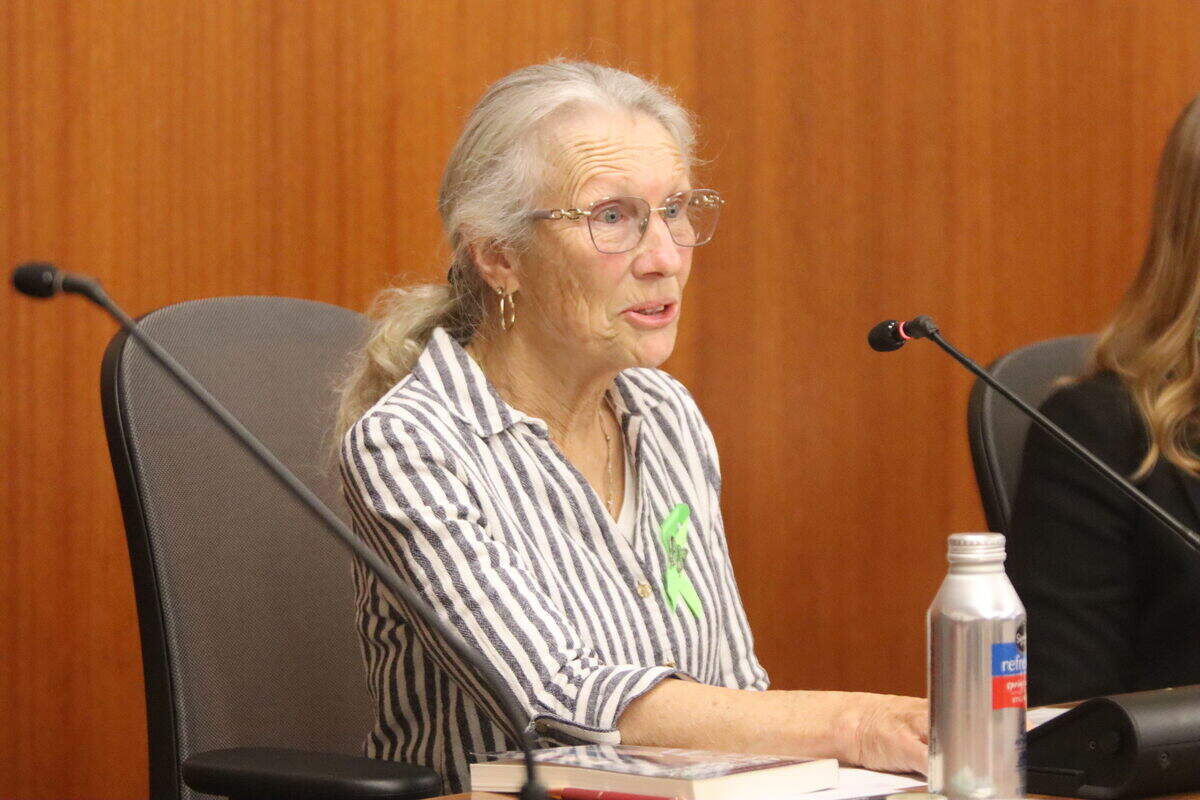
The May 8 panel brought Addis and Anderson together with THMA clinical director Alvarez, SLO County Behavioral Health Access and Crisis Services Division Manager Samantha Parker, Community Action Partnership Homeless Services Director Jack Leahy, San Luis Obispo Police Chief Rick Scott and Lt. Caleb Kemp to discuss gaps in care for the severely mentally ill in SLO County.
”We’ve designed everything around episodes, not continuity of care,” Leahy said on the panel. “And so what happens is people stabilize briefly. ... But then it’s how do you link to the next service and the next service without falling down?”
The budget hearing and the local panel — both held during Mental Health Awareness Month — helped to push forward the CenCal, THMA and other funding packages.
At a time when federal money for mental health services is being taken away, Addis and her team were able to secure landmark funding for care on the Central Coast. The $5 million CenCal package comes entirely from the state’s general fund.
“We see nothing but funding cuts, and there were numerous needs,” Owen said. “To be able to champion something new that really helps in the behavioral health arena, and to really try to destigmatize some of the services and supports for those with severe schizophrenia in this budget is incredible — in any budget it would be, but particularly this one.”
‘We have to work together’
For Anderson, a community advocate not just for her son but for other families who face the same experience, the funding is a godsend — and where the real work begins.
After his last arrest over a year ago, her son regained stability and has been living at home with her in Los Osos in harmony, working and taking his medication for a whole year.
“When my son is on medication, he is a completely different person,” she said. “He’s a builder. He works hard, he earns money, he creates a life. He’s proud, he’s kind. That’s who he truly is. But the system mostly sees him when he’s on, medicated, homeless and in a crisis, expects him to make choices we know he cannot make.”
When he was released from custody, he entered the AB 109 post-release program, which set him up with a medication manager, a case manager and a psychiatrist who he met with one to three times a week.
He recently graduated from the program, but this time, a team including a public defender and members of the District Attorney’s Office and the jail recognized he was not ready to be released when the program ended and advocated for three extra months and ongoing support after that — and it finally worked, she said.
“My son and I have a relationship, first time ever,” Anderson said. “It should not take 25 years and 12 cycles through a system to get there.”
She hopes that kind of personal, empathetic and continued care is what the CenCal pilot program can bring to every family in SLO County who has a loved one struggling with severe mental illness.
“We have to work together, and we have to trust,” Anderson said.