3 SLO County groups want grants for homelessness. How would they spend it?
A trio of groups is looking to bring state money to San Luis Obispo County — but it remains to be seen which ones will come away with the funding, if any.
As of the June 30 deadline, three applications for the fifth round of Encampment Resolution Fund grants were submitted from San Luis Obispo County, its cities and homeless service providers.
Those applications are seeking a piece of the $93 million pie of the final round of Encampment Resolution Fund money, which was initially authorized by the state Legislature in 2021.
One application seeks to remediate the long-term homeless encampments in Paso Robles’ Salinas Riverbed. Another aims to make a dent in vehicular homelessness across the county, while a third is looking to turn around the well-known Sunny Acres property.
With $93 million up for grabs, not all applicants will be able to receive the funding they requested, but that doesn’t mean they’re necessarily competing with one another as grant allocations are announced later this year, county homeless services division program manager Katlynn Beatty said
“I don’t know specific chances, but I will say that they are really different projects, and especially the vehicular homelessness one is so different from the Sunny Acres one in scope and in the total requested,” Beatty said. “For these ERF grants, about ... 50% is allocated to encampments along the Caltrans area — so like along the 101 or Caltrans-owned roadways — and so that is part of my hope, that because multiple of the vehicular encampment sites are along the state-right-of-way, that it will not be in direct competition with the Sunny Acres one.”
Paso Robles aims to address Salinas Riverbed
Two weeks ago, the city of Paso Robles finalized a joint application with the Housing Authority of San Luis Obispo and El Camino Homeless Organization to address homeless encampments in the Salinas Riverbed.
The city’s application is seeking $12-14 million in state money — the largest of any application from the region — to tackle the problem on multiple fronts.
Part of the grant would be used to create a Housing Navigation Center at the El Camino Homeless Organization’s 1134 Black Oak Drive campus, while around 70% would go to funding housing vouchers for individuals exiting from HASLO’s existing Homekey units at ECHO into more permanent situations.
Though ECHO currently operates 60 permanent supportive beds in its Homekey program, which are intended to serve as a stepping stones to long-term housing options, that stage of the re-housing process has proved to be a bottleneck in the rehousing pipeline, keeping turnover low at Homekey beds, Paso Robles community services director Angelica Fortin said.
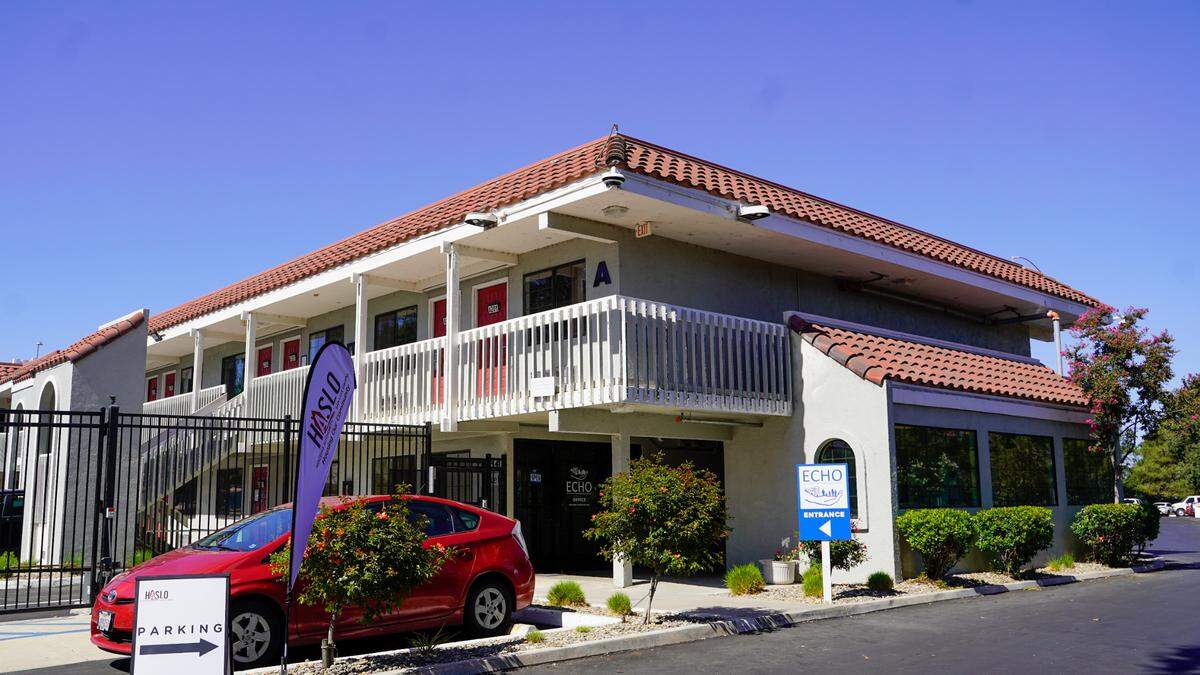
Part of that bottleneck stems from the Homekey units proximity to ECHO’s nightly meal program and other resources, while on the other end, HASLO has a decade-long waitlist for its properties in the area, giving Homekey residents little reason to move on from the stability they’ve attained, Fortin said.
That’s where the Moose Apartments come in, she said.
Featuring 4,000 square feet of commercial space and 26 residential units in two buildings at 2548 Spring St., the complex has been in the works for several years, and is expected to start taking on occupants by winter next year, Fortin said.
HASLO’s share of the grant — just shy of $8.5 million — would see the Moose Apartments completed and back its vouchers and other permanent housing solutions in the area, city manager Chris Huot said.
“Over the last four or five years, the property has gotten to certain points in development and has stopped, I think, for a variety of reasons, including financial,” Huot said. “Not only does it allow families potentially the opportunity to find permanent supportive housing, but it also has the opportunity to improve and enhance a property that, frankly, has been what cities would tend to classify as a nuisance-type property due to unfinished structures.”
By the time the funding must be fully expended in 2029, the city is aiming to house 60 of the approximately 75 individuals currently living in the riverbed, homeless services manager Ashlee Hernandez said.
Countywide program focuses on vehicular homelessness
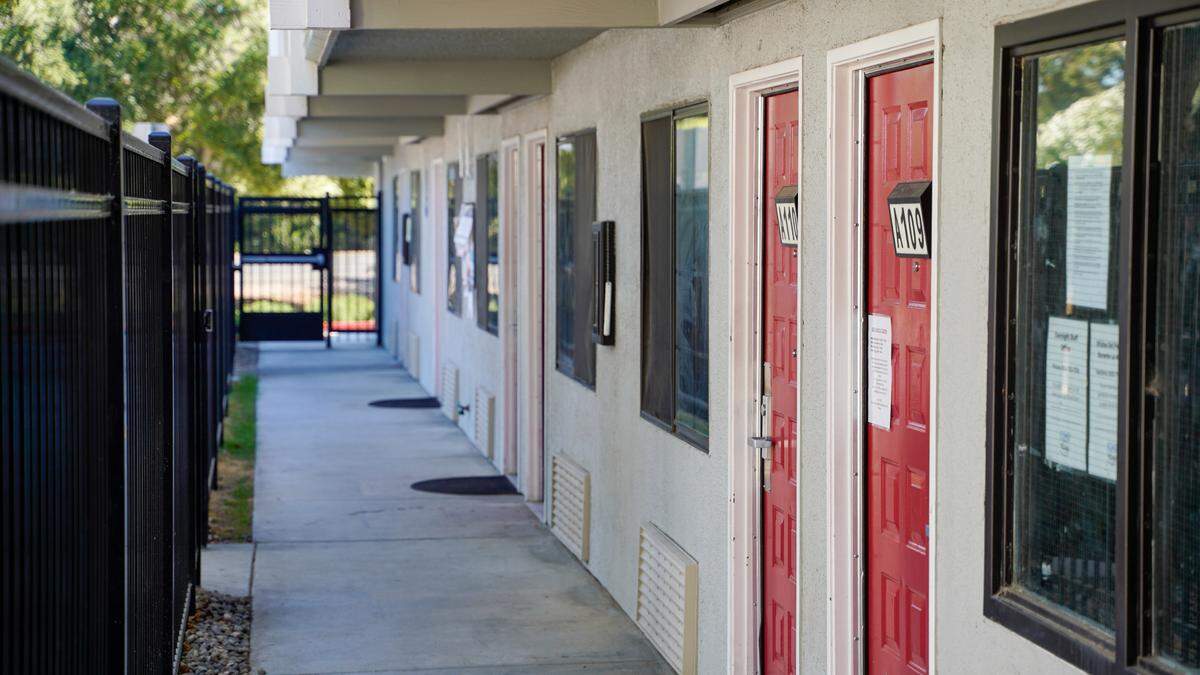
San Luis Obispo County is also throwing its hat into the ring for this year’s Encampment Resolution Fund grants in an effort to curb homelessness in recreational vehicles countywide.
Working with the Community Action Partnership of San Luis Obispo, the 5Cities Homeless Coalition and ECHO, the county is seeking an $8 million grant to give individuals living in RVs a path to long-term housing.
Beatty said the effort will start with a buyback program, mirroring a strategy used by the city of Berkeley.
In Berkeley’s buyback program, RVs were purchased at $125-150 per linear foot, Beatty said. For most RVs, that’s a payout of around $4,000, and at that rate, the county has budgeted to take 25 RVs off the road, she said.
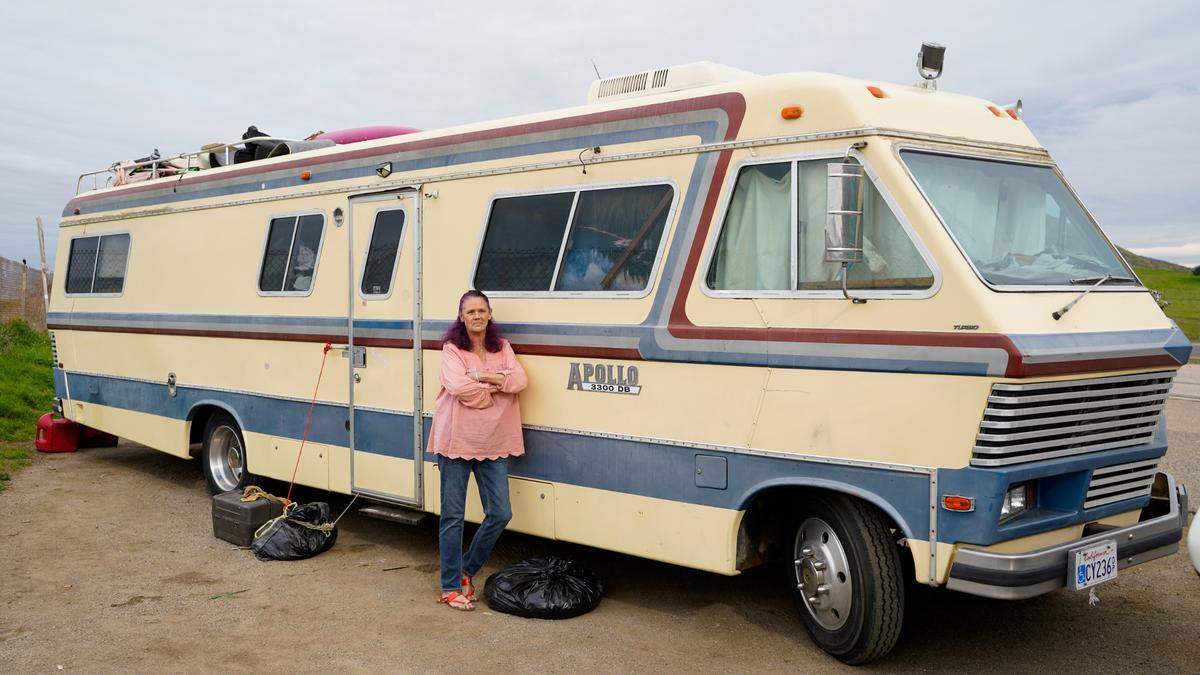
Should the county receive the grant, outreach teams from CAPSLO will make contact with individuals residing in the RVs, offer to enroll them in the buyback program, and match them into supportive housing, Beatty said.
The remaining $7.9 million will go toward supporting the people who accept CAPSLO’s offer by funding 15 new recuperative care beds at the 5Cities Homeless Coalition and rapid rehousing, Beatty said.
“There is that worry where people are like, ‘Well, I’ve lived in my RV for three years and this is my safety net,’ and so they’re afraid even if they get into a more permanent or safer housing situation, they’re afraid of losing the RV, and so we can store it,” Beatty said. “They will be getting a contract with a storage yard, so they’ll be able to store it, and that can be in up to 90 day increments, and then can potentially be extended for another 90 days.”
“The goal is to continue working with people, show them that they can have stability in an apartment or a home that we are able to get them into, and then slowly get them to, kind of separate from the RV,” Beatty continued.
On the other side, residents who aren’t ready to immediately transition into housing or have complex housing needs will be able to turn to the 5Cities Homeless Coalition for their first step out of their RVs, executive director Devon McQuade said.
McQuade said when the opportunity to add recuperative care to her team’s services became available, she jumped at the chance to serve some of the most vulnerable people experiencing homelessness.
“A lot of times we’ll see that folks are living in their cars because they can’t get their medical needs met in a traditional shelter setting, whether that’s medications that are needed or wound care or things like that, so they’ll just discharge from the hospital and go back into their car, because that’s their best option for being able to take care of whatever those needs are,” McQuade said. "We have a site that’s already secured over next to our Balay Ko shelter that we’ve earmarked for this project, and we’ve got some funds to secure it already, so we thought this would be kind of a good tie-in to that.”

Hope on the horizon for Sunny Acres?
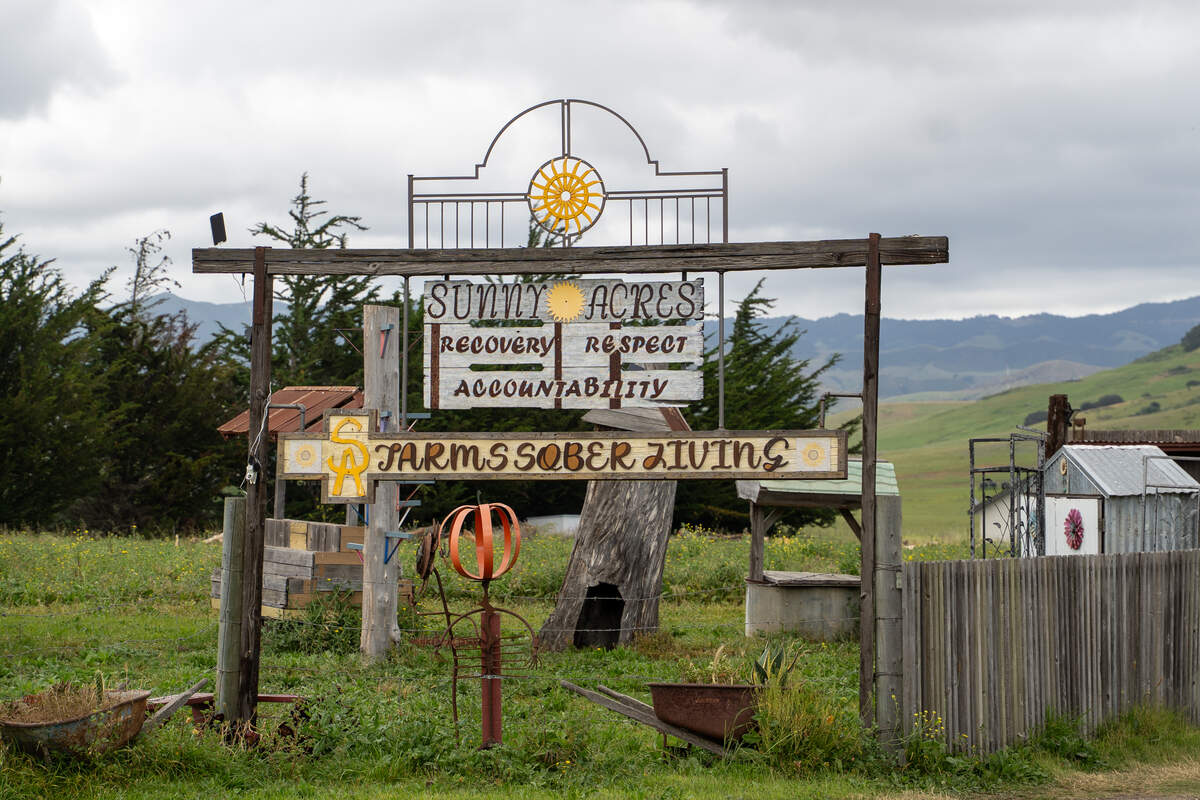
The third application would support efforts to repurpose the Sunny Acres rehabilitation center near San Luis Obispo.
At its peak in the late 2000s and early 2010s, Sunny Acres ranch housed around 50 people at a time, fitting people in varying stages of drug and alcohol recovery into an ever-expanding series of buildings raised on the property, almost always without a permit or any semblance of county approval.
Earlier this year, Sunny Acres founder Dan DeVaul died at 82, just a couple of years after his property was put under the court-ordered care of the California Receivership Group.
Under the California Receivership Group’s, debris has been removed from the site, but the property’s next steps are still murky.

Nonprofit Restorative Partners has been in talks to acquire the property for a couple of years, but the actual transaction has been tied up in delays.
Still, the county and Restorative Partners are seeking a grant just shy of $3 million to start then process of turning the property into a health campus, program manager Jeff Al-Mashat said.
To do that, the county would take advantage of the emergency shelter ordinance that it has renewed every year since 2018, which allows counties to quickly deploy small shelters to rehouse homeless individuals, Al-Mashat said.
In Sunny Acres’ case, aging and dilapidated structures would be replaced by tiny homes not unlike what just opened at the Welcome Home Village, which would serve as temporary housing for the 23 residents who still live on the property, Al-Mashat said.
Meanwhile, permanent structures would be installed by Restorative Partners to turn the property into a more conventional health and rehabilitation campus, he said.
Those tiny homes would be modular builds that could be repurposed into additional structures as needed once Restorative Partners’ vision is put in place, Al-Mashat said.
That side of the property’s rehabilitation would be covered by a separate funding stream on Restorative Partners’ side, Al-Mashat said.
“The idea is that we get these here to provide safe shelter now, but then they are here long-term to provide more structures for long-term housing and services, particularly for the types of clients that they are serving at Sunny Acres,” Al-Mashat said. “We know there’s a real need for the kind of low-barrier housing for people who are involved with the justice system, who often have trouble finding housing elsewhere, so that’s the idea of what we’re putting together with Restorative Partners.”
Restorative Partners declined to comment on its plans for the property.