SLO County mother’s dilemma: How do you treat a son who doesn’t know he’s mentally ill?
Every morning for months, Dawn Marie Anderson started her day the same.
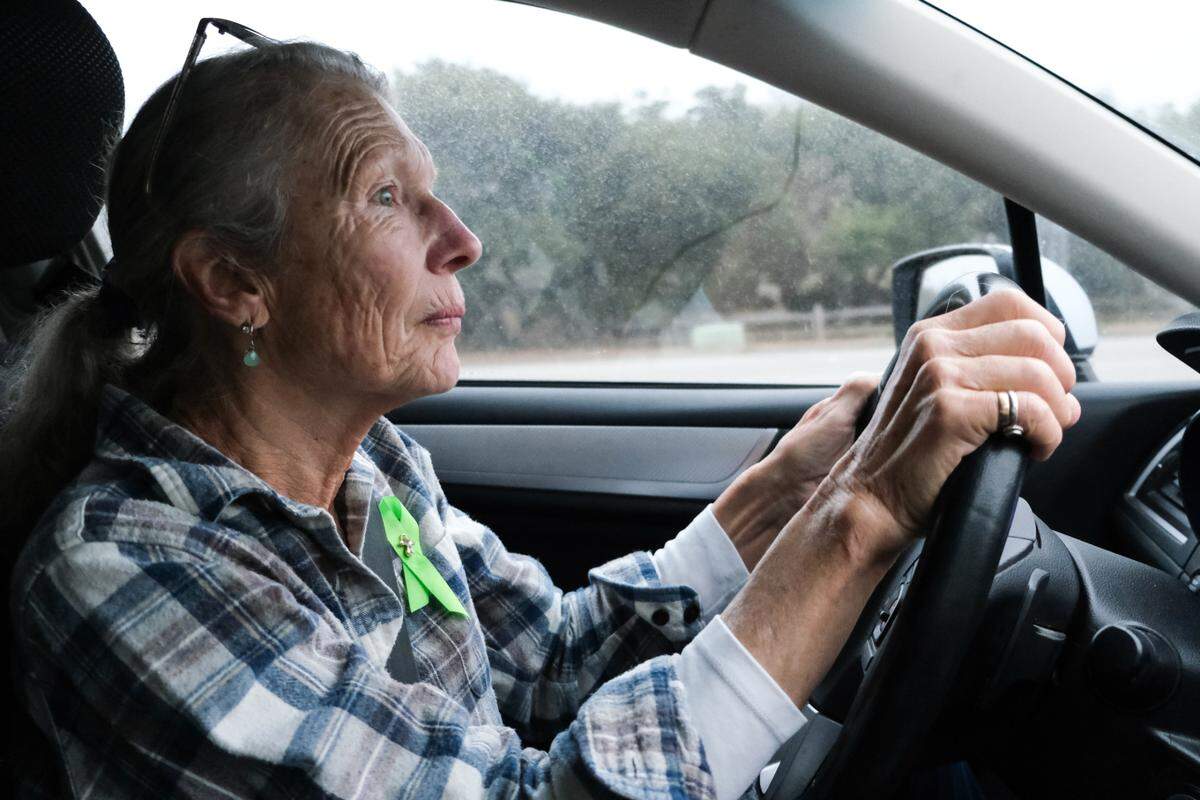
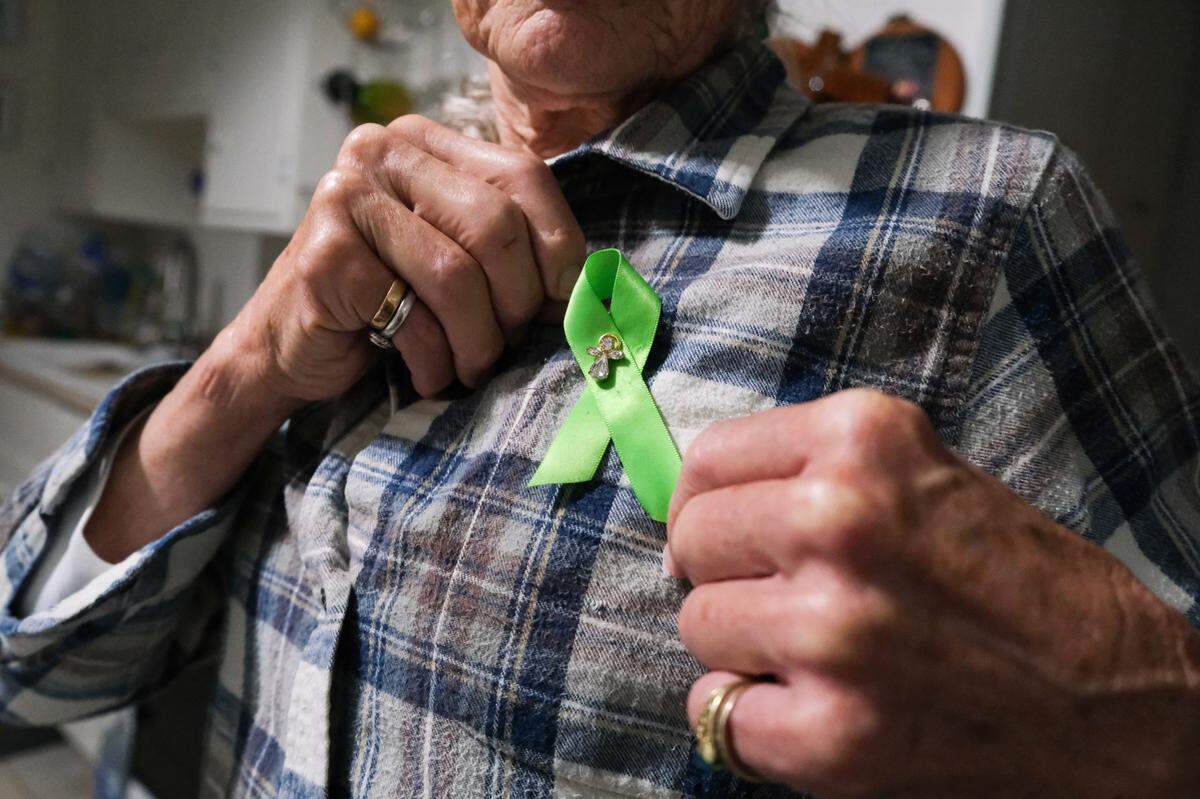
She woke up and got ready, then she fixed a green ribbon onto her collar.
“It’s like brushing my teeth,” she said.
The green ribbon represents mental health awareness — an issue Anderson is far too familiar with, beginning when her son was diagnosed with bipolar disorder in 2007.
In later years, other diagnoses would follow, including one that has been particularly damaging: anosognosia, a symptom of severe mental illness in which someone does not believe they are sick.
Now 41, he’s been in and out of jail and the mental health services for almost three decades.
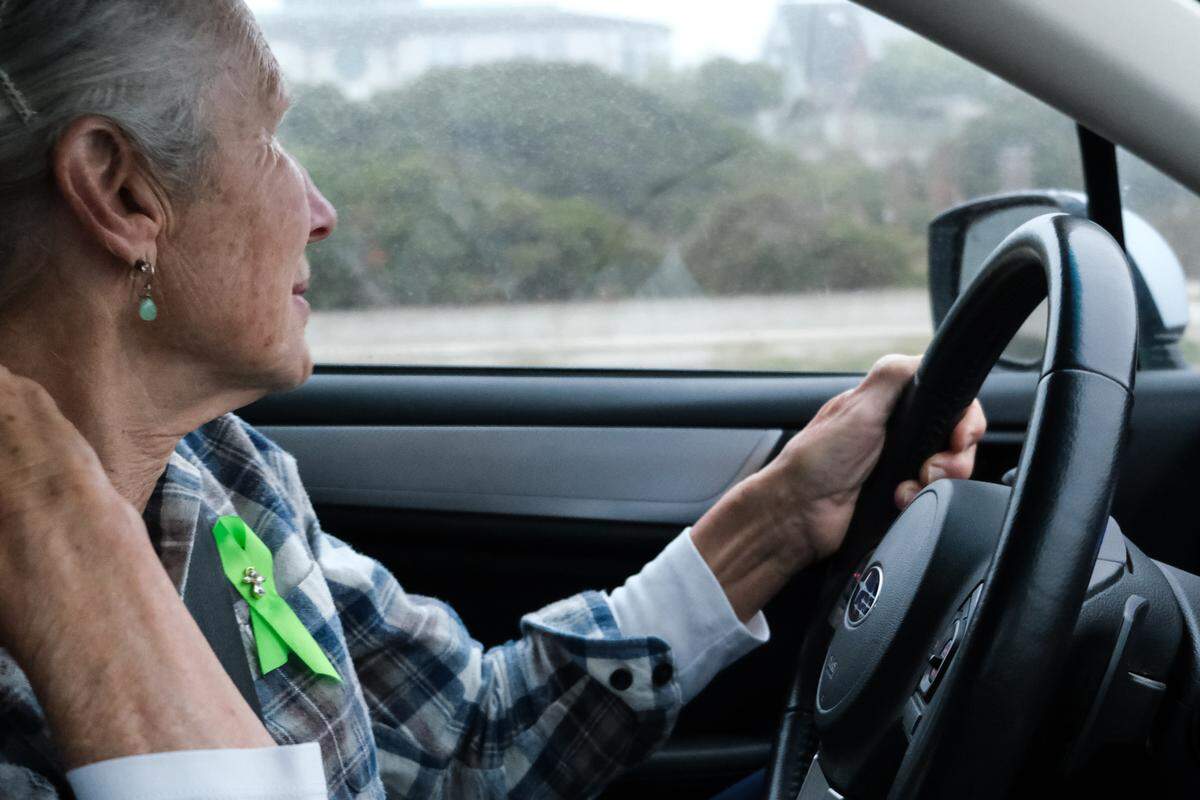
Once Anderson was ready for the day, she checked the San Luis Obispo County Jail website to see if her son had been picked up by police. If he wasn’t in custody, she drove to his usual spots in Los Osos for the most basic of welfare checks — to ensure he was still alive.
She would check behind a church, then behind the Los Osos Community Center. Sometimes she would see him walking on the sidewalk or sitting on a bench.
If she saw him, she’d try to give him a blanket, water or socks. Sometimes he wouldn’t take it, so she’d leave it nearby.
Because of her son’s illness and the limited resources here, his housing options have narrowed.
It’s jail or the streets.
“They’re not even options. It’s forced on them,” Anderson said. “They’re being punished consistently for having an illness that they have no control over.”
Her son was last arrested on Aug. 4 for at least the 24th time since 2005, and he’s now in custody for at least his eighth jail stay.
According to Anderson, his arrests reflect a severe mental health illness that has escalated over time amid a shortage of assistance in San Luis Obispo County.
But at the same time, she noted, her son is receiving treatment in jail — something he refuses to accept outside of it.
“It’s a cruel part of the disease that a lot of people struggle with because their experience is so real,” San Luis Obispo County Behavioral Health access and crisis care division manager Samantha Parker said.
Anderson’s story is not an unusual one.
Some of the county’s most vulnerable residents living with severe mental illness have limited options for help and bounce between the stability provided in jail and the instability of being homeless, despite the work done by mental health professionals to plug gaps in the system.
The Tribune is not naming Anderson’s son to protect his privacy.
Son showed signs of mental illness in late teens
Anderson’s son was born in March 1984. His birth was complicated, and he was in the NICU for eight days before she could take him home.
As a child, he was quiet and shy, but “he beat to his own drum,” Anderson said. He enjoyed being alone and did not like loud noises.
A doctor eventually diagnosed her son with attention deficit disorder and prescribed ritalin, Anderson said. The doctor also said her son had autistic markers, she added.
Her son didn’t socialize much, Anderson said, but he loved being outside and creating art. He made fishing hooks and flies, sculptures and drawings.
Those hobbies persisted into his adult years, and he even creates art during each of his jail stays.
Some of it was beautiful — like the bell peppers hanging in Anderson’s kitchen or the wire dragonfly hanging from her blinds — while others showed more telling signs that her son was struggling with his psychosis.
Dozens of pages Anderson has kept from her son’s jail stays, for example, show repetitive scribbles of various phrases, sometimes overlapping in a cross-hatched pattern.
Anderson’s son’s symptoms began to escalate as he entered his late teens.
Just before his senior year at Morro Bay High School, he moved out to work and live on a ranch in Los Osos, Anderson said. He rode his bike to school and became distant with his mother.
“He kind of got edgy with me. Didn’t want anything to do with me,” she said. “Not knowing anything about mental illness, I thought, ‘Well, he’s doing OK in school. He’s working and stuff. But is he drinking? Is he doing drugs? Because he’s just a little off.’”
At one point after he graduated high school, Anderson said she received a call from his landlord who said her son had torn out the walls from inside the studio he was staying in.
The ranch owner had to fire her son, and he found another apartment to live in, Anderson said.
But now, her son was 18 — an adult under California law.
“The first couple of times he got in trouble, I didn’t know about it,” Anderson said. “I just found out through the grapevine that he’s been having law enforcement come into his life.”
Anderson then went to her son’s apartment, where she saw flyers from San Luis Obispo County Behavioral Health alongside medications.
“I had no clue what they were for, because they were just dumped out on his dresser top. All different colors, moved around in different lines.”
Anderson said she called Behavioral Health, which was able to give her information about her son’s diagnosis: bipolar disorder.
Anosognosia incredibly difficult to treat, behavioral health says
At the time, Anderson didn’t know what bipolar disorder was or how any severe mental illness might affect her son’s life. But she was determined to learn.
For the next two decades, her son cycled in and out of jail while Anderson learned everything she could about mental illness.
She became involved in Transitions Mental Health Association, known as THMA, and went to their family-to-family class to connect with other people who were going through the same thing with their loved ones.
“Hearing their cases and then understanding my son’s differences, that helped and told me different avenues that needed to be explored,” Anderson said.
That’s also when she learned her son had anosognosia, and his belief that he is not sick actively works against him getting help. He’s had this symptom since his illness began, Anderson said. Eventually, he was also diagnosed with schizoaffective disorder and grandiose personality disorder, which causes him to experience delusions.
Parker with Behavioral Health told the Tribune that treating people with anosognosia is one of the toughest parts of the job.
Mental Health Diversion Court, a program where someone’s criminal charges could be dropped in lieu of succeeding in mental health treatment, may not be the best setting for someone living with the a more severe mental illness.
People must be able to live in a congregate setting and participate in group therapy. If someone doesn’t believe they are sick or need treatment, it makes giving them treatment that much more difficult.
“How does someone fit in a group therapy session who’s saying, ‘I’m not sick, I want to be out of here,’” Parker said. “There’s got to be buy-in of the person too. For these, we could offer treatment courts until we’re blue in the face. If that anogsognosia is so strong ... then the treatment court is not going to do anything for them.”
She said Care Court, a new program that creates treatment plans for people with severe mental illness without the need for law enforcement, could be another option for people with severe mental illness, but the problem is that the treatment is voluntary.
“Care court (is) very exciting in many ways, but when you hear that a civil court order into mental health treatment heavily relies on volunteer participation — that’s, in and of itself, like a contradiction,” she said. “We’re doing the best that we can with the tools we have, but we’re always looking for the next creative solution.”
She said the county’s Community Action Teams, which are a partnership between law enforcement and behavioral health, have seen a lot of success in creating enough rapport with individuals to finally get them to accept treatment.
A last resort for those with anosognosia could be a public guardian conservatorship, Parker said.
The challenging thing, she said, is that a conservatorship takes away people’s civil liberties, so situations have to reach an incredibly emergent point to even be considered.
Only a judge or a psychiatrist with Crestwood Behavioral Health, the psychiatric health facility that helps provide acute care and mental health rehabilitation for a maximum of two weeks, can recommend the Public Guardian’s Office initiate an investigation to see if someone should be conserved.
For it to even get to that point, Parker said, a judge or psychiatrist would have to find that someone has tried every avenue to receive mental health treatment without any success.
“It’s a very difficult process and it’s a huge deal to take people’s rights, but at some point — if there’s no other box to check, there’s no other opportunity — in my opinion, it’s important that the Public Guardian then look at those (cases),” she said.
Son lost care during COVID, mother says
Anderson’s son was doing well before COVID-19 hit.
He had received treatment at Atascadero State Hospital when he needed to get his competency restored to face misdemeanor vandalism and unauthorized entry charges in 2017.
According to court records, his competency was restored and he pleaded no contest to the misdemeanors. He was released on a probation order and kept up with his treatment.
He got his landscaping contract license and opened a business. He had regular clients and would study and do paperwork at the home of Anderson’s other neighbor, Mike Segor.
Segor’s wife had hired Anderson’s son to do odd jobs on their property since 2014. Segor told the Tribune he knew Anderson’s son had problems, but “never asked too many questions about it because our relationship was pretty good.”
“He was helpful and reliable, and we kept asking him back,” Segor added. “I know he had ups and downs, so we often saw him when he was on an upward swing in his cycle or when he was not working his own jobs on a regular basis and needed some cash to keep going. He would call, and I’d find work for him to do.”
Segor said Anderson’s son was really good on a smartphone and learned how to use business support software to do his accounting and advertising. He even created and printed his own brochures to promote his business and bought a white van with his company’s logo painted on it.
And his business was successful, Segor said. He said Anderson’s son charged $40 per hour and was able to be completely self-sufficient, paying rent to live in an apartment with roommates.
But then, the pandemic hit.
Her son lost his access to his monthly anti-psychotic injection, his mother said, and in-person visits with therapists and psychiatrists halted.
He started drinking, his mother said. Then he got in trouble with the law.
In 2021, he was charged with burglary, battery, vandalism and dissuading a witness. After two competency court treatments, he pleaded no contest to misdemeanor vandalism, unauthorized entry, battery and preventing the use of a cell phone.
In April 2023, he was sentenced to one year of probation after already being incarcerated for two years.
Before his most recent August arrest, her son had been charged with drug- and alcohol-related crimes, such as public intoxication and being under the influence of a controlled substance.
During that time, his mother said, he was living unhoused, the majority of the time in Los Osos. He lost his business and all the equipment he had purchased to make it successful.
That’s when Anderson spent each morning looking for her son, she said. She just needed to make sure he was alive, even if he refused to accept her help. It’s one of the hardest things she’s had to do as a mother.
“I can’t abandon him when he’s this sick and he’s homeless,” Anderson said. “People are saying, ‘Well, you gotta let him live. Just don’t feed him, don’t this, don’t that.’ How do you not do that?”
Mother: Jail conditions and care improvement can be seen first-hand
The more Anderson attempted to get her son help, the more she realized the county didn’t have the resources he needed to succeed without being arrested.
It’s a double-edged sword, she said.
“I can’t decide in my head if living out in this cold — rainy now — place is where I would want him to be, or do I want him in that jail cell?” Anderson said one September morning.
At least when her son is in jail, she said, she knows he is in a safe location where he is being regularly fed and receiving health care.
Anderson has seen improvements in the jail’s mental health care firsthand over the past two decades.
Her son was incarcerated around the same time as the 2017 death of Andrew Holland, an inmate who died naked on the flood in restraints as deputies watched for 46 hours.
The death prompted a DOJ investigation, which eventually found in 2021 that the jail “violated the rights of prisoners in several ways, including failing to provide adequate health care and subjecting some prisoners to excessive force.”
Since then, the jail has made massive improvements to its mental health care and use of force, with the DOJ finding the issues from their 2021 report settled in January.
The jail now has comprehensive healthcare — specifically for mental health — and has expanded its competency treatment program.
Anderson said in her son’s previous jail stays, he’s been “horrified” and “fearful” of being in jail. Now, despite his mental illness, he talks positively about the jail and the care he’s received.
He seems comfortable, she said.
Anderson also noted that the jail staff has been more communicative with her than in the past. While they can’t tell her details of her son’s care — he has not signed an information release — they have answered the questions they could and she’s been able to give the jail her son’s medical background to help his care be more comprehensive.
She believes her son has been receiving the care he needs in the jail, but she knows that same type of care is not available when he leaves. The jail is the largest provider for inpatient mental health care services in San Luis Obispo County other than Atascadero State Hospital.
But in order to receive care at the jail or the state hospital, a person must become involved with the criminal justice system first.
As of January, 28% of inmates at the jail were deemed severely mentally ill, according to San Luis Obispo County Sheriff’s Office spokesperson Tony Cipolla. Cipolla added that treatment is based on a person’s needs rather than diagnosis.
The jail also has an eight-bed program for inmates designated incompetent to stand trial. It’s a Department of State Hospitals program for inmates like Anderson’s son. The program helps restore competency and can be a faster avenue to competency than waiting for a bed to open at a state hospital.
If someone needs inpatient involuntary crisis care without the justice system involvement, Crestwood Behavioral Health can provide care for 16 beds for up to two weeks.
What happens now?
Anderson continues to advocate for anosognosia awareness with the county’s leaders. She’s dropped off Xaviar Amador’s book on the topic, “I’m Not Sick, I Don’t Need Help,” to the District Attorney’s Office, representatives of Assemblymember Dawn Addis, D-San Luis Obispo, and several members of the county’s Behavioral Health department.
She believes more education is the first step to create a mental health system that can better help people like her son, but sometimes it gets tiring.
Then, she’ll have a win, like when she was able to help a neighbor who’s son was in a mental health crisis.
“That just told me that I wasn’t supposed to quit,” she said. “That’s what keeps me going. That’s my fuel.”
While this has been the most comfortable her son has seemed in jail, Anderson said, it’s also the worst his psychosis has ever been.
His competency was declared restored on March 12, but to be considered competent under the law, a defendant only has to understand the charges against them and be able to help an attorney with their defense.
Competency does not necessarily require someone to not have psychotic symptoms. Nor does it mean they’re equipped to live on their own.
Meanwhile, Anderson continues to visit her son in the jail. Sometimes he accepts her visit, sometimes he doesn’t.
Still, she goes. She puts money on his books. She continues to love him.
In the latest development on Wednesday, her son received disappointing news: He was denied eligibility from mental health diversion court.
Anderson hopes that if her son is released at his next court hearing on April 2, he can be put on a path toward treatment, and that perhaps he could be reconsidered for diversion court.
She said he’s in a better place and may succeed more than he has in past years.
“He can only stay on his medication with people helping him with his medication,” she said. “If they just let him go on the street, he’s going to do it all over again. This is scaring me like crazy. I know there’s really nothing else anyone can do for him.”
Most of all, she worries that once her son is released, she will be back to driving around Los Osos wondering if she was going to find him dead or alive.
Because he still doesn’t believe he is ill.
Without care, she believes, the cycle will repeat itself — just as it has for the past 20 years.
This story was originally published March 30, 2025 at 5:00 AM.