
Andrew Holland's death demands a response: We must improve access to mental health care
The death of Andrew Holland was a community tragedy that exposed failures in our systems of treatment and incarceration. Mr. Holland’s case reflects our collective failure as a society to provide effective and humane help for the tens of thousands of our county residents who suffer from mental illness.
Yes, tens of thousands of our fellow residents need help.
According to the National Alliance on Mental Illness, one in five people experience a mental health condition. In our county of 280,000 residents, that suggests 56,000 of our friends and neighbors struggle with mental illness.
Unfortunately, we are set up to fail many of these friends and neighbors. Part of that stems from our biases about people with mental illness, and part is due to systemic flaws.
There is a prevailing and inaccurate notion that those living with mental illness are dangerous. In fact, those experiencing mental illness are 10 times more likely to be the victims of violence than to be perpetrators, according to the U.S. Department of Health and Human Services. And yet, 40 percent of our county jail’s 600 inmates are diagnosed with mental health conditions.
Why are these people in jail instead of in an appropriate treatment facility?
A main reason is the nature of the disease itself. An inmate’s illness often contributes to the events leading to arrest. For example, when questioned or asked to follow directions, someone suffering from schizophrenia may not answer immediately or clearly because the voices in their head are loud and distracting. More often than not, the person who is unwell is not intentionally being combative. It is simply that symptoms of their illness become a barrier, and their reactions lead to behavior that is disruptive or criminal, which leads to law enforcement intervention, which leads to jail.
Ideally, people with mental illness who run afoul of the law would more frequently be diverted from jail directly to mental health care.
But San Luis Obispo County has only two facilities for mental health crises: the County’s 16-bed Psychiatric Health Facility and the new 4-bed Crisis Stabilization Unit, which, while a promising new resource, will still be inadequate to serve the entirety of this vulnerable population.
This is not unique to our county. The total number of hospital beds in communities throughout California for individuals who need short-term acute psychiatric care has decreased 30 percent since 1995, according to a 2017 report by the Stanford Justice Advocacy Project.
As a society, we’re not only failing to help people who need mental health services, we’re also wasting a colossal amount of money.
In California, we spend more than $70,000 annually to incarcerate the typical state prisoner, not including mental healthcare costs, while the cost of treating a person with mental illness in the community is approximately $22,000, again according to the Stanford Justice Advocacy Project. It is in our collective interest to increase mental health services.
What the Andrew Holland tragedy should inspire is a focus on reducing the number of chronically and persistently mentally ill people from getting to our county jail in the first place. I call on our community to work collaboratively to expand immediate access to mental health services by both San Luis Obispo County and private providers. Examples of this are the Behavioral Health Treatment Court, which allows mentally ill offenders to opt for treatment rather than jail time. Another concrete step would be the development of transitional housing for released inmates so they can get treatment and avoid interactions with law enforcement.
Greater integration of mental health professionals within law enforcement can prevent unnecessary incarceration before it begins. Our agency looks forward to our upcoming collaboration with the SLO Police Department’s Community Action Team (CAT), funded by SLO Behavioral Health Department, which will now have a mental health clinician and peer mentor working with them on the streets.
Transitions-Mental Health Association is committed to actively working with the San Luis Obispo Behavioral Health Department, Sheriff’s Department, the National Alliance on Mental Illness (NAMI), the Holland Family and other advocates to improve our current system. A team approach is crucial, one that ensures continuity of services.
Andrew Holland’s death demands a community response that focuses on action, not blame. People will continue to fall through the cracks until we make community mental health services a larger priority.
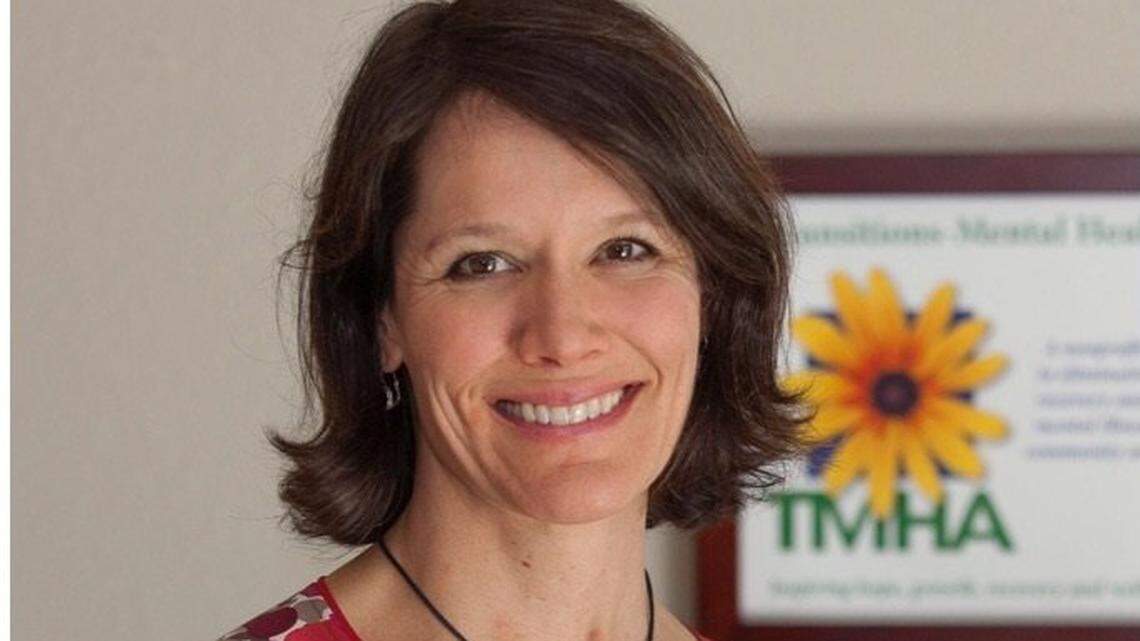
Jill Bolster-White has spent 28 years advocating for improved community mental health. She has been executive director of Transitions-Mental Health Association since 1992.
This story was originally published April 5, 2018 at 5:34 PM with the headline "Andrew Holland's death demands a response: We must improve access to mental health care."