
What does it really take to stop a bad guy with a gun?
We all need to be “armed” — teachers, social workers, psychologists, school counselors, and students as well as their parents — with effective tools that will prevent gun violence. But does that require that more of us carry guns?
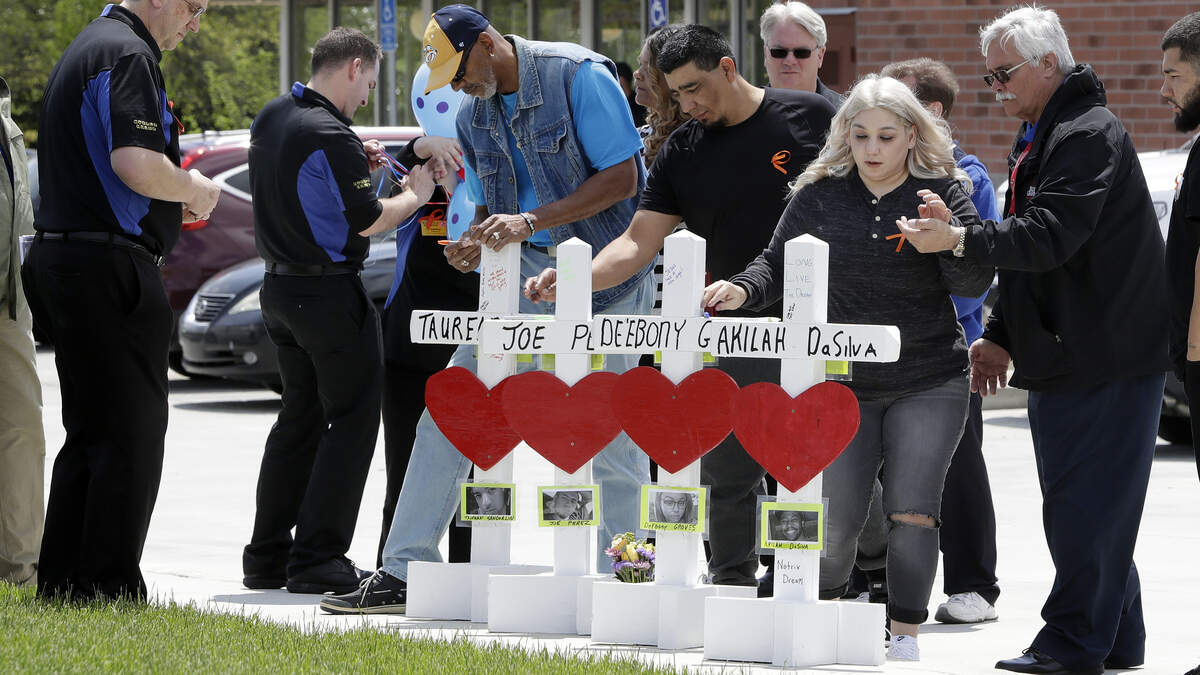
Just since Jan. 1, mass shootings in the U.S. have claimed 84 lives and injured 257 others, in 64 separate incidents, defined as 4+ casualties, excluding the perpetrator (Gun Violence Archive). That’s almost 20 mass shootings every month. On Valentine’s Day, Nikolas Cruz killed 17 at Marjory Stoneman Douglas High School in Florida. Only three weeks earlier, a 15-year old killed two and injured fifteen at Marshall High School in Kentucky with a 9 mm handgun.
Since Jan. 1, over 4,265 Americans have been killed by firearms, an average of 35 each day – and that’s just homicides, not including firearm suicides, which generally average 60 per day (almost 2/3 of all firearm deaths). Our rate of gun homicides is 25 times the average of other developed nations. (Gun Violence Archive and Everytown for Gun Safety).
This toxic culture of gun violence is a public health problem, not merely a partisan political issue used to drive an irreconcilable wedge between us. Gallup polls report that 2/3 of Americans favor more strict laws covering the sale of firearms.
But we need more than better regulation of firearms to confront this crisis. How can we reduce the grotesque specter of gun violence in American society? What does it really take to stop a “bad guy with a gun?” Is it, as the National Rifle Association insists, only a “good guy with a gun?” Do we need to flood our schools and other public places with even MORE guns?
That’s the refrain we hear so often after every mass shooting event: The NRA wants to arm everyone — schoolteachers, ministers, wait staff — with guns. Gun manufacturers would have us believe that virtually everyone in this society should be armed to the teeth, converting all of us into their model of “good guys with a gun,” capable of stopping bad guys.
As H.L. Mencken would say, “There is always a well-known solution to every human problem — neat, plausible, and wrong.”
Arming school teachers is one of those WRONG solutions: It would offer little in the way of additional security (though it certainly stimulates the sale of firearms). Independent research demonstrates that a firearm in the home puts a family, ironically, at greater risk of incurring a gun death or injury.
What we need instead is a better training for teachers, school administrators, psychologists, counselors, social workers, and security officers in how to identify potential “active shooters,” how to prevent them from carrying out their demonic plans, and how to handle such a situation when it occurs. That includes training in negotiating skills to detect, defuse, and where possible to disarm a shooter before a shot is fired.
Our county hasn’t suffered a mass shooting since December, 1848, when bandits bludgeoned and shot ten members of the Reed family at the San Miguel Mission. Not a bad record: 170 years with no mass shootings. But we almost had one in January, 2003.
That’s when a disturbed sophomore pulled out a loaded semi-automatic pistol and confronted Carolyn Swanson, an English teacher at Arroyo Grande High School. Swanson was armed with nothing but her persuasive skills, but she and her 32 students were trapped and terrified.Ms. Swanson, along with an adult aide, spent nearly 10 long minutes talking with the armed boy before two other boys in the class got close enough to tackle and disarm him. The young teens, now grown adults, were Jonathan Griswold and Clay Gheza.
There are dozens of examples of unarmed “good guys” who have stopped a shooter: Last November, a gunman attacked Rancho Tehama Elementary School in Northern California with a semi-automatic rifle and two handguns. The school secretary heard gunshots fired by the assailant from outside the school grounds, and immediately ordered a lockdown; the result was that only student was struck and injured by the shooter’s volley of bullets. The shooter had already killed his own wife and the father and grandfather of one of the school’s students, and later killed two others and injured fourteen before taking his own life. He’d been known for years to police, and to his neighbors, as a dangerous felon; the Tehama County Sheriff had tried to disarm him after numerous complaints of random shooting, but he ordered his weapons by mail.
All of us bear a responsibility to do whatever it takes to stem the blood-dimmed tide of gun violence in this nation. Everyone in law enforcement, education, medicine, public health, mental health, and social services should know how to recognize and manage a violent person. Only licensed gun dealers should be able to sell guns — ending the “gun show loophole” — and we should require licensing for all those who possess guns as we now require licenses for anyone who gets behind the wheel of a car or truck.
We must treat our persistent epidemic of gun violence as the systemic public health problem that it is, requiring the attention of all Americans.
John Ashbaugh is a former San Luis Obispo City Council member who teaches U.S. history and global studies at Hancock College. He is among the writers who will fill in for liberal columnist Tom Fulks over the coming weeks.
This story was originally published April 25, 2018 at 5:32 PM with the headline "What does it really take to stop a bad guy with a gun?."