
The Hearst Castle solar project will break ground soon, marking a milestone for State Parks
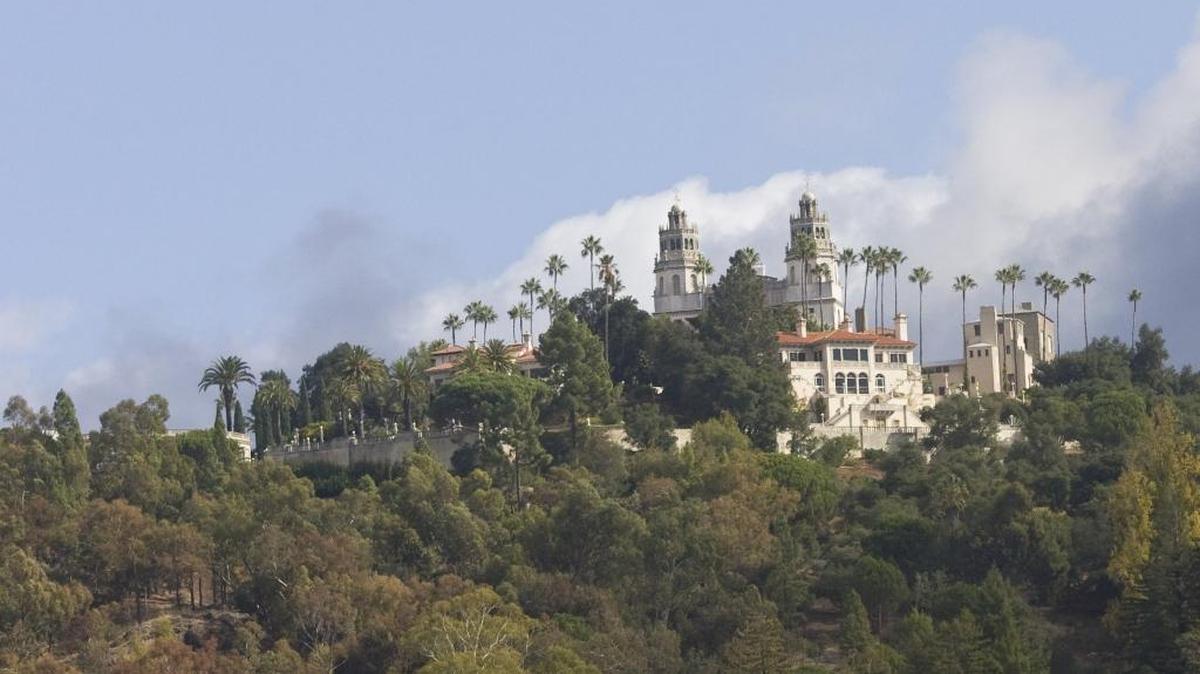
The Hearst Castle State Park Visitor Center will soon become the first state park facility to draw 100 percent of its electricity by solar power.
Construction on the solar project in the visitor center’s parking lot is set to break ground Tuesday, according State Parks.
The project cost to State Parks? Zero.
“It’s essentially a lease,” said Dan Falat, superintendent of the park district that includes the castle and its visitor center.
He said it’s “power-purchase agreement” with project contractor Ecoplexus.
“The state does not own the solar array but instead agrees to purchase the power produced by the solar panels for 11 cents per kilowatt-hour,” Falat said.
The district currently pays PG&E 15 cents per kilowatt hour in the winter and 20 cents in the summer, he said.
At the end of the 25-year contract, Falat said, the state has the option to renegotiate the agreement or have the contractor remove the system.
The system is designed to produce 1 million kilowatt hours per year, he said.
State number crunchers estimate that once the 1,812 units are complete and online, the facility’s electrical bills could be reduced by as much $1 million over the life of the contract.
The grid-tied system is intended to provide all the electricity needed by the compound. However, “we will still be connected to PG&E,” Falat said, and would be charged by the utility for any power drawn from the grid.
“The amount produced by the solar array and the amount used from the grid will be averaged annually,” he said.
The project is “designed to have an annual net PG&E bill of zero.”
While this is the first power-purchase agreement that the state Department of General Services has done with State Parks, “they have done at least 20 with other state departments,” Falat said.
The project
After a lengthy permit-review process, the parks district got formal notice from the county Wednesday that work on the project could begin.
“People can say it takes a long time” to get a project like this approved, Falat said in February, “but at least I can be confident it’s being done the right way.”
The solar units will be installed on top of canopies in the parking lot. And there’s a bonus: Those canopies will provide shade for vehicles parked beneath them.
To make room for the solar units, 70 drought-impacted Monterey cypress trees will be removed and replaced with low-growing, drought-tolerant native shrubs.
Two trees are to be replanted for every one removed, with cypress and oak trees going in around the parking lot’s perimeter. Eventually, those will provide more screening between Highway 1 and the visitor center and the parking area in front of it, including the new solar array.
The compound includes the center, park district offices and maintenance yard. Facilities in Hearst San Simeon State Beach also will be served by the solar project.
The compound and Hearst Castle itself are miles apart, separated by hilly Hearst Ranch land, so the expansive former estate of media mogul William Randolph Hearst isn’t included in the project.
Weather permitting, the solar array is expected to be operational before the end of June. Falat said if it isn’t complete by then, work likely would be put on hold until after the peak summer tourist season.
Going green
The solar project has been in the planning stages since 2013, when district Maintenance Chief Tom Kidder and then-superintendent Nick Franco began researching the possibilities.
But Hearst Castle has been going green for years.
The castle was honored for its pollution-reducing efforts in 2005 by the county’s Air Pollution Control Board. Visitors are shuttled up to the castle in buses fueled by compressed natural gas, while backup generators for the castle operate on bio-diesel.
The monument has 14 electric car-charging units in the parking lot, and the castle’s fleet includes three electric vehicles.
Inside the historic-house museum, LED bulbs have replaced standard lighting along some parts of the tour route, and other locations are being tested for the energy-saving bulbs.
Falat said the combined projects will put his State Park district “in a good position to meet Governor Brown’s target to reduce greenhouse gas emissions.”
He said that Brown’s 2015 executive order required all state agencies to reduce greenhouse gas emissions 80 percent by 2050. In 2012, he had required that all state agencies reduce grid-based energy purchases 20 percent by 2020 and include at least 50 percent zero-emissions vehicles in new vehicle fleet purchases by 2025.
It’s all part of a “Cool Parks Initiative,” he said of a three-pronged statewide strategy to combat climate change. The initiative calls for “adaptation, mitigation and education.”
This story was originally published April 21, 2018 at 3:21 PM with the headline "The Hearst Castle solar project will break ground soon, marking a milestone for State Parks."