
Cal Poly adds new varsity sport after cutting swim and dive team
AI-generated summary reviewed by our newsroom.
- Cal Poly elevated stunt to varsity status after cutting swim and dive programs.
- University faces Title IX violation claims after removing 29 women's roster spots.
- Flag football may become Cal Poly's next varsity sport as early as 2027.
Less than two months after Cal Poly’s swim and dive team was officially axed due to budget concerns, the university has announced it will create one — possibly two — new varsity sports.
Cal Poly athletic director Don Oberhelman announced on Aug. 1 that STUNT, which has been a club sport managed by the college athletics program since 2010, will become a varsity sport starting in the upcoming academic year.
STUNT showcases traditional cheerleading skills in a more competitive format, according to the NCAA.
“Teams compete in partner stunts, pyramids, jumps and tumbling, with points awarded based on execution,” the NCAA wrote in a May article recommending STUNT for championship status. “Championships are conducted through a double-elimination tournament structure, and games require only existing gymnasium space.”
The addition of the sport, which is geared toward female athletes, comes as Cal Poly faces allegations it violated Title IX by eliminating its women’s swim and dive team.
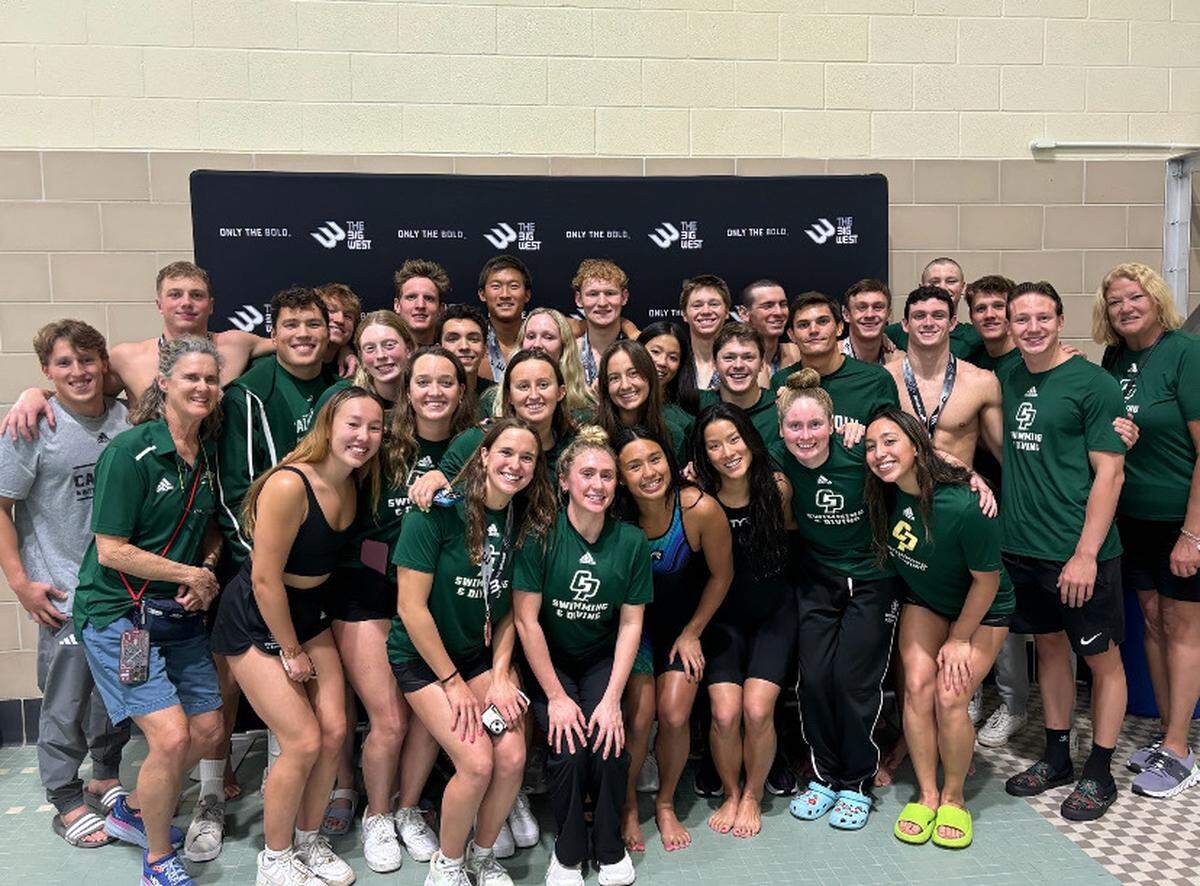
The addition of STUNT to Cal Poly’s roster will create dozens of new varsity spots for female athletes, Oberhelman wrote in the announcement. The announcement also said the STUNT team would be “cost-effective” with limited travel and equipment expenses.
“One of our guiding principles for Cal Poly Athletics is participating in sports where we can be competitive,” the athletic director wrote. “Two years ago, Cal Poly STUNT won a club national championship and has seen tremendous success since its inception. We’re confident this team will compete for titles from day one, while creating up to 65 new varsity opportunities for women.”
And it’s possible Cal Poly will add another women’s sport to boost its roster of female athletes.
According to Oberhelman’s announcement, the university could create a women’s flag football team as early as 2027.
Flag football was recently established as a club sport at the university, according to the announcement — but elevating it to varsity status would allow Cal Poly to “embark on a legacy of success,” Oberhelman wrote.
“The NCAA recommended flag football as an emerging sport in January, and 45 collegiate programs have already announced their intent to participate,” Oberhelman wrote in his announcement. “NCAA President Charlie Baker has publicly stated that he anticipates the sport will achieve full championship status by 2028 — the same year it is set to debut in the Los Angeles Summer Olympic Games.”
Announcement comes after controversial swim and dive cuts
Cal Poly cut both the women’s and men’s swim and dive teams in March, citing budget cuts and a changing NCAA landscape.
The athletes were initially given no opportunity to fundraise to reinstate their teams, but university president Jeffrey Armstrong eventually issued a $25 million fundraising goal, which was later lowered to $20 million and then $15 million, The Tribune reported.
The swim and dive athletes took to social media to raise enough money to reinstate their team, eventually generating more than $9 million in donations in just a few months. However, the team didn’t meet the $15 million goal by their June 15 deadline, resulting in the team’s official cut.
By the end of June, the university received an accusation that it violated Title IX, the federal law prohibiting sex-based discrimination in education, by cutting the women’s swim and dive team.
The allegation was lobbed against the university in a letter signed by Leigh Ernst Friestedt, founder and sports law attorney at Equity IX, and Nancy Hogshead, former Olympic swimmer and current CEO and civil rights lawyer at women’s sports advocacy group Champion Women.
The letter, which was obtained by The Tribune, alleged that women at Cal Poly have fewer athletic opportunities — and that the cuts to swim and dive significantly widened the gap between female enrollment and athletics participation. The cuts to swim and dive eliminated 29 spots for female athletes.
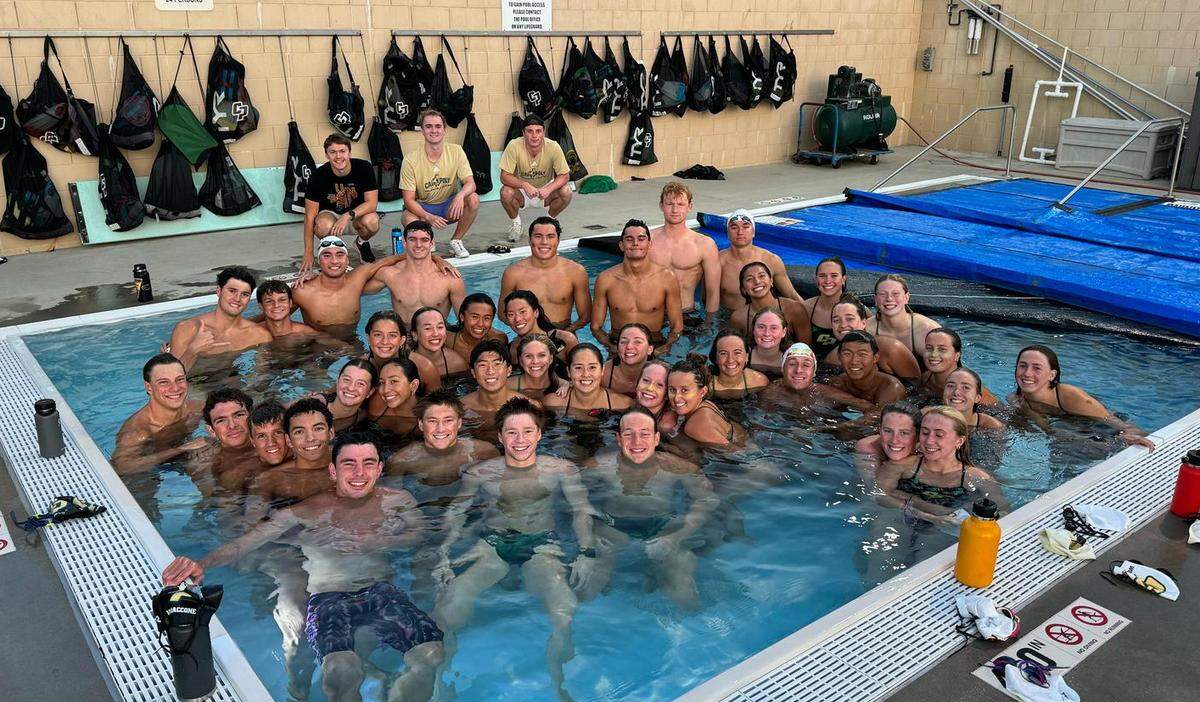
In response to the allegations, university spokesperson Matt Lazier told The Tribune that Cal Poly was “actively developing and planning specific initiatives to increase participation opportunities for women in NCAA sports.”
Oberhelman noted the timing of the decision in his announcement.
“Finally, I want to acknowledge that the additions of STUNT and flag football come at a time when Cal Poly was recently forced to eliminate its swim and dive programs,” he wrote. “Unfortunately, the university was unable to support the programs financially — especially at a level required to be competitive. Additionally, they did not shift the ratio of opportunities for Cal Poly’s female student-athletes. While discontinuing a sport is difficult, it was a necessary decision. “
University’s decision is ‘laughable,’ Cal Poly swimmer says
The university’s decision to add two new sports came right on the heels of the cuts to the swim and dive program — a fact that did not escape the university’s athletes.
Camilo Vargas, a swimmer who was on the team when it was cut, told The Tribune the university’s decision was “laughable.”
“If Cal Poly thinks that is going to deter us, they haven’t quite grasped Title IX, nor have they grasped who they are dealing with,” Vargas wrote to The Tribune. “Our women’s team is stronger than ever.”
Vargas referenced a July executive order issued by President Donald Trump that directs colleges to do more to support non-revenue college sports.
Specifically, it ordered that athletics departments that received $50 million or less in revenue during the last academic year “should not disproportionately reduce scholarship opportunities or roster sport for sports based on the revenue that the sport generates.”
Swimming is typically considered a non-revenue sport.
“Men’s swimming and women’s swimming is both a non-revenue sport and a core Olympic discipline, making it explicitly protected under the order’s mandate to preserve and expand programs like ours,” Vargas wrote to The Tribune. He added that the order “underscores the importance of collegiate athletics in developing Olympic athletes” — a role he said swimming has “historically fulfilled with distinction.”
“By cutting both swimming teams, Cal Poly undermines federal policy, Olympic development and the educational mission of college sports,” Vargas continued. “It’s no surprise that our own Taylor Spivey, who honed her swimming skills at Cal Poly, is an Olympic silver medalist. Incidentally, Cal Poly fails to include her on their Olympian page.”
Spivey was a swimmer for Cal Poly and competed in her first triathlon while on a club team at the university, according to her profile on the Team USA website. Spivey went on to win a silver medal during a triathlon mixed team relay at the Paris Olympics in 2024.
Spivey was not mentioned on the Cal Poly website listing the school’s Olympians as of Friday afternoon. It appeared the website had not been recently updated, as other Olympians who studied at Cal Poly were also not mentioned on the page, including cyclist Christopher Blevins, who competed in the 2020 and 2024 Olympics, according to his profile on the USA Cycling website.
Vargas continued: “Cal Poly has done irreparable harm to us, our recruits and the people who have come out in support of us, including 30+ Olympians.”
But there’s still time for Cal Poly to reverse course, Vargas said. Many of the athletes competed on club teams over the summer, achieving personal records.
“We’re ready to come back to Cal Poly,” he wrote. “It’s time Cal Poly own up to the mistake, and bring us back. After all, institutions make mistakes, that is inevitable. But it is the actions that follow which define them.”
The Tribune requested comment from the women’s swim team, but Vargas said the women declined to respond.
This story was originally published August 8, 2025 at 1:49 PM.
.JPG)