
Cal Poly accused of violating Title IX by cutting swim and dive team
AI-generated summary reviewed by our newsroom.
- Cal Poly faces Title IX complaint over women’s swim and dive program cuts.
- Advocates claim female athletes receive fewer opportunities and scholarships.
- University plans new steps to address widening gender participation gap.
Cal Poly President Jeffrey Armstrong is facing accusations that the university’s decision to ax its women’s swim and dive team violates Title IX, the federal law that prohibits sex-based discrimination in education.
A letter outlining the allegations was sent to Armstrong on June 27 from Leigh Ernst Friestedt, founder and sports law attorney at Equity IX, and Nancy Hogshead, CEO and civil rights lawyer at women’s sports advocacy group Champion Women.
Hogshead is also a former Olympic swimmer.
According to the letter, Cal Poly’s decision to cut the women’s swim and dive teams is a violation of Title IX.
“Evidence we have reviewed is clear: In Cal Poly’s athletic department, male students are receiving disproportionately more participation opportunities than female students, more athletic scholarship dollars, as well as more favorable treatment and benefits,” the letter said. “These discrepancies directly contradict the requirement of both federal and state law, which mandates equal opportunities and equitable treatment for all students.”
The letter requests that Cal Poly reinstate women’s swimming, boost scholarships and create a plan to beef up women’s sports as a whole at the university.
Swim and dive cuts violate federal law, letter says
The university abruptly cut both the women’s and men’s swim and dive teams earlier this year, citing budget cuts and a changing NCAA landscape.
The athletes were initially given no opportunity to fundraise to reinstate their teams, but Armstrong eventually issued a $25 million fundraising goal, which was later lowered to $20 million and then $15 million, The Tribune reported.
The athletes did not reach the goal by the June 15 deadline.
According to the letter sent to Armstrong and obtained by The Tribune, women make up more than 50% of undergraduate students on campus but female athletes represented only 42% of Cal Poly athletes during the 2023-24 academic year, using duplicated numbers. That percentage decreased to just 38% when using unduplicated numbers, the letter said.
The duplicated number includes all athletes, with those who may sit on two different teams counted twice. The unduplicated number includes all individuals who participate on at least one team, without being counted for each team.
Universities have a responsibility under Title IX to afford women equal opportunities in athletics as their male counterparts.
But according to the two groups, Cal Poly isn’t hitting that mark — and financial constraints do not excuse the university from its obligations under Title IX.
“Specifically, Cal Poly has failed to provide female athletes with equal participation opportunities, equal athletic scholarships, and has not ensured that female athletes receive equal treatment and benefits,” the letter said. “These actions represent separate violations of Title IX.”
According to the letter, 29 women and 29 men were impacted by the cuts to the swim and dive teams.
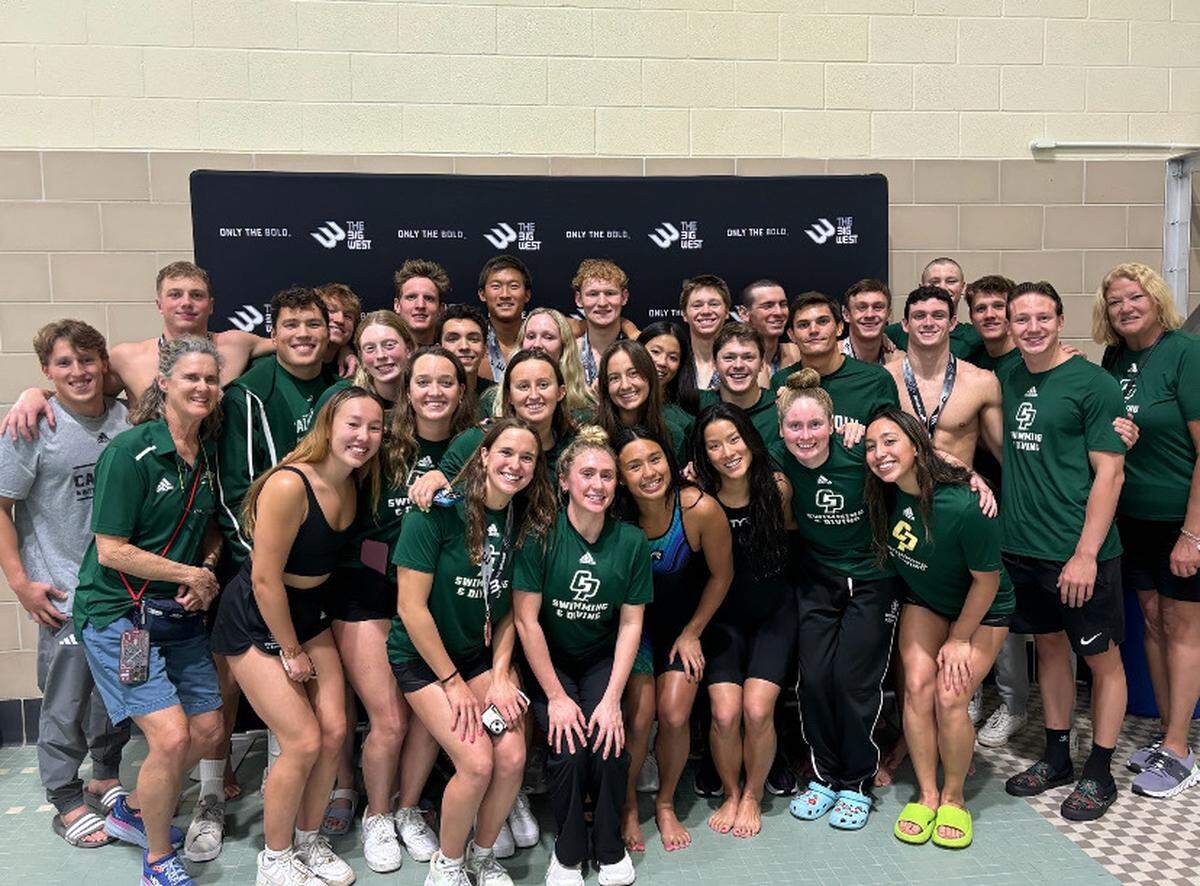
“But with women comprising 37.3% of total athletic participation, the cuts actually widened the participation gap between female enrollment and athletics participation to 12.9%,” the letter said.
University spokesperson Matt Lazier acknowledged that in an email to The Tribune, confirming that while the swim and dive cuts impacted an equal number of male and female athletes, female athletes were impacted at a higher percentage of total athletes compared to their male counterparts.
Lazier added that a recent NCAA settlement and subsequent roster caps would have a negative impact on the gender equity gap in athletics.
“We take these concerns seriously,” Lazier wrote. “In response, the university is actively developing and planning specific initiatives to increase participation opportunities for women in NCAA sports. We look forward to sharing details about these efforts soon, as we believe they will play a meaningful role in addressing the participation gap.”
.JPG)