
Cal Poly athletic director Don Oberhelman to retire
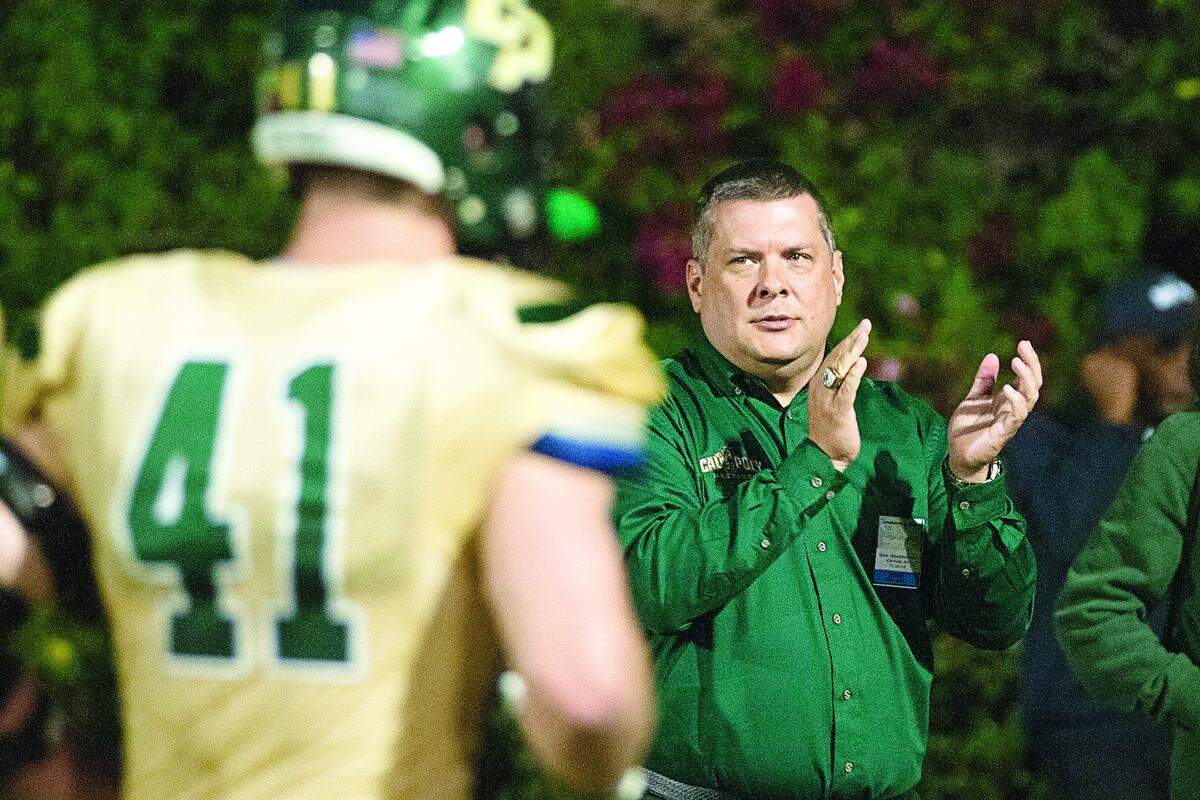
Cal Poly announced athletic director Don Oberhelman’s retirement in a university-wide email on Monday.
The announcement comes at a critical time, just days after the NCAA approved a $2.8 billion settlement that will allow schools to share revenue directly with student-athletes.
Oberhelman’s retirement will take effect at the end of the summer or upon the hiring of his replacement.
Oberhelman has served as the head of Cal Poly Athletics since March 2011, when he was hired from San Diego State University, where he was chief operating officer and senior associate athletic director. Over his 14-year tenure, he oversaw a period of significant growth, both in competition and infrastructure, the email said.
During his tenure, the department achieved a 93% graduation rate and saw historic success across its 20 athletics programs, the email said. In 2024, Cal Poly captured its first-ever Big West Commissioner’s Cup, awarded to the conference’s top-performing athletics department across men’s and women’s sports.
“We will certainly miss Don, but please join me in thanking Don for his years of outstanding service and in wishing him and his wife, D.D., a long, well-earned, and enjoyable retirement,” President Jeffrey Armstrong said in the email.

This past year alone, men’s track and field won its second consecutive Big West title, and baseball not only claimed the conference championship but also advanced to the NCAA Regional Final, its second postseason appearance under Oberhelman.
Men’s cross country secured a third straight Big West title, becoming the first men’s team to three-peat since Cal Poly’s own four-peat from 2016-19. Men’s soccer captured the Big West regular season crown in the fall, while beach volleyball made back-to-back NCAA Tournament appearances. Both basketball programs have also enjoyed a resurgence under new coaching leadership.
“I want to thank President Armstrong for his support and partnership over the years,” Oberhelman said in the email. “I’m so grateful to have had the opportunity to serve our amazing university. To our incredible staff and student-athletes, I have enjoyed my time with you greatly and look forward to celebrating your future success. For D.D. and I, this is our forever home, and we are excited to support Cal Poly as fans and donors in the future.”
Reflecting on his time at Cal Poly, Oberhelman wrote on X, “For the university, the people, the community, coaches, staff, student-athletes, campus leadership. This place is incredible.”
Retirement comes at a key time for Cal Poly Athletics
Even with that success, Oberhelman’s departure comes at a pivotal time for college athletics.
As the NCAA moves toward a revenue-sharing model and financial demands rise, mid-major programs like Cal Poly face increasing pressure to remain competitive without the major media contracts or booster support of power conference schools.
In March, Cal Poly announced it would eliminate its men’s and women’s swimming and diving programs, citing projected budget shortfalls tied to the NCAA settlement.
The original $25 million fundraising goal to save the programs was later reduced to $20 million, with the deadline extended to June 15.
The cuts have raised concerns that other non-revenue sports could be at risk if donor support and institutional funding fail to keep pace.
To help address the evolving landscape, Cal Poly launched a Players Trust Fund, a donor-driven initiative aimed at supporting student-athletes through enhanced resources, development opportunities and potential financial support.
Oberhelman described the fund as an opportunity for Cal Poly to remain competitive without relying solely on media revenue, emphasizing the strength of the university’s community and supporter base.
Even if Cal Poly opts out of the NCAA’s newly approved revenue-sharing model, Oberhelman’s legacy includes long-term strategic investment in facilities designed to elevate the student-athlete experience.
Projects completed under his leadership include the Dignity Health Baseball Clubhouse at Baggett Stadium, Doerr Family Field, Comerford Pavilion, and the Swanson Beach Volleyball Complex. Construction is currently underway on the John Madden Center, a performance and wellness facility expected to open within the next year.
Cal Poly has not yet announced whether it will opt into the revenue-sharing system. The deadline is June 15.
“We have financial realities here that I don’t think people really fully understand what those are,” Oberhelman said in a YouTube video recapping the winter season.
For a school without major media revenue or deep-pocketed booster networks, opting in would require significant financial backing through fundraising, donor support and NIL collectives.
On top of that, schools that opt in will also be required to abide by potential roster limits and scholarship caps outlined in the settlement — factors that could further complicate roster management and impact opportunities for walk-ons and non-revenue sport athletes.
As the university begins a national search for Oberhelman’s replacement, the next athletic director will inherit both a department built on competitive success and a rapidly shifting landscape that demands financially sustainable leadership.
This story was originally published June 10, 2025 at 5:18 PM.