
Does the abortion debate have to divide us?
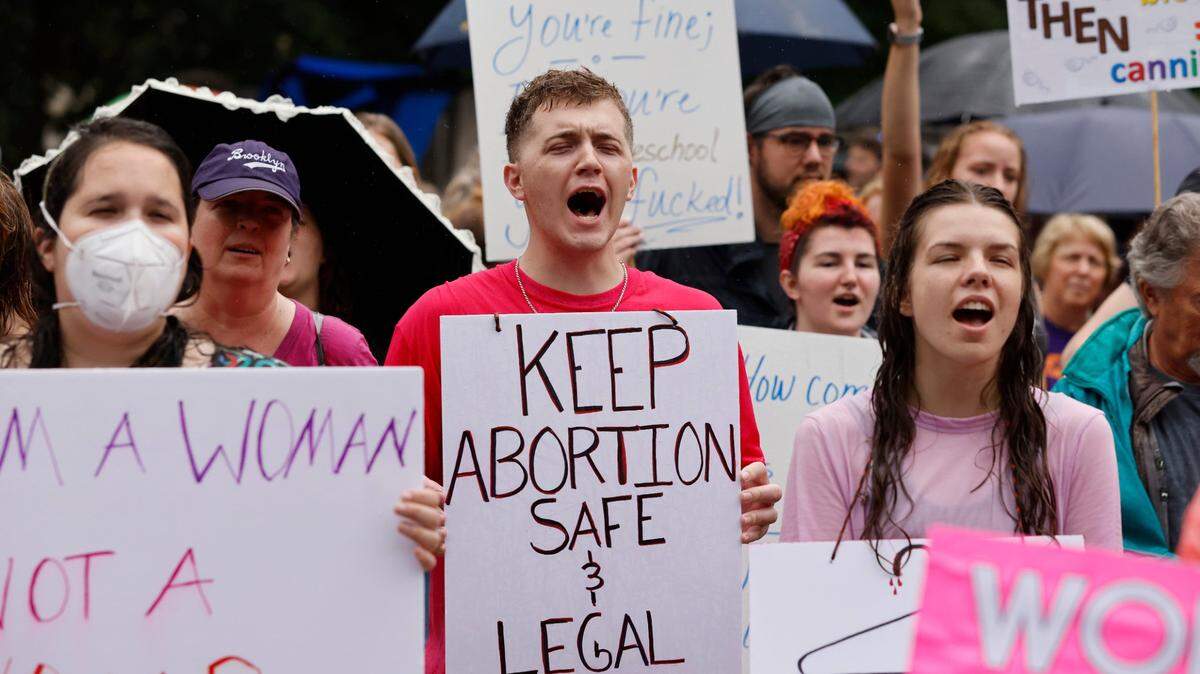
Democratic strategists credit the reversal of Roe v. Wade with motivating their voters this past election, leading to better-than-expected results.
The reality is that abortion also motivated many within the Republican base; both parties benefited from the highlighting of abortion policy.
Abortion seems like the ultimate wedge issue that both reflects and creates an irreconcilably divided America. But does abortion have to divide us?
There is a public misconception that the pro-life/pro-choice divide tracks the religious/non-religious divide within America, but there are religious believers on both sides of this issue. Polling can be tricky in this area, but white Evangelical Protestant Christians and conservative Catholics are typically against a woman’s right to choose, while a plurality of all other religious groups — mainline Protestants and Catholics, Eastern Orthodox Christians, Jews, Buddhists, Hindus, Muslims and those who are “spiritual but not religious” — typically support a woman’s right to choose. Thus, the debate on abortion occurs within the religious community, not simply between religious and non-religious factions of the country.
While religion has erroneously been blamed for the stark divide surrounding abortion, it might instead surprisingly provide an avenue for bridging the two sides. Before you scoff or make the sign of the cross, let me explain.
Beyond abortion, one of the most important issues for white Evangelical Protestants and conservative Catholics is expanding the judicial interpretation of the free exercise clause of the Constitution. For those for whom civics classes are a distant and hazy memory, the free exercise clause guarantees the right of people to practice their religion. It has often been seen in tension with the establishment clause, which ensures that the state does not endorse a particular religious faith over others.
The original intent of the free-exercise provision was not to protect the religious rights of the majority, who presumably didn’t need protection, but rather the rights of the minority religious persuasions who had been prosecuted throughout Europe. In the early years of this county’s founding, it was Catholics, fringe Protestant groups and Jews who needed protection, not white Protestants.
However, today many white Evangelical Christians and conservative Catholics believe that an activist interpretation of the establishment clause has curtailed the free exercise of their religious beliefs. They have argued that prayer in schools after classes or religious displays in public squares do not represent a state endorsement of religion and thus should be allowed under a broad interpretation of the free exercise clause. Let’s steadfastly support the free exercise of religion here and abroad, they say, for it is a foundational freedom that embodies the greatness of America.
I wonder if such a strong commitment to a broad interpretation of the free exercise clause might represent a potential bridge between the opposing sides of the abortion debate. What if we reframed the debate over abortion away from a personal right to privacy and toward a discussion of the free exercise of religion?
While no religions celebrate abortions, most global religions recognize there are situations in our broken world where choosing to not bring a fetus to term is the most moral and ethical course of action. Specific religious motivations for abortion vary among traditions: for some, it is the health of mother, for others it is the viability and quality of life for the would-be child, for still others the choice to abort must be seen within a framework of a fundamental respect for individual autonomy of a woman’s body.
The point is, for many sincere, well-intentioned believers from many religious traditions there are circumstances when the most moral action is to abort a fetus before term. As a coalition of faith groups including Reform Judaism, Buddhism, the Episcopal Church, the United Church of Christ and the Unitarian Universalist have recently argued before Florida state courts, when a legislature dictates that the development of a fetus cannot be stopped under any circumstances, they infringe upon the specific moral commandments within their traditions.
Blanket bans on abortion thus represent an unconstitutional curtailing of religious expression. If advocates of religious freedom want the courts to take their arguments for religious freedom seriously, they should also embrace the free-religious expression arguments by those who find that the right to abortion aligns with their own deeply held religious beliefs.
Some religious supporters of the recent Dobbes decision may not be able to fathom religious justifications for abortion, but they should be reminded that millions of Americans who spend their weekends at mosques, synagogues and churches cannot imagine any legitimate justification for coaches praying on sidelines, bakers refusing to make gay wedding cakes or religious exceptions to vaccines. Moreover, do we really want the government policing which genuinely held religious beliefs are authentic and which ones can be ignored?
Opponents of this approach might point out that if some warped religious group employed the free exercise clause to advocate for human sacrifice or child molestation, the courts (and society) would clearly want to curtail such “religious” expressions. True enough, but such a strawman argument does not apply here: the pro-choice position is not limited to a fringe minority of religious eccentrics, but the majority of every religious group in America outside of white Evangelical Protestants. To limit “legitimate” religious expression to the beliefs of a minority group seems clearly antithetical to goals of framers of the Constitution.
The reality is that if we want a country grounded in the broadest interpretation of the free expression of religion—a position that most pro-life groups strongly hold—then we need to be consistent. Limiting free expression to only one form of religion is not a genuine embrace of religious freedom. We cannot claim to be a beacon of religious freedom if millions of Americans are not free to exercise their religious beliefs surrounding the choice to end a pregnancy, especially when it is due to the imposition of another’s religious beliefs.
In the end, the American experiment in religion has historically been grounded not in shared religious doctrines, but rather in a social and constitutional agreement that our neighbors should be free to practice their religion as they see fit, even if we disagree with it.
So, let us passionately disagree with one another — such is the nature of religious debates because the stakes are high and the questions are profound — but in the end, let’s support all Americans’ rights to practice their religion as they see fit, including on the question of abortion.
Isn’t this a position we all can support?
Contributing columnist Stephen Lloyd-Moffett is a professor of religious studies at Cal Poly, San Luis Obispo.