
The biggest reason more young people don’t vote? They’re fed up with political hypocrisy
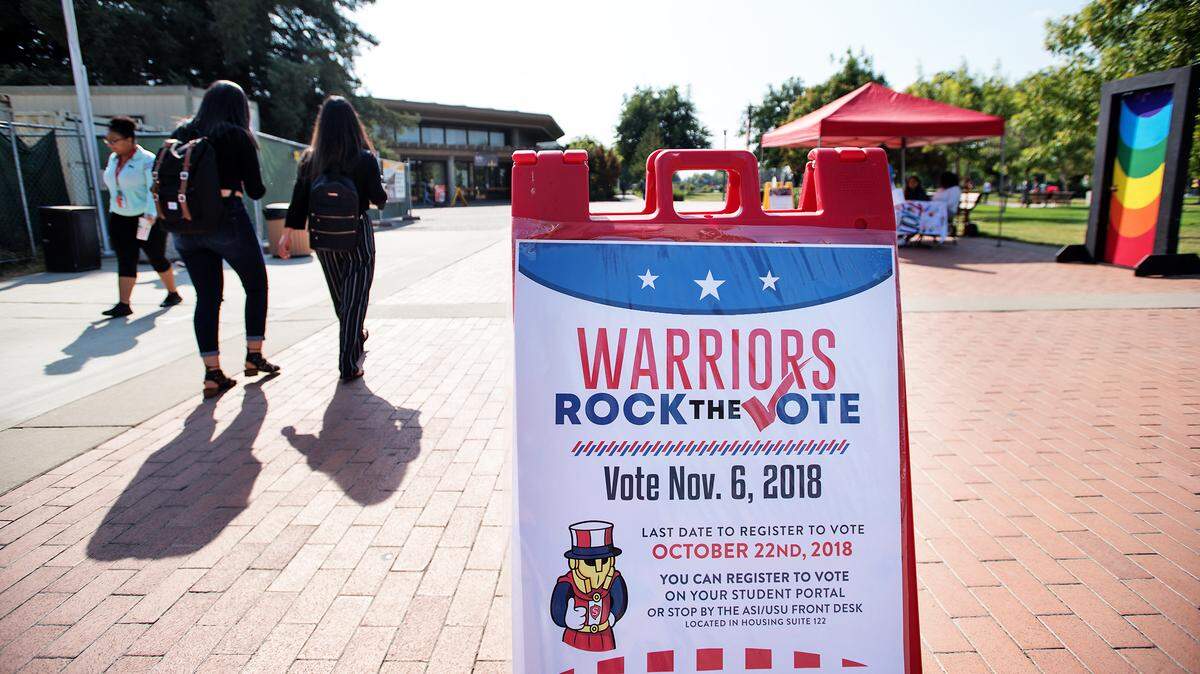
There seems to be a lot of grousing around the pickleball courts and pinochle tables about the apathy of young people today. Why do Millennials and Generation Z demonstrate such little interest in politics and religion?
Jesus just may provide the answer: “Woe to you hypocrites…you snakes! you brood of vipers!” (Matthew 23).
While “woe” rarely comes from the mouths of today’s youth, here is a Jesus pronouncement that even the atheists among young Americans can say “amen” to. In fact, if there is a statement from Jesus that most resonates with young people of every generation, his condemnation of hypocrites is a good candidate. Let’s be honest: No one likes a hypocrite, but younger generations seem particularly attuned to its corrosive power.
After years of reading college essays and talking with students, the perception of hypocrisy also lies at the root of political and religious apathy. Nothing has tarnished the reputation of modern Christianity more among my students than many vocal Christians’ embrace of the thrice-divorced, misogynistic, “never had to ask for forgiveness” Donald Trump.
Younger Americans throw up their hands and ask, “what is the point of voting?” whenever popular politicians accept bribes or are exposed as caring more about their reelection than their moral compass. My students consistently tell me that if older generations want to know why younger generations are apathetic, look in the mirror.
Hypocrisy is so corrosive because it undermines social trust, which is the engine of democracy and the necessary condition for healthy religious communities. When social trust recedes, cynicism fills the void and cynicism eventually breeds apathy. While the perception of widespread hypocrisy is not the sole driver of apathy among my students, its role is far more prominent than those on the pickleball court think.
Of course, the sad link between religion and hypocrisy seems as old as the first stone altar. Today, when a priest molests a child or a pastor absconds with the secretary or an imam uses the religion of peace to advocate for violence, the damage extends far beyond the immediate victims.
Their stories spread rapidly via social media until the “church” in some online feeds is little more than a collection of scandalous stories from around the U.S. and the world. Students rarely ask me if I have heard about the good things that such-and-such rabbi or priest is doing, yet they always love to share torrid tales of temptation and abuses of spiritual authority. When one is looking for hypocrisy in religion, it is almost a dogma that it is not hard to find examples.
Election season seems to make vast swaths of America a special kind of crazy, but it is also the time when people make the kinds of juicy justifications that younger generations see as rank hypocrisy:
When the good people of the Bible-belt Georgia want to win the Senate so much that they back a candidate whose own life embodies the opposite of his espoused positions, the youth pay attention.
When members of the Los Angeles City Council espouse progressive values of equality in public and then denigrate other minorities in private as part of a scheme to gerrymander districts in their favor, the youth pay attention.
When local public figures preach non-partisanship and unity and yet fund PACs dedicated to negative campaigning and character assassination, the youth pay attention.
During this political season, wouldn’t it be nice if we did not allow short-term expediency or party loyalty to take precedence over voting for candidates of character?
Just because someone’s promised votes might align with our policy positions doesn’t mean that we should overlook their behavior in the public sphere. When will we learn that consistency is a currency that pays dividends over time, even if it might harm our immediate goals?
There is an old saying among early Christians: “You get the priest you deserve.” Well, until we reward politicians who choose caring-for-all over dividing-to-conquer, we’ve earned the current political climate, where vilification of opponents seems the only thing that unifies our representatives. If we want to regain social trust, let’s pledge to not reward those candidates who cynically appeal to the worst of our social instincts but publicly support candidates whose character aligns with the better angels of our nature.
We cannot simultaneously say we want a more civil society and less polarization while at the same time supporting candidates whose election strategy depends on misleading attack ads and dark-money financed political action committees whose expressed purpose is to malign, mock and misrepresent the other side. We get the politicians we deserve, so this campaign cycle, let’s reward those who earn our trust by how they run their campaigns.
The voices of Jesus and American youth are calling out in our county and country: “Woe to you hypocrites!” Is anyone listening?
Contributing columnist Stephen Lloyd-Moffett is a professor of religious studies at Cal Poly, San Luis Obispo.
This story was originally published November 6, 2022 at 6:00 AM.