
‘Right hooks’ can be fatal. Here’s how cyclists can avoid them
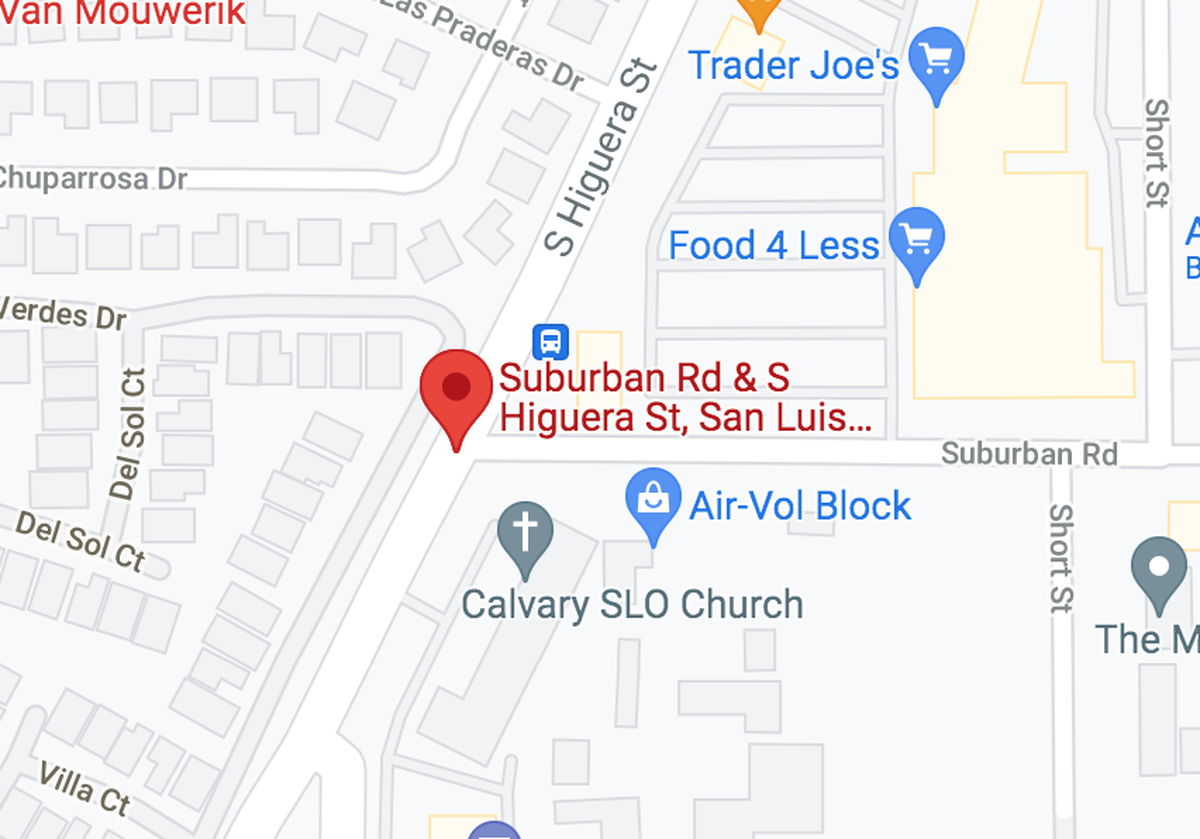
On Friday morning, June 25, Salvador Cortez, a financial consultant living and working in San Luis Obispo, was riding his bike and was fatally injured in a collision with a truck turning right at the corner of Higuera and Suburban in San Luis Obispo.
The police investigation concluded that the driver was at fault for making an unsafe right turn; the driver faces a charge of misdemeanor vehicular manslaughter; he will be arraigned on Jan. 24.
Both the driver and the cyclist could have taken actions that would have avoided this tragic incident. These actions may seem counterintuitive to both cyclists and drivers, but they are nevertheless either required or allowed by the California Vehicle Code and recommended by cycling and driving handbooks and instruction manuals.
My hope is that both cyclists and drivers will consider these recommendations when approaching an intersection or driveway where right turns are possible. You may save a life, and that life may be your own.
The collision that took Salvador’s life is called, in cycling circles, a “right hook.” It is one of the most common causes of vehicle-bicycle collisions, and often results in serious injury or worse to the cyclist. Cyclists can avoid or at least reduce the risk of these types of collisions in a number of ways.
First and foremost is by being visible. Bright clothing and rear lights, even during daylight, will help riders to be seen and avoid blending into the surroundings.
The second action, which may feel uncomfortable to many cyclists, is to get out of the bike lane and get in line with cars at intersections where right turns are common. This positions the cyclist behind a car that may turn right and gets the rider out of the potential collision zone. Many cyclists think that they are safer or legally required to stay in the bike lane. Neither is true.
Collisions from the rear are much less frequent than right hooks, and if the cyclist signals their lane change and allows plenty of room for following vehicles to react, the chance of collision is very rare. And the vehicle code specifically allows cyclists to move out of the bike lane when approaching an intersection where right turns are permitted.
As for drivers of cars and trucks, the best way to avoid causing a right hook collision is to get as close to the curb as possible when preparing to make a right turn. This prevents cyclists from passing you on the right. Though many drivers think they are being courteous to cyclists by staying out of the bike lane, the vehicle code requires vehicles to move into the bike lane in preparing to make a right turn and to be as close to the curb as practicable when turning.
Drivers should always be cautious before making a right turn across a bike lane, as it is very easy to underestimate the speed of oncoming cyclists who can easily attain speeds above 20 mph, especially if on an e-bike.
Bicycles and motor vehicles both have rights and responsibilities to drive and ride responsibly and to respect each other’s space on our roadways. And when that space is narrow or restricted, it needs to be shared.
Ride your bike like you would drive your car. Obey all traffic laws, ride predictably with proper signals, and don’t be afraid to “take the lane” when conditions warrant. And drivers need to watch out for cyclists and respect their right to the road. With mutual respect, attentive awareness and courteous behavior, we can all get around our beautiful Central Coast safely, no matter what mode of transportation we choose to take.
Barry Rands is a green transportation specialist with the San Luis Obispo Climate Coalition and an avid cyclist.
This story was originally published December 21, 2021 at 6:00 AM.