
Cal Poly has a culture of racism. It's up to Armstrong to fix it, says third-generation alum
Some of my fondest memories of Cal Poly were created at a young age. Because my grandfather taught marine biology at Cal Poly, I was on campus weekly. Whether it be exploring the sea creatures in the touch tank in my grandfather’s classroom or visiting the pigs at the swine unit, Cal Poly in the 1990s afforded me a child's ultimate playground.
Being such a young age, I was immune to the social and cultural issues around me, life was simple. As I grew older, I began to notice the social, political and economic issues that affected our community. Issues of homelessness, economic inequality, and cultural biases now grabbed my attention.
While we may preach cultural diversity in San Luis Obispo and at Cal Poly, the lack of large groups of diverse populations hinders our ability to truly empathize with people of color.
I failed to see San Luis Obispo’s lack of cultural diversity until making the move from San Luis Obispo to New York City to pursue a master’s degree at Columbia University. Cultural diversity in New York City is not an option — it is everywhere, celebrated by street- corner vendors, bodega shop owners, and at my alma mater, Columbia University.
Not without it’s problems, Columbia introduced me to the world of the multicultural college campus. Feeling almost as a fish out of water, my new life in New York City changed my all-too-familiar, white-washed landscape of San Luis Obispo to a kaleidoscope of colors, languages and cultures. Columbia University embraced the diversity. I embraced the diversity. It forever changed me.
While not an Ivy League school, Cal Poly is arguably on the top ten list of desirable schools to attend in California. According to the Cal Poly admissions website, out of the 58,429 students who applied to the university for Fall 2016 admission, 4,341 freshman and 779 transfer students were accepted (11.4% acceptance rate), with an average GPA of 3.92 (freshman) and 3.42 (transfer), and an average SAT score of 1251 (math and reading scores). Quite impressive, to say the least.
So why, out of a total 2016 student population of 21,306, were only 152 — 0.7 percent — African-American students? You would think such a desirable and highly rated school such as Cal Poly would have no problem attracting African-American students. Well, it does. We will talk about that soon, but before we do, let’s switch gears and discuss the diversity problem demonstrated by Cal Poly’s employee profile. According to the Cal Poly Institutional Research website, out of the 3,054 people employed by Cal Poly in 2016, 59 of them were African American. Does Cal Poly have an issue with attracting African-American faculty and staff to its campus? By reading the charts provided by the Institutional Research website, it would seem so. But why?
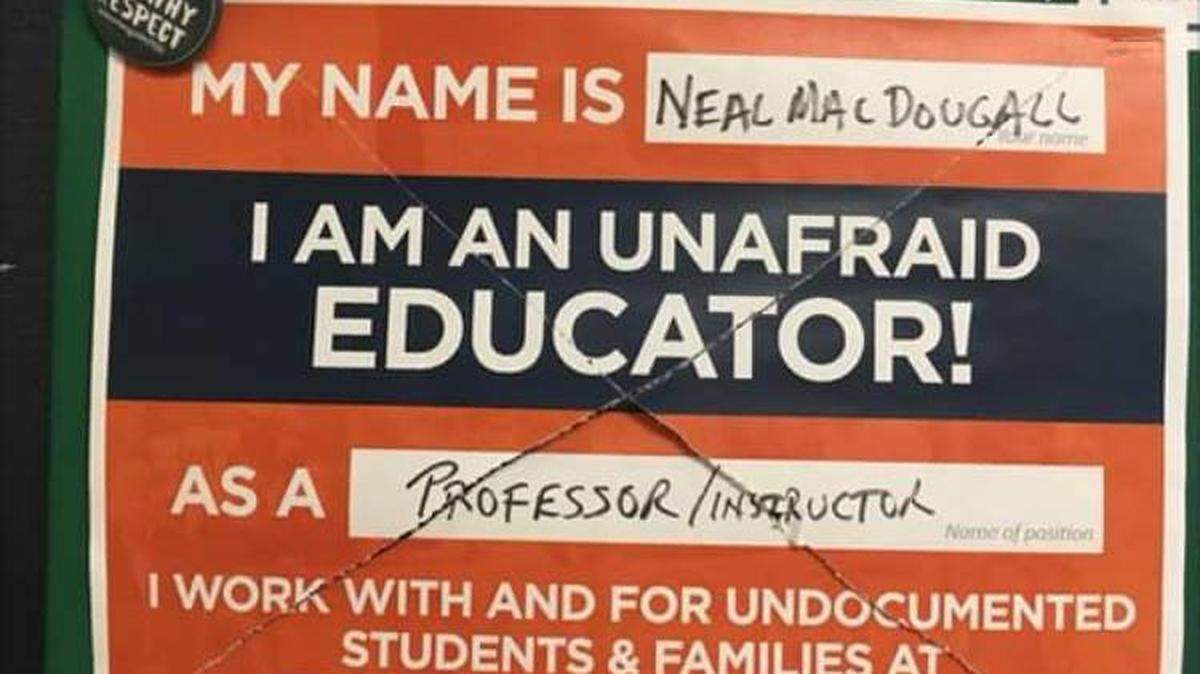
The reason is simple: the ongoing racist, bigoted and culturally insensitive incidents involving members of the Cal Poly student body. As a third-generation alumni of Cal Poly, I am saddened and appalled by news of the recent racist and bigoted actions of Lambda Chi and Sigma Nu fraternity members and further troubled by the racist fliers, graffiti and vandalism reported by Cal Poly agribusiness professor Neal MacDougall.
While it is not logical to blame the entire university for the actions of a few, it is logical to believe that Cal Poly has a cultural problem that affects the diversity in recruitment and retention of its faculty, staff and student body. It is also not logical to blame President Jeffery Armstrong for creating the toxic, hyper-masculine and racist culture currently alive and well at Cal Poly, but one can find it hard to ignore the fact that he has an obligation to stop it.
My one piece of advice to President Armstrong is this: Cal Poly needs to actually celebrate diversity, not just say it does. Cal Poly needs to put a real and honest effort toward attracting, recruiting and retaining a quality and culturally diverse body of staff, faculty, and students. They are out there, believe me. I saw them everywhere at Columbia University. You also have a moral obligation to protect the minority students at Cal Poly, as it is the role of the majority to protect the minority, no matter the opposition or donation lost.
The university needs to distinguish between “freedom of speech” and hate speech, and act accordingly to protect the integrity of the entire student body. President Armstrong, you have the golden opportunity to right years of wrong done at Cal Poly. Please don’t let us down.
Ben Arrona is an adjunct professor of history at Cuesta College. He has a master's degree in history from Cal Poly and a master's degree in Islamic Studies from Columbia University.
This story was originally published April 20, 2018 at 4:50 PM with the headline "Cal Poly has a culture of racism. It's up to Armstrong to fix it, says third-generation alum."