You sneezed. You’re a little tired. Is it time to break into that stash of at-home COVID tests?
You know how it is. You wake up, and maybe your nose is slightly stuffed up. Or you’ve got the tiniest bit of a headache. Or your stomach is queasy.
It’s the minor stuff we would have shrugged off back in pre-pandemic days.
Now we run through a mental checklist:
Is it the start of a cold? Something I ate? Or could it be COVD?
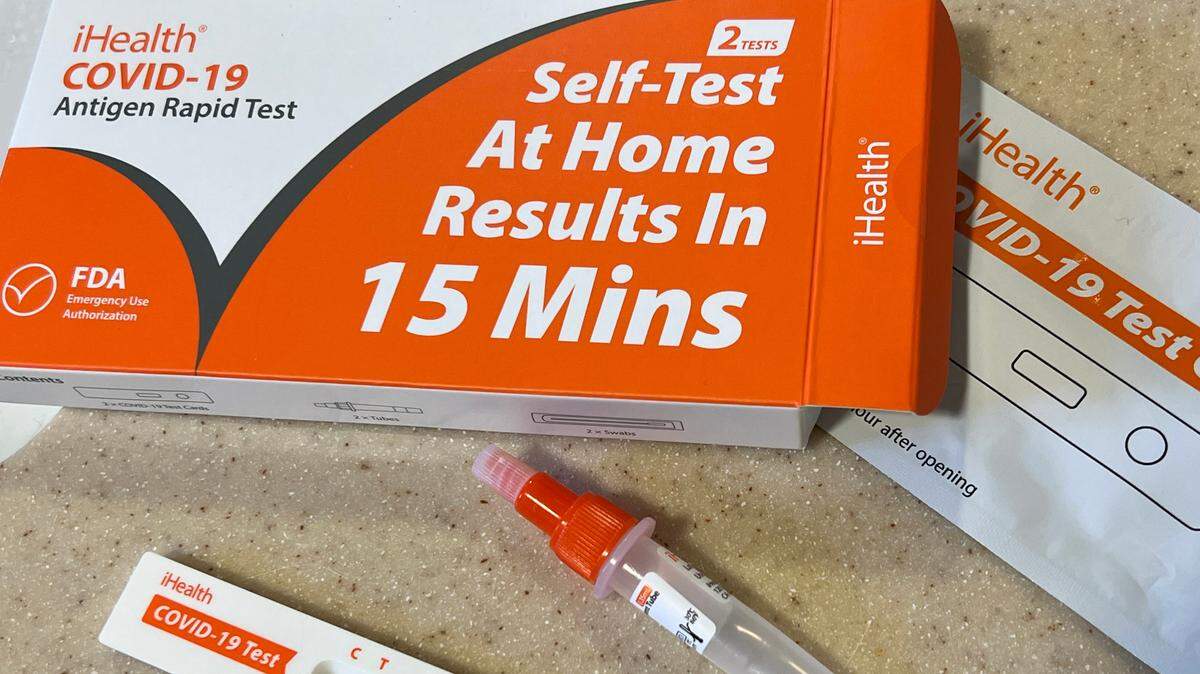
At the end of that rabbit hole, a final question awaits: Is it time to break into that stash of at-home tests I’ve been hoarding?
Such is life in the time of omicron — a variant so transmissible it has us analyzing every little cough, sneeze and sniffle, trying to determine whether it’s a test-worthy symptom.
There’s guidance online, but it can be frustratingly vague.
One example: “Flu symptoms are often of rapid onset. COVID symptoms can be of rapid or more gradual onset,” advises the University of Michigan.
Family and friends aren’t necessarily much help either.
“I’m telling you it’s nearly impossible not to get it if you do anything at all outside your house,” one close friend texted me recently. “Nearly EVERYONE I know has gotten it (including her).”
But she lives in New York. I live in Arroyo Grande.
Night and day, right?
Except ... there was that time last week when I got into an elevator, not realizing that the two other passengers weren’t masked.
Does that count as an exposure?
And was that sneezing fit and scratchy throat I had a few days later just a fluke — or something more ominous?
And finally, should I use up one of my two tests that took weeks to arrive from Amazon?
Seriously, this omicron surge wouldn’t be nearly so nerve-racking if tests were more plentiful.
San Luis Obispo County Health Officer Dr. Penny Borenstein sympathizes.
“We recognize the difficult situation our community is in,” she said in a prepared statement. “My heart especially goes out to those who need to find a scarce test in order to see their loved ones.
“Our advice right now is about making the most efficient use of testing... If you have only one or two home tests or can only find one appointment, we want that test to be as effective as possible.”
Here are the county-issued guidelines:
- Time it well. “If you’ve been exposed to someone with COVID-19, if you’ve traveled or if you’ve attended a gathering, get tested on Day 5 after the exposure for the most accurate read. If you have symptoms, get tested right away.”
- Make an appointment. “If you can’t find an appointment right away at your preferred location, consider a different location with open appointments.”
- Don’t go to the ER for routine testing. “If you feel well or have only mild symptoms, avoid going to the ER for a test. If you have severe symptoms—trouble breathing, chest pain/tightness, or severe confusion—seek emergency care right away.”
- Beware of fraud. “You do not need to provide a Social Security Number to get tested. If you don’t have insurance, you can get tested at no cost at community testing sites. If you are purchasing at-home tests, be sure they are FDA-approved.”
- Don’t wait to isolate or quarantine. “If you test positive with a lab or at-home test, isolate immediately.”
- Report your home test result. “If you test positive from home, report your results at SLOPublicHealth.org/testing.”
- Stay home if you are sick. “If you’re sick with COVID-19 symptoms and are waiting for test results or can’t get tested right away, stay home from work and school.”
OK.
But that still leaves a question hanging: How do we know if our mild discomforts are actually symptoms?
After all, that muscle soreness could be from the workout we did a few days ago.
The sneezing could mean we need to vacuum up the dust and the dog hair.
The headache could be ... well, you see where this is headed.
If we keep it up much longer, we’ll all make ourselves sick — with stress.
For the record, many medical websites (yes, they can be of some help) mention that we should pay special attention to new symptoms. That narrows things down a bit.
Also, if we take care of the big stuff — getting vaccinated and boosted, using medical-grade masks, avoiding large indoor crowds — that’s the best protection from serious illness.
Because honestly, we can’t be getting tested every time we cough or sneeze.
But to be on the safe side, I’m stocking up on a few more at-home tests. You never know when you might encounter unmasked people on an elevator.
This story was originally published January 15, 2022 at 5:30 AM.