
If Paso councilman’s records contained no smoking gun, why did he try to hide them? | Opinion
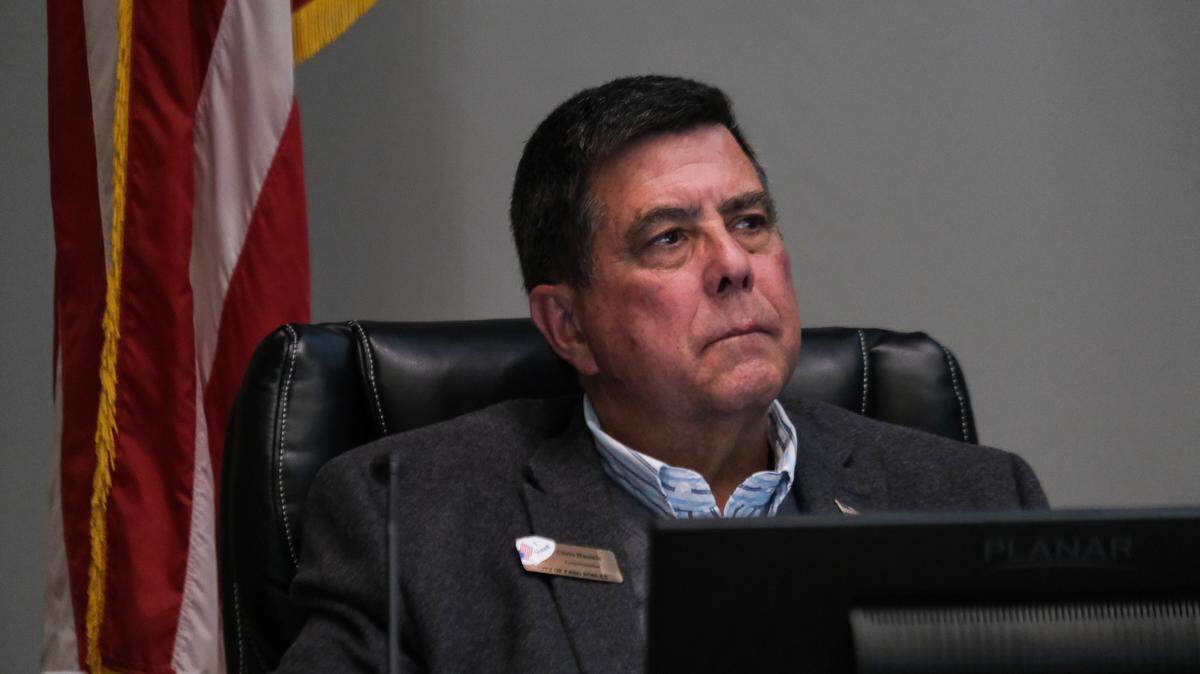
After reviewing nearly 4,500 records withheld for months by Paso Robles City Councilmember Chris Bausch, here’s some of what The Tribune learned:
- Bausch did not believe council candidate Linda George had much of a shot at winning in 2024. (She did, indeed, lose.)
- He ratted out fellow Councilmember Steve Gregory by texting a photo of Gregory’s car with Idaho plates to Cal Coast News reporter Karen Velie, who then wrote a story insinuating that Gregory was breaking the law by failing to reregister the car in California in a timely manner.
- He likes devil emojis.
That’s not all The Tribune found in its investigation, but those are some of the choice tidbits.
The records show the people accused of trying to run former City Manager Ty Lewis out of his job were trying to flip the City Council. They did work together on strategies, collaborated with Velie on messaging and sniped about each other when the campaigns went sideways.
But unless you are a Paso Robles City Hall insider, those kinds of details may seem ho-hum.
Bausch’s emails and texts — which were evaluated by the councilman and released by the councilman according to his own judgment — revealed little about the darker allegations Lewis says cost him him a job — allegations that led The Tribune to request the records in the first place.
Lewis claimed he was subjected to a campaign of bullying and harassment that included spreading salacious, unfounded stories that he participated in “sex parties.” It got so bad, he said, that his health suffered and he took a medical leave from work. He ultimately filed a lawsuit against the city that eventually settled for $365,000.
We still don’t know how much of those claims were true.
But the general intransigence by Bausch raises the question: If he had nothing to hide — aside from some disparaging remarks about fellow Roblans — and if he wasn’t in fact spreading rumors and damaging stories, why didn’t he comply with The Tribune’s numerous requests from the get-go?
Why didn’t he complete the searches repeatedly asked of him and turn over the records held on his devices in a timely manner?
Instead, his repeated refusals to turn uphold his basic responsibilities led The Tribune to sue him and the city of Paso Robles, for violating the California Public Records Act.
That stubbornness led the city to turn around and sue its own councilmember, blaming him for failing to follow state public records law, which is his duty as an elected councilmember.
“Councilmember Bausch has stated that he will not make his personal devices available to the City and that complying himself would require him to conduct over 700 searches on his personal devices, which he deems unreasonable,” City Attorney Elizabeth Hull wrote at the time. Hull said Bausch refused to turn over his records without a court order.
And ultimately, it did take just that to pry the documents loose.
Paso Robles on the hook
As a result, the city went through the time and expense of defending itself in court on the taxpayers’ dime so far, and it’s not over yet. The matter of attorney’s fees — and there are many — has still to be decided.
This all could have been avoided had Bausch followed what is now common practice in a growing number of municipalities.
Many agencies in California now require officials to use a government-issued device rather than a personal phone or computer when they communicate about official business. As an alternative, they can also automatically forward messages from their personal devices to a city account.
The city of Paso Robles says it provides extensive training on California open government and transparency laws to city councilmembers and routinely reminds them to use their public accounts and devices for city business.
Yet Bausch apparently ignored that guidance.
Elsewhere in San Luis Obispo County, local agencies have a hodge-podge of policies on using personal devices for public business.
If nothing else, the Bausch fiasco should put other municipalities on warning, compelling them to draft clear, written rules if they haven’t already done so.
Bausch was able to vet his own records
There are multiple reasons to ban the use of private devices for public business.
Expediency is one. Transparency and trust are others.
In this case, Bausch was allowed to vet his own records before releasing them to the city, which in turn provided them to The Tribune.
The councilmember — who formerly served on the Paso Robles school board and is no novice to government business — decided himself to continue withholding 127 apparently relevant emails, citing attorney-client privilege.
According to Tribune reporter Chloe Jones, some of those withheld records appear to be central to Lewis’ conspiracy claim, based on the subject lines of the emails. They mention “election tampering,” “nefarious conspirators,” “council being forced to settle,” “alleged Lewis conflict of interest,” election interference” and “self restraint.”
Permitting public officials who are themselves the subject of an investigation — whether it’s conducted by a journalist or a private citizen — to decide whether they need to release documents that could put them in a negative light is the epitome of the fox guarding the henhouse.
Why The Tribune went to court
At its heart — aside from the scandalous accusations — this case was about a local news organization upholding its role as a watchdog on government.
And through it all, Tribune journalists did what good journalists do — conducting interviews, attending council meetings, poring through records and filing Public Records Act requests to gather as much of the hidden background details as possible.
The fact that the records released by Bausch lacked bombshell information is not a failure — even though Bausch and company will likely portray it as such.
Not every public records request turns up a smoking gun, but the only way to find out is to go through the process.
If public officials fail to cooperate, as Bausch did, that doesn’t mean you shrug your shoulders and move on to the next story.
To do so effectively gives our elected leaders a pass on accountability — and will embolden them to withhold more information in the future.
That can’t happen.
The fact is, Chris Bausch attempted to put himself above the law.
Allowing him to get away with violating California would have been a major disservice to the public.
Whether they represent Paso Robles, Los Angeles or all of California, public officials must learn that they will be held responsible to they oath they took and to their citizens — even if it takes a lawsuit and a court order to do it.