
A massive energy storage plant near Hollister Peak? Great project, wrong location
While we support clean energy projects, we have to take a hard pass on this one.
The compressed air plant proposed at the base of Hollister Peak, along one of the most scenic routes in San Luis Obispo County, would be an epic eyesore.
It may be a perfectly fine project, but it belongs somewhere else. If that makes us energy NIMBYS, so be it.
Not only is it in the wrong place, the fact that the applicant started test drilling without all the necessary permits doesn’t exactly inspire confidence.
Nor does the lack of notice given to neighbors, who were inconvenienced by a constant whirring noise and bright lights.
As Tribune writer Mackenzie Shuman reported last week, Hydrostor drilled test wells near iconic Hollister Peak — one of the Nine Sisters — in a bucolic area zoned for agriculture, not industry.
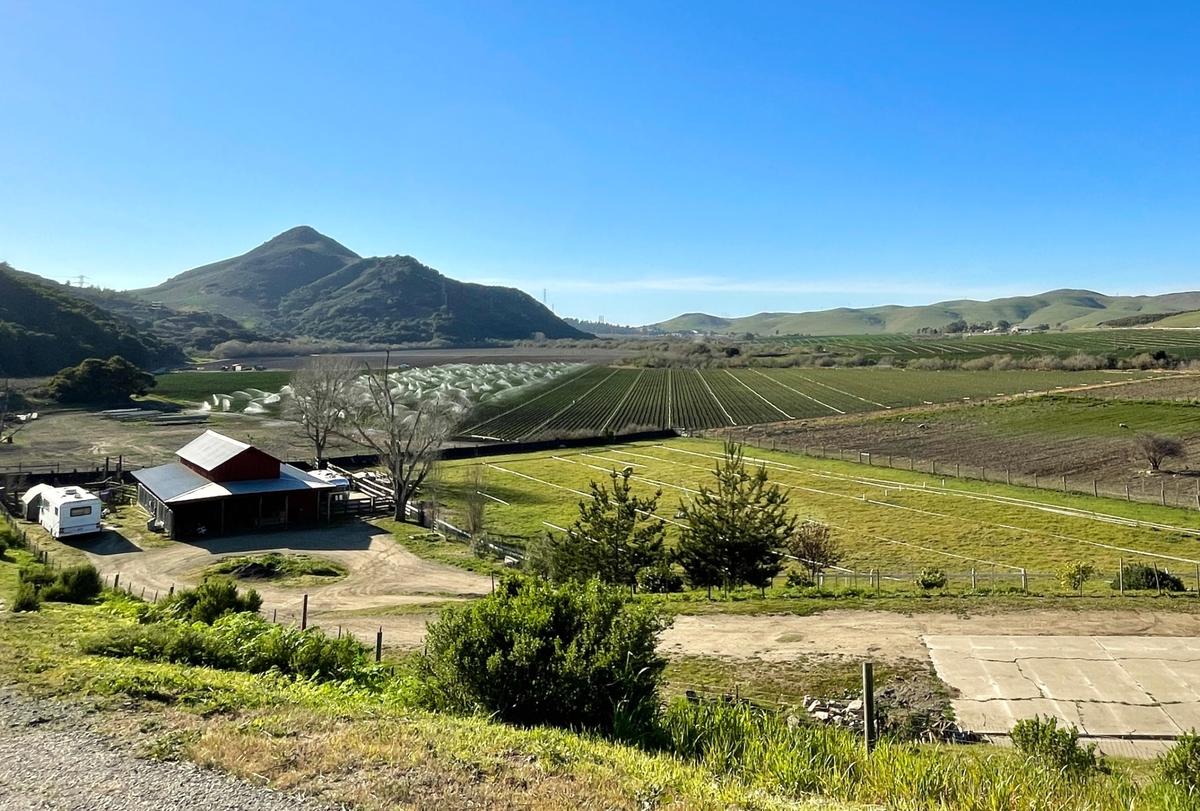
It had the necessary permits from San Luis Obispo County, but because the project is in the coastal zone, it also needed approval from the California Coastal Commission. Since it didn’t have that, the Coastal Commission issued a notice of violation.
The drilling has since stopped, but Hydrostor plans to restart once it has the blessing of the Coastal Commission.
“All our activities and impacts are temporary,” company official Curt Hildebrand said. “We will be restoring each and every site to its original condition.”
The company would be better off quitting while it’s ahead, because as hard as it is to get permits for test drilling, that’s nothing compared to what it would take to get an OK for the actual project.
“They have some high hurdles to clear before they can build a project,” said Pat Veesart, a Coastal Commission enforcement supervisor.
As Shuman reported, the location off Highway 1 was chosen because of its geology: The volcanic plugs of the Nine Sisters provide a geological formation that continues underground and forms hard rock deep underground suitable for hosting pressurized air.
Here’s how the project would work: It would take in excess energy generated by wind, solar and other green sources and use it to compress and remove the heat from the intake air.
The compressed air would then be sent underground into caverns where it would displace water into an above-ground reservoir to keep the system under pressure.
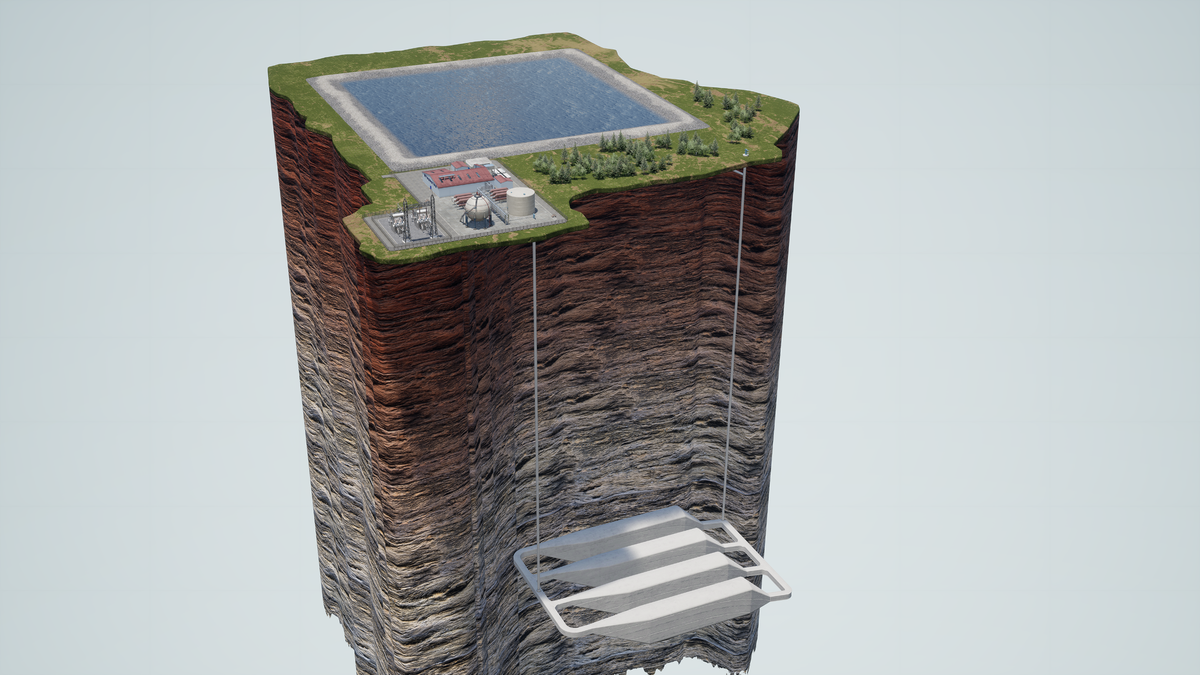
Then, when energy is needed, the compressed air would be reheated and released through a turbine to generate electricity.
One energy writer described the process like this: “The rough business model of Hydrostor’s plant is to convert cheap excess energy into valuable grid capacity by storing it for later.”
In SLO County, the project would require excavation of about 880,000 cubic yards to make way for a compressed air cavern.
Its above-ground footprint would be massive. It would include a 100-foot-tall, 65-foot-wide, 1,075-foot-long building to house power generators and air compressors, plus several other buildings.
The plant would have the capacity to generate 400 megawatts of electricity. To put that in perspective, Diablo Canyon nuclear power plant can produce 2,256 megawatts — a resource that will be lost when Diablo shuts down in 2024-25.
As much as California needs to replace the emission-free power generated by Diablo Canyon — as well as produce more clean energy to meet ambitious greenhouse gas reduction goals — we shouldn’t rubber-stamp every project in a panic.
It will no doubt be necessary to make some sacrifices — for instance, not everyone will be happy to see wind turbines off our coast — but we can’t lose sight of the duty to protect ag lands and scenic open spaces.
We admire Hydrostor’s initiative, but we strongly encourage the company to give up on Hollister Peak and look elsewhere.