
SLO County supervisors will ask Newsom to help keep Diablo Canyon open. It’s a moonshot
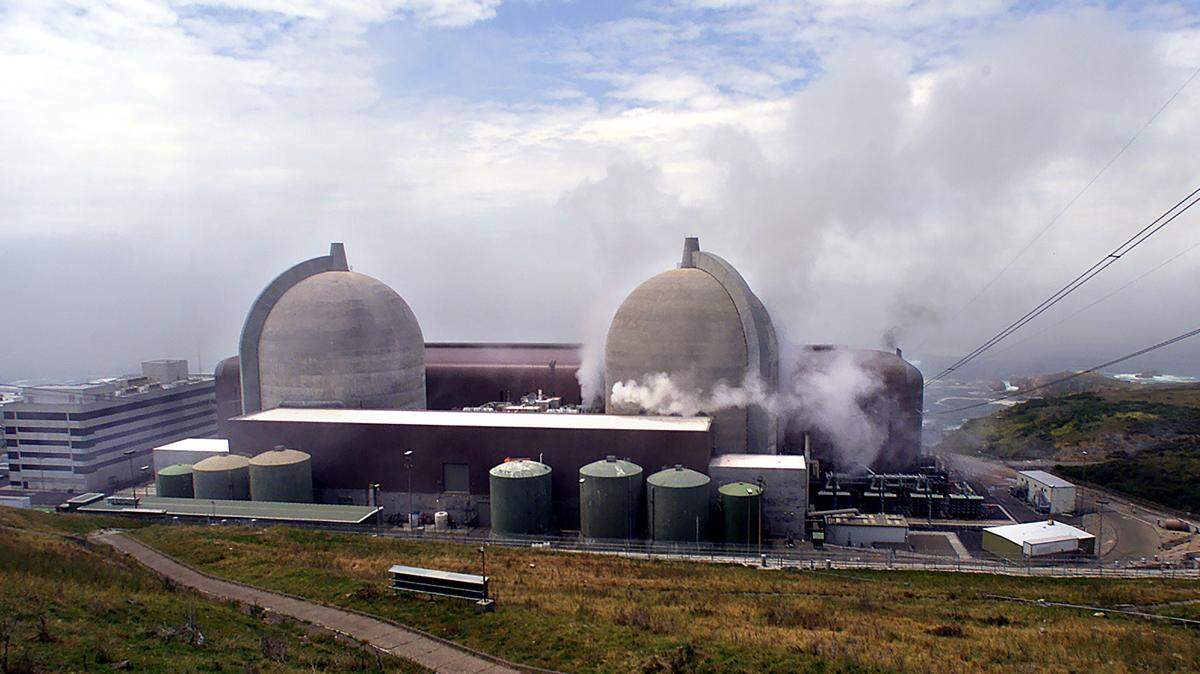
The San Luis Obipso County Board of Supervisors voted 3-1 Tuesday to make a long-shot effort to extend the life of California’s last nuclear power plant.
The board will send a letter to Gov. Gavin Newsom, requesting he do “everything he can” to work with PG&E “to ensure they have access to all permits necessary to continue to operate the plant.”
The licenses for the twin-reactor plant expire in 2024 and 2025, and PG&E decided years ago to shutter the plant.
Despite pressure to keep the plant open from some scientists, academics and current and former government officials, the odds are against it.
Here are some of the hurdles:
One: The governor’s office has indicated that Newsom has no intention of intervening to keep the plant operating past 2025.
Two: Even if Newsom were to support continued operation, the nuclear power plant is licensed by the federal Nuclear Regulatory Agency — not the state of California — and the governor has no power to “ensure access” to that permit.
Three: PG&E, the plant’s owner, is proceeding with closure — a position it reiterated on Tuesday. “We remain on course for decommissioning in 2025 at this time,” said Tom Jones, PG&E’s director of government relations.
Four: So far, no other company or government agency has stepped up to take over the plant.
Five: San Luis Obispo County has accepted and already spent some of its share of an $85 million settlement intended to help local governments weather the economic hit they will take when Diablo Canyon closes.
Six: Several parties, including PG&E, signed an agreement stipulating the conditions for closure. At least one of those parties is prepared to sue if that agreement is broken.
“If PG&E can back out we, or any other party, can sue them for breach of contract,” David Weisman of the Alliance for Nuclear Responsibility said in a telephone interview.
Conservative supervisors support continued operation
The board’s vote came following a presentation by scientists who worked on a Stanford-MIT study that strongly supported keeping the plant online.
The three conservatives supervisors, John Peschong, Lynn Compton and Debbie Arnold, voted in favor of sending the letter to the governor.
Board Chairman Bruce Gibson voted no and Dawn Ortiz-Legg, a former PG&E employee, recused herself, though she has been supportive of keeping the power plant operating.
Need for clean energy driving push
It’s true that Diablo Canyon is a significant source of emission-free power, and there is growing concern that it will be difficult to meet the state’s ambitious goals for greenhouse gas reduction without it.
But given the hurdles that would have to be overcome in a relatively short period of time — and the fact that the Board of Supervisors already more or less agreed to the closure — trying to stop it now is no more than political grandstanding.
Sure, the board majority may score points with conservatives like Mike Brown, the head of the SLO County Coalition for Labor, Agriculture and Business, who made a dramatic pitch for action by the board.
“If you do something, you are going to feel so much better on your death bed,” he told the supervisors Tuesday.
But Gibson — who will likely be criticized in his re-election campaign for voting no — had a far more clear-eyed take when he suggested efforts would be better spent focusing on offshore wind.
“If we want to put some effort into something, I think that’s the way to go.”
He’s right.
This campaign to save Diablo Canyon is a lost cause.
Besides, if the Board of Supervisors is so convinced it’s a huge mistake to shutter the plant, why didn’t it fight the closure years ago?
And don’t try to say that it took the Stanford/MIT study to serve as a wakeup call. The threat of climate change and need for green energy has been apparent for years, long before that study.
Instead of questioning the environmental effects of closure, the county focused on softening the economic blow that would result from the loss of PG&E tax revenue and high-paying jobs.
It’s time to face reality: This last-ditch effort is much too little, and much too late.
This story was originally published February 16, 2022 at 9:55 AM.