
Study says keeping Diablo Canyon open would help CA meet energy needs — but is it too late?
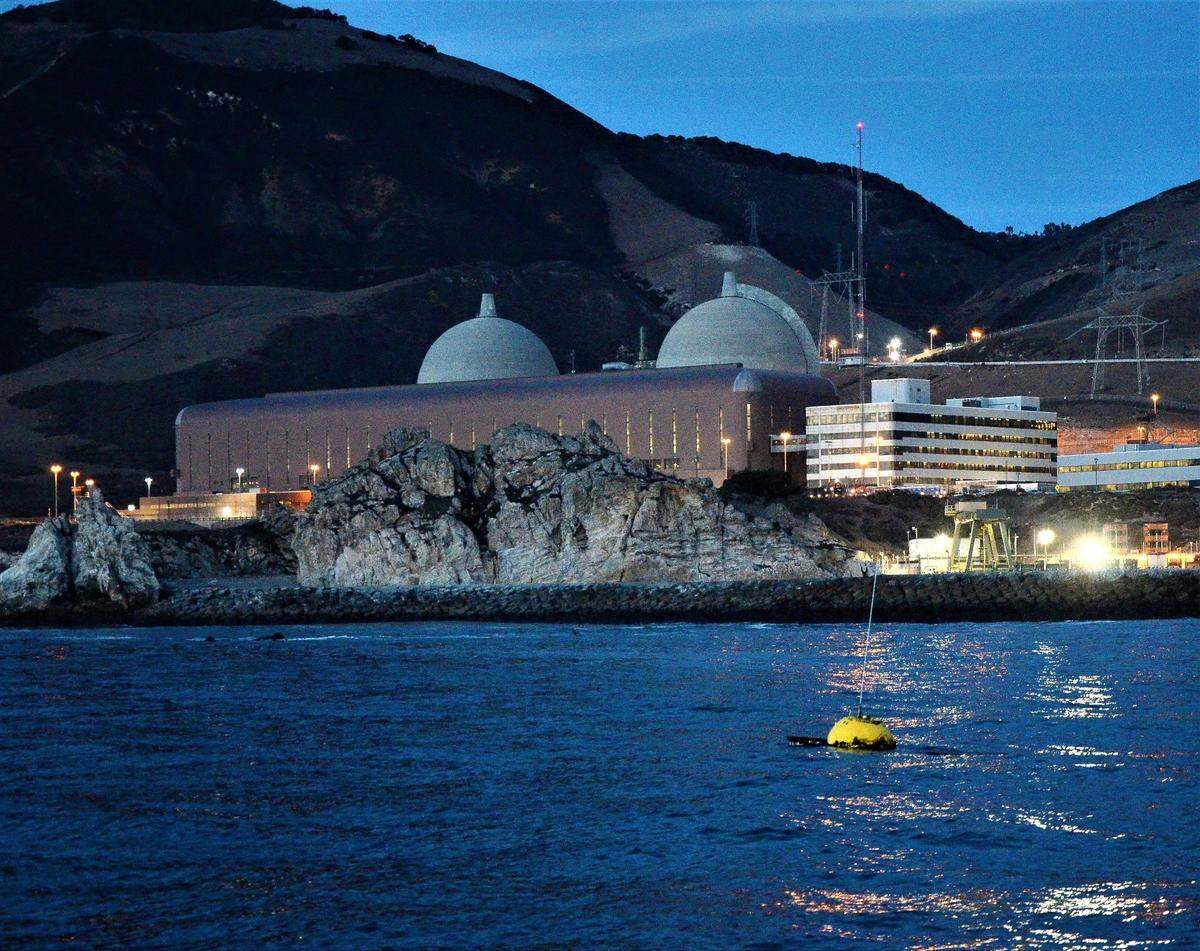
A new study claims that keeping Diablo Canyon nuclear power plant running beyond its expected closure date in the coming years would help California meet its shifting energy needs — but those involved in the already years-long process of closing the plant say changing direction now is nothing more than an expensive pipe dream.
The study, conducted by a group of researchers with the Massachusetts Institute for Technology (MIT) and Stanford, found that keeping Diablo Canyon open would help the state meet “the increasing challenges of climate change by providing clean, safe and reliable electricity, water and hydrogen fuel for Californians.”
According to one of the study’s authors, Jacobo Buongiorno — a professor of nuclear science and engineering at MIT — the decision to close the state’s last remaining nuclear power plant was made at a time when California’s energy priorities were different.
“Things have changed,” Buongiorno said during a press conference Monday. “There have been some new opportunities and new challenges.”
PG&E announced the plan to shutter the plant in 2016 once the licenses for its reactors expire in 2024 and 2025, as part of an agreement between labor unions, environmental groups and nuclear stakeholders. The California Public Utilities Commission approved the joint proposal in 2018.
According to Buongiorno, in the years since the agreement was approved, California has set aggressive decarbonization goals that aim to transition the economy into one with significantly reduced carbon dioxide emissions. The state has also prioritized finding more clean, zero-carbon energy sources.
At the same time, Californians have been forced to deal with rolling brown-outs and the ongoing threat of wildfire as the state’s drought worsens, all issues that draw the stability of the state’s energy grid in a post-Diablo world into question, he said.
“We know very well the climate around nuclear in California is highly controversial,” Buongiorno said. “We want to start a debate. We feel our findings are sufficient, probably in our opinion, to warrant that debate actually start. So we basically offer this information to the important stakeholders.”
PG&E and a number of stakeholders in the closure don’t agree with the report’s assessment however.
Most experts and stakeholders contacted by The Tribune in the wake of the report’s release this week say such an abrupt about-face this late in the game — the plant is scheduled to be decommissioned beginning in 2024 — is nearly impossible.
“The study appears to be a perfect example of academic pronouncements from an ivory tower, completely divorced from the on-the-ground reality of the situation,” said David Weisman, legislative director for the Alliance for Nuclear Responsibility.
Others, meanwhile say they would be open to having more conversation about the issue.
“We have to take a real solid look at what this forecasted and what they’re saying about the need to really take a second look at Diablo Canyon and the potential,” said Third District SLO County Supervisor Dawn Ortiz-Legg.
Ortiz-Legg’s district includes the area surrounding Diablo Canyon.
“I‘m open to the conversation with the community,” she said. “I’m open to the conversation with my colleagues. And I’m open to the conversation with the state leadership on what the possibilities could be.”
Report: Diablo Canyon could help California’s clean energy goals
The report — which was funded by independent philanthropic ventures and received no funding from industry, according to a news release — analyzed the impact of extending the life of Diablo Canyon as a way to help the state meet its future energy needs.
Diablo Canyon currently provides 8 percent of California’s in-state electricity production and 15 percent of its carbon-free electricity, according to the report.
Researchers with the study found that extending Diablo Canyon’s operations by just 10 years would reduce California’s power sector carbon emissions from 2017 levels by more than 10 percent each year and reduce its reliance on natural gas.
It would also improve the reliability of the state’s electrical grid and help prevent further power outages like what residents saw during the summer of 2020, researchers say.
Meanwhile, keeping the plant open those extra 10 years could save ratepayers a total of $2.6 billion, according to the study, while keeping it open until 2045 could save ratepayers up to $21 billion in power system costs, they said.
It would also reduce the need for setting aside land for massive solar projects, researchers said: Keeping Diablo Canyon running to 2045 and beyond “would spare 90,000 acres of land by avoiding the need for 18 gigawatts of solar,” according to the study.
The study also outlined ways in which the nuclear power plant facility could be enhanced to uses “beyond electricity,” including as an emission-free desalinated water plant and source of cleaner hydrogen fuels.
Diablo Canyon already uses desalinated water as part of its cooling system; that system could be expanded to help provide much needed water to urban, industrial and agricultural users at a lower cost than other desalination plants — something especially useful in a time of encroaching drought, researchers said.
The study also found Diablo Canyon could be used to produce up to 110 million kilograms of hydrogen annually, at about half the cost of producing hydrogen from solar or wind power. That fuel would help as California’s transportation sector transitions from fossil fuels, according to the study.
Notably, the study did outline some of the challenges to keeping the plant open, including seeking relicensing from the Nuclear Regulatory Commission and implementing costly changes to the plant’s once-through water cooling system to reduce impacts to marine life in Diablo Cove.
Despite those challenges, researchers said they felt the gains would be much greater than the costs.
“This preliminary analysis is intended to allow policymakers and the public to consider weighing the benefits and tradeoffs associated with maintaining or rededicating Diablo Canyon in light of other new and urgent challenges that face California: achieving a livable climate and the mandate for a zero-carbon economy under SB 100 and Executive order B-55-18, providing affordable and reliable electric and non-electric energy, furnishing adequate fresh water in a world of growing water stress, and reducing pressure on California’s limited land resources,” read the study.
The full study is available on Stanford’s website at stanford.io/3wAHIdu.
Local legislators open to talking about keeping Diablo Canyon open
The researchers were careful to note that the report is simply a gathering of findings and not a mandate or a game plan for how the state could switch course on closing the plant this late in the game.
They also noted that they had not been in contact with policy makers or PG&E directly regarding their findings.
Some local legislators said they would be open to talking more about the issue.
Ortiz-Legg, who before becoming a district supervisors spent most of her career in the energy sector, said she was interested to read the study and its analysis of Diablo Canyon’s role in California’s decarbonization.
“One of the things that I’ve always talked about is that San Luis Obispo is very unique in being an energy-exporting county. For the size of population that we have, the amount of energy that we generate, is significant,” she said. “And my concern is that in some ways, all of that generation for all these years has kind of lulled the community to think that things could always be the same, you know? We can shut things off and turn things on ... and our lifestyle and quality of life will be the same. And I think that this is a good report for people to really think how they want to have their energy generated and what aspects of that generation are they willing to accept.”
Ultimately though, Ortiz-Legg said that most of this would be out of local hands, and instead in the jurisdiction of the California Public Utilities Commission.
“The California Public Utilities Commission holds the keys to the kingdom, so to speak,” she said. “So we can all review and assess what this report says, but the ultimate authority comes from at a higher level.”
Assemblyman Jordan Cunningham, R-San Luis Obispo — who in 2019 pushed for an amendment to California policy that would classify nuclear power as a renewable energy source and could have potentially helped position Diablo Canyon to remain open — urged state leaders to look more closely at the issue.
“This study, conducted by environmental and engineering experts at Stanford and MIT, solidifies what we have all been saying: closing Diablo Canyon would be bad for the climate, bad for ratepayers, and bad for 1,200 Central Coast families who rely on the plant for head-of-household jobs,” he said in a statement to The Tribune on Monday. “World leaders are gathering in Glasgow right now to discuss how to address climate change. Back in Sacramento, PG&E and the governor should take the study’s findings seriously and at least consider the huge benefits to keeping Diablo Canyon open through at least 2035.”
When asked if Cunningham would support a legislative push to keep the plant open, Cunningham’s Chief of Staff Nicholas Mirman said the assemblyman “has always been supportive of keeping the plant open past 2025, while also working to ensure the community has the resources it needs to get through the decommissioning process and closure.”
“Decision to keep the plant open past 2025 lays in the hands of PG&E and the governor,” Mirman said.
Where do PG&E and CPUC stand on keeping plant open?
Though Ortiz-Legg and Cunningham both expressed an interest in talking about keeping Diablo Canyon open, other stakeholders were less enthused.
“This would be more credible if these academics represented a developer with the several hundred million dollars needed to take this fantasy through the permitting process,” said John Geesman, attorney for the Alliance of Nuclear Responsibility. “Licensing a Hindenberg-type explosive technology next to a nuclear plant surrounded by earthquake faults is not for the faint-hearted.”
Weisman — also speaking for the Alliance, which was a part of the original closure joint proposal — added that a major issue if PG&E were to consider seeking re-licensing the plant would be returning economic mitigation funds that have already been dispersed throughout SLO County.
Terrie Prosper, the director of the California Public Utilities Commission’s news and outreach department, said the CPUC had not been briefed on the report as of Tuesday, and no proposal has been made to the commission to revisit its 2018 decision.
Prosper said that if PG&E were to change position and want to keep the plant open, the utility would need to seek a license renewal from the federal Nuclear Regulatory Commission and would like have to make considerable seismic upgrades to the plant.
“Those upgrades combined with required changes to the cooling systems to comply with state and federal water quality laws would likely cost more than $1 billion,” she said.
So, all of that considered, is PG&E considering keeping the plant open?
PG&E spokesman Suzanne Hosn told The Tribune on Monday that the utility company is aware of the study, but that the results “will not cause PG&E to reconsider its position on the future of Diablo Canyon.”
“PG&E is committed to California’s clean energy future, and as a regulated utility, we are required to follow the energy policies of the state,” she said. “The state has made clear its position on nuclear energy, and the plan to retire Diablo Canyon Power Plant has been approved by the California Public Utilities Commission and the state Legislature.”
She added: “Our focus therefore remains on safely and reliably operating the plant until the end of its NRC licenses, which expire in 2024 and 2025.”
%20Cropped.jpg)