Wake up, millennials. SLO County’s radical conservative supervisors are ruining your world
By The Tribune Editorial Board
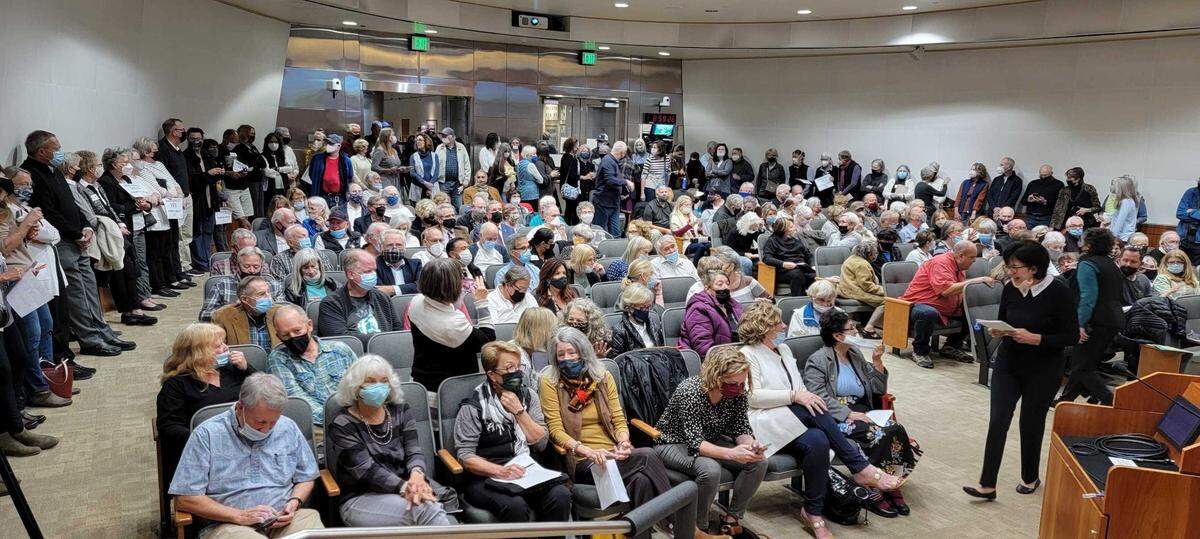
If not for the masks, you never would have known there was a pandemic going on — that’s how thick the shoulder-to-shoulder crowds were at recent county redistricting hearings.
Yet one group was conspicuously absent under those face coverings: the under-40s.
It’s safe to say that, in the sea of boomers, the number of young millennials and Gen-Zers could have been counted on the fingers of one hand.
That’s not unusual for government meetings; unless there’s an agenda item that directly affects younger people, the audiences almost always skew over 40, usually by a fair bit.
But this time, the stakes were especially high. Three conservative supervisors shamelessly voted to radically redraw district lines in a way that retains a Republican majority in three of the five districts, even though the GOP is losing ground countywide.
And under-40s will pay the steepest price.
During the coming decade, thousands of younger millennials and Gen-Zers will be graduating, looking for jobs and housing, starting families.
Good luck getting help from the Board of Supervisors.
To be painfully blunt, the party currently in power in San Luis Obispo County is too busy catering to its conservative base and conniving ways to cling to power to care much about what most affects young people — issues like affordable housing, climate change, child care, diversity and voting rights.
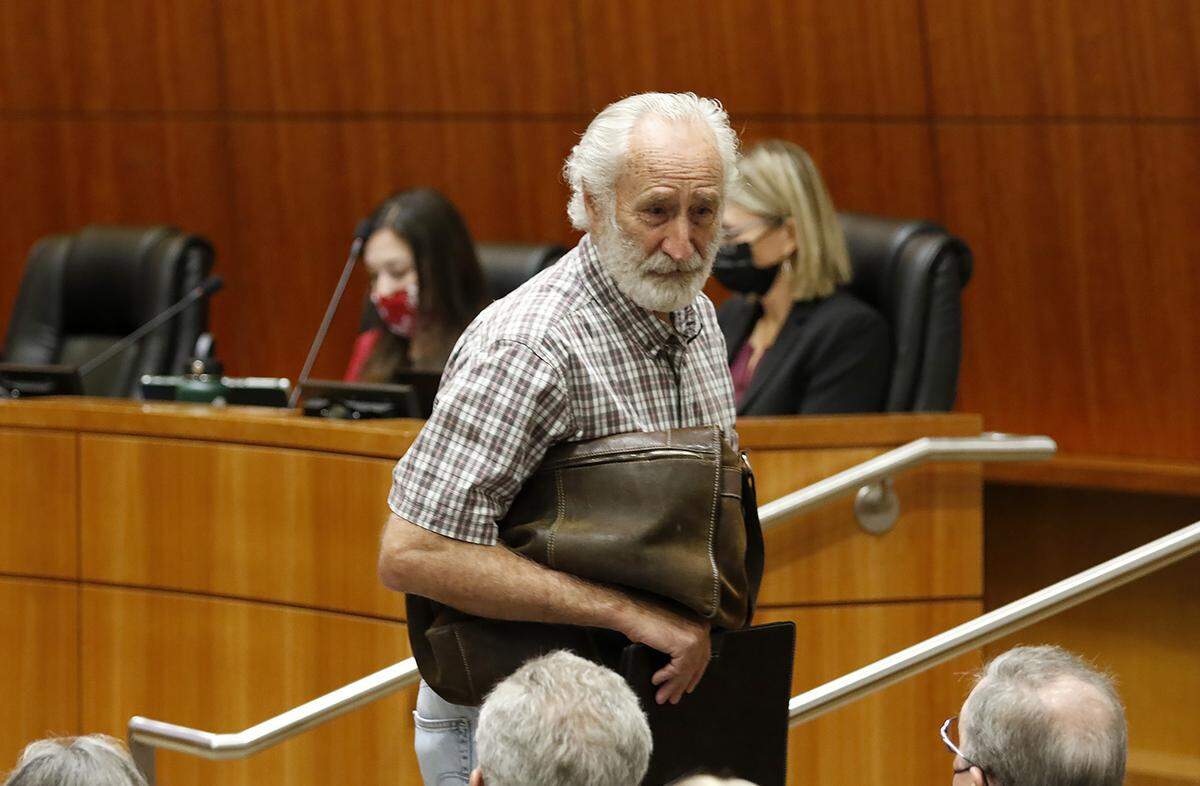
Richard Patten, who is credited with creating the map adopted by the board majority, steps away from the podium after testifying on Nov. 30. Laura Dickinson ldickinson@thetribunenews.com
Affordable housing record is abysmal
Conservatives on the Board of Supervisors dragged their feet for years on passing affordable housing and policies supported by liberal board members.
Ironically, Gibson has lobbied for years for increased funding for affordable housing projects — only to lose on a string of 3-2 votes.
The board majority has been even more cavalier on environmental issues, going so far as to pull out of the Integrated Waste Management Authority after it passed a countywide ban on polystyrene containers. Never mind that polystyrene is a hazard to wildlife, the environment and public health.
And while the supervisors themselves haven’t denied the existence of climate change, some of their supporters have scoffed at the idea that human activity has anything to do with an environmental crisis that threatens the world.
Brown, for example, recently criticized Supervisor Gibson for saying that climate change is “settled science.”
There have been overflow crowds at county redistricting hearings, but few young people took part in the process. Laura Dickinson ldickinson@thetribunenews.com
Turning Poly students into pawns
Nor is the far-right majority above using Cal Poly students like pawns in a chess game.
At the hearings, conservative speakers argued that it’s a “violation”and “atrocity” to keep Cal Poly and the city of San Luis Obispo in separate districts.
What’s more, keeping them in the same district as “rural” Atascadero is nuts!
They overlooked the fact that Cal Poly and SLO have been in separate districts for at least 30 years.
Or that in a county our size, supervisors may well be called upon to represent both urban and rural areas. If they aren’t prepared to do that, they should not run for the office.
By insisting that Cal Poly and SLO be joined at the hip, conservative speakers gave cover to the board, providing them with an excuse to gerrymander districts in a manner that will likely allow the far-right to retain control for another 10 years — if the new lines hold up in court.
The feigned concern for Cal Poly students was nothing more than a brazen power play.
Would it have made a difference?
Granted, it may not have done a whole lot of good if a huge contingent of 20- and 30-somethings had shown up at the redistricting meetings, demanding a more equitable solution than the one they chose.
After all, the board ignored the pleas of two mayors, a former city manager, two former police chiefs, the League of Women Voters, the SLO Chamber of Commerce and the head of the local bar association, to name just a few.
Obviously, this board majority doesn’t care who it crosses, and it has no interest in even trying to compromise.
Still, the fact that is was so difficult for young people to take part only added to the unfairness of the process.
Yes, one redistricting hearing was held at night — a requirement under state law — but that wasn’t nearly enough.
It might have helped if the board had appointed an advisory committee to review proposed maps and make recommendations.
A committee could have held well-publicized meetings throughout the county and — here’s an idea — maybe a couple of under-40s could have been asked to serve.
Better outreach
If local politicians sincerely want more voices in government, it’s going to take outreach — and innovative ways of doing business — to include young people in the conversation.
They’re working, attending school, raising kids, maybe caring for parents, grandparents or younger siblings. They don’t have the luxury of traveling to the county seat and spending hours in meetings, waiting for their turn to speak.
“We’re just plumb tired,” wrote Krista Jeffries, an organizer of a YIMBY (Yes In My Backyard) group advocating for affordable housing in SLO County. “We had to educate our kids, work from home, support local businesses, and keep ourselves from getting COVID for the last two years. Now we’re supposed to save the county districts, too?”
There are ways to make it more convenient for young people with lots of commitments to get involved.
Jeffries has some good suggestions:
Provide free child care on request at public meetings.
Allow phone-in comments.
Conduct more outreach during times when working people tend to be available.
“Churches tend to be closed on Friday because their workweeks include Sundays. Why shouldn’t the local government do the same on the weeks there’s public outreach happening?” Jeffries wrote in an email.
Good point.
The Board of Supervisors, for example, generally meets only twice a month, during the day.
It could add one night meeting per month — or even every two months — to discuss items of importance to working families, like housing and economic development and the environment. And maybe take the show on the road, by holding some meetings in the North and South County.
Of course, that would require cooperation from the board majority, which seems all too happy with maintaining the status quo — and now has a gerrymandered map to ensure it get its way.
That’s discouraging, but this is not a lost cause.
There’s a chance the new map could be overturned by a lawsuit or a referendum.
If not, given the large number of decline-to-state voters in the county, it could still be possible to flip the balance of power on the board in the next election.
But “boujee retirees” won’t be able to do it alone.
If San Luis Obispo County is to be rid of a board majority that’s shown itself to be unfit to lead, Gen-Xers, millennials and Gen-Zers must join the cause.
That’s not asking too much. After all, they have the most to lose as long as the current majority stays in power.
This story was originally published December 6, 2021 at 5:30 AM.