
PG&E wants to stick you with an 18% rate increase. That’s an outrage
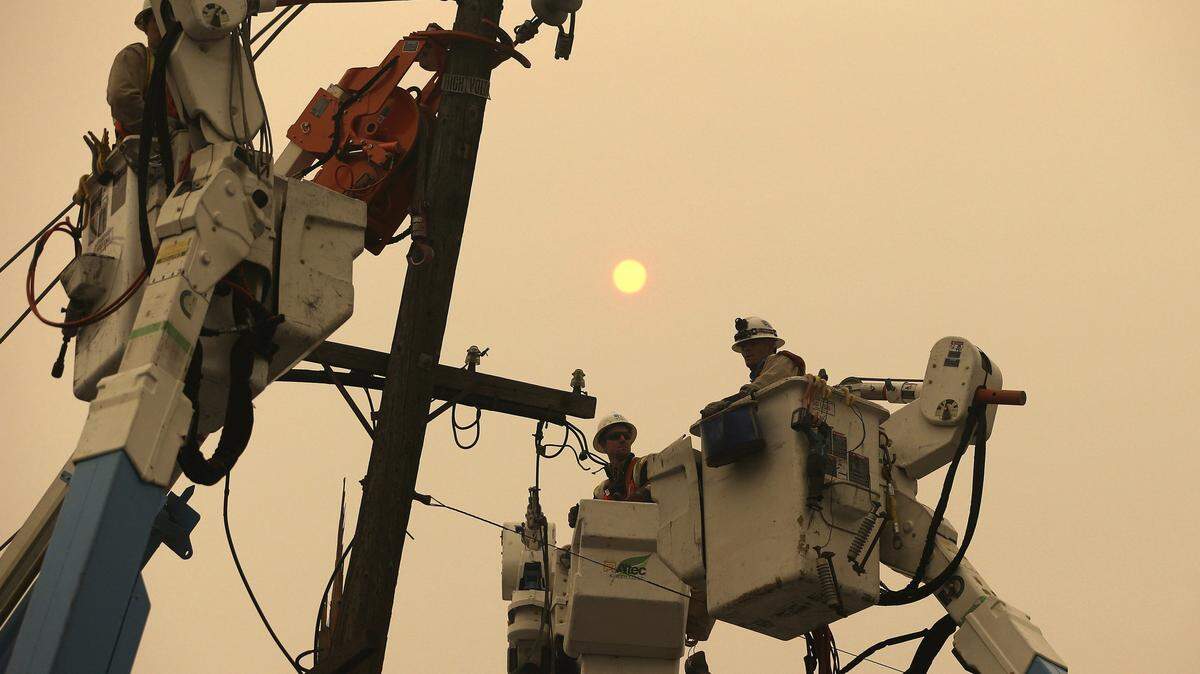
PG&E’s recent request for an 18% rate increase — and no, we didn’t forget a decimal point — is about as tone deaf as you can get.
There is little likelihood the California Public Utilities Commission will grant the request in full. This is just the opening salvo in a long and complicated negotiating process.
Still, PG&E does its already tattered reputation no favors with such an outlandish ask.
PG&E customers already pay way more than the national average — as much as 80% more, according to a UC Berkeley/Next10 study.
If the rate increase were approved, the electric bill for an average residential customer would increase from $138.86 in 2021 to $164.05 in 2023, according to the application submitted to the CPUC.
Customers enrolled in CARE, PG&E’s financial assistance program, would see their electrical bills go from $89.32 to $105.70.
The utility’s gas customers also would pay 18% more.
And it wouldn’t end there. The 2023 increase would be followed by a 6% increase in 2024, a 3.6% hike in 2025 and a 2.25% increase in 2026.
Why such hefty increases?
Wildfires are a big reason. Half the new revenue would be dedicated to vegetation management and other fire prevention programs.
More can and should be done to avoid the tragic loss of life we’ve seen over the past few years.
There were 33 fatalities in California due to wildfires in 2020 and five in 2019. In 2018 — the deadliest fire season in state history — California saw 103 wildfire-related deaths.
But PG&E’s track record raises serious reservations about its ability to successfully manage the job of making its territory more fire-safe.
In April, the PUC voted 5-0 to move PG&E into “enhanced oversight and enforcement” after concluding the energy company was doing a poor job trimming and removing trees near the most hazardous power lines, the Sacramento Bee reported.
The Public Advocates Office, an organization within the CPUC that represents ratepayer interests, wrote a scathing review of PG&E’s performance in a recent wildfire “fact sheet.”
“Pacific Gas and Electric has shown time and again that it is not protecting its customers,” the Public Advocates Office wrote. “The company’s repeated mistakes led to wildfires in five of the last six years. PG&E’s failures have taken a devastating toll killing more than 120 people. Holding PG&E accountable has never been more urgent.”
Nor has the Public Advocates Office been impressed with PG&E’s recent efforts to avoid future disasters; it “identified significant flaws” in the utility’s 2021 Wildfire Mitigation Plan.
For that matter, the CPUC doesn’t have a stellar reputation either.
The regulatory agency has been accused of not being tough enough on requiring PG&E to adopt wildfire safety policies.
“Deflect, delay, defer … we would joke that these were the rules of utility rulemaking,” Los Angeles County Deputy Fire Chief John Todd told Frontline.
Since the deadly fires, more attention has been paid to fire prevention efforts — including at the CPUC and PG&E.
That’s good, but California also needs a comprehensive plan on how to finance that work — one that’s both adequate and equitable.
Sticking ratepayers with a huge bill for work that should have been done years ago is not fair.
Nor is it fair for PG&E to pay top executives millions of dollars in bonuses, including a one-time cash award of $6.6 million for new CEO Patti Poppe, on top of her base salary of $1.35 million.
PG&E points out that Poppe’s compensation, as well as that of most other senior officers, is covered by shareholders, not customers.
Fine! Then let shareholders also contribute to other expenses, like fire prevention.
PG&E should not be punished in perpetuity for the mistakes of the past, but it shouldn’t be rewarded with a hefty rate increase either.
Expecting struggling families to pay substantially more to light their homes and run their washing machines is not equitable, especially if they live in areas of low fire danger.
PG&E may deserve a reasonable rate increase, but not 18%.
It is past time to hold both PG&E and the California Public Utilities Commission accountable for protecting Californians from deadly wildfires — without taking financial advantage of ratepayers.
This editorial has been updated to include information about PG&E employee compensation.
This story was originally published July 8, 2021 at 7:00 AM.