
Eddie Giron fell through cracks long before he killed SLO detective. That can’t happen again
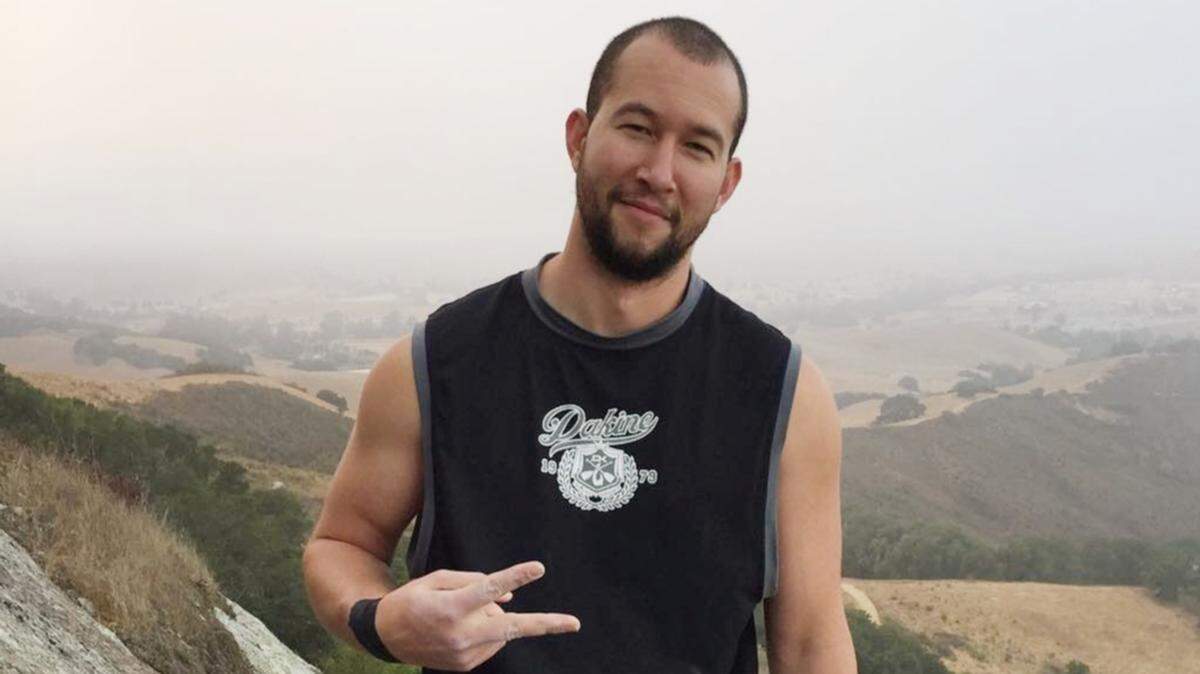
The more we learn about the final months of Eddie Giron’s troubled life, the more it becomes apparent we failed both him and Det. Luca Benedetti, the San Luis Obispo police officer shot and killed by Giron.
There is an overarching lack of mental health services — and mental health knowledge — not just in San Luis Obispo County, but also across the state.
In a state-by-state ranking of psychiatric treatment laws, California was given a D- in the 2020 analysis by the nonprofit Treatment Advocacy Center. Only eight other states scored lower.
That’s not surprising. For the most part, state and local leaders are content to follow the status quo until there is a crisis.
In SLO County, the most recent crisis occurred on May 10, when six police officers looking for stolen property served a warrant at Giron’s residence. Giron fired on them, killing Benedetti and injuring another officer. Giron died, reportedly from a self-inflicted wound; the shooting remains under investigation by the SLO County sheriff and district attorney. The Police Department is conducting an internal review as well, according to a statement from the city.
A Tribune public records request revealed officers responded to 10 calls for service involving Giron in the months leading up to the shooting, including one that said Giron was “exhibiting signs of mania and paranoia.” Also, friends of Giron reported telling police that he had unregistered firearms.
The city released a statement in late May saying the SLO Police Department was aware of past contacts with Giron.
“None of these contacts were violent in nature nor did they result in an involuntary mental health hold. A pre-warrant check disclosed that he had no firearms registered to him,” the statement said.
Yet he did indeed have a firearm. And while he was not placed on an involuntary hold, the reports of his behavior raise serious questions about his mental state.
More than a month after the shooting, many questions have yet to be answered:
Why didn’t Giron get the help he needed?
Was it due to a deficiency in state mental health laws and/or access to services? If so, what are other states doing that we aren’t?
Did police officers have all the pertinent information in this case — including reports that he possibly had unregistered weapons?
What might have happened if they had a fuller understanding of Giron’s situation prior to serving that warrant? Would they have approached the situation differently?
And finally, how will this tragedy inform policing in the future?
In an interview with a Tribune reporter, new Police Chief Rick Scott said it would be premature to comment at this point.
But he also said this: “Having a tragedy and not identifying areas that we learn from would be a true tragedy. There’s more work to be done.”
That’s reassuring.
In the meantime, the San Luis Obispo City Council recently approved hiring a second social worker for the Police Department’s Community Action Team (CAT), as well as a mobile crisis unit staffed with a paramedic and social worker to respond to homeless needs.
That’s a step in the right direction, but a few social workers hardly seems like enough, especially when you consider there are 64 sworn police officers in San Luis Obispo.
We are not advocating for “defunding” the Police Department, but we do believe there’s something inherently wrong with a system — and again, it’s not just San Luis Obispo — in which multiple red flags about a person’s behavior yield little or no effective action.
In this case, that had terrible consequences for two men and their families, friends and colleagues.
Local officials have the opportunity to step up and show true leadership by thoroughly and transparently examining investigative findings and determining what could have been done differently, to avoid future tragedies like this one.
We look forward to Chief Scott sharing those answers with the public as soon as he is able.
It would be a powerful way to build community trust, as well as to galvanize support for whatever changes are necessary to protect police officers and the public.