
Pismo Beach may get a ‘part-time’ freeway lane. Will that fix the bottleneck?
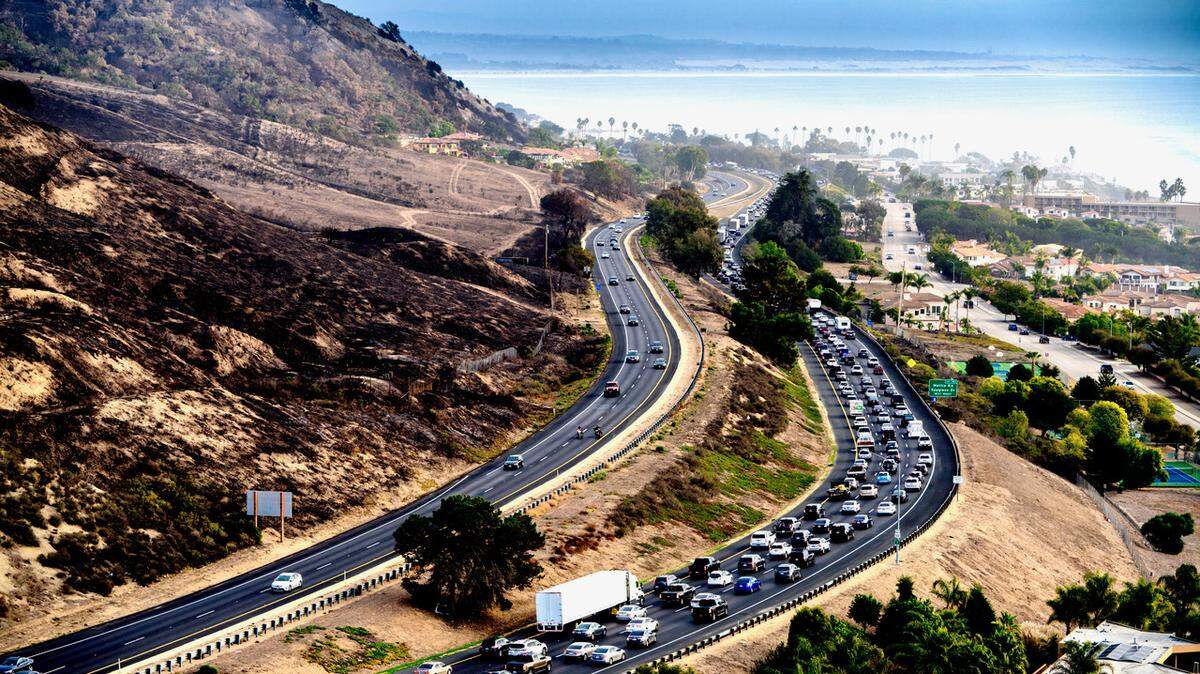
Pismo Beach may finally get a coveted third lane on southbound Highway 101.
But there’s a catch: Because the additional lane won’t be built to usual highway standards, it will be open only during peak traffic hours.
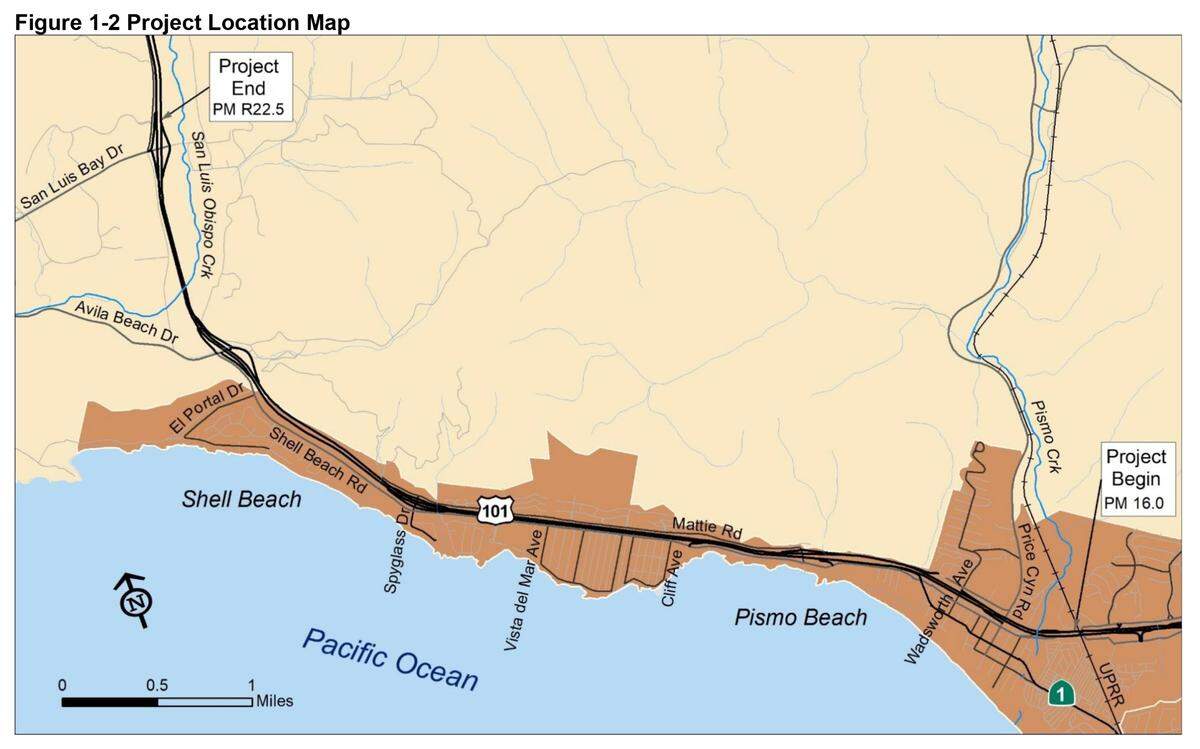
Transportation planners say that solution will work well for the Shell Beach Straits — that congested stretch of southbound Highway 101 that starts around Avila Beach and doesn’t clear until, well, it depends on the time of day. Sometimes traffic is bumper-to-bumper all the way to Arroyo Grande. And there are occasions when the backup starts as far north as San Luis Obispo.
Because traffic is terrible only at certain times each day, planners say it doesn’t justify adding a full-fledged third lane.
Instead, they propose adding a “part-time” lane open during, say, 2 p.m. to 7 p.m. on weekdays and 1 p.m. to 5 p.m. on weekends.
The 4- to 5-mile-long lane would be on the far left, next to what’s now the fast lane. It would be the same width as a conventional lane — 12 feet — but with only a 2-foot shoulder.
Overhead signals would indicate when the lane is open; motorists caught driving there when it’s closed could be fined an amount still to be determined.
It’s an innovative solution — it would be the first lane of this type in California, and one of only four or five in the entire United States.
Our take: As long as it eliminates that awful bottleneck, we’re all for it — on one condition.
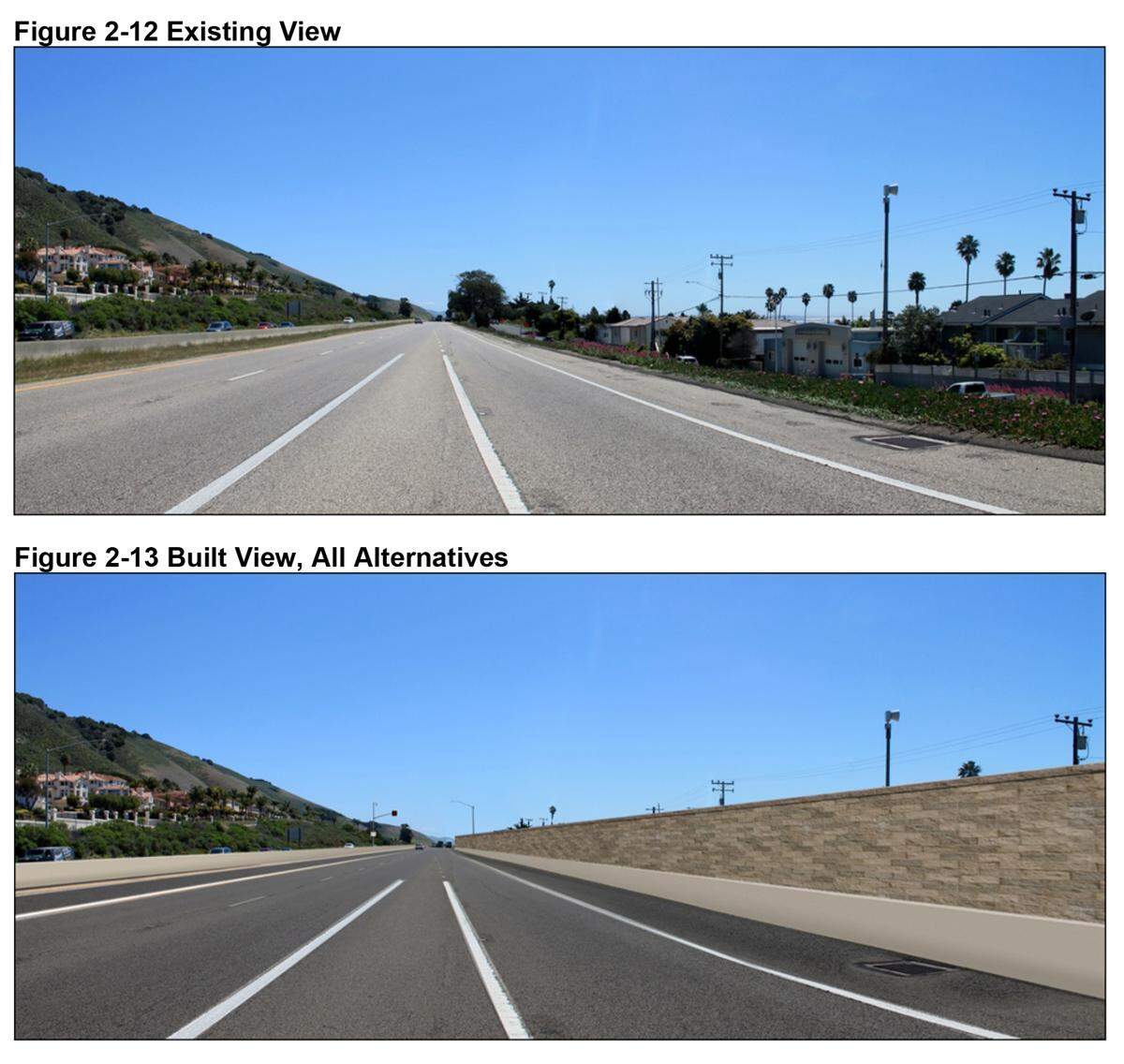
Those ugly sound walls that would block the gorgeous view?
No way.
When would the lane open?
If all goes according to plan, construction will start in 2024-25 and the lane could be open in 2026.
But that’s a big “if” — the project is still largely unfunded. Construction will be around $63 million (in 2024-25 dollars) and so far, there’s only around $11 million dedicated to the construction phase.
An application was submitted last year for congestion relief funds available through SB 1 — the gas tax voters approved in 2018 — but the Pismo Beach project didn’t make the cut.
SLOCOG is submitting an application for the next funding round, though once again, the Pismo Beach project will be competing against big city freeway improvements proposed for areas far more congested than ours.
Still, there’s good reason this project deserves to move forward. Not only would it improve traffic on one of the state’s major north-south routes, it’s also a seven-year pilot project that could pave the way for similar fixes in other regions of the state.
If it’s successful at the end of that time, the next step would be to pass state legislation to allow for permanent part-time lanes.
If it’s a bust, then there will be a nice, wide — and very expensive — 14-foot shoulder.
Will it work?
There’s been strong support for the project — many regular commuters are so fed up they just want something done — but at least one skeptic has come forward.
He is George Gibson, a former engineer with San Luis Obispo County Public Works who often takes a contrarian view of road improvement projects — he recently wrote a letter to the editor complaining that configuration of the bike lanes at the Madonna Road intersection near the Post Office looks like the work of a “group of third- and fourth-graders.”
He questions the need for a third lane on Highway 101; he believes a much simpler and less expensive fix would work: Simply close the truck-climbing lane that starts on the grade just south of Avila Beach.
The lane was installed years ago so that slow-moving vehicles won’t impede traffic as they climb the grade. Except it’s not just trucks that take it — cars use it too, and when the lane ends, it creates a bottleneck as motorists merge back into traffic.
It’s this “jockeying for position” that creates the problem, Gibson said at a public meeting held on Zoom last October.
“There are idiots that make lane changes to get ahead of two or three cars to get home five minutes earlier,” he said.
He’s absolutely right — as anyone who drives that stretch regularly will tell you.
And yes, the auxiliary lane has been the focus of scorn ever since it was installed.
Caltrans planners, though, say there are other factors at play here, one being future growth.
“We’re just going to see more and more traffic on the roads. ... It (just closing the truck lane) doesn’t work in the future,” said Paul Valadao, project manager for Caltrans.
Besides, if you simply take away the truck lane, slow-moving vehicles won’t be able to get out of the way as they climb the grade.
On top of that, there’s at least anecdotal evidence that some southbound motorists slow down to look at the ocean.
And finally, commuters often use the frontage road to travel south from San Luis Obispo to avoid traffic, then jump on the freeway at Avila Beach.
Those all combine to create a major headache for drivers who have the bad luck to be driving south at the wrong time of day.
Downsides of the plan
Cost isn’t the only hurdle; according to the draft environmental impact report, there are other drawbacks to the project.
Since cars will be traveling at faster speeds, there will be more carbon dioxide emissions (vehicles emit higher levels of CO2 when they travel at speeds over 55 mph) and more noise.
Hence, sound walls are being considered in a few spots, though no final decision has been made.
Even without sound walls, there will be a more urban look to the highway that “would be somewhat out of scale with the rest of the small, beachtown community,” Caltrans environmental coordinator Paula Huddleston said at the October meeting.
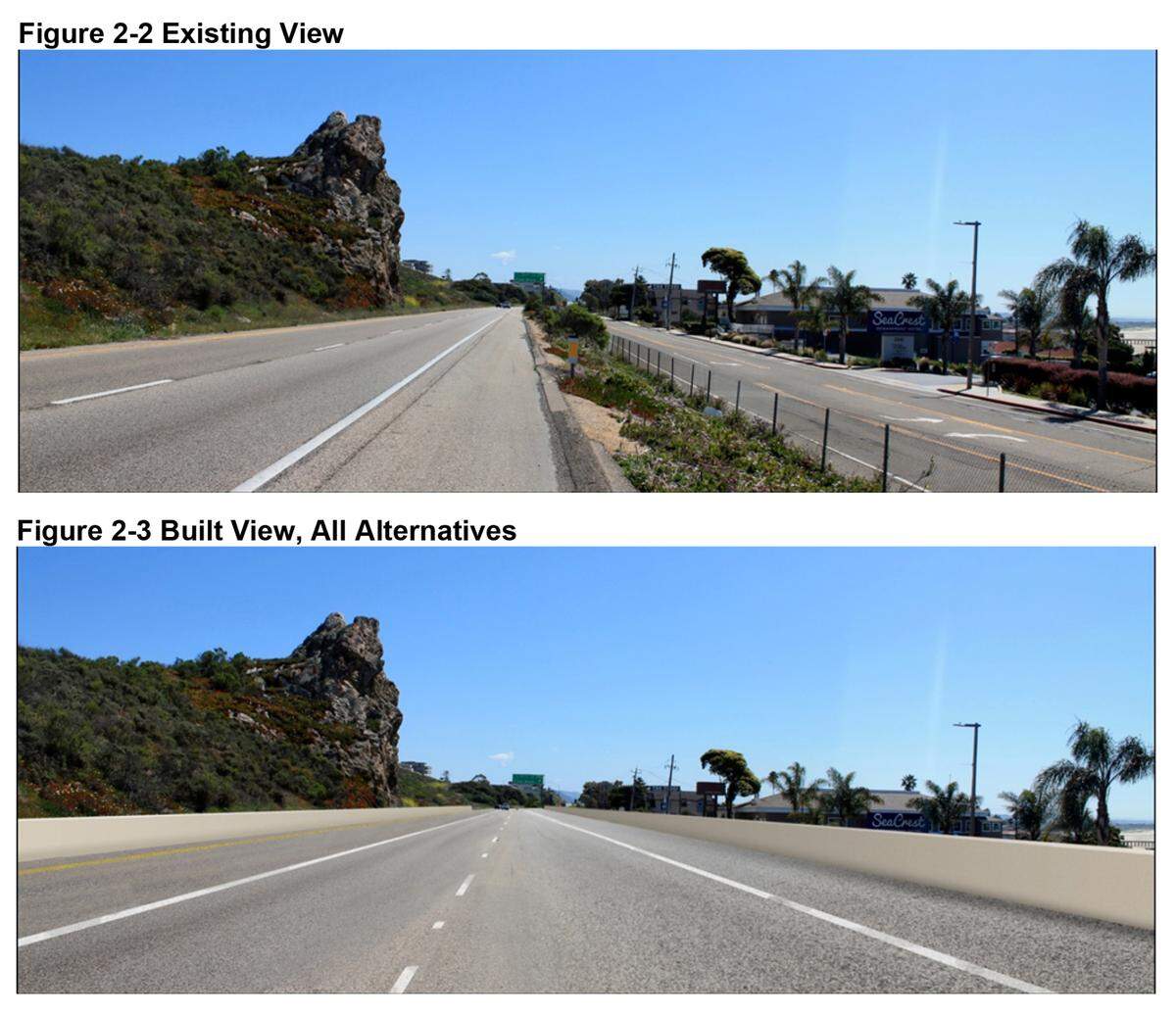
On the plus side, one of the most significant landmarks on that stretch of highway — Pismo Rock — would be preserved.
“The rock is a massive symbol to the Chumash Nation,” said Valadao. “It’s a pinnacle part of our county.”
To protect the rock, widening has to occur on the right side, rather than the left, and a retaining wall added.
What about that truck lane?
Transportation planners have yet to decide the fate of that pesky truck-climbing lane.
They are looking at three alternatives:
Close the lane entirely; keep it as is; or extend it just beyond the Shell Beach Road exit. That would give drivers the option of pulling off there and using the frontage road.
That’s just one of the decisions yet to made.
The design for the project is far from complete, and there will be several more opportunities for public comment.
One thing is for certain, though: Doing nothing is not an option.
The EIR paints a scary picture: “By 2046, traffic backups within the project limits are predicted to begin by 2 p.m. and build continuously throughout the afternoon. Traffic volumes are expected to be so inflated that the freeway and ramps would no longer be able to carry them.”
It’s way past time for something to be done about one of the worst bottlenecks on the Central Coast, not just for the sake of locals who commute to and from work every day (and now that COVID restrictions are lifting, traffic is increasing) but also for out-of-towners traveling on Highway 101.
This cannot be allowed to go on for another 10 or 20 years.
We strongly urge community leaders — especially state lawmakers — to advocate for necessary funds to improve this scenic stretch of highway before it become more unbearable than it is now.
This story was originally published June 17, 2021 at 6:30 AM.