
SLO County has authority to ban ICE prisons. What’s it waiting for? | Opinion
As the Trump administration moves to expand federal immigration prisons across California, many San Luis Obispo County residents and advocates are drawing a hard line: Not here. Not anywhere.
On April 25, 2026, San Luis Obispo County resident Risa Kaiser wrote to District 2 Supervisor Bruce Gibson with an urgent appeal: Draft and pass a strong ordinance against any ICE prison in SLO County.
Supervisor Gibson responded with encouraging words — the board, he said, is preparing language to ban ICE from commandeering county property. We are grateful for his responsiveness, but a ban on county property alone is not enough.
Most federal immigration prisons are built on private property. The nearest to us is in McFarland, northwest of Bakersfield.
The Trump administration has already opened two new ICE prisons in California since taking office, bringing the total to eight statewide, with a combined capacity of nearly 10,000 beds. The average daily population has surged 72% since April 2025. A ban limited to county-owned land leaves the door open.
We are asking the board to close it — permanently and completely.
SLO County must act quickly
San Luis Obispo County is not a bystander in this.
According to 805 UndocuFund, at least 94 people have been taken from SLO County into ICE custody as of early 2025 —a minimum, since not all apprehensions are reported. These kidnappings have happened in San Luis Obispo, Paso Robles, San Miguel, Oceano, Arroyo Grande, Grover Beach and Nipomo — in parking lots, at workplaces, outside of schools, in front of homes, in the places people go about their daily lives, as well as at the SLO County Jail.
Families have been torn apart, children have gone to school, not knowing if their parents would be home when they returned, workers have vanished from job sites.
Meanwhile, federal funding for ICE facilities is dramatically increasing.
Just this month, Congress approved an additional $70 billion in immigration enforcement funding on top of the nearly $140 billion already approved.
The companies running these prisons are in the incarceration-for-profit business. The GEO Group and CoreCivic — the two largest operators — lobby Congress aggressively, sign long-term contracts before state bans take effect, and open facilities without permits.
The Kern County detention camp cluster — McFarland, Bakersfield and California City — is already operational, already expanding and already less than two hours from our front door.
What the Board of Supervisors can do
SLO County has more authority than it may realize.
On county-owned property, the board has full control and can prohibit ICE use entirely. On private land, it has regulatory authority through zoning and land use — restricting categories of use through a neutral ordinance grounded in planning, safety, infrastructure, and environmental impact.
On federal land, the county has no authority — but the vast majority of ICE prisons are not on federal land. They are on private property, where a well-drafted ordinance has the most impact.
Communities across the country have blocked new ICE facilities through sustained local pressure, protests and government action — in red states and blue.
In Santa Clara County, the federal government secretly leased 24.5 acres near Gilroy in January 2025 — without notifying the county, without public hearings, without any community input. Residents discovered it only when construction crews were already on site. California Attorney General Rob Bonta and Santa Clara County filed a federal lawsuit on June 10, 2026, to halt construction.
In Social Circle, Georgia, the city manager locked the water meter on a planned, 10,000-bed ICE mega-prison. Their argument was based on infrastructure: The facility’s demands would exceed the city’s entire water treatment capacity. That argument held.
In Florida’s Everglades, Alligator Alcatraz is closing, not because of a court order. Because it cost nearly a billion dollars to operate and became financially unsustainable. Trump once called it a model for other states. It lasted less than a year.
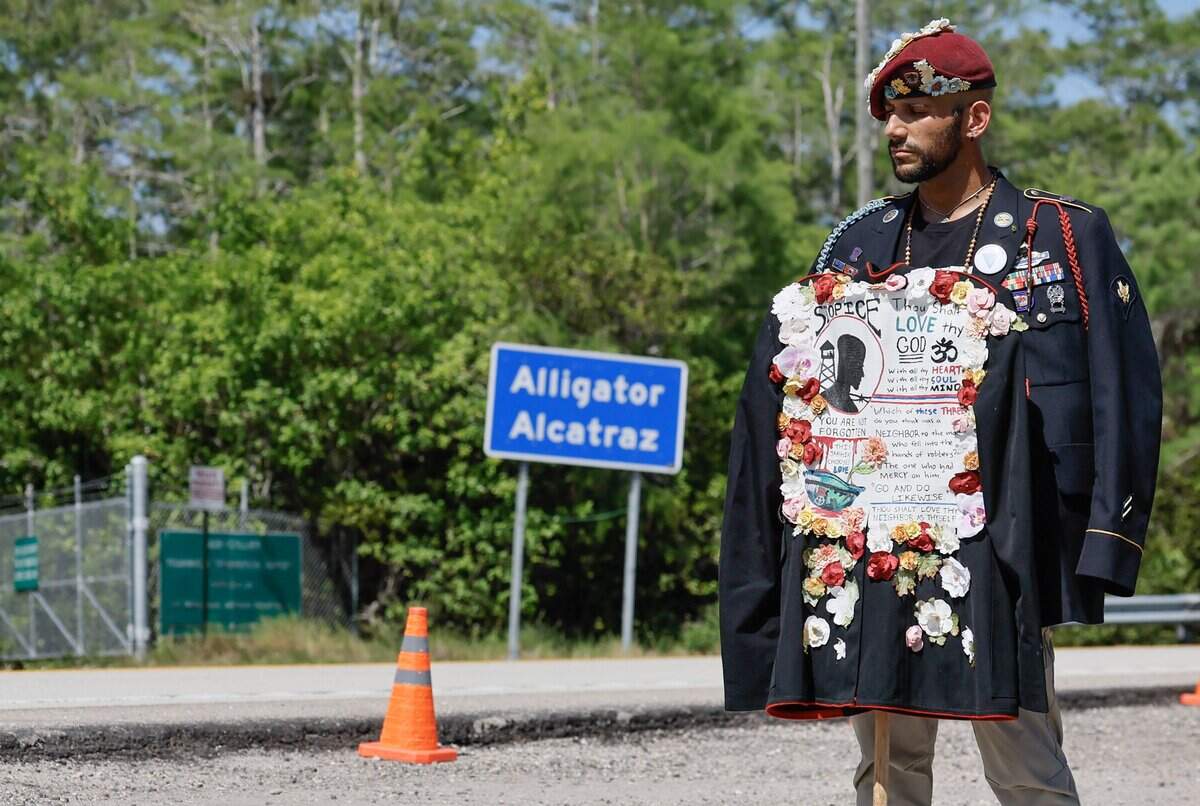
The lesson is not complicated. Sustained, legally grounded, locally driven opposition works. The time to act is before the permit is filed.
What we’re asking of the board
Adopt an immediate moratorium on any permit, application or approval related to federal immigration detention while permanent protections are developed.
Pass a formal, countywide ordinance banning the construction, operation or conversion of any property for use as a federal immigration prison — private or public, now or in the future.
Ground the ordinance in neutral land use, zoning, infrastructure, and environmental authority under California Government Code Section 65850 to ensure it is legally defensible.
Require Conditional Use Permits for any facility involving involuntary confinement, secure detention, or federal immigration detention contracts, subject to public hearings and board approval.
Prohibit county-owned property, contracts, financial incentives or infrastructure support from being used to develop or operate any immigration detention facility
We ask that you act now, before the county becomes the next target. Stand with us and support our community values — compassion, due process, and human dignity — and make San Luis Obispo County a place where ICE prison camps will never take root.
Submitted by the following chapters of Indivisible: Avila Beach, Cambria, Estero Bay, Arroyo Grande; Nipomo, North SLO County, Rapid Response Team SLO and San Luis, as well as the San Luis Obispo County Democratic Party and SLO 50501.