
Modern miracle from the Sacramento Valley feeds the world. It’s horribly overlooked | Opinion
The list of California innovations is long and famous. The semiconductor, the internet, Hollywood, aerospace, renewable energy, Disneyland, Apple and, of recent, artificial intelligence.
Yet one achievement has been horribly overlooked.
Its genius did not come from Silicon Valley. Or the San Fernando Valley.
It came from the Sacramento Valley.
Here, in all the places on the planet, is where this creation best prospers. Many are likely in your home right now, in many forms.
We have taken the California Tomato for granted.
We have underestimated its reach. We have overlooked its remarkable evolution. And here in Sacramento, the epicenter of a veritable tomato empire, we simply don’t appreciate what we have.
The tomato deserves to be on the short list of California’s greatest contributions to the world. It is one of food’s greatest ingredients. More than nine out of every 10 tomatoes grown in the nation come from here. It travels throughout a world that depends on it for dinner.
Modesty to a fault
We grow big beefsteaks, plump heirlooms and tiny yellow ones shaped like pears. But what we really grow, first and foremost, is the world’s working class tomato.
“It is this humble, everyday staple that is coming from our fields,” said Karen Ross, California’s secretary for the Department of Food and Agriculture, referring to the processing tomato, a modest-sized orb packed with pulp.
The processing tomato is like a backup singer. In a dish like pizza, something else other than the sauce is ultimately the star of the show. Taking away the tomato from any recipe, however, is the equivalent of lungs being deprived of oxygen.
“Our product is an ingredient,” said Chris Rufer of Sacramento. Patriarch of Morning Star, Rufer has dedicated his life to the tomato and now runs the largest tomato processing plant in the world, just an hour’s drive from the capital. From there, Rufer’s tomatoes ultimately go just about everywhere.
“It’s really awesome to have a really basic staple in the lives of consumers around the world that we grow,” Ross said. “It’s 30% of the global supply. So when we talk about food security, we have a significant role in that because it is tomato-based.”
The California Tomato. Protector of humanity.
The genius of the tomato farmer
A generation ago our best farmers could grow perhaps 25 tons of tomatoes to the acre. If a farmer claimed a 30-ton crop, “you were a liar,” said Frank Muller, a second-generation Woodland area tomato farmer.
To be sure, 25 tons of tomatoes is a lot of tomatoes — about 350,000 tomatoes on 4,800 square yards (an acre) of land, assuming seven to the pound.
Muller is now living that reality once thought to be a lie: He and other farmers commonly grow 50 tons of tomatoes on the same amount of Central Valley land. Muller is part of a remarkable cooperative of farmers that processes tomatoes in Woodland at a plant operated by Pacific Coast Producers.
“The cost of growing tomatoes per ton is maybe a third of what it was 20 years ago,” Rufer said. What other California product can make the same claim?
The incredible productivity of the California tomato plant is due to one brilliant breakthrough after another.
Take, for example, water.
No longer does water reach the tomato via some puddled surface furrow. It arrives underground, in plastic strips laid just below the root zone that can last for years. It takes less than a gallon of water to grow a tomato in our valley’s scorching sun. Just think about that.
The 8-inch “plug” that starts its life in the soil as early as March is no random plant from Home Depot. Ever-changing varieties are selected by local farmers that are tailored for valley microclimates to achieve the highest possible yield. A typical tractor carves a straight row of tomatoes, typically 14 to 18 inches apart from the next one (just enough room for a tractor wheel), with the help of a satellite. Nothing is left to chance.
The California Tomato. A stickler to detail.
UC Davis laughingstocks: The harvester
The careful cultivation of the tomato marks its beginning, akin to an orchestra testing its horns, awaiting the conductor. The true symphony begins in the valley just about every Fourth of July. This is when the first tomatoes (their plantings intentionally staggered over many weeks) are ready for harvest.
Harvesting by machine required the tomato to grow a thicker skin, Ross said. Years ago, researchers at UC Davis solved that problem.
In the 1950s, plant breeder Jack Hanna and engineer Coby Lorenzen envisioned a machine that could pick the tomato. The concept of a mechanical harvester was born. Many tomatoes lost their lives in the fields as the first experimental harvesters mangled the fruit beyond recognition. The university’s own accounting of Hanna and Lorenzen labeled them as laughingstocks during nearly a decade of futility.
By 1963, nobody was laughing. The University of California had invented the tomato harvester. Hanna, through breeding experiments, invented the tomato with a heartier exterior. California had revolutionized the industry. Our legions of tomatoes were about to explode.
From farm to factory: Processing
Now, in a matter of minutes, a harvester can pick the tomatoes, separate them from the plant canopy and deposit about 392,000 of them in double truck trailers — ubiquitous come summer on our interstates.
The tomato truck driver faces a deadline pressure. The product is perfect, but not for long. Its arrival has long been anticipated by the nearby processing plant.
Rufer’s Morning Star operates processing facilities in Santa Nella, Los Banos and Williams, which is the largest in the world. If we appreciated the busy life of a tomato plant like we do an international airport, the Williams facility would be renowned as the equivalent of London’s Heathrow — on steroids.
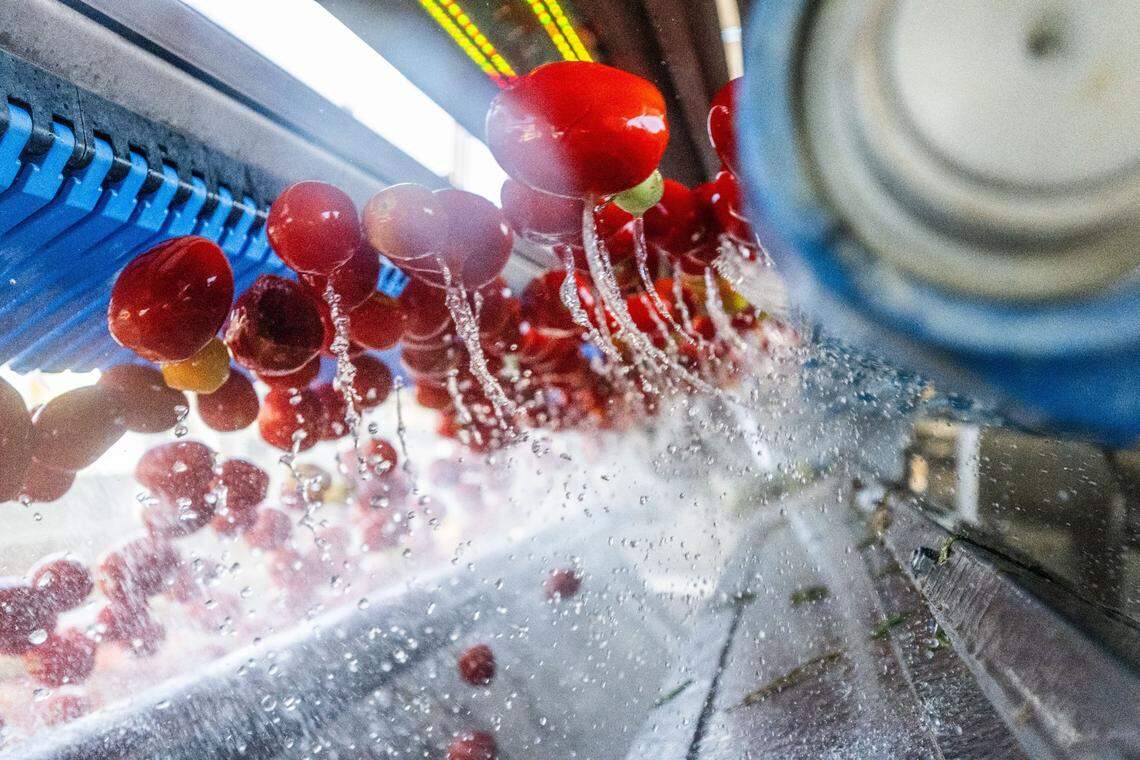
Imagine an airport even busier than Heathrow, where a plane arrives every two minutes of every hour of every day for months on end. Welcome to Morning Star in Williams. Just about every 90 seconds, a tomato truck pulls up to dump its load, the beds filled with recycled water so thousands of tomatoes are quickly emptied in a controlled flood.
The California Tomato. It has no time to waste.
Tomato paste: The chef’s blank canvas
In the valley, every processing plant has its place in the California tomato order. In Woodland, at the facility run by a cooperative of farmers, some end up diced, some are first roasted in a wall of fire. But above all destinies, most California tomatoes mirror this great cultural melting pot. They end up cooked and blended together into paste.
How much paste? Rufer’s plant in Williams alone converts more than 2 million tons — yes, tons — of tomatoes into paste every year.
California’s vendetta against the plastic bag has exempted the tomato. Tomato paste is preserved for transport in 300-gallon thick plastic bags, vacuum sealed to last for months at its peak of flavor. Tomato paste to a chef is akin to a blank canvas for an artist. The concentrate is the culinary platform for myriad red products: A soup base. A marinara. A Bloody Mary. Ketchup.
About 75 out of every 100 California tomatoes end up as paste. This destiny is not glamorous. Yet neither is the tomato, rarely celebrated.
How many tomatoes are alive in California today? Nobody can say precisely. Farmers typically talk about them by the ton. Typically, says Rufer, there are seven processing tomatoes to the pound. Perhaps 11 million tons will be grown this year.
The California Tomato. All 150 billion or so of them.
The future: The perfect tomato
California has had its farm celebrities in recent decades, such as the almond and the wine grape. Yet the world seems to have had its fill. The acres in production and sales by retailers are all dropping as consumer preferences shift.
The tomato is not a fad. A staple of so many cuisines in so many cultures, the tomato is a constant in our culinary universe. If the tomato were in a financial portfolio, it would be the granny stock.
Most California farming is a form of legalized gambling. The sales price of a commodity like the almond is completely unknown at the farmer’s time of planting.
Not so with the tomato, Ross said. Rare is the tomato plant that goes into the ground without a farmer and a processor agreeing on a contract.
What California needs, Rufer said, is more tomatoes.
He is working to revolutionize the tomato plant. In experimental nurseries, Morning Star is busy marrying baby tomato plants with the best roots to those with the most productive canopies. He is not satisfied with today’s 50 tons of tomatoes to the acre, an achievement that has not been advanced in some years. Rufer is now aiming for 80 tons to the acre. And it’s actually beginning to happen.
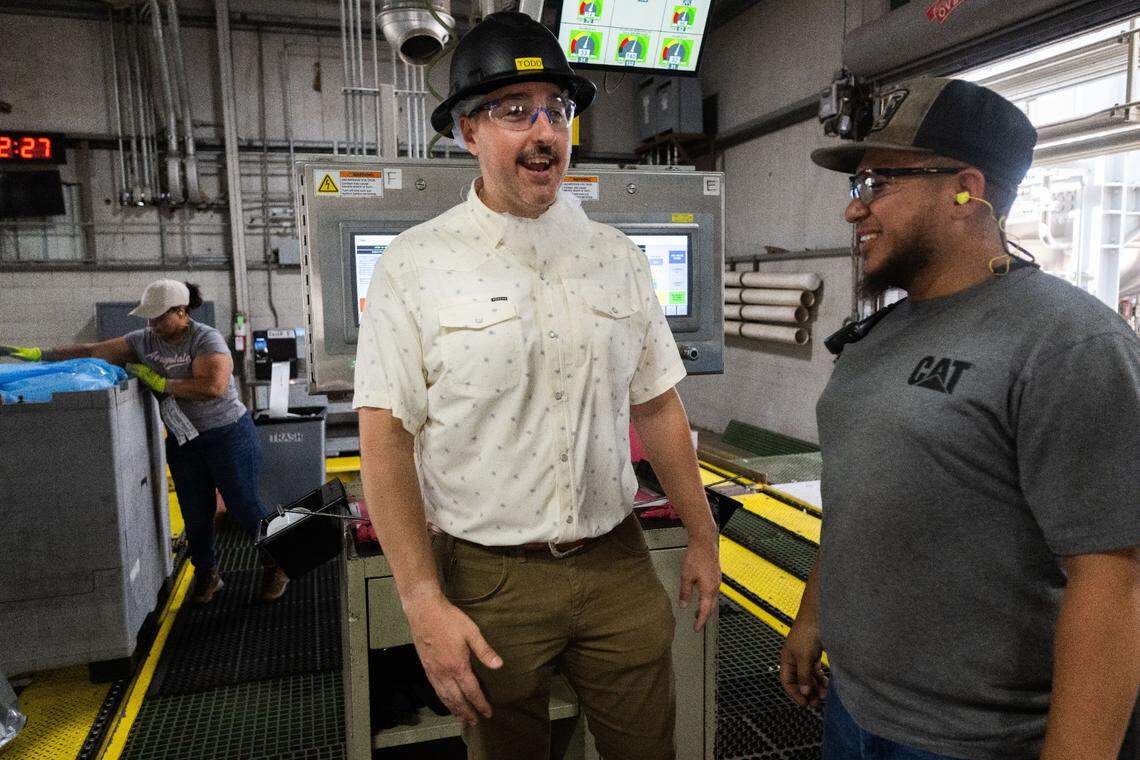
“It is proving it at a commercial scale that we have yet to accomplish,” said Todd Rufer, son of the patriarch, who runs the Williams processing plant.
Wither the tomato due to climate change? Muller of Pacific Coast Producers is confident that new strains can keep up with higher temperatures.
Water limits? California farms on about 40 million acres. In any given year, tomato farmers need a tiny fraction of that, about 250,000 acres, to grow those billions and billions of tomatoes. The Rufers are confident that his ingredient with steady demand and steady financing is destined to survive.
The California Tomato. Our forever fruit.
For too long, the tomato has lived in the shadows of other state achievements. What happens in the fields of the great San Joaquin and Sacramento valleys, from Bakersfield to beyond Willows, with Sacramento at its heart, is nothing short of a modern miracle.
This story was originally published August 15, 2024 at 5:00 AM with the headline "Modern miracle from the Sacramento Valley feeds the world. It’s horribly overlooked | Opinion."