
Scores of sand crabs are being spotted on Central Coast beaches. This is why
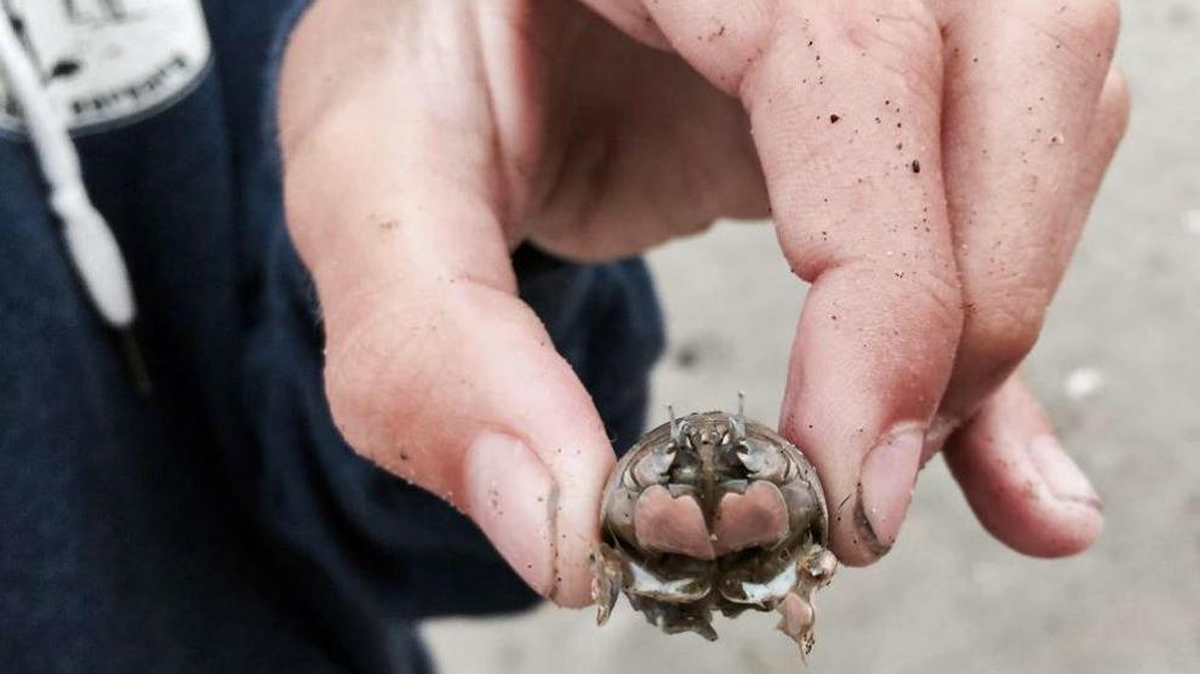
My wife Trish, our son Sean and I were walking our dog, CoBe, on Friday evening along Morro Strand State Beach, south of Cayucos, and saw the shoreline lined with what looked like dead sand crabs.
It turns out that the “dead” sand crabs actually were molted shells.
Like other invertebrates with exoskeletons, such as lobsters, these Pacific mole crabs (Emerita analoga) need to molt their old shells to grow.
According to marine biologist Jenny Dugan at the Marine Science Institute of UC Santa Barbara, these windrows of molt skins are particularly evident in the spring months.
That’s when millions of young sand crabs land on Central Coast beaches, burrow in the wet sand, start feeding and begin to grow in unison.
However, their peak growing season may have been pushed back a month or so. Here is why.
The persistent ridge of high pressure over California may be affecting marine life, including sand crabs.
This condition helped to create sustained Santa Lucia (northeasterly) winds that compressed and heated the air mass as it flowed down the Santa Lucia Mountains.
Not only did this ill-fated condition this year cause one of the warmest January-through-March periods on record, but the driest start of any year on record since 1869.
Cal Poly has recorded only 1.5 inches of rain as of June 27. The previous most-parched start to the year was in 1972, when 2.78 inches fell.
Thankfully, the Central Coast shifted back to a more normal weather pattern as the persistent ridge has been replaced by a trough of low pressure off the coastline.
This atmospheric condition has given rise to gale-force northwesterly winds.
In fact, since the start of April through June 21, northwesterly wind gusts have reached 40 mph or greater on 55 of the past 87 days at the Diablo Canyon Meteorological Tower.
That was the most days above 40 mph during this time frame since 1976 when wind records started.
So far this month, northwesterly wind gusts have reached 49 mph or greater on nine days. I’ve been forecasting weather along the Central Coast since 1991 and have never seen this before.
These winds have increased the amount of upwelling along the coast, which brings cold and nutrient-rich subsurface water to the surface along the immediate shoreline.
This is the type of water where plankton, the primary food source of many marine creatures such as sand crabs, thrives.
According to Dugan, these crabs gather in the active swash zone, the areas where the remnants of waves surge up then back down.
As the swash zone moves up and down the beach with the ever-changing tides, the crabs effortlessly move with it. They are some of the fastest-burrowing critters on the face of the earth.
Unlike other crabs, sand crabs only move backward and don’t have any claws. They also swim and orient themselves well in turbulent conditions.
“Overall, they are the most widespread and often the most abundant suspension-feeding invertebrate on the beach,” Dugan told me.
Dugan and her team of researchers have counted as many as 100,000 mole crabs per meter of shoreline.
“To feed, the crabs burrow in the beach facing seaward with only their eyes and first antennae exposed to the sea,” Dugan said. “As the waves recede, they extend their feathery second antennae to sieve fine particles, primarily phytoplankton, from the turbulent moving water of the swash.”
Their presence is marked by V-shaped marks in the wet sand.
Speaking of feeding, these abundant crabs represent 80 to 90% of the food available on the beach for birds and for surf-zone fishes.
Not only do they provide food for coastal inhabitants, but they can also deliver hours of fun for kids trying to catch them.
PG&E climate message
PG&E’s new Climate Strategy Report outlines targets and milestones on the path to net zero emissions. The report is available at www.pge.com/climate.