
Astronomy offers answer on why year’s shortest day doesn’t also include earliest sunset
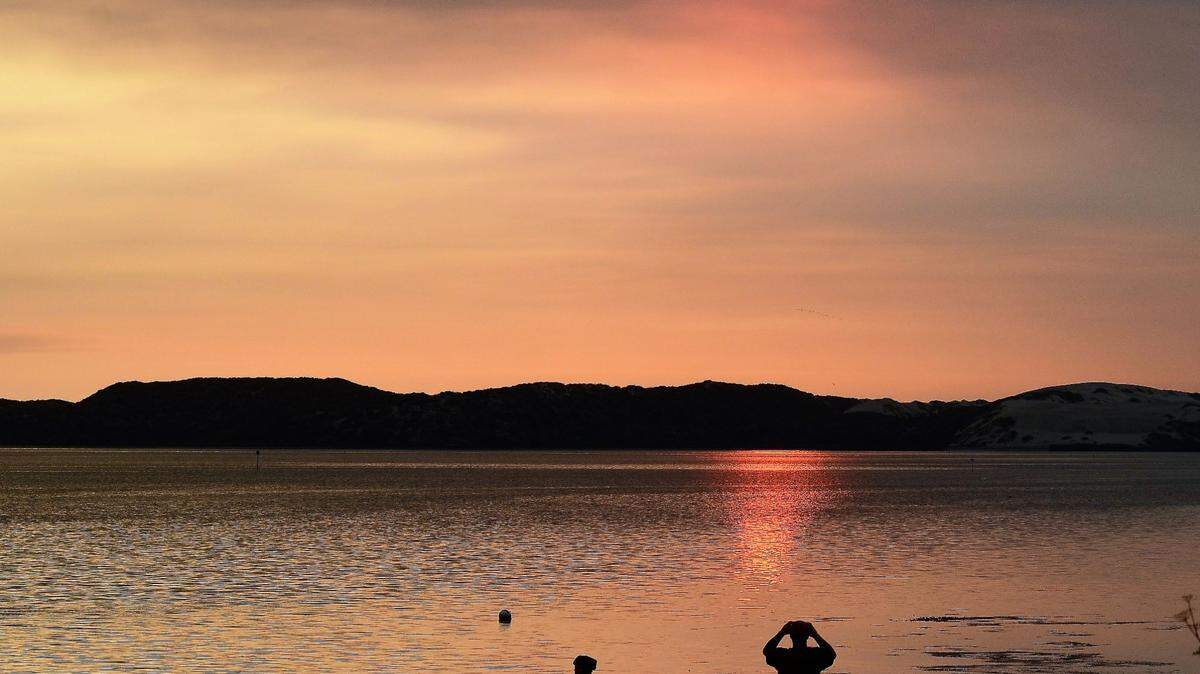
This year, the winter solstice with the shortest day and longest night of the year arrives at 7:59 a.m. on Dec. 21. However, the year’s earliest sunset occurred this past Saturday, Dec. 5, at 4:51 p.m.
Which leads to the question: Why doesn’t the earliest sunset of the year come on the shortest day?
The exact date of the earliest sunset depends on your latitude. Along the Central Coast, the earliest sunset of the year takes place about two weeks before the first day of winter. In northern Washington state, the earliest sunset happens on Dec. 11, while farther south, Key West, Florida, already has seen its earliest sunset on Nov. 29.
Conversely, the latest sunrises occur about two weeks after the winter solstice. This year’s latest sunrise will occur on Jan. 7, when the sun will not appear until 7:12 a.m. PST. If we remain on Pacific Daylight Time throughout the year, the sunrise will not happen until 8:12 a.m.; most parents would not be happy sending their children to school in the dark.
So why does that paradoxical condition happen?
For the answer, I asked astronomer Ray Weymann, who provided this explanation: “Sunrises and sunsets have to do with the real sun rather than the ‘fictitious sun.’ This means that what we call solar time and clock time get out of whack, and this is measured by that which is called the equation of time. The two effects described below cause the equation of time to change rapidly in December, and so the day of earliest sunset measured by clock time occurs well before the shortest day of the year, and the day of latest sunrise well after the shortest day of the year.
“To understand this, we need to understand the difference between a ‘clock day’ and a ‘sun day,’” Weymann said. “We also need to understand the two main motions of the Earth and how they relate to keeping time. Time is now kept with the super-regular ticks of atomic clocks. A ‘sun day’ is the number of clock ticks from one solar noon to the next. Solar noon is also called ‘midday.’
“It refers to that instant when the sun reaches its highest point for the day. However, atomic clocks are not the same for every day of the year. Why is this? The Earth rotates on its axis, and this causes the stars and sun to rise and set every day. Now, imagine a stick pointing to the sun and some distant star right next to the sun when they are together at their highest in the sky.
“The next day, the stick will be pointing to the same star. However, because the Earth has moved a little way in its orbit around the sun, the sun will no longer be lined up with that star but will have appeared to have shifted a bit to the east of that star. So it will take a little extra time — about 4 minutes longer — before the Earth rotates a bit more until the sun reaches its highest point.
“Because Earth’s orbit around the sun is not a perfect circle but rather an ellipse, the speed of the Earth in its orbits varies,” Weymann said. “During the Earth’s closest point of approach to the sun — called perihelion, which occurs around Jan. 3 — the Earth’s orbital speed increases, so the sun takes slightly longer than average to reach its highest point and, conversely, a little less when it is farthest from the sun.
“But there is another second effect,” Weymann continued. “The Earth’s axis of rotation compared to the plane of the Earth’s orbit is tilted compared to the Earth’s equator, which also causes a comparable amount of variation in the number of ticks in a solar day.
“The ‘fictitious sun’ is an imaginary one which has the same length of a ‘fictitious solar day’ every day of the year, and that is how our 24-hour clock time is defined,” he said.
By the way — the winter solstice also marks the longest day in the Southern Hemisphere due to the 23 1/2-degree tilt of the Earth on its axis. Christmas in Australia has the same weather characteristics as some areas of the United States on the Fourth of July.
This 23 1/2-degree tilt of the Earth on its axis drives the seasonal variations in the weather. It produces additional uneven heating of the Earth’s surface, which causes differentials in pressure that give rise to the winds and storms that bring the rains and snow.