
What’s the difference between drizzle and rain? Here’s how you can tell
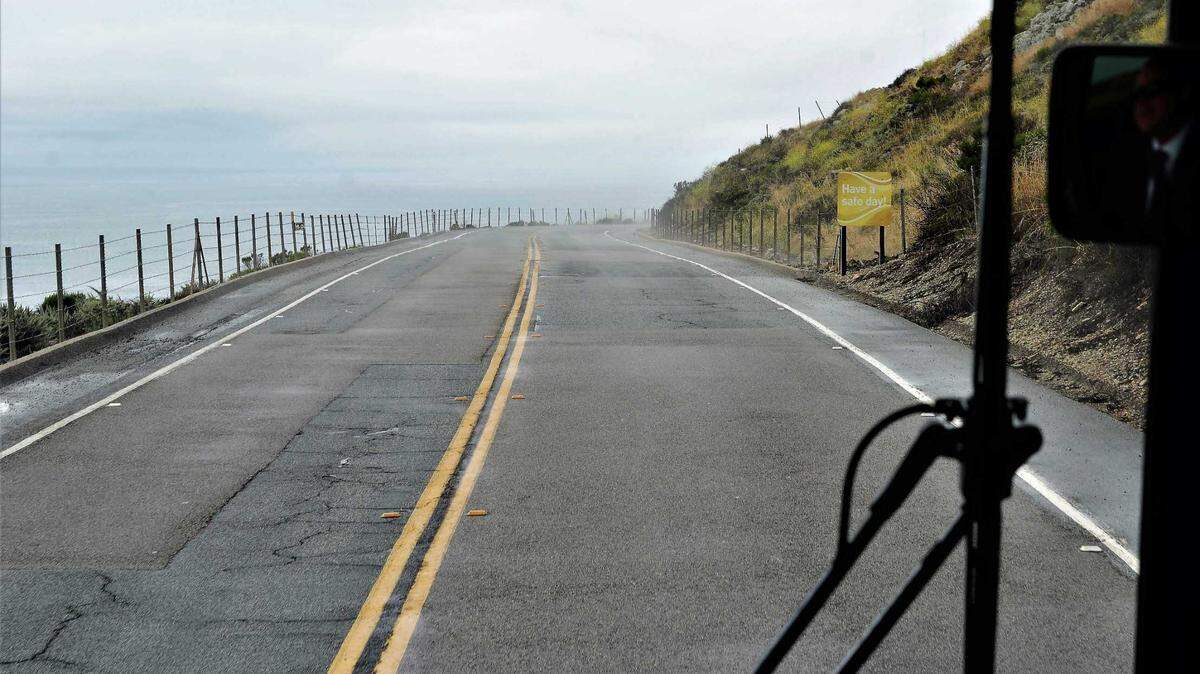
An upper-level low-pressure system produced areas of drizzle and even a few light rain showers throughout the Central Coast on Saturday night into Sunday morning.
Diablo Canyon Power Plant reported 0.07 of an inch of rain, while Davis Peak on top of the Irish Hills recorded 0.12 of an inch of precipitation.
That was the first measurable rainfall at the power plant since March 19.
This system also brought widespread thunderstorm development along the spine of the Sierra Nevada mountains during the afternoon on Sunday.
The difference between drizzle and rain is the size of the water drops.
When the marine layer rolls in off the Pacific Ocean, it is composed of relatively thin stratus clouds with leisurely upward-moving air currents. Under these conditions, water droplets have little time to grow.
They become too heavy for the weak air currents to support, and they fall to the ground as a drizzle. Drizzle is defined as water drops with diameters less than 0.02 inches.
Rain is composed of water drops with diameters greater than 0.02 inches.
Generally, rain falls along the Central Coast when surface or upper-level low-pressure systems or cold fronts move over our area, producing rapid, upward-moving air currents.
These upward air currents keep the water droplets suspended in the air column, where they combine and grow. Raindrops can reach sizes of up to 0.25 inches before they fall to the ground.
The intensity of rain is based on the amount that falls in one hour.
Light rain is classified as 0.10 of an inch or less per hour. Moderate rain ranges from 0.11 to 0.30 inches per hour. Heavy rain is greater than 0.30 inches per hour.
If you follow the weather forecast, you will often hear or read the terms “upper-level low” or “upper-level trough.”
So, what are these systems?
Typically, most of the energy in these upper-level systems exist roughly from 10,000 feet all the way up to the top of the troposphere, which extends upward to about 33,000 feet, depending on your latitude and the atmospheric conditions. Some days, this level can be higher, other days lower.
The word trough is used to describe a line of low pressure that stretches from one location to another. Like a cold front at the Earth’s surface, these upper-level troughs can extend for hundreds of miles across the sky and move in similar patterns.
An upper-level low, also known as a cold-core low, is like a surface cyclone, but like with an upper-level trough, most of its energy is located further upward in the atmosphere. In other words, these storms are stronger aloft than at the Earth’s surface.
These upper-level lows often contain an isolated pool of cold air at their core, with temperatures at our latitude reaching minus 30, 40, or even 50 degrees Fahrenheit below zero far up in the atmosphere. (Minus 40 degrees Fahrenheit equals minus 40 degrees Celsius, which is cold indeed!)
Like so many others, Sunday’s system will separate from the jet stream, causing it to move in unpredictable directions.
As the late, great Los Angeles television weatherman Dr. George Fischbeck would say, “A cutoff low is a weatherman’s woe.”
Sometimes at our latitude, the tilt of the cyclone through the atmosphere is severe enough to allow the upper-level low to break away from the surface low, like the Leaning Tower of Pisa.
The numerical forecast models, which meteorologists rely on for guidance in weather forecasting, have a more challenging task to initialize the atmosphere at these altitudes and create an accurate prediction.
There is much less atmospheric data available there than at the Earth’s surface, where marine buoys and weather stations reside.
As daylight hours become longer in May, energy from the sun heats the Earth’s surface, which warms the surface air and causes it to rise into the atmosphere. This convection circulation can severely destabilize the atmosphere as the relatively warm air slams into the cold air above, producing a tempest.
Tornadoes are rare along the Central Coast, but nearly all the verified and rumored twisters over the years have occurred in May.
By the time June arrives, storm activity has diminished.
How to apply for PG&E scholarships
The PG&E Corporation Foundation is awarding $250,000 in STEM scholarships to local students.
Applications are open to graduating high school seniors, current college students, U.S. military veterans and adults returning to school who are PG&E customers at the time of application. The application deadline is June 1.
Please visit www.pgecurrents.com to learn more.