
‘June Gloom’ continues for SLO County beaches as inland valleys warm. See forecast
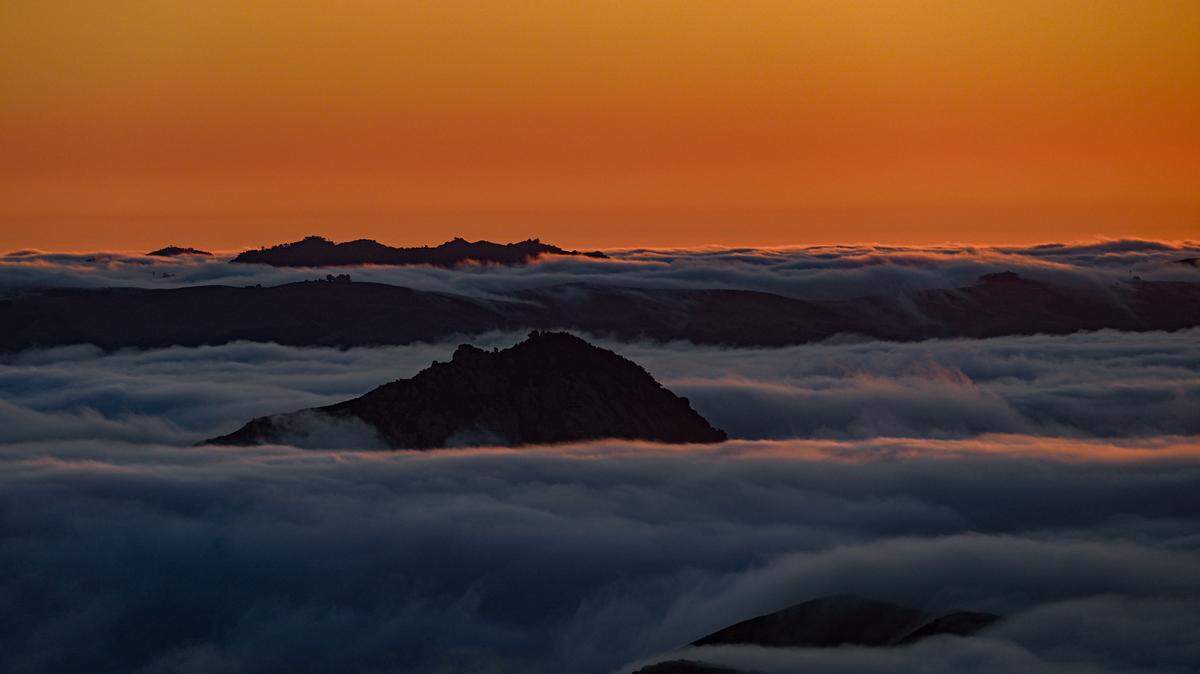
On the first day of summer, which marks the longest day of the year, a typical June weather pattern will persist along the Central Coast through Monday, bringing low marine clouds, fog, mist and drizzle to much of the Central Coast during the night and morning, with below-seasonal temperatures.
Increasing high pressure from Tuesday into Friday will produce warmer temperatures, squash the marine layer and clear the inland valleys (Paso Robles), with earlier clearing in the coastal valleys (San Luis Obispo), but the marine overcast will become more persistent along the beaches during the day.
A weak trough of low pressure along the California coastline will continue to produce persistent moderate to fresh (13 to 24 mph) northwesterly (onshore) winds and an extensive and deep (3,000 feet) marine layer with pockets of dense fog, mist and even measurable drizzle, which will move inland during the night and morning. This pattern often allows for a reverse-clearing scenario in the afternoon, with the beaches becoming partly cloudy to clear before the coastal valleys do through Monday.
Temperatures over this time frame will range from the low to mid-80s in the inland valleys, including Paso Robles, while coastal valleys such as San Luis Obispo will reach mid-70s. Along the beaches, temperatures will range from the low to mid-60s as seawater continues to warm along the immediate coastline.
On Tuesday, an upper-level high (592 dm) from Arizona will move over Southern California, creating warmer temperatures and a shallower temperature inversion layer.
This condition will allow the inland valleys to remain mostly clear and warmer, with much earlier clearing in the coastal valleys. However, the beaches are expected to remain mostly overcast (June Gloom) throughout the day. Temperatures across the inland valleys (Paso Robles) will warm to the low to mid-90s, while the coastal valleys (San Luis Obispo) will reach the low 80s. The beaches will remain in the low to mid-60s through next Saturday.
The wild card in this scenario is a slug of subtropical moisture expected to produce variable cloudiness and a slight chance of rain showers, which can help mix out the marine layer from Wednesday into Thursday. Otherwise, there is little change in this pattern of moderate to fresh (13 to 24 mph) northwesterly winds during the afternoon and low marine low stratus clouds in the coastal regions.
A dry cold front is forecast to move through the Central Coast early next Sunday with strong to gale-force (25 to 38 mph) northwesterly on Sunday afternoon into next Monday with clearing skies and slightly cooler temperatures.
Looking ahead, the longer-range models indicate that a Tropical Cyclone, which would be named Douglas, will develop in the Eastern North Pacific late next week. If the models verify, subtropical moisture could move over the Central Coast, accompanied by increasing mid- to high-level cloudiness and muggy conditions, and even a slight chance of rain showers over the 4th of July weekend. This subtropical moisture is expected to mix out the marine layer, leaving good conditions for fireworks viewing.
Surf report
Gale-force northwesterly winds off the Northern and Central California coastline will generate a 3- to 5-foot northwesterly (300-degree deep-water) sea and swell (with a 5-to 11-second period) on Saturday and Sunday, becoming a 2- to 4-foot northwesterly (290-degree deep-water) swell (with an 8- to 11-second period) on Monday through next Saturday.
Strong to gale-force (25 to 38 mph) northwesterly winds along the Central Coast will produce a 5- to 7-foot northwesterly (300-degree deep-water) sea and swell (with a 5- to 9-second period) next Sunday and Monday.
Arriving from the Southern Hemisphere:
A 2- to 3-foot Southern Hemisphere (215-degree deep-water) swell (with a 15- to 20 -second period) is forecast to arrive along our coastline on Monday, and remain at this height (but with a 15- to 17-second second period) through next Saturday.
Seawater temperatures:
Seawater temperatures will range between 57 and 59 degrees through Monday, warming to 58 and 61 degrees on Tuesday through next Saturday.
On this date in weather history
2008: Heatwaves in our coastal areas usually have a duration between 24 and 72 hours before the northwesterly (onshore) winds and the marine layer comes rolling in, but this event was unprecedented in its strength and longevity since weather records have been kept at Cal Poly (1948). Overnight low temperatures were very warm throughout the area in part due to mid and high-level moisture from the southwest. Diablo Canyon reached a low of 64.4 degrees, while the San Luis Obispo Airport had a low of 68 degrees. It didn’t make for a good night’s sleep for those of us without air conditioners in our coastal regions.
San Luis Obispo high temperatures:
- June 18, 2008: 100 degrees
- June 19, 2008: 107 degrees
- June 20, 2008: 113 degrees
- June 21, 2008: 108 degrees
2019: Many Central Coast locations reported heavy drizzle. The San Luis Obispo County rain gauge on the top of Davis Peak, north of Avila Beach recorded 0.08 of an inch. Marine overcast was slow to clear from the North County, and never burned off from the coastal valleys and beaches. Consequently, Paso Robles only reached a high of 68 degrees.
This week’s temperatures
LOWS AND HIGHS, PASO ROBLES
SUNDAY: 51, 81
MONDAY: 52, 86
TUESDAY: 51, 90
WEDNESDAY: 54, 94
THURSDAY: 55, 93
FRIDAY: 53, 90
SATURDAY: 51, 91
SUNDAY: 54, 90
LOWS AND HIGHS, SAN LUIS OBISPO AND COASTAL VALLEYS
SUNDAY: 55, 73
MONDAY: 56, 75
TUESDAY: 53, 80
WEDNESDAY: 56, 81
THURSDAY: 57, 82
FRIDAY: 56, 80
SATURDAY: 57, 79
SUNDAY: 58, 81
John Lindsey is a retired PG&E marine meteorologist. Email him at JohnLindseyLosOsos@gmail.com or follow him on X @PGE_John.