
Fog, chilly temps mean ‘Bummer Summer’ for SLO County beaches. See forecast
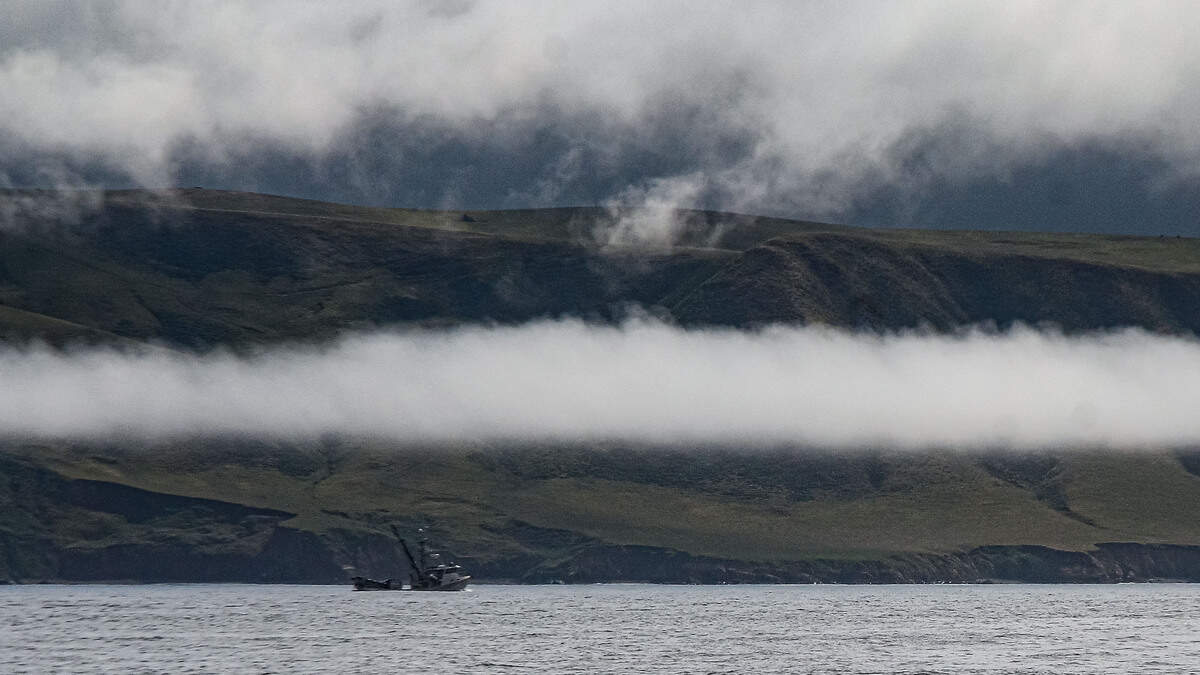
A typical June weather pattern will persist along the Central Coast through Thursday, bringing low marine clouds, fog, mist and drizzle to coastal areas during the night and morning, while inland valleys stay mostly clear with near-seasonal temperatures.
Increasing northwesterly winds should bring a greater amount of clearing to the beaches during the afternoon but also cooler temperatures in the inland valleys Friday through the following weekend.
Warm temperatures across the inland valleys (Paso Robles), combined with persistent gentle-to-moderate (8 to 18 mph) south-to-northwesterly (onshore) winds, will continue to bring a relatively cold, moist and denser airmass from the Pacific Ocean, creating a strong but shallow (1,000 feet) temperature inversion layer.
This classic setup favors June Gloom, with overcast skies, pockets of dense fog, with areas of mist and drizzle developing overnight into the morning in the coastal regions, followed by late morning and afternoon clearing in the coastal valleys and partial afternoon clearing along the beaches.
These overcast conditions are expected to persist along the Central Coast beaches through Thursday.
In other words, it may be the beginning of the season locals affectionately call “Bummer Summer,” when sunshine is plentiful inland, but the coastline remains locked beneath a blanket of low clouds, fog, and cool temperatures.
Temperatures over this time frame will range from the high 80s to mid-90s in the inland valleys, including Paso Robles, while coastal valleys such as San Luis Obispo will reach mid-70s. Along the beaches, temperatures will range between high 50s to low 60s.
By Friday, a trough of low pressure will develop over California producing moderate to fresh (13 to 24 mph) northwesterly winds during the afternoon and a greater amount of clearing in the coastal regions. This system will also bring cooler temperatures with the inland valleys reaching the low 80s, while the coastal valley is arranged between the high 60s to the low 70s. The beaches will range between the high 50s and low 60s.
Looking ahead, the National Weather Service has announced that El Niño conditions have developed across the tropical Pacific and are forecast to strengthen to a moderate or possibly strong event by this fall. Forecasters currently estimate a 63% chance that sea surface temperatures in the Niño 3.4 region will exceed 2.0°C above normal.
Should that threshold be reached, NOAA would classify the event as a “very strong” El Niño.
For California’s Central Coast, strong El Niño events have often been associated with above-average rainfall and an increased likelihood of powerful winter storms. However, history reminds us that El Niño is not a guarantee of a wet winter. Some El Niño events have produced near-normal or even below-normal rainfall across our region, underscoring the complexity of the atmosphere-ocean relationship.
Surf report
A 2- to 4-foot northwesterly (300-degree deep-water) swell (with an 8- to 11-second period) is expected through Thursday, increasing to 4- to 6-feet (with a 5- to 11-second period) on Friday through next Sunday.
Arriving from the Southern Hemisphere:
A 1- to 2-foot Southern Hemisphere (225-degree deep-water) swell (with a 22+ second period) is forecast to arrive along our coastline on Monday, building to 3- to 4-feet (with an 18- to 20-second period) on Tuesday. This long-period swell is expected to peak Wednesday into Thursday at 3- to 5-feet (with a 16- to 18-second period).
Note: Much like last week’s event, wave heights in Southern California will be much higher.
Seawater temperatures:
Seawater temperatures will range between 52 and 54 degrees through Monday, warming to 54 and 57 degrees on Tuesday through Friday.
On this date in weather history
1903: The Heppner Disaster occurred in Oregon. A cloudburst in the hills sent a flood down Willow Creek, and a 20-foot wall of water swept away a third of the town in minutes, killing 236 residents and causing 100 million dollars damage. (David Ludlum)
1961: The temperature in Downtown San Francisco soared to 106 degrees to establish an all-time record for that location.
2019: The Southeast Hawaii NOAA marine buoy reported a 7-foot Southern Hemisphere swell with a 19-second period. This was larger than predicted by the models. Consequently, this Southern Hemisphere swell was bigger than forecasted.
This week’s temperatures
LOWS AND HIGHS, PASO ROBLES
SUNDAY: 55, 90
MONDAY: 52, 93
TUESDAY: 53, 94
WEDNESDAY: 50, 89
THURSDAY: 51, 78
FRIDAY: 50, 77
SATURDAY: 51, 78
SUNDAY: 52, 83
LOWS AND HIGHS, SAN LUIS OBISPO AND COASTAL VALLEYS
SUNDAY: 53, 73
MONDAY: 54, 75
TUESDAY: 54, 75
WEDNESDAY: 53, 74
THURSDAY: 53, 70
FRIDAY: 50, 68
SATURDAY: 49, 69
SUNDAY: 51, 71
John Lindsey is a retired PG&E marine meteorologist. Email him at JohnLindseyLosOsos@gmail.com or follow him on X @PGE_John.