
SLO County weather forecast calls for heat wave amid Gifford Fire’s smoky skies
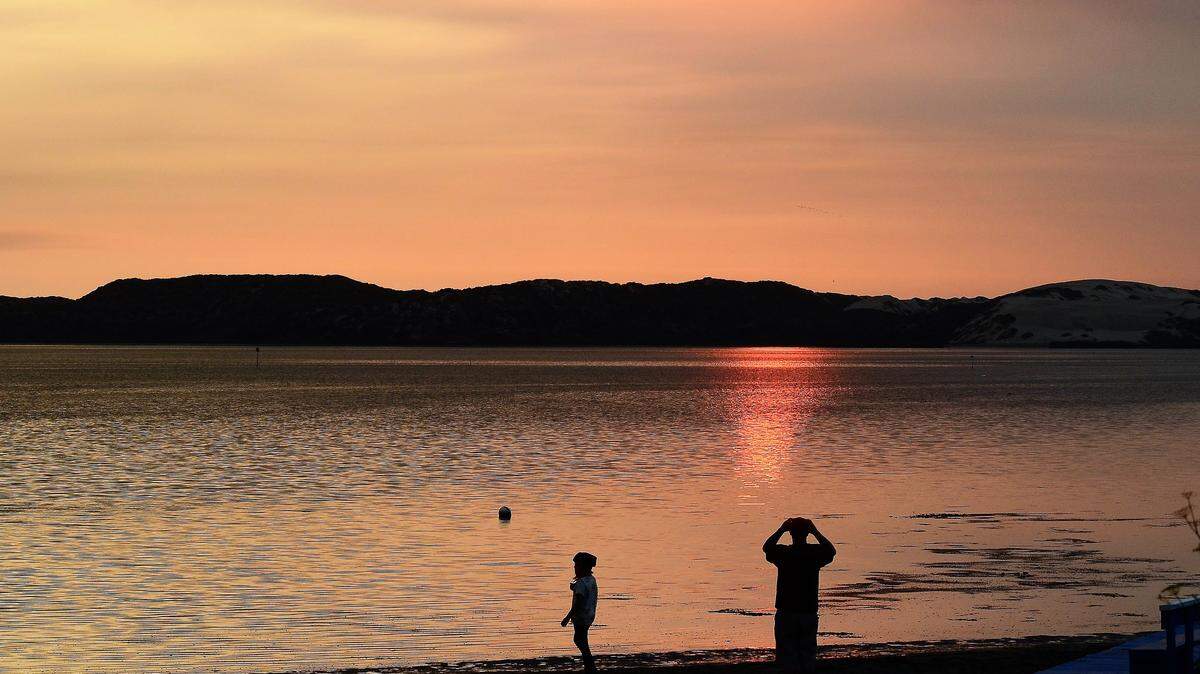
San Luis Obispo County can expect a small heat wave while smoke from the Gifford Fire spreads throughout the atmosphere.
An upper-level, high-pressure system over the southwestern United States will keep temperatures above seasonal norms through Wednesday, while a gentle onshore flow along the coastline will allow low marine clouds to linger along the coast for much of the day.
Cooler temperatures and strengthening northwesterly winds will bring increasingly clear skies to the beaches later in the week.
Gentle to moderate (8 to 18 mph) afternoon northwesterly winds, becoming light and variable overnight through Sunday, will allow the marine layer to linger along the beaches for much of the day.
Overnight, low marine clouds will push into coastal valleys, bringing pockets of fog and occasional drizzle.
Overnight variable winds are expected to carry smoke from the Gifford Fire, burning in eastern San Luis Obispo and Santa Barbara counties, across much of the Central Coast.
High temperatures in the inland valleys (Paso Robles) will range between the high 90s and low 100s through Wednesday. The coastal valleys (San Luis Obispo) will reach the high 70s to the low 80s, while the beaches will remain in the mid-60s.
The afternoon northwesterly winds will increase to moderate to fresh (13 to 24 mph) levels on Monday through Wednesday, further building into strong to gale-force (25 to 38 mph) levels along the coastline on Thursday through Friday. These winds will help to produce clearer skies during the afternoon along the coastline, especially on Thursday and Friday.
The upper-level, high-pressure system responsible for the above-normal temperatures will weaken, while a trough of low pressure will develop along the West Coast, resulting in cooler temperatures on Thursday through Friday.
High temperatures in the inland valleys will range from the upper 80s to low 90s, while coastal valleys will reach the low to mid-70s.
Most beaches will stay in the low 60s, except for south-facing spots like Cayucos, Avila Beach and Shell Beach, where highs could climb into the low 70s on Thursday and Friday.
Northwesterly winds will ease by next weekend, allowing the marine layer to linger more along the coast, while seasonal temperatures will develop farther inland.
Throughout the week, expect periods of subtropical mid-to high-level clouds to stream over the area from the southwest.
Looking ahead, the infamous “El Nothing” or “El Nada,” or perhaps a La Niña is forecast to continue through this winter in Niño 3.4, a region of sea surface temperatures in the central equatorial area of the Pacific Ocean. This area is the standard for classifying El Niño events (warmer than normal sea surface temperatures) and La Niña events (cooler than normal sea surface temperatures).
The fortune-telling sea surface temperature cycles in Niño 3.4 are categorized by the amount they deviate from the average sea surface temperature over a three-month period.
La Niña conditions tend to produce below-average rainfall in Central and Southern California, while El Niño years often see above-average rainfall.
The Climate Prediction Center projected that the chances of La Niña conditions will increase this fall and winter, but remain comparable to El Niño Southern Oscillation neutral.
With that said, the predicted neutral condition, or La Niña, may happen within the context of a larger climate event, a cool phase of the basin-wide Pacific Decadal Oscillation.
The Pacific Decadal Oscillation is a long-term fluctuation of the Pacific Ocean that waxes and wanes between cool and warm phases approximately every five to 20 years.
The cool phase tends to intensify La Niña or diminish El Niño impacts around the Pacific basin, according to Bill Patzert, a retired climate scientist at NASA’s Jet Propulsion Laboratory in Pasadena.
In other words, there is a growing likelihood that we will experience another winter with below-average rainfall.
Surf report
A 3-to 5-foot northwesterly (300-degree, deep water) sea and swell (with a 7-to 11-second period) is forecast through Wednesday, increasing to 6-to 8-feet with the same period on Thursday into Friday.
As the northwesterly winds decrease, a 2-to 4-foot northwesterly (290-degree, deep water) swell (with an 8-to 12-second period) is expected next Saturday and Sunday.
A 1-to 2-foot Southern Hemisphere (220-degree, deep water) swell (with an 18-to 20 -second period) will arrive along our coastline on Sunday, increasing to 2-to 3-feet (with a 16- to 18-second period) on Monday. This swell will peak Tuesday at 3-to 4-feet (with a 15- to 17-second period), gradually decreasing Wednesday through Friday.
Surface seawater temperatures will range between 54 and 56 degrees through Wednesday, decreasing to 52 to 54 degrees on Thursday through Friday.
On this date in weather history (Aug. 10)
1987: An early evening thunderstorm in Wyoming produced hail up to 2 inches in diameter from Alva to Hulett. Snowplows had to be used to clear Highway 24 south of Hulett, where hail formed drifts two feet deep. (The National Weather Summary)
1989: One of the most severe convective outbreaks on record came to a climax in southern California after four days. Thunderstorms deluged Benton, with 6 inches of rain falling two days in a row. Flooding resulted in damage to homes and highways. (Storm Data)
2016: The upper-level trough over California produced much cooler temperatures in the North County. Paso Robles only reached 79 degrees, which was 20 degrees cooler than the previous day’s high of 99 degrees.
2017: The “Dog Days” of summer, which start on July 3, officially end each year on Aug. 11. Historically, this period followed the heliacal rising of Sirius — the “Dog Star.” Today, it is regarded as the hottest and most uncomfortable stretch of summer in the Northern Hemisphere. Many people believe the phrase stems from the fact that dogs tend to be sluggish during the hottest days of summer.
This week’s temperatures
LOWS AND HIGHS, PASO ROBLES
| SUN | MON | TUE | WED | THU | FRI | SAT | SUN |
| 56, 98 | 57, 99 | 58, 101 | 55, 100 | 53, 90 | 54, 89 | 55, 91 | 58, 94 |
LOWS AND HIGHS, SAN LUIS OBISPO AND COASTAL VALLEYS
| SUN | MON | TUE | WED | THU | FRI | SAT | SUN |
| 55, 83 | 56, 78 | 56, 83 | 54, 82 | 53, 74 | 53, 73 | 54, 73 | 54, 72 |
John Lindsey is a retired PG&E marine meteorologist. Email him at JohnLindseyLosOsos@gmail.com or follow him on X @PGE_John.