
Warming trend headed to SLO County with highs back into the 90s
A deep marine layer will develop Saturday morning, bringing patches of mist and drizzle along with cooler-than-normal temperatures to the Central Coast.
By Sunday, gale-force, northwesterly winds will arrive, clearing the skies and ushering in a warming trend through the following weekend. Meanwhile, the long-delayed, infamous spring winds of April will finally make their appearance in May.
An upper-level trough of low pressure will bring a deep marine layer to the coastal regions on San Luis Obispo County on Saturday morning and night, accompanied by well-below-normal temperatures.
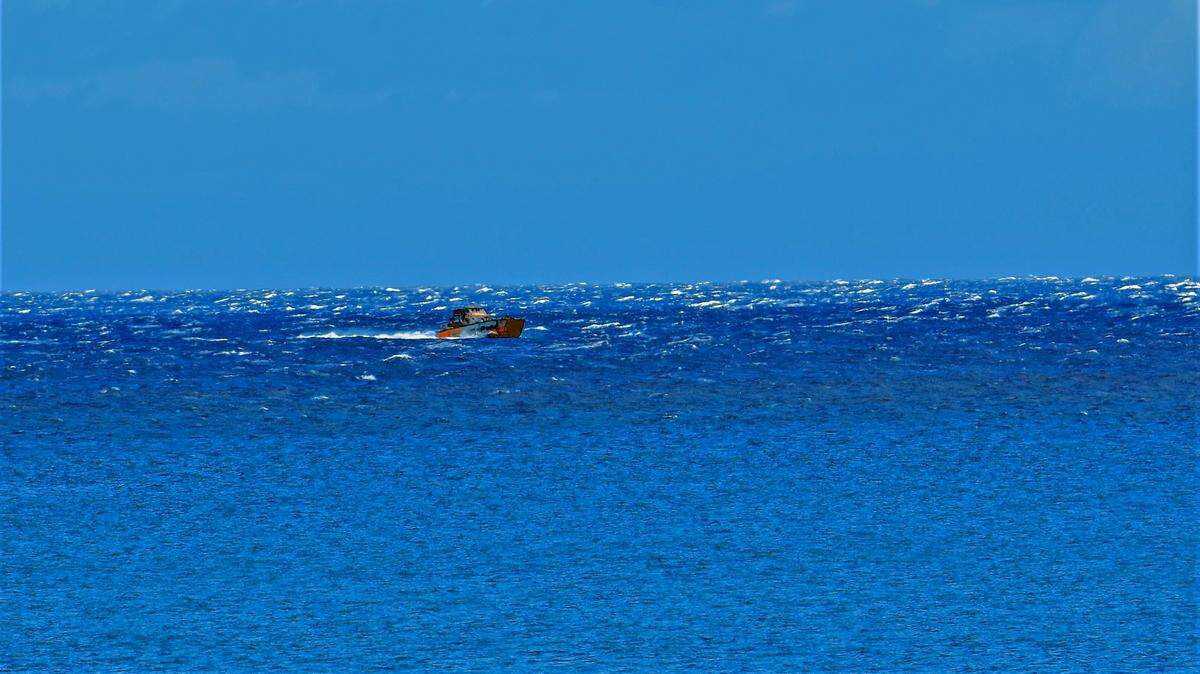
Fresh to strong (19 to 32 mph with gusts up to 40 mph) northwesterly winds on Saturday afternoon will make the air feel even cooler.
Meanwhile, a robust 1,032-millibar Eastern Pacific High, anchored about 1,100 miles west of Monterey Bay, will keep the storm track well to the north.
This high-pressure system will generate strong to gale-force (25 to 38 mph with gusts up to 45 mph) northwesterly winds along the Northern and Central California coast starting Sunday and persisting through next weekend.
An upper-level ridge will also develop, producing gentle to moderate (8 to 18 mph) Santa Lucia winds during the mornings on Sunday and Monday.
These down-slope winds will help limit marine cloud development, allowing for sunnier skies and warmer temperatures.
Inland valleys like Paso Robles will warm into the low to mid-80s, while coastal valleys such as San Luis Obispo will reach the upper 70s.
Most beaches will see highs in the upper 60s to low 70s, though southerly facing beaches like Cayucos, Avila Beach and Shell Beach could climb into the upper 70s thanks to these localized winds.
Persistent northwesterly winds from Tuesday through the weekend will allow the marine layer, with patches of fog and mist, to redevelop along the coast during the night and in the morning.
However, skies will clear by the afternoon, with temperatures continuing to warm.
Inland valleys will climb into the 90s, coastal valleys into the 80s, while most beaches will remain cooler in the upper 50s to low 60s. Again, southerly facing beaches will be the exception, likely reaching to the 70s.
Looking further ahead, long-range models indicate that dry conditions are expected to continue through the first week of June.
Surf report
Gale-force, northwesterly winds along the California coastline will generate a 7- to 9-foot northwesterly (310-degree deep water) sea and swell (with a 5- to 9-second period) through next weekend — ushering in rough oceanographic conditions.
Whether you are a scuba diver, surfer, fisher or just a beach visitor, you will undoubtedly notice the frigid temperature of the ocean along our rugged coast as gale-force northwesterly winds will blow this week.
So why do these winds generate such cold ocean temperatures?
As the northwesterly winds blow parallel to our coastline, the friction of the wind causes ocean surface water to move.
Combined with the rotation of the earth, these winds push the surface waters to the right of the wind direction — pushing these waters out to sea, which creates a void.
Cold and nutrient-rich water is drawn from below to fill this void.
The upward movement of this colder water is called upwelling.
During periods of strong to gale-force northwesterly winds, I’ve seen seawater temperatures along the immediate coastline drop nearly 7 degrees in just one day.
Surface seawater temperatures will range between 49 and 51 degrees through next weekend.
On this date in weather history (May 18)
1980: Mount St. Helens erupted in Washington, spewing ash and smoke 63,000 feet into the air. Heavy ash covered the ground to the immediate northwest, and small particles were carried to the Atlantic Coast. (David Ludlum)
2012: A rare annular eclipse occurred in San Luis Obispo. The partial eclipse began at 5:21 p.m. with the maximum eclipse at 6:36 p.m. The event ended at 7:42 p.m., shortly before sunset.
2020: A late-season cold front passed through the Central Coast with rain, gentle winds and mild temperatures. Rainfall amounts ranged from 0.67 of an inch at the Morro Toro Cal Fire Station Number 14 off of Highway 41, 0.44 of an inch at Lopez Dam and 0.33 of an inch both at Arroyo Grande and Nipomo. Cal Poly and Los Osos reported 0.14 of an inch of rain.
This week’s temperatures
LOWS AND HIGHS, PASO ROBLES
SUN | MON | TUE | WED | THU | FRI | SAT | SUN |
44, 80 | 49, 87 | 54, 92 | 55, 93 | 56, 97 | 53, 88 | 52, 85 | 52, 86 |
LOWS AND HIGHS, SAN LUIS OBISPO AND COASTAL VALLEYS
SUN | MON | TUE | WED | THU | FRI | SAT | SUN |
47, 77 | 51, 81 | 56, 83 | 55, 81 | 57, 85 | 55, 74 | 53, 72 | 54, 75 |
John Lindsey is a retired PG&E marine meteorologist. Email him at JohnLindseyLosOsos@gmail.com or follow him on X @PGE_John.