What caused the huge waves that battered California’s coast?
Massive waves fueled by a distant, approaching storm crashed into San Luis Obispo County’s coastline on Thursday, causing a destructive spectacle that experts say might be a hint at a future altered by climate change.
In Avila Beach, people ran, parents grabbing their screaming children and leaping onto elevated surfaces to escape waves that sloshed over a seawall that usually marked the beginning of an expansive, sandy beach.
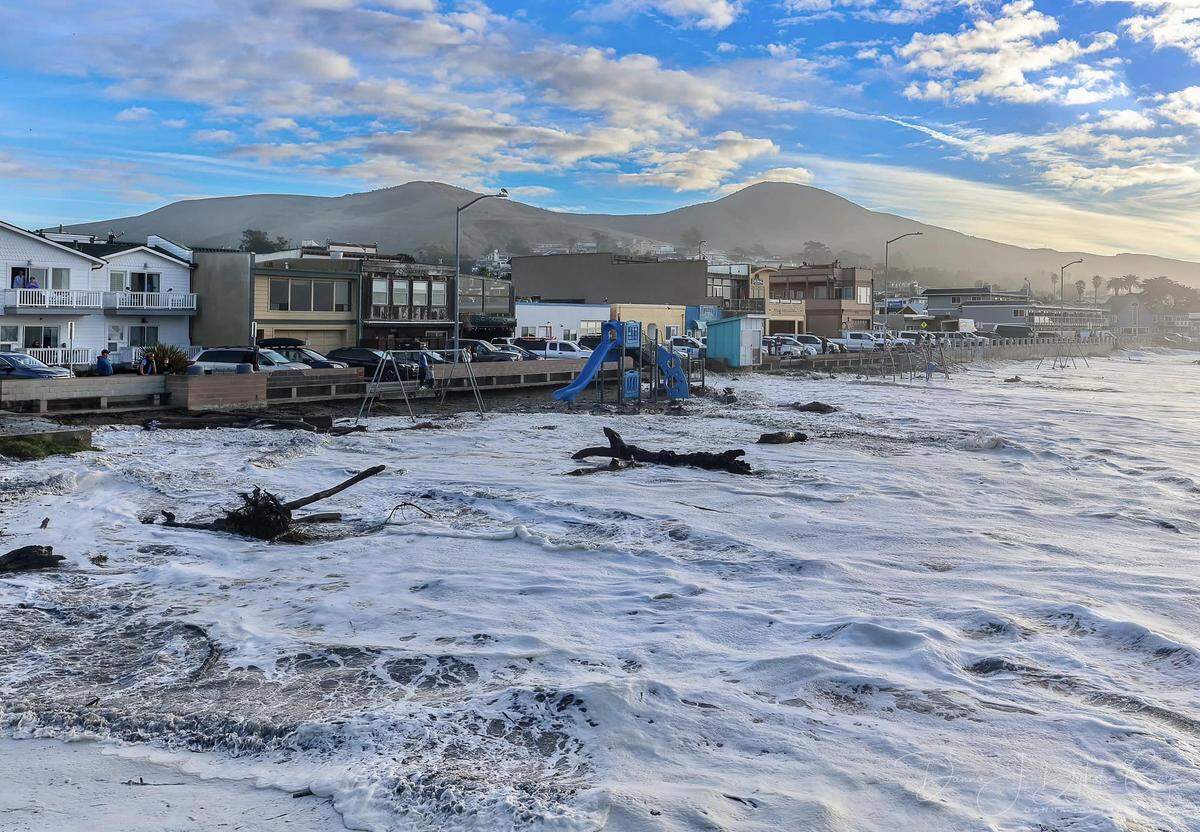
Nearby in Shell Beach, neighbors watched as waves crashed as high as their home rooftops sitting atop tall cliffs above the raging Pacific Ocean. Some took photos and videos, having to pause frequently to wipe the ocean spray from their camera lenses.
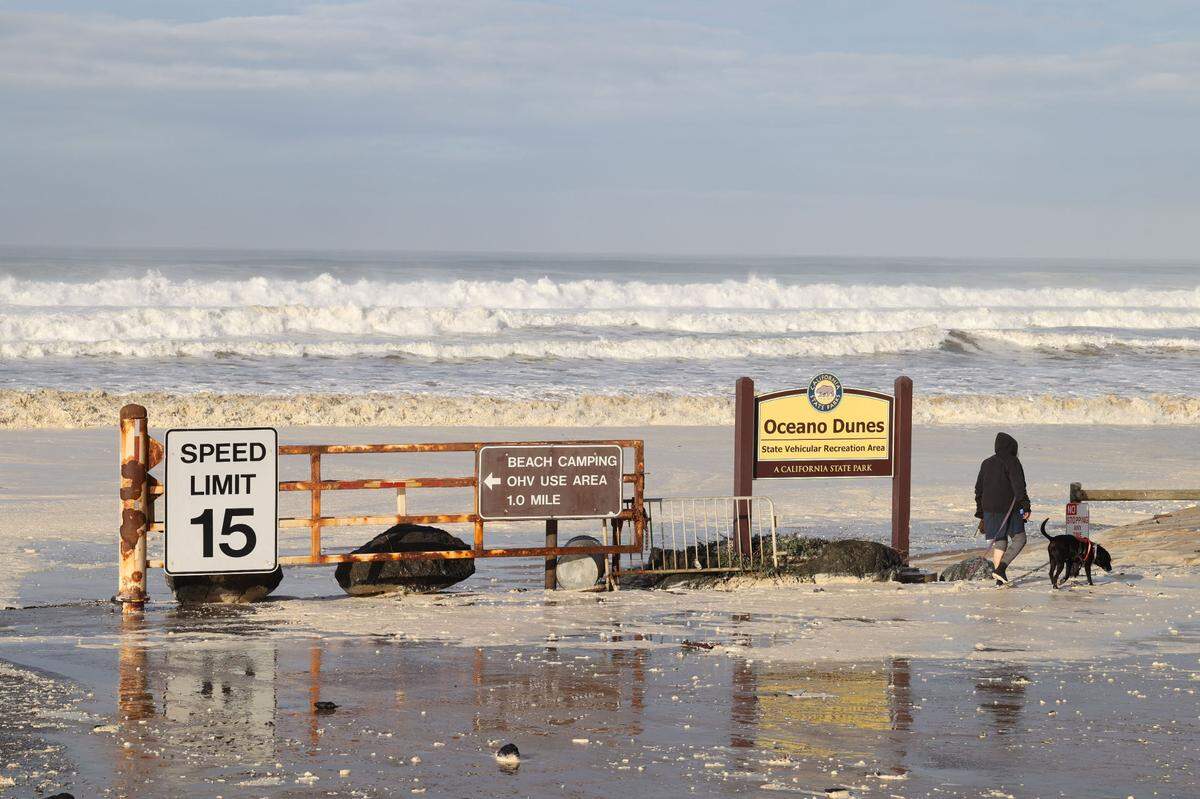
Farther south, a pickup truck overturned in flooded Arroyo Grande Creek, foamy water reaching past the kiosk normally welcoming visitors to the Oceano Dunes State Vehicular Recreation Area.
And to the north, waves breached the rocks surrounding the parking lot at Morro Rock, a huge surge topped the wall in Cayucos and ran down the street and elephant seals battled waves while giving birth to pups at the Piedras Blancas rookery.
San Luis Obispo County wasn’t alone — powerful waves caused wreckage from Pacifica to Ventura on Thursday, according to multiple news reports.
“Events like these are not that common,” said Richard Thompson, a meteorologist for the National Weather Service in Los Angeles. “It’s a combination of the storm and high tides that are really exacerbating things.”
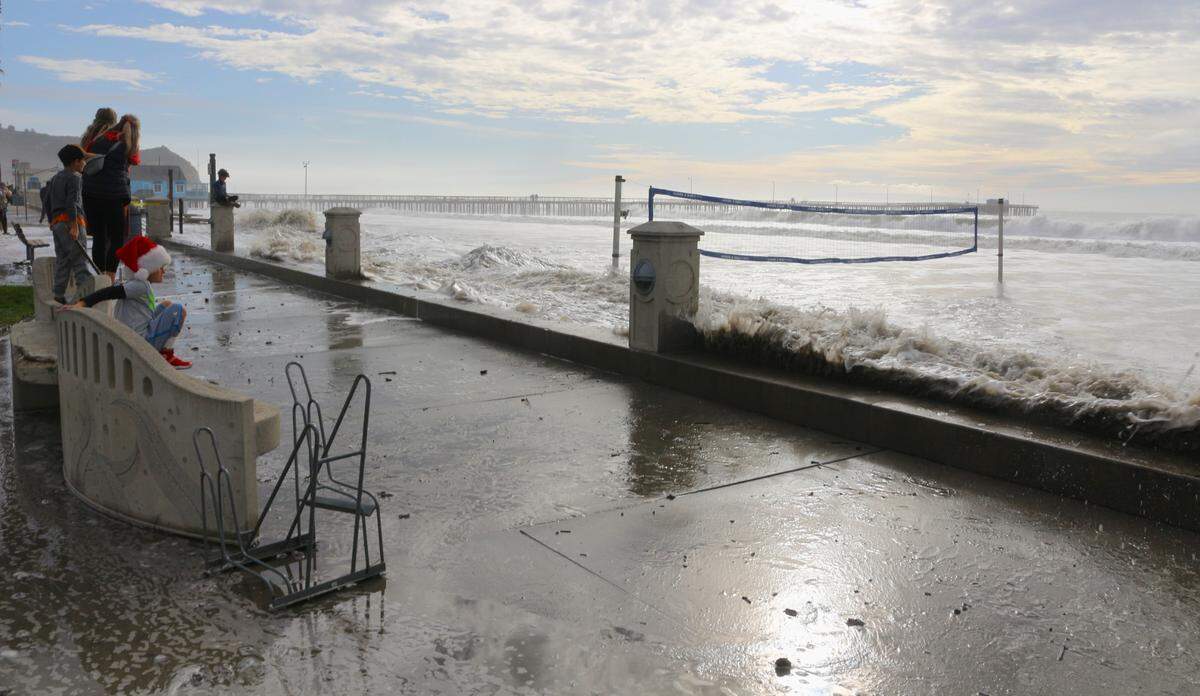
Strong storm in Pacific Ocean kicks up big waves
Thompson said a storm in the Pacific Ocean “hundreds of miles out” from San Luis Obispo County’s coastline was generating hurricane-force winds on Thursday.
Those strong winds shoved the ocean water out and toward California, creating a massive swell and exceptionally high surf.
A high tide of about 6.5 feet accompanied the massive waves — meaning those waves crashed closer to shore than normal.
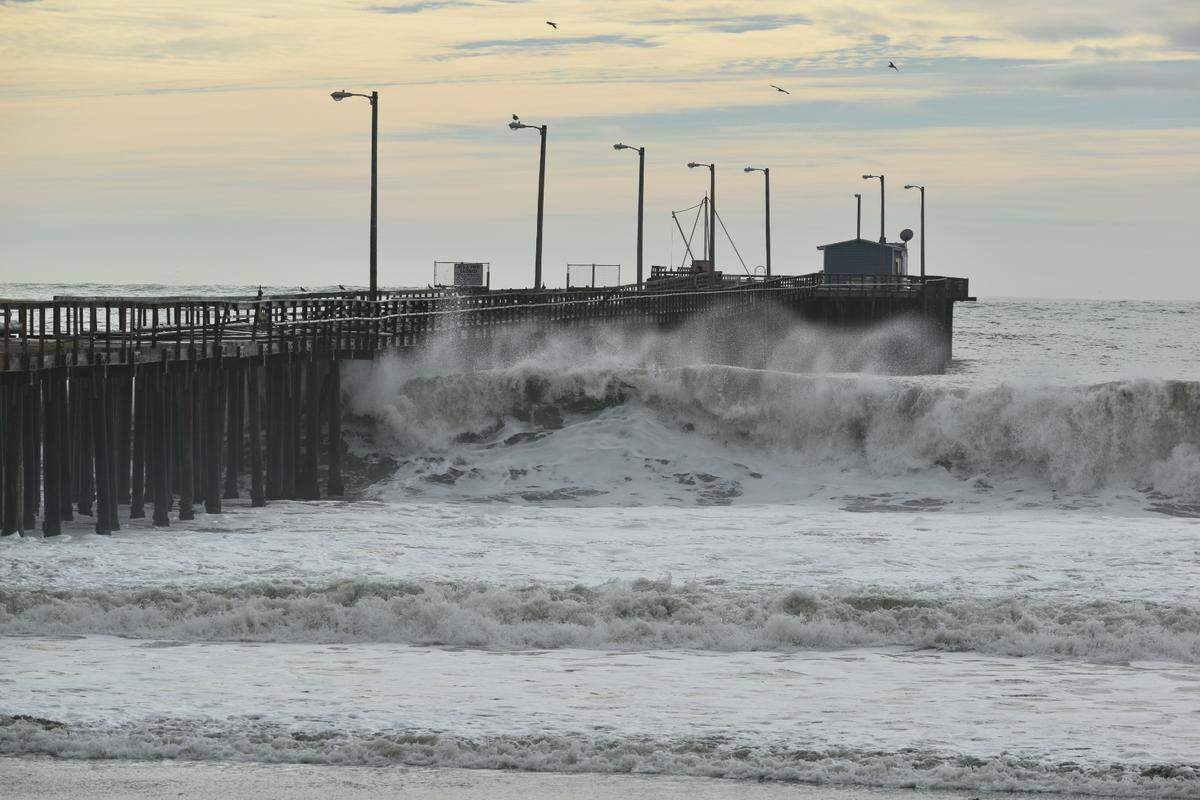
The Weather Service issued a high surf warning and coastal flooding warning for areas of the Central Coast beginning Thursday and in effect through Saturday evening. The warnings advised people to steer clear of beaches while breaking waves of 15 to 25 feet were expected to hit the shoreline.
Another potential factor impacting the surf was the unusually warm sea surface temperatures in the equatorial Pacific Ocean creating what may be considered a “historically strong” El Niño event.
Those warm ocean currents have a tendency to kick up strong storms, giving California good chances of a rainy winter.
El Niño event brings ocean-wide waves
The El Niño event is accompanied by oceanic downwelling Kelvin waves. This occurs when a thick, warm layer of the Pacific Ocean sloshes east — creating an expansive, ocean-wide wave that can take two to three months to reach California’s shore.
Kelvin waves are different from the waves we’re accustomed to seeing crash on the shore.
For one, they move slowly at about a few meters a second, according to David DeWitt, director of the National Oceanic and Atmospheric Administration’s Climate Prediction Center.
“These waves can cause a modest rise in sea level, but that effect lasts for several months because they move so slowly,” DeWitt said in an emailed statement to The Tribune.
The Kelvin waves can also reach a higher amplitude when they enter shallower water.
“During El Niño, conditions can be more damaging,” said Gary Griggs, a professor of Earth sciences at UC Santa Cruz.
It’s a triple threat: A large storm with hurricane-force winds kicking up big waves, a high winter tide and El Niño-associated Kelvin waves.
“What you are seeing off the coast of California is wind-driven surface waves associated with this large storm that is impacting the area,” DeWitt wrote in his emailed statement. “Those wind-driven waves occur on top of the tides and any effect from the coastal Kelvin waves.”
Dangerous surf conditions may become more common due to climate change
It’s important to note, Griggs said, that the dangerous surf conditions along San Luis Obispo County’s coast should not be taken as a one-off.
He cited a recent study by Peter Bromirski of the Scripps Institution of Oceanography at UC San Diego.
The study found that winter waves along California’s coast have gotten bigger by about a foot since 1970 — because the planet’s warming temperatures from greenhouse gas emissions have esulted in stronger and more frequent storms.
Thursday’s weather event “was not unexpected,” Griggs said. “And we may see more of these events more often.”
This story was originally published December 29, 2023 at 3:45 PM.