
SLO County weather forecast: Warm weather to follow record high temperatures
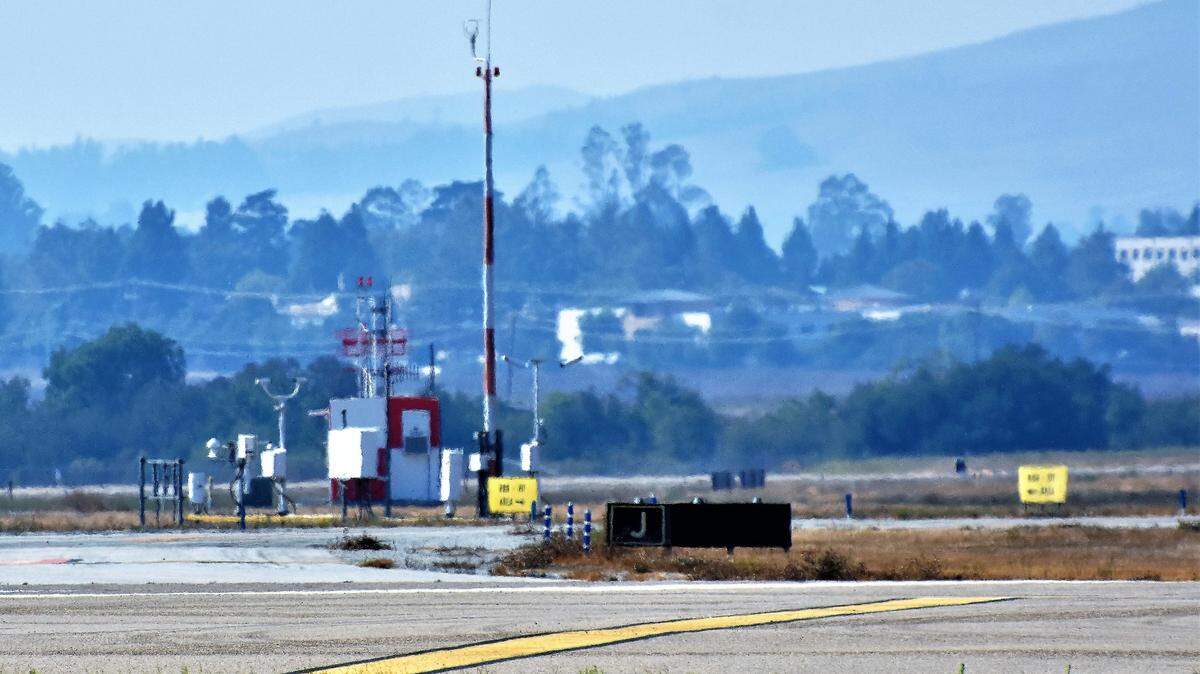
At noon on Saturday, the San Luis Obispo County Airport hit 106 degrees, smashing the previous daily record of 105 degrees set in 1955. This record-breaking temperature was partially caused by the Santa Lucia (northeasterly) winds flowing down the Cuesta grade.
Some of the warmest temperatures of the year will develop away from the ocean this Labor Day weekend, then a gradually cooling trend will develop on Tuesday through Friday.
A strong upper-level high-pressure system will continue to produce hot temperatures in the inland valleys and warm temperatures in the coastal valleys and even along the southerly facing beaches as gentle to moderate (8 to 18 mph) Santa Lucia (offshore) winds developed during the morning. These winds will produce mostly clear skies and warm temperatures in the coastal regions.
Sunday’s high temperatures will range between the mid- to high-60s along the beaches, except Cayucos, Avila Beach and Shell which will reach the 80s. The coastal valleys (San Luis Obispo) will reach the low to mid-90s, while triple-digit temperatures are expected in the inland valleys (Paso Robles).
The ridge of high pressure responsible for the hot temperatures will move toward the east; consequently, a gradual cooling trend will start Tuesday and will continue through Friday as the northwesterly (onshore) flow continues throughout the day. This onshore flow will also allow the marine layer with night and morning fog and mist to develop along the coastline.
I can’t count the number of late summer heat spells created by high pressure over the Four Corners area broken by the North American Monsoon. However, it can be a double-bladed sword with rain but also lightning. Following on the heels of tropical storm Javier, Hurricane Kay is forecast to travel northward along the Baja California peninsula and weaken as it moves toward Southern California. At this time, NOAA’s Global Forecast System (GFS) model is advertising a chance of rain for the Central Coast next weekend (9/10 & 9/11). However, the other models are not.
Surf report
Sunday’s 6- to 8-foot northwesterly (300-degree, deep-water) sea and swell (with a 5- to 9-second period) will decrease to 3- to 5-feet with the same period on Monday and remain at this level through Friday.
A 1- to 3-foot Southern Hemisphere (220-degree, deep-water) swell (with a 16- to 18-second period) is expected along our coastline on Monday into Wednesday.
Seawater temperatures will range between 55 to 59 degrees through Friday.
This Date in Weather History
1970 - The greatest natural disaster of record for Arizona occurred. Unprecedented rains caused rivers in central Arizona to rise five to ten feet per hour, sweeping cars and buildings as far as 30 to 40 miles downstream. Flooding claimed the lives of 23 persons, mainly campers, and caused millions of dollars damage. Water crested 36 feet above normal near Sunflower AZ. Workman’s Creek was deluged with 11.40 inches of rain in 24 hours to establish a state record. Moisture from Pacific Tropical Storm Norma led to the severe flooding. (4th-6th)
1986 - An unusually strong dust devil moved across the Flagstaff Pulliam Airport. The dust devil blew open the doors of the National Weather Service office scattering papers and bringing down a ceiling-mounted light fixture. (Storm Data)
2007 - Compressional heating off the Santa Lucia Mountains produced hot coastal temperatures. Temperatures at 14:30 hours yesterday afternoon were 105°F at Avila Beach and 64.6°F degrees at Diablo Canyon.
A fishing boat reported a 37°F temperature drop. This temperature gradient occurred off Port San Luis between the breakwater and the wind shift line in less than 1/4 of a mile. That’s what you call a temperature gradient!
The Diablo Canyon Meteorological Tower showed a very strong temperature inversion (A warmer, less dense air mass over a cooler, more dense air mass at the surface) from 76 meters to 10 meters during this time. One could write a American Meteorological Society Bulletin on yesterday’s temperatures gradients. At 1600 hours very gusty northerly winds mixed out the inversion layer, causing sea level air temperatures at Diablo Canyon to increase to the low 90s from 1600 through 1800 hours.
2017 - Scattered rain showers have produced between a few hundreds of an inch to over a tenth of an inch of measurable precipitation throughout the Central Coast. So far, the Santa Maria Airport has recorded more than a quarter of an inch.
This week’s temperatures
LOWS AND HIGHS, PASO ROBLES
SUN | MON | TUE | WED | THU | FRI | SAT | SUN |
62, 108 | 65, 110 | 68, 107 | 66, 106 | 65, 101 | 61, 95 | 67, 79 | 68, 77 |
LOWS AND HIGHS, SAN LUIS OBISPO AND COASTAL VALLEYS
SUN | MON | TUE | WED | THU | FRI | SAT | SUN |
59, 95 | 60, 94 | 61, 92 | 62, 86 | 62, 84 | 60, 81 | 64, 75 | 65, 74 |
John Lindsey is a longtime meteorologist who lives in Los Osos. Email him at JohnLindseyLosOsos@gmail.com.
This story was originally published September 4, 2022 at 5:00 AM.