
Got your recall ballot in the mail? Here’s everything to know to cast your vote
Ballots for the recall of Gov. Gavin Newsom started arriving in the mailboxes of San Luis Obispo County residents this week.
On Sept. 14, registered voters in California must decide whether or not Newsom, who was elected in 2018, should remain in office for the rest of his term or be replaced by one of the wide field of other-party candidates running to replace him.
Because a recall election can be a little confusing, The Tribune has compiled this handy guide to help you understand what’s happening on your ballot and how to fill it out.
Have more questions about the recall process? Send them to Tribune reporter Kaytlyn Leslie at kleslie@thetribunenews.com and the answers could be added to this guide.
How does a recall election work?
A recall election is a special election aimed at removing an elected official from office before the end of their term.
Before a recall election can happen, a certain number of voters must sign a petition indicating support for recalling the elected official.
If successful, the petition will trigger a special recall election in which registered voters vote on whether the elected official should remain in office — and, if they are recalled, who should replace them.
Since 1913, there have been 179 recall attempts of elected officials in California, according to the state Secretary of State’s office.
Of those, the majority — 55 — were recall attempts aimed at a governor.
To date, only six recall attempts have been successful, including the 2003 recall of then-Gov. Gray Davis, who was replaced by former Gov. Arnold Schwarzenegger, according to the Secretary of State’s office.

What’s the current recall about?
Since taking office in January 2019, Newsom has faced a total of seven recall attempts — although only the most current one has garnered enough signatures to trigger a special election.
In February 2020, Newsom was served with a recall petition over his policies on homelessness, taxation, immigration and water rationing, among other issues.
During the coronavirus pandemic, support for recalling Newsom gained traction among those upset about his response to the crisis as well as the economic downturn associated with mass business closures and California’s stay-at-home order.
In March, the most recent petition to recall Newsom had collected more than 2.1 million signatures. The California Secretary of State’s office verified and certified 1.7 million of those — enough to qualify for a special recall election.
The official certification of those signatures happened on July 1, setting a special election date of Sept. 14.
Who can vote?
All people registered to vote in California are eligible to vote in the recall election.
To check if you are registered in San Luis Obispo County, you can use the county’s Voter Status Lookup page at clerk.slocounty.ca.gov/voterstatus. You just need your birth date, the last four digits of your driver’s license or California ID and your street address.
If you are not registered to vote, the final day to do so is Aug. 30, according to the San Luis Obispo County Elections Office.
For a registration to be valid for this election, the registration form must be received in the local office either online or in person by Aug. 30. If registering by mail, the form must be postmarked no later than that date.
What’s on the ballot?
Your recall election ballot boils down to two questions: Should Newsom be recalled and if so, who should replace him?
A “yes” vote to the first question would support recalling Newsom, while a “no” vote would support keeping him in office.
If 50% or more of voters vote “yes,” Newsom will be recalled and replaced by the highest vote-getter from the second question.
For the second question, voters can choose between a wide field of candidates vying to replace Newsom.
A total of 46 people qualified for the ballot. Several candidates, such as Republican Doug Ose, have since dropped out of the race.
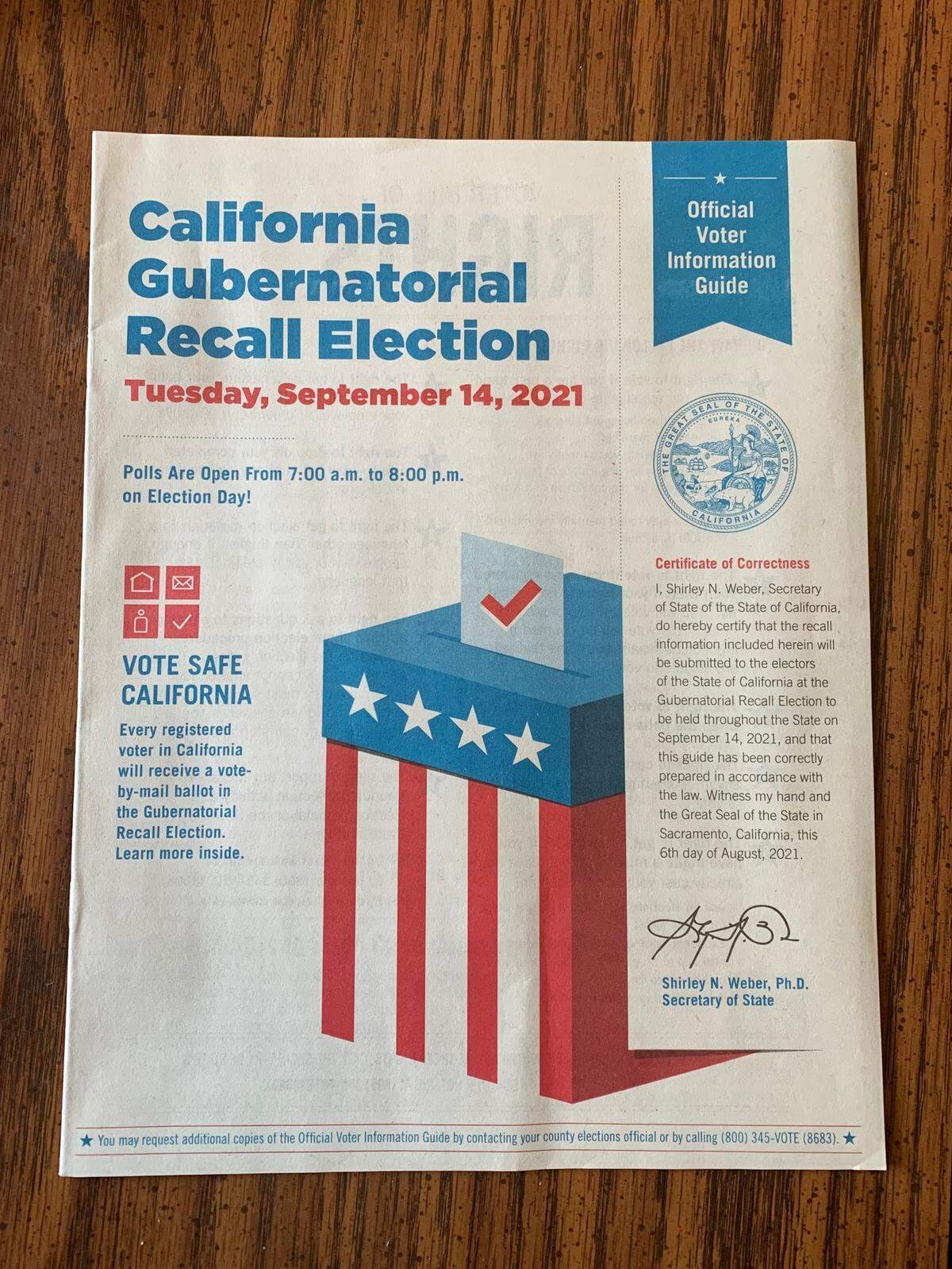
For information on those included on the ballot, check out the candidate statements in the Voter Information Guide sent along with your ballot.
There is also an option to write in a candidate. The Secretary of State’s Office will release a list of certified write-in candidates — basically, those who have submitted the correct paperwork — in early September, ahead of the election.
Heads up: You can’t write in Newsom’s name for the second question because he is barred from being a candidate to replace himself.
Whoever is the highest vote-getter will replace Newsom if more than 50% of voters support a recall.
Do I have to vote on both questions?
Nope, your vote will be counted even if you only answer one question.
According to the San Luis Obispo County Elections Office, they “encourage all voters to vote on both the recall question and a replacement candidate, but you may choose to vote on only the recall question or only a replacement candidate, and your ballot will still be counted.”
You can also vote “no” in the first question, and still select someone to replace Newsom in the event that the majority of voters choose to support a recall, according to the county Elections Office.
How to turn in your ballot by mail or drop box
Now that you’ve received your ballot, it’s time to figure out how you want to turn it in. (If you didn’t receive a mail-in ballot but are registered to vote, contact the San Luis Obispo County Elections Office at 805-781-5228 for assistance).
Ballots can be turned in by mail, at a drop-box location around San Luis Obispo County or in person at a polling place on Sept. 14.
To mail in your ballot, simply remove the ballot stub, seal the ballot in the return envelope provided and sign your name on the envelope before dropping it in the mail. All ballots must be postmarked on or before Sept. 14 to be counted.
You don’t even need a stamp. Postage is paid for by the county.
If you don’t want to run to the post office, you can also return the sealed ballot in person to the County Clerk-Recorder’s Office at 1055 Monterey St. in San Luis Obispo. Starting on Aug. 30, you can also return it to the office at 6565 Capistrano Ave. in Atascadero.
You can also drop your ballot off at any one of the 17 official drop boxes across San Luis Obispo County. For a list of those locations, visit the county Elections Office website.
Can I vote in person?
Yes, you can still vote in person if you don’t want to vote by mail.
Polling places will be open on Sept. 14 from 7 a.m. to 8 p.m. To find your local polling place, visit the San Luis Obispo County Elections Office website.
Make sure to bring your blank mail-in ballot with you to surrender. You’ll be given a different ballot to vote in-person at the polling location.
Have further questions? Contact the San Luis Obispo County Elections Office at 805-781-5228 or visit SLOvote.com.
This story was originally published August 19, 2021 at 1:41 PM.
%20Cropped.jpg)