SLO County budget slashes funding for Growing Grounds program. What to know
AI-generated summary reviewed by our newsroom.
- Growing Grounds faces $289,000 budget cut, ending 40-year county funding tie.
- Funding loss would reduce staffing, affecting up to 80 program participants yearly.
- Program reported reduced crisis use, jail visits, and improved housing stability.
Seven years ago, Steve Kingan was homeless and living off of social security and disability income.
“I didn’t have anything. I was living out of my car. It was hard just to find a safe place to park each night,” Kingan told The Tribune. “Just trying to get by like that is very stressful.”
But then, his border collie Tink — who had helped get him through some of the toughest times in his life — got sick. She needed medication that Kingan couldn’t afford.
That’s when he applied to Growing Grounds, a vocational work program run by Transitions-Mental Health Association to help people with severe mental illness or substance abuse disorder reenter the workforce.
Growing Grounds not only gave him the ability to pay for Tink’s medication, but also led Kingan to a permanent job at the nursery as a sales rep, where he was able to make enough money to no longer receive social security or disability benefits. The only government assistance Kingan has now is his Section 8 housing voucher.
“It’s hard to say how my life would have turned around without it,” Kingan said.
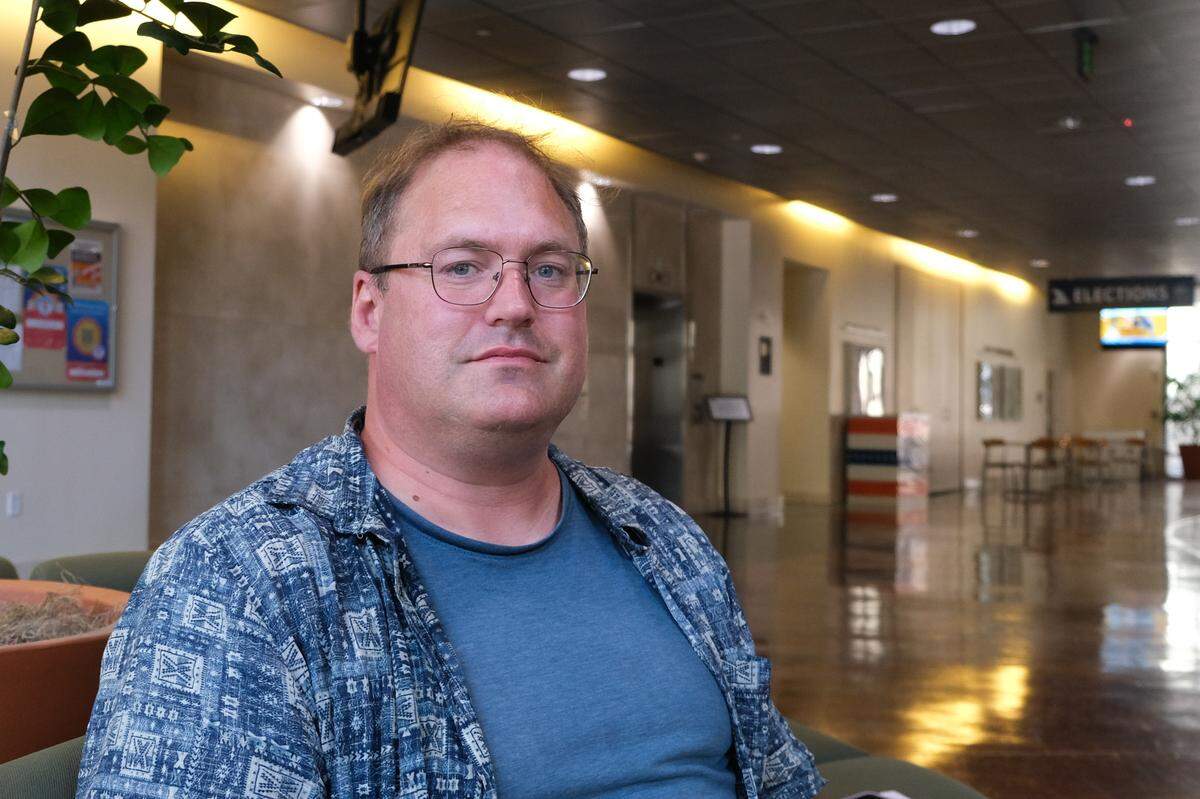
Now, the program that helped change Kingan’s life faces its biggest hurdle in at least two decades: A $289,000 budget cut.
The proposed cut would be the end of a 40-year collaboration between Transitions-Mental Health Association and San Luis Obispo County, which has provided funding for the program out of the county’s general fund since its founding.
While the amount the county has provided may have fluctuated over the years, the county’s assistance has remained consistent and dependable up to this point, Transitions community engagement director Michael Kaplan said.
Growing Grounds’ operating budget is a tad above $600,000, executive director Jill Bolster-White told The Tribune, which would make the county’s proposed cut around 16% of their budget.
But that 16% almost exclusively went toward staffing, Bolster-White said.
“That would look like not employing 80 people in a year, but probably it would be more of a skeleton crew to see then how we could transform this into something different,” she said.

Growing Grounds mission is not profit — it’s support
Growing Grounds aims to provide jobs to 65 to 80 people living with mental health challenges per year, Bolster-White said, adding that the people it hires have seen great outcomes.
She said from 2023 to 2024:
- 100% of Growing Grounds clients had decreased use of crisis services
- 91% had increased housing stability
- 89% experienced zero visits to the Psychiatric Health Facility, the county’s acute crisis facility
- None that were referred by San Luis Obispo Behavioral Health returned to jail
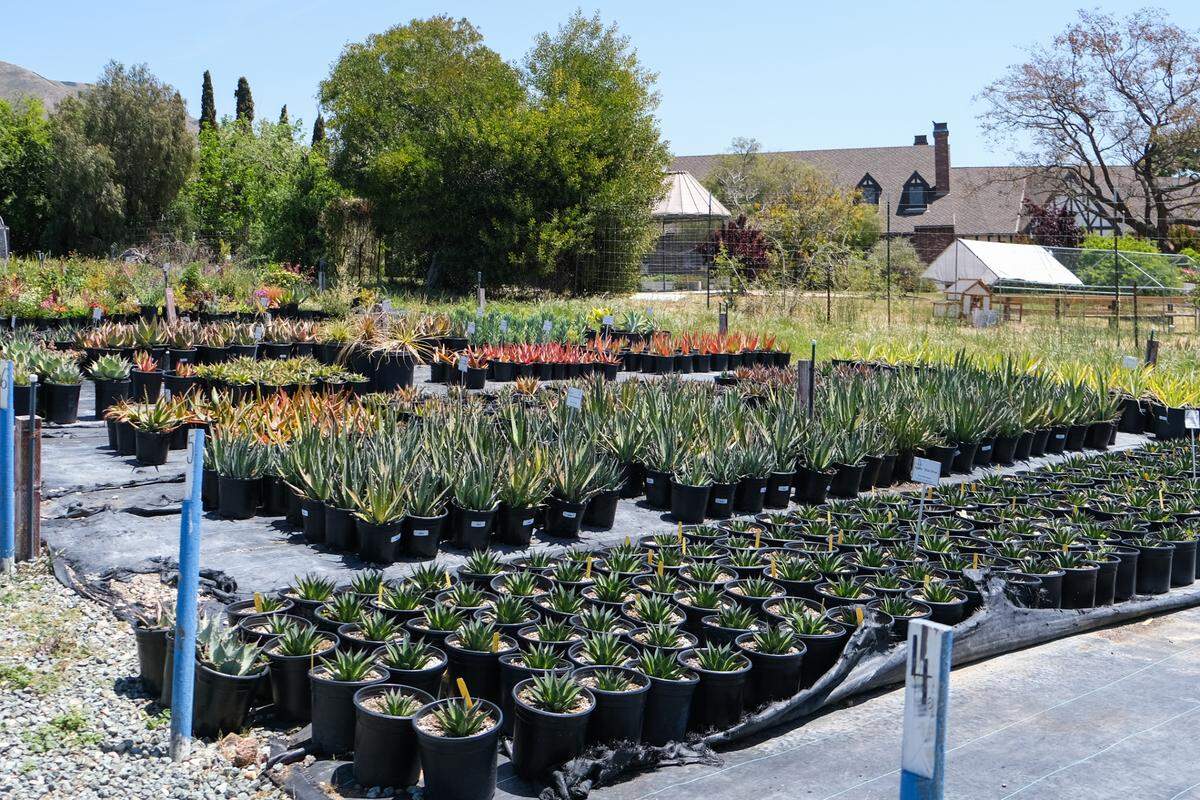
The program has a nursery where clients can work in horticulture and cultivate plants that are market quality to sell on wholesale to landscapers and larger nurseries, like Miner’s Ace Hardware. It also runs a store in downtown San Luis Obispo where members of the public can buy plants directly.
People can be referred to Growing Grounds from various programs, including referrals from Behavioral Health.
According to Growing Grounds assistant manager Quentin Smith, the waitlist for the program is currently three to four months long. The wait would be even longer if the program loses the ability to serve as many clients as it does.
While Growing Grounds is a business, it doesn’t necessarily operate as one. Rather, Transitions calls it a “social enterprise.”
Its mission is driven by providing a therapeutic environment for people living with mental illness to help them transition back into the workforce. Profit — while important to keep the program running — is not the priority.
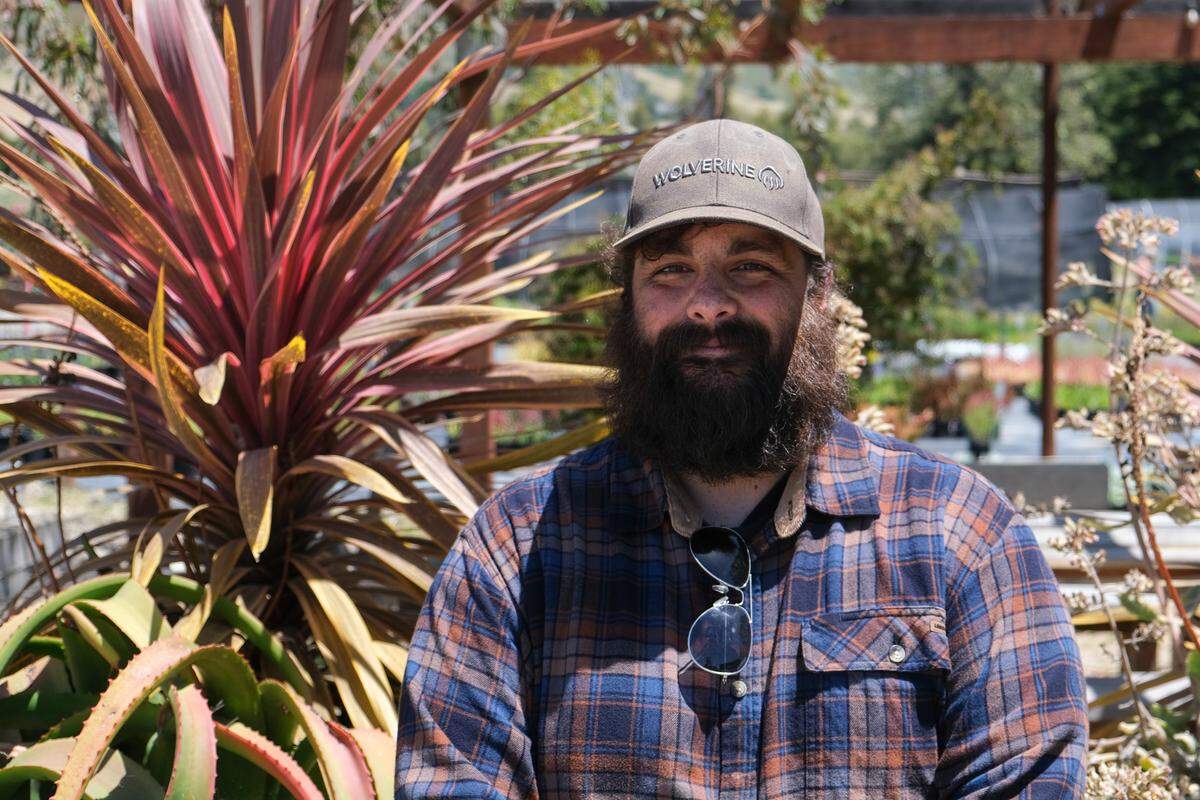
“The mission of a social enterprise is not to profit, but to provide a need that is in the community,” director of vocational services Eric Blanco said. “That social need is providing employment to individuals that might not be able to find employment elsewhere.”
While most businesses would want to keep good employees, Growing Grounds celebrates when employees move on to better opportunities.
“Every time I see somebody tell me, ‘Hey, sorry, I gotta put in my two weeks. I got a job at X, Y or Z,’ those are the best times,” Growing Grounds assistant manager Quentin Smith told The Tribune. “Everyone here, it’s their own recovery. So whatever they put into it is the reward they will reap.”
Jobs also can provide a sense of purpose, which is huge for people living with mental illness.
For Kingan, Growing Grounds helped him get out of the depressive state he was in without feeling judged.
“I felt like I didn’t deserve a chance because I knew the hardships I was facing every day and that’s too much of a risk for most employers to take,” Kingan said. “How can you trust anybody who’s willing to take a chance on you when you are a homeless person who may not be able to shower that day, who may not be able to get to work?”
Growing Grounds allowed Kingan to “stumble” without having dire consequences, which allowed him to work on his mental health.
When living with mental illness, he said, you can have a bad day with no reason that can cause you to miss a shift or run away. Instead of being fired, Growing Grounds calls to see how they can help.
“That security — knowing that you can stumble and they’ll help you back up — is a lifesaver,” he said.
Other more profitable nurseries also have integrated more automation into their workflow. At Growing Grounds, just about everything from watering to packaging is done by hand by one of the employees, Bolster-White said.
Each employee is paid at least minimum wage, which also impacts the nursery’s budget as state law has increased bottom salaries, she said.
Growing Grounds funding threat comes as other programs are at-risk
Growing Grounds is not the only financial challenge Transitions has faced in recent months.
Federal and state funds for mental health have been pulled, and with the reorganization of mental health services under Prop 1, the nonprofit — as well as other mental health providers — has had to cut preventative programs and look for funding elsewhere.
It’s been the hardest time in Bolster-White’s 35 year career with Transitions, she said.
“We’ve had these changes, but they usually come like one or two or three at a time,” Bolster-White said. “But to have state budget, federal ... and then SLO County is not in a very solid budget situation itself. ... Plus all the Proposition 1 changes. It has definitely been more changes and more unknowns that I’ve certainly seen.”
But at least with Prop 1, Kaplan said, Transitions has until July 2026 to figure out restructuring and funding.
For Growing Grounds, the cut would come when the San Luis Obispo County Board of Supervisors adopts the new budget on July 1 this year.
Growing Grounds isn’t the only social service on the chopping block. Representatives from CASA, Martha’s Place and other nonprofits all spoke during public comment Tuesday at the Board of Supervisors to advocate to keep funding for their programs.
Bolster-White, meanwhile, is hoping the county will reconsider its budget position given the benefits of the program.
Growing Grounds is a form of prevention that can save the county money in the long-run, she said. According to Transitions, someone receiving services at the Psychiatric Health Facility costs the county $2,271 for a single day while employing one person at Growing Grounds costs the county $31 per day.
Kaplan told The Tribune he hopes the county could provide just one more year of funding to give the nonprofit a buffer to figure out new strategies so that it doesn’t have to depend on the county to keep the program alive.
“We want the year to really look at how we can adapt the program, how we can streamline the business, how we can bring on new partners and new funders to really ensure sustainability,” Kaplan said. “But we need that time.”
Supervisor Bruce Gibson said that is a possibility the county is exploring between now and the next budget hearing on June 9.
The Board of Supervisors directed county staff on Tuesday to consider transition plans for the numerous nonprofits that stand to lose funding to budget cuts, including Growing Grounds.
What that plan would look like exactly remains to be seen, but Gibson hoped that a solution would “give our nonprofit partners a chance to find other funding sources or adjust their program to meet the funding that they have.”
“What we’re saying is, can we figure out a way to provide at least some funding for the next fiscal year, which would give them another 12 months to figure out the transition, as to whatever it would be?” he said.
Representatives from Transitions have spoken during public comment during at least two Board of Supervisors meetings to plead their case to keep the funding.
The nonprofit is now inviting its supporters to also contact their supervisors, speak at board meetings and to donate to the organization at t-mha.org/donate.php.