
Creature found as roadkill identified as footlong new species in India. See it

From sharp-toothed sharks to spiders a bit too large for comfort, some animals have earned a scary and intimidating reputation.
Snakes are a central part of this group of animal villains, but while boa constrictors or venomous rattlesnakes have earned it, not all snakes warrant a fight-or-flight response.
In the lush forests of Mizoram, India, a newly discovered species was described as “timid” and “gentle,” and even chose to keep its mouth shut when being handled, researchers said, in a study published Aug. 5 in the peer-reviewed journal Taprobanica.
Smithophis leptofasciatus, or the narrow-banded rain snake, was discovered in and around small streams as well as under the leaf litter, rocks and decaying logs on the forest floor, according to the study.
While two of the snakes were found living, a third was found as roadkill in the area, and five others were spotted but not collected for the study, researchers said.
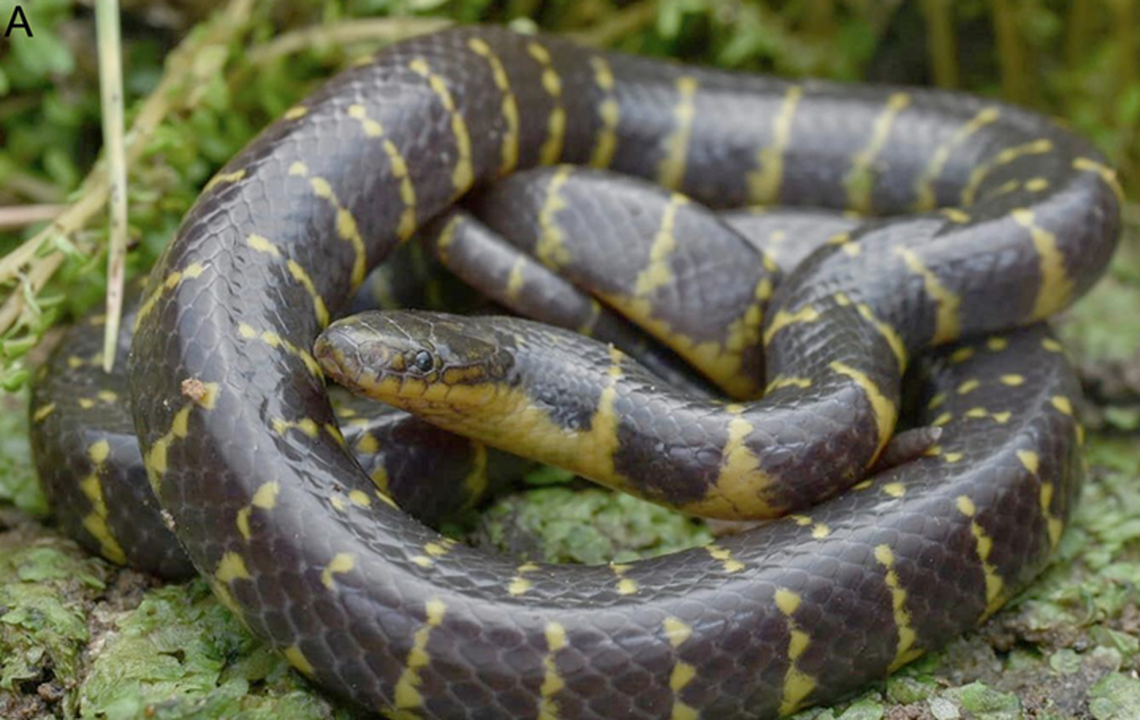
The narrow-banded rain snake is considered “small” for its group, though it can measure more than 16 inches long, according to the study.
Its coloration is described as a “shiny dark or a black background intermixed with distinct, narrow and creamish-white or yellowish-lime transverse bands” that are narrow and encircle the body in incomplete bands, researchers said.
The snake’s head is “elongated” and “moderately large” in proportion to its body, with a large and broad snout, according to the study. The eyes are also considered “moderately large.”
The species name, leptofasciatus, is derived from the Greek word “leptos” and Latin word “fasciatus” and means “narrow banded,” referring to the snake’s pattern, researchers said.
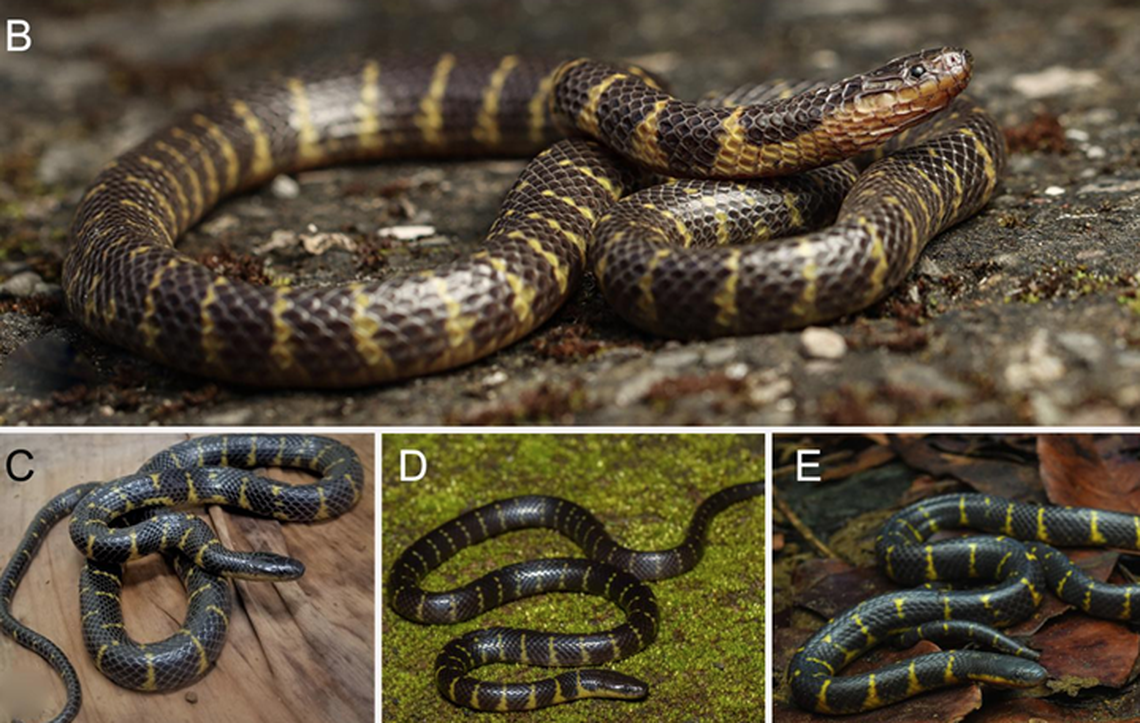
Researchers found the snakes both near and in the water of the streams, suggesting they are at least semiaquatic. The new species is also nocturnal, according to the study.
“All handled specimens were very timid, gentle, showing no inclination to bite when handled,” researchers said. “In captivity individuals voraciously fed on earthworms.”
Researchers also found the brood of a female and noted white, oval and “leathery” eggs, according to the study.
The new species was previously considered part of another known species, Smithophis bicolor, which is found in the Meghalaya region of India. However, recent studies have shown genetic differences between the snakes found there and the ones identified in Mizoram, meaning geographical separation has led to distinct lineages, according to the study.
Mizoram is in northeastern India, west of the border with Myanmar.
The research team includes Lal Muansanga, Jayaditya Purkayastha, Vanlal Hruaia, Mathipi Vabeiryureilai, Lal Biakzuala, Ht Decemson, Hmar T. Lalremsanga and Sanath C. Bohra.
This story was originally published August 6, 2025 at 1:13 PM with the headline "Creature found as roadkill identified as footlong new species in India. See it."
