
15 million-year-old creature — with its last meal inside — is new species in Australia
What can fossils tell us about prehistoric life?
The length of a femur bone may help paleontologists determine how tall a dinosaur once was, or a curved tooth may help researchers identify an aquatic reptile as a carnivore or herbivore.
In a few rare cases, something extra left behind in the fossil record leads to a groundbreaking discovery, or, at least, the identification of a new species.
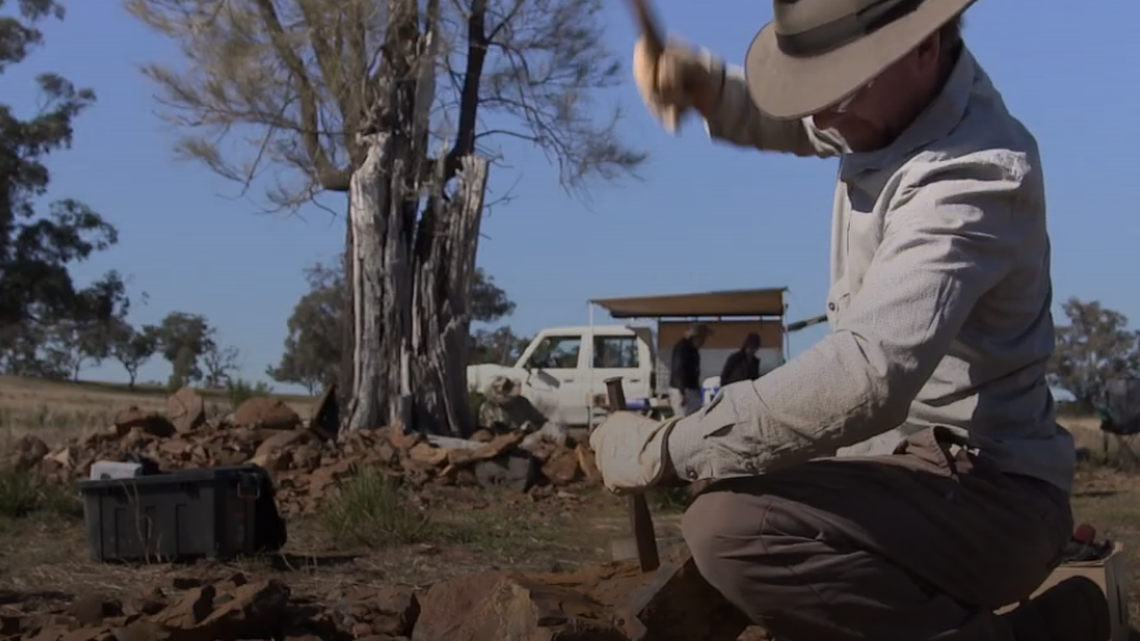
Researchers working in New South Wales, Australia, at a fossil site called the McGraths Flat discovered the bones of an ancient fish species, according to a study published March 17 in the peer-reviewed Journal of Vertebrate Paleontology.
McGraths Flat was once a freshwater ecosystem during the Cenozoic period, ranging from 66 million years ago until recently, according to the study.
When the fossil was examined, researchers saw the bones belonged to a fish, but not like one they had seen before.
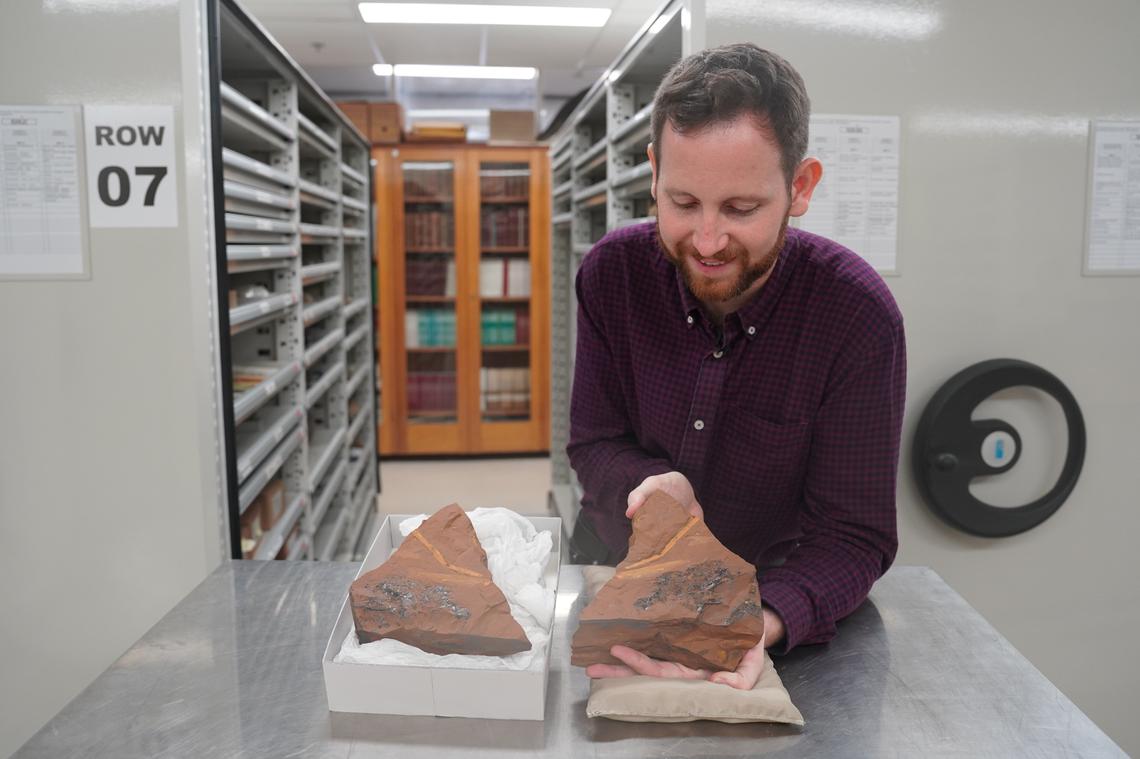
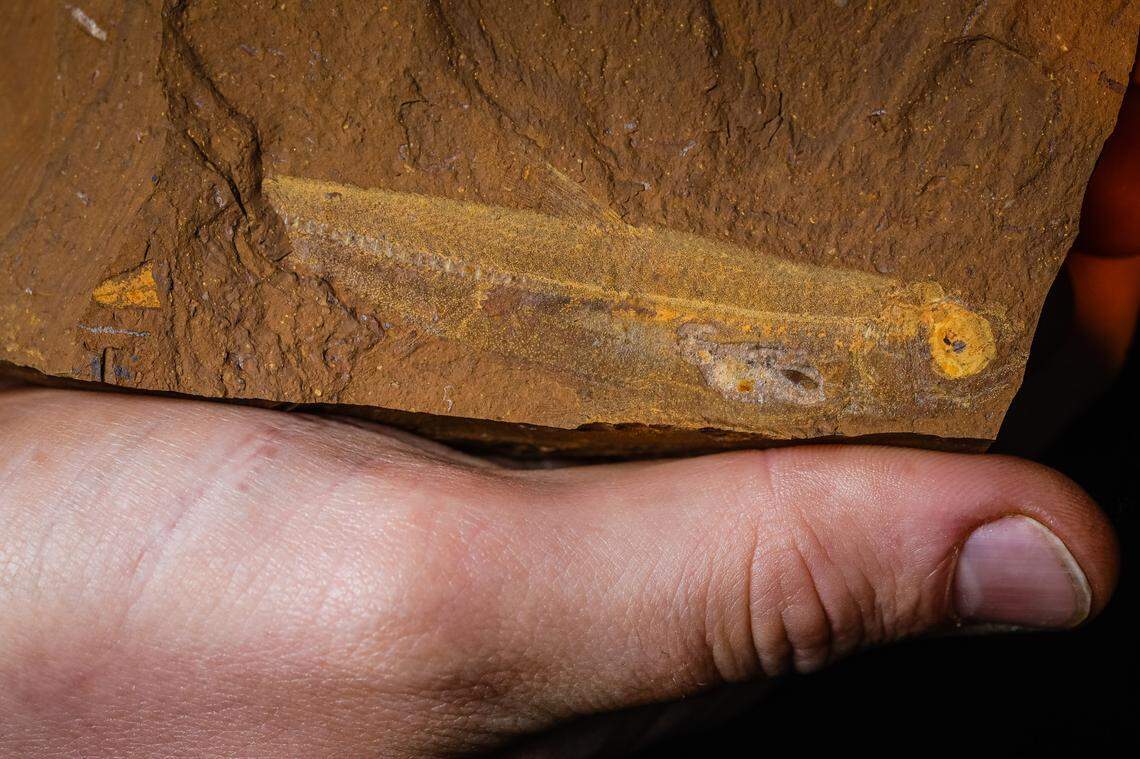
The fish was “slender” and “fusiform,” and it had an adipose fin, a fleshy dorsal fin without bony rays that is common in fish like salmon, according to the study.
While the teeth and bones of the fossil were relatively “poorly preserved,” outlines of multiple fins allowed researchers to identify the prehistoric fish as a species new to science.
The new species was named Ferruaspis brocksi, or Brock’s iron shield fish, according to the study, honoring Jochen Brocks, who discovered multiple specimens.
The fossil was dated to the Miocene, between 11 million and 16 million years ago, and was found in iron-rich stone, researchers said.
“The discovery of the 15 million-year-old freshwater fish fossil offers us an unprecedented opportunity to understand Australia’s ancient ecosystems and the evolution of its fish species, specifically the Osmeriformes group during the Miocene epoch,” study author Matthew McCurry said in a news release from the Australian Museum, shared with McClatchy News. “Osmeriformes are a diverse group of fish within Australia which includes species like the Australian Grayling and the Australian Smelt. But, without fossils it has been hard for us to tell exactly when the group arrived in Australia and whether they changed at all through time.”
However, the most exciting feature of the fossil may not be the bones of the fish at all. At the bottom edge of the fossilized fish is a grouping of fossilized material that was a little bit different than the rest, researchers said.
The fish’s stomach contents had also been preserved.
“Not only does this fossil provide a unique snapshot into the environment it lived, but also because its stomach contents are so well preserved it allows us a glimpse into the behavior of these ancient species,” McCurry said in the release. “We now know that they fed on a range of invertebrates, but the most common prey was small phantom midge larvae.”
Researchers also used a powerful microscope to look for features called melanosomes, part of the body of animals that creates color.
In previous studies, melanosomes found in fossils were used to reconstruct the color of feathers for birds millions of years after they lived, study author Michael Frese said in the release. This is the first time the same process was used on a fish.
“The fish was darker on its dorsal surface, lighter in color on its belly and had two lateral stripes running along its side,” Frese said.
Brock’s iron shield fish adds to the rich prehistoric history of McGraths Flat, and contributes to its classification as a “Lagerstätte,” or a “site that contains fossils of exceptional quality with remarkable detail,” according to the museum.
McGraths Flat is near Gulgong, New South Wales, in southeastern Australia, about a 180-mile drive northwest from Sydney.
The research team includes McCurry, Frese, Anthony C. Gill, Viktor Baranov, Lachlan J. Hart and Cameron Slatyer.
This story was originally published March 17, 2025 at 2:30 PM with the headline "15 million-year-old creature — with its last meal inside — is new species in Australia."
